

In the rugged world of off-roading, vehicles are put to the test against the elements and challenging terrains. While 4WD trucks reign supreme, a surprising contender emerges in the blocky silhouette of the 2WD truck. Designed primarily for urban utility, 2WD trucks can still carve out a niche for certain off-road adventures. Understanding their capabilities is crucial for enthusiasts and adventurers looking to engage in light off-road use without jumping to a fully equipped 4WD. In this exploration, we will navigate through four vital chapters: grasping the true potential of 2WD trucks off-road, dissecting the different types suitable for such environments, acknowledging their limitations, and offering well-grounded recommendations. Each chapter will contribute to a comprehensive understanding of how 2WD trucks can serve in off-road scenarios, empowering owners to make informed choices along their journeys.
On the Edge of Traction: Understanding What 2WD Trucks Can and Cannot Do Off Road
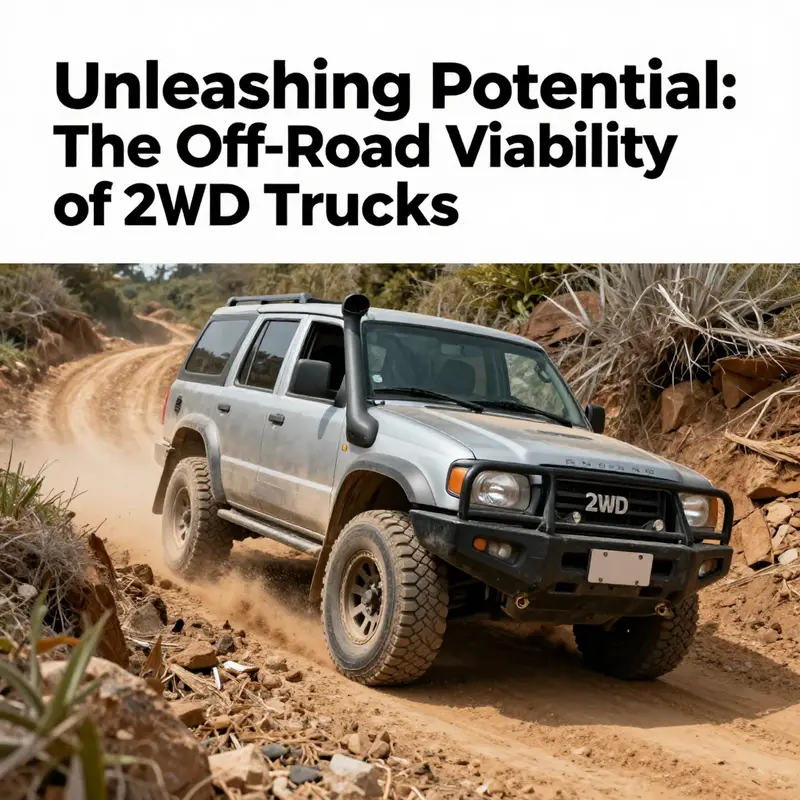
Two-wheel-drive trucks have earned a reputation for urban efficiency and straightforward reliability. In off-road discourse, they are often treated as second best, suited only for light chores and paved paths that peek into the countryside. Yet the real world is messier than reputations suggest. There are moments when a two-wheel-drive layout can negotiate limited rough terrain without turning a day into a rescue mission. The chapter that follows offers a careful, nuanced look at those moments, while making clear where the boundary lies between capability and risk. It is not a defense of laissez-faire off-roading, but a practical map for people who need to balance cost, maintenance, and the occasional excursion off the beaten track. To navigate this terrain, it helps to understand how two-wheel-drive configurations behave as ground changes beneath them, why certain terrains punish traction and weight transfer, and what strategies a driver can use to optimize performance within those constraints. The overarching lesson is simple: the envelope of capability for 2WD is real, but measured, and it should be interpreted in light of terrain, speed, and purpose rather than bravado or habit alone.
At the heart of the 2WD equation are two fundamental layouts: rear-drive and front-drive, each with its own traction choreography. In a rear-drive setup, the engine’s weight often sits over or near the rear axle, which can aid grip on firm, dry surfaces. But as soon as dirt turns slick or the ground begins to yield, that weight bias becomes a liability rather than an advantage. The front wheels, which steer the vehicle, are not delivering traction in a controlled, evenly distributed way. The result is a system that can feel confident on smooth roads but falters when the surface refuses to cooperate. In a front-drive configuration, traction tends to feel steadier on some surfaces because the weight shifts toward the driven axle during modest climbs; however, the same layout rarely offers the robust ground clearance and the torque-management options that off-road demand. Across both designs, the absence of advanced off-road helpers—locking differentials, low-range gearing, multi-terrain traction control—narrows the field to a narrow set of scenarios where a 2WD truck can still work effectively.
Ground clearance is another hard truth. Two-wheel-drive trucks typically carry less suspension travel and a lower ride height than their four-wheel-drive counterparts. The practical consequence is a higher risk of belly contact on rocks, hard-edged ruts, or uneven steps in the trail. A collapsed underbody is not a cosmetic concern here; it signals a real threat to critical components and to the ability to continue the journey. The geometry of approach and departure angles matters in the same way. When the front bumper or the rear overhang meets a slope or a protruding obstacle, a 2WD truck can become stuck in a narrow passage where four-wheel-drive systems would simply crawl over it. The lack of a transfer case with low range compounds the problem by depriving the driver of a torque-capable, crawl-friendly gear ratio. It isn’t merely about feeling underpowered. It’s about the vehicle lacking a built-in mechanism to keep the wheels gripping the ground when the terrain resists, bends, or shifts under load.
Yet, the off-road world is not all rock gardens and mud trenches. There are surfaces and conditions under which a 2WD truck can perform with surprising competence, provided the driver respects the terrain and the vehicle’s limits. A well-packed dirt road, for instance, can offer predictable grip if the surface is firm and dry. In those moments, steady throttle, smooth steering, and patience can carry a 2WD truck where a less patient approach would spell trouble. Gravel roads, when properly managed, can also be navigated without door-to-door excitement, so long as the tires are matched to the surface and the driver avoids abrupt throttle changes that can cause wheel spin. In some conditions—think of snow or ice that is moderately compact—the two driven wheels can maintain enough traction to move forward, so long as speed is deliberate, steering is progressive, and momentum is controlled rather than exploited.
Even with these caveats, the absence of traction aids remains the dominant factor. On a technical level, traction is a function of how many wheels are applying power and how those wheels respond to ground resistance. With only two wheels under power, grip must be found at a single contact patch or pair of patches. That reduces redundancy and increases sensitivity to surface irregularities. On a muddy slope, a 2WD truck might slog uphill for a stretch if the ground below remains cohesive and the tires can bite. But the moment the ground fractures or the slope steepens enough to cause slippage, the same two wheels lose their anchor, and progress stalls with little or no ability to reallocate torque to the other axle. The risk profile shifts from a test of throttle control to a test of line choice and potential recovery. This is not a fatal flaw in the design of many 2WD trucks. It is simply the truth of how power, contact, and control interact when the ground fights back.
Another practical factor is tire philosophy. Tires designed for mixed-use terrain versus pure road use can tilt the odds in a 2WD truck’s favor when the task at hand involves light off-road work. An aggressive tread can improve bite on loose surfaces yet may compromise on-road manners and wear life. The driver must balance the need for traction on soft ground with the imperative of predictable handling on pavement. Tire pressures become a dynamic tool in this balancing act. Reducing air pressure on soft, loose surfaces can improve flotation and grip, but it also raises the risk of sidewall damage, pinch flats, and reduced steering precision on harder ground. In short, the driver is juggling dynamic parameters: tire tread, air pressure, load distribution, and the rate at which the truck can safely negotiate obstacles that are not uniform in density or rigidity.
Load management and vehicle weight also matter. Heavier payloads can enhance traction on soft ground by pressing more weight onto the driven wheels, yet this same weight can worsen ground contact on soft ground and increase fuel consumption or impede steering. Lighter configurations, when paired with careful driving, can surface a different set of advantages, including greater wheel speed control and more delicate throttle application on tricky patches. The absence of four-wheel traction control means that the driver’s skill set becomes a more critical component in the equation: reading surface texture, choosing a precise line, and applying power in a manner that minimizes wheel spin. The overall message is nuanced: there are trade-offs in any 2WD setup, and the outcome depends on terrain, approach, and restraint just as much as on horsepower or capability on paper.
From a strategic perspective, decision-making should be guided by purpose and risk tolerance. If a task involves routine urban duties and occasional, non-technical off-road exploration—say, a field access road, a farm lane, or a maintenance path—the 2WD layout can deliver dependable service with discipline. If the terrain grows unpredictable—steep grades, deep mud, loose rock, or water crossings—the safe conclusion often points to a four-wheel-drive solution designed for those conditions. This does not discount the value of a 2WD truck; it reframes it as a tool optimized for a specific niche of off-road activity, not a universal off-road machine. The important point for buyers and operators is clarity: identify the terrain’s typical demands and ensure that the vehicle’s drivetrain, suspension travel, and ground clearance align with those demands rather than stretching a 2WD platform beyond its natural limits.
For readers who want to explore how the broader mechanical context shapes off-road behavior, resources focused on propulsion reliability and maintenance can be highly informative. A deeper dive into diesel drivetrain fundamentals can shed light on why certain configurations favor durability and simplicity in rugged environments. To follow this thread further, you can consult practical guides that emphasize maintenance discipline, parts compatibility, and the way routine service supports off-road resilience in two-wheel-drive platforms. The aim is to equip readers with practical knowledge that enhances safety and reliability while avoiding overreach in capability. In this sense, two-wheel-drive trucks can play a supporting role in certain off-road tasks, but they do not replace purpose-built four-wheel-drive platforms designed for hard climbs, unpredictable surfaces, and the demands of remote terrain. By clearly understanding these boundaries, readers can make informed decisions about what to buy, how to use it, and when to call for help or switch vehicles to achieve the mission safely.
In summarizing the practical takeaways, several themes emerge. First, 2WD trucks excel on straightforward, stable surfaces and in urban contexts where fuel efficiency and maintenance simplicity matter. Second, their off-road usefulness is real but limited to non-technical, moderate-terrain experiences that do not demand torque transfer to all four wheels. Third, the success of any limited off-road operation with a 2WD vehicle hinges on disciplined driving, appropriate tires, reduced risk-taking, and careful route selection. And finally, for anyone who expects regular exposure to rough terrain, gearing up with a four-wheel-drive platform remains the safer and more capable choice. This is not a sweeping indictment of two-wheel-drive trucks but a grounded appraisal of what they can and cannot do as off-road machines. The broader conclusion is that 2WD can perform, but it must be performed with an honest appraisal of terrain, a plan for potential recovery, and a readiness to switch to a more capable vehicle if the situation dictates.
For readers seeking a deeper technical anchor beyond the narrative here, consider exploring sources that discuss drivetrain design, traction technology, and off-road capability in a more granular way. These resources emphasize how the interaction of weight distribution, tire selection, ground clearance, and mechanical constraints shapes real-world performance. By absorbing these ideas, drivers can approach off-road adventures with a clearer sense of when 2WD suffices and when it does not, thereby reducing surprises and increasing safety. The conversation continues across the broader field of off-road mobility, where engineering choices and driver judgment converge to define what a vehicle can accomplish in less-than-ideal conditions. This balanced perspective helps ensure that the chapter remains grounded, useful, and aligned with the practical realities of off-road travel in two-wheel-drive platforms.
Further reading and expansion on these ideas can be found in manufacturer documentation and technical guides that emphasize the diverse range of vehicle configurations tailored to specific tasks. For readers seeking a closer match to the realities described here, the topic becomes less about chasing off-road bravado and more about aligning equipment with the terrain’s demands, the mission’s duration, and the risk tolerance of the operator. The conversation continues beyond this chapter, with continued exploration of how drivetrain choices shape on-and off-road performance, how tires and suspension adapt to different soils, and how maintenance and system design on two-wheel-drive platforms influence reliability in rugged environments. The goal is to present a balanced portrait: 2WD trucks offer efficiency and simplicity; they can handle limited off-road duties; but for serious off-road work, four-wheel-drive remains the gold standard and the safer choice for the long haul.
To connect these ideas with practical resources, a deeper look at diesel drivetrain maintenance can be helpful for those who manage fleets or rely on 2WD platforms for regular use. For readers who want a direct path to practical, engine-focused guidance, consider exploring this resource: Mastering diesel mechanics: your step-by-step path to success. It offers a grounded approach to keeping propulsion systems robust in challenging conditions and can complement the terrain-focused discussion above.
External resource: https://www.toyota.com/hilux/
null
null
Two-Wheel Limits: Understanding What 2WD Trucks Can and Can’t Do Off Road
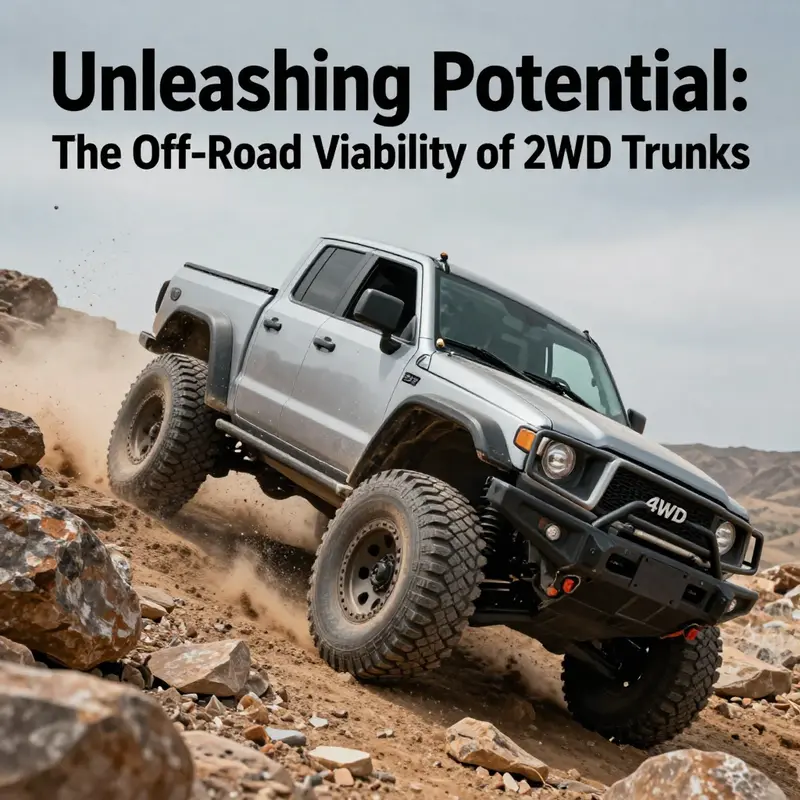
Two wheels pulling and the other two trailing sounds simple, almost intuitive. Yet the off-road world is built on a much more demanding physics of traction, weight, and terrain interaction. In the broad landscape of trucks, two-wheel-drive configurations—whether rear-wheel drive or front-wheel drive—occupy a special niche. They excel where surfaces are predictable and firm, but their very design tends to thin out as mud thickens, sand loosens, or rocks demand controlled torque distribution. This chapter delves into why that is, how the limitations show up in real-world scenarios, and what it means for anyone mapping out a vehicle for off-road use. The aim is not to demonize 2WD but to illuminate the conditions under which two wheels are enough and those where four wheels are almost always the safer, more reliable choice for serious challenges.
On dry, compact surfaces, a 2WD layout can feel reassuringly predictable. The drivetrain’s energy flows to a single axle, and steering feel remains straightforward because there is no torque shuffle between front and rear ends. The weight transfer that happens when a driver accelerates, climbs, or brakes tends to favor that single axis, reinforcing a sense of stability. But the moment the road tilts away from flat, smooth, and dry, the reliability of that single-drive path begins to waver. In off-road terms, traction is a balance between three forces: engine torque, the friction between tire tread and terrain, and the weight pressing down on the contacting surface. A 2WD truck relies on these forces passing through a single axle. When that single axle slips, there is little automatic compensation to shift torque to the other axle. The result can be a wheel that spins with abandon on slick rock, deep mud, or soft sand while the other wheel remains powerless, or even a vehicle that simply stops mid-trail as restraint surfaces snag and hold.
The practical consequences of that arrangement become clearer when you compare surface classes. On loose, granular surfaces—soft sand or light snow—the vehicle’s wheel that bears the load often loses bite first, while the opposite wheel might maintain momentum but cannot transfer that momentum into motion across the obstacle. The lack of four-wheel torque distribution means the driver’s options are limited to tyre choice, momentum control, and, in some designs, tire pressure adjustments. In contrast, a multi-axle drive system can redistribute power to the axle with more grip, maintaining forward progress where a 2WD would stall. The difference is not simply about grip; it is about the dynamic torque path that keeps a vehicle moving across a sequence of changes in slope, surface friction, and obstacle height. The most common hesitation among 2WD users arises when the terrain demands a controlled crawl through ruts, a gradual climb on gravel with loose ballast, or a shallow but slick ascent where stability hinges on evenly distributed traction rather than sheer tire pull.
A key distinction emerges when we name the alternative: part-time four-wheel drive systems. These are designed to give drivers a choice—drive on pavement in 2WD for efficiency, switch to 4WD for tricky terrain. The advantage here is not just more wheels turning; it is the ability to select a low-range for low-speed, high-torque control and climb or descend with a measure of steadiness that 2WD cannot reproduce. The manual nature of some part-time systems—engaged by the driver, sometimes with an effort to lock hubs by hand—speaks to a design philosophy that prioritizes control and reliability over convenience in adverse conditions. The driver’s role becomes an integral part of off-road success: knowing when to engage four wheels, how to balance throttle with momentum, and when to back off to regain traction. The reality is that even with hub locks and a low-range gear, 2WD configurations cannot guarantee traction across all surfaces. They can, at best, buy some time and space through careful technique, but they do not overcome the fundamental constraint of delivering power to all four corners when that is what terrain requires.
The specific terrain becomes a lens through which to gauge capability. On a hard-packed dirt trail, a 2WD truck can maintain momentum so long as the surface remains consistent and the grade shallow. A notable caveat is that the vehicle’s weight distribution, ground clearance, and axle articulation still determine whether minor obstacles become proportionally large barriers. When the trail transitions to sticky mud that clings to tyres, the very factors that help in puddles—the busy grip of the tread and the lateral support of a broader contact patch—become liabilities. One spinning wheel can bury the truck in seconds if there is no mechanism to deliver torque to the wheel with better grip. The same dynamic shows up in snow, where the surface itself acts like a rolling trap. Without torque from the other axle, a single wheel may slip through the snowpack, while the other wheel stalls, leaving the vehicle stranded and the driver with few options beyond waiting, digging, or winching.
Rigorous off-road driving demands more than grip; it demands confidence in vehicle geometry. Ground clearance is one of the structural limits for 2WD machines. If underbody components meet rock or a stony step before the wheels, the risk of damage increases and the chance of losing progress grows. Approach and departure angles—those angles that determine whether the front or rear end will contact terrain during steep ascents or descents—are typically tighter on 2WD workhorses. In short, the geometry of a two-wheel-drive chassis is optimized for work on pavement or well-groomed surfaces. When the terrain grows unpredictable, the physics call for broader articulation, deeper underbody clearance, and a drivetrain that can deliver torque where the vehicle actually risks stalling.
The research landscape emphasizes this reality in concrete terms. The primary takeaway is that, while some 2WD trucks can tackle limited off-road duties, they are not designed for sustained or demanding off-road use. The absence of a stable mechanism to cross-load demands—without a full four-wheel drive with a dedicated transfer path—means that traction cannot be guaranteed across the full breadth of off-road conditions. The takeaway is not merely about a lack of horsepower. It is about the torque distribution, torque control, and suspension dynamics that are essential in rough or slippery environments. In this context, the 2WD configuration presents a trade-off: readily deliverable efficiency on paved roads in exchange for reduced versatility on unpaved, uneven, or variable terrain.
From a practical standpoint, owners and operators who rely on 2WD for off-road work often need to plan around the vehicle’s limitations. Tire choice becomes a more deliberate decision, with the goal of maximizing grip on the surfaces likely to be encountered while acknowledging that no tire can replicate the four-wheel distribution of a full 4WD system. Some drivers will experiment with tire pressures to improve surface contact in specific terrains, yet this comes with risks to bead integrity and tire sidewall performance. Techniques such as maintaining steady momentum on light obstacles or using momentum to crest small rises can enable short stretches of off-road progress, but they do not replace the reliability of a drivetrain able to deliver torque to both axles when the terrain demands it. The reliance on driver skill, rather than drivetrain capability, is a testament to the essential truth: 2WD off-road capability is situational and limited.
The broader point emerges clearly when we reflect on the category as a whole rather than on individual journeys. Serious off-road activity, especially in environments where traction can be uncertain and defensible positions are scarce, is better supported by 4WD configurations with sophisticated drivetrains. The manual engagement process and the potential for low-range gearing in part-time 4WD systems represent an explicit shift from passive traction to actively managed traction. In environments where rock crawling, steep inclines, or deep mud are the norms, the ability to dedicate torque to the axles that have the grip becomes a decisive factor in progress and safety. Even though a 2WD truck can carry out urban duties and light-duty tasks with competence, the core challenge of off-road traversal—the need to maintain traction across four contact points in varying terrains—remains beyond the reach of two wheels in most demanding contexts.
In weaving together these threads, the chapter aligns with the broader narrative that 2WD is not universally ill-suited for off-road use but is inherently limited. It offers affordability and simplicity at the cost of versatility. The take-home message is practical and direct: for truly challenging off-road conditions, a vehicle with four-wheel drive, a capable transfer mechanism, and an able suspension is the prudent choice. This does not negate the value of 2WD agricultural, urban, or light-duty roles where pavement and predictable surfaces dominate; it simply clarifies that when the path leaves the pavement, the added capability of four wheels is often the deciding factor between progress and immobilization.
As the article moves forward to examine configurations that actively enhance off-road capability, readers will encounter the mechanisms that unlock traction in difficult terrains. The next sections explore how true off-road drivetrains distribute torque, how low-range gears enable controlled speed and power, and how differential systems influence the vehicle’s ability to navigate obstacles with confidence. The narrative will also consider the role of suspension articulation, approach and departure angles, and underbody protection in shaping a vehicle’s limits—and how these factors interact with drivetrain choices to determine success on the trail. Importantly, the discussion remains anchored in the principle that 2WD is a design choice optimized for specific environments, while 4WD offers a broader, more reliable toolkit for conquering the irregularities of off-road surfaces.
For readers curious about maintenance and reliability—areas that are particularly consequential when push comes to shove on rough terrain—consider exploring more about drivetrain fundamentals and how people keep these components dependable in demanding conditions. A resource focusing on diesel mechanics provides a structured, step-by-step path to understanding the foundations that underpin all drivetrain work, including two-wheel versus four-wheel configurations. You can read more here: Mastering diesel mechanics: your step-by-step path to success. This reference invites readers to consider how routine maintenance, component wear, and preventive care influence performance when traction is taxed on challenging surfaces. While the chapters that follow will expand on the advantages of four-wheel drive, the lesson remains consistent: knowing the limits of what you have is the first step toward mastering what you can achieve on the trail. External references to drivetrain capabilities in real-world, heavy-duty applications also offer context for understanding how system design translates into on-trail performance. For a general reference on drivetrain capabilities in heavy-duty pickups, consult the official capabilities page of a major manufacturer: https://www.ford.com/trucks/f-250/.
Wheels on Dirt: Reconsidering Off-Roading with 2WD Trucks and the Safer Paths When Traction Fades
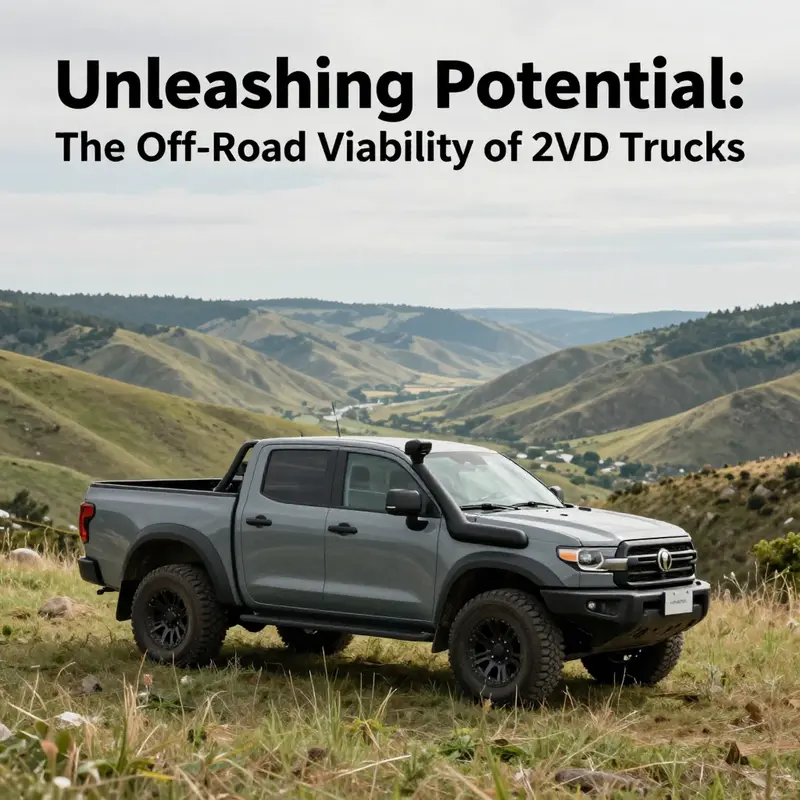
The allure of off-road capability has long tempted drivers toward two-wheel-drive trucks, drawn by the practicality and efficiency of a simpler drivetrain. Yet the chapter of off-road performance written for 2WD models is a sober one. In rough terms, two-wheel drive trucks trade traction, control, and the ability to shed vehicle weight across multiple contact patches for a lower cost of maintenance and, often, better efficiency on pavement. The same principles that make a compact pickup trusted on slick city streets or dusty rural lanes begin to crumble when the route climbs a steep hill, carves a rocky switchback, or darts across mud that swallows a tire with a mind of its own. The core takeaway, echoed through the research, is clear: 2WD can handle certain limited off-road tasks, but serious off-road adventures demand the capabilities that four-wheel drive or all-wheel drive systems provide, along with sophisticated suspensions and drivetrain tuning. The narrative here threads through the how and why of that boundary, showing where 2WD can be a viable tool and where it ceases to be a reliable partner in challenging terrain.
To understand the terrain of capability, one must first distinguish the two broad flavors of 2WD: front-wheel drive and rear-wheel drive. On a high-level map, RWD trucks tend to excel when the surface is stable and the grade is modest. The power that reaches the rear axle helps push the vehicle forward on dry, hard-packed surfaces, and the balance can feel predictable on flat, open dirt roads. But that same setup struggles where the ground becomes uneven, slippery, or deeply rutted because the front axle—frequently the steering axle—lacks the same traction advantages when the rear tires are spinning. Conversely, FWD configurations can feel more confident in some slippery conditions, especially on loose surfaces where the front tires bite into the terrain and keep the vehicle steering. The drawback, however, is ground clearance and the limited ability to translate engine torque into stable forward momentum when tires encounter large rocks, holes, or deeply packed mud that can trap the undercarriage. In short, 2WD brings a trade-off: predictable behavior on predictable surfaces, tempered by vulnerability when the terrain asks more of the vehicle’s grip and geometry.
These dynamics are not merely theoretical. The practical implication is that 2WD trucks, even when lifted and fitted with rugged tires, operate with a lower ceiling for off-road capability. The lift and suspension that help clear obstacles will improve approach and departure angles and reduce the likelihood of scraping the underbody, but they cannot replace the fundamental advantage of distributing torque to all four corners. The difference is not simply about what the tires can do; it is about how power, weight, and contact patches are managed across a changing landscape. The effect is most noticeable on surfaces where traction is at a premium: steep ascents in mud, rock gardens, soft dunes, or any terrain where the tires can quickly lose grip and the vehicle must rely on additional traction aids, momentum, and weight transfer to avoid a stall or a dig.
The research also points to a practical truth: ground clearance matters more in off-road settings than in urban driving. A 2WD truck with generous clearance can slip over rocks or clear a shallow rut more easily than a stock low-rider with the same drive configuration. Suspension stiffness and overall articulation—the ability of the axle and wheel to maintain contact with the ground as the suspension cycles—play a critical role in how well a 2WD platform can respond to uneven terrain. A well-tuned suspension that maintains tire contact without sending jolts into the cabin can markedly improve control, reduce wheel spin, and keep momentum from stalling on a rocky or rutted path. Yet no suspension can conjure the same traction that a 4WD system can marshal when the terrain clings to the tires and refuses to relinquish grip.
The tire choice remains a decisive factor. All-terrain tires generally offer a balanced compromise: they provide better traction on dirt and gravel than highway tires while preserving reasonable wear characteristics on pavement. Mud-terrain tires can unlock more aggressive grip in sticky material, but they bring trade-offs in noise, wear, and fuel economy. For the 2WD user, the tire choice is a strategic decision—one that should be aligned with the expected terrain, driving style, and how much risk of getting stuck one is willing to tolerate. It is not a cure-all. Tires can only do so much when the fundamental traction system is limited by design. In other words, there is a ceiling to what even the best all-terrain rubber can accomplish when the vehicle’s drive to the ground is not shared across all four corners.
Beyond tires, many drivers explore traction aids to compensate for limited driveline capability. In snowy or muddy conditions, devices such as tire chains or traction boards can provide the necessary bite to maintain forward momentum when spinning tires threaten to bury the vehicle. These tools do not replace the need for a capable drivetrain, but they can extend the range of what a 2WD truck can handle under controlled conditions. The guiding principle is prudent: use more surface contact and the correct technique to avoid the stalemate that occurs when wheels spin in place. Driving technique, in fact, often proves more decisive than hardware upgrades. In scenarios where a 2WD truck can manage traction with careful throttle application, smooth pedal input, and deliberate weight shifting, the vehicle can traverse modest obstacles without becoming stuck. Rushing through a turn, stomping the accelerator, or attempting to yank power through a slick patch is precisely how one ends up high-centered or spinning out.
The chapter’s most important caveat is humility. For more demanding terrain—think steep climbs where the surface is a mixture of mud and loose rock, deep ruts carved by previous traffic, or dunes that require sustained momentum—2WD configurations prove unreliable for long durations. The risk of a stall, a spinout, or a dig becomes less of a nuisance and more of a safety concern when the vehicle is far from help. The research reinforces the notion that the safer and more reliable approach for serious off-roading is a four-wheel-drive system combined with a robust suspension, well-tuned transfer case, and traction management that can modulate power delivery across all four wheels. In this light, 2WD can complement a broader toolkit—serving well for light, constrained off-road work or for exploration where paths are well-maintained and the risk of losing grip is relatively low. It is not a universal solution.
What, then, should a 2WD owner do if the goal is to pursue off-road experiences without sacrificing reliability or safety? The answer lies in three integrated strands: mechanical readiness, terrain-aware planning, and a clear-eyed sense of limits. Mechanically, the vehicle should be inspected for weight distribution and suspension wear that would impede articulation. Components that sag or bind can magnify the vehicle’s vulnerabilities on rough surfaces. A properly aligned suspension helps ensure that tires maintain contact with the ground as the surface changes, which in turn improves steering feel and braking confidence. Tires, as discussed, should be matched to the anticipated conditions, with an understanding that wear and noise will differ from highway use. A careful inspection of tires for even wear, proper tread depth, and correct pressure is essential; even a single misfit or improper inflation can transform a routine dirt road into a precarious descent.
Terrain-aware planning means reading the landscape before committing to a route. This includes evaluating the surface type, moisture level, and the likelihood of sudden changes in traction. A dirt road that is firm in the dry season can become treacherous after rain, while a dry line that looks passable may actually be a trap where soft shoulders invite the tires to sink. The prudent driver reduces risk by mapping the route, identifying potential escape points, and maintaining a conservative pace that allows recovery if grip is lost. The technique of modest throttle input, steady steering, and smooth weight transfer becomes a practical discipline. Weight distribution, in particular, matters more than many novices expect. Shifting weight forward or rearward—within safe limits—can influence the traction of each axle and help the vehicle avoid digging into soft ground on steeper sections.
Finally, there is the strategic question of whether to upgrade a 2WD truck or to consider alternatives better suited to rugged conditions. The research presents a practical framework: for more demanding terrain, a 4WD or AWD system remains the recommended choice. It distributes power to all wheels, enabling traction under uneven grip and enabling the vehicle to maintain forward momentum even when one wheel loses traction. In some cases, this could mean choosing a different platform altogether—one designed from the ground up to handle the abuse and demands of rugged terrain. The alternatives proposed include purpose-built off-road vehicles or utilitarian trucks that are engineered for harsh environments. These often feature reinforced frames, more robust transmissions, and heavy-duty differentials that survive the knocks of rocky trails, sandy dunes, and repeated climbs. In many contexts, these specialized machines deliver reliability and capability that a modestly upgraded 2WD simply cannot provide, especially in adverse conditions where getting stuck is not an option.
The chapter’s recommendations, drawn from the synthesis of research, emphasize a pragmatic trajectory. If the plan is to rely on a 2WD platform for off-road work or exploration, the path forward is selective and bounded. Lifted or reinforced suspensions, high-quality all-terrain tires, and considered traction aids extend the envelope but do not erase the fundamental limitations. The driving philosophy should be one of humility, thorough preparation, and a clear acceptance that certain trails are beyond the reach of two-wheel-drive power. For those who seek the exhilaration and safety of true off-road performance, the chapter ultimately points toward 4WD platforms that bring balanced traction, controlled power delivery, and a drivetrain designed to keep momentum where it matters most.
For readers who want to translate these insights into hands-on practice, there is value in coupling documentary knowledge with practical maintenance and learning. Maintaining the mechanical health of a 2WD truck—checking the drivetrain, ensuring the suspension moves freely, and maintaining proper tire condition—can extend its versatility for light off-road use. Those who crave more depth into the mechanical craft of trucks can consult practical guides on diesel mechanics and step-by-step maintenance paths, such as Mastering Diesel Mechanics: Your Step-by-Step Path to Success. This resource, through its emphasis on fundamentals like diagnostics, lubrication, and component interaction, provides a grounded companion to the decision of how far to push a 2WD vehicle into rugged terrain. Alongside hands-on learning, readers should cultivate a habit of route scouting, speed moderation, and conservative risk assessment that together form a reliable framework for off-road exploration with limited drivetrain capabilities.
The broader implication of the findings is a reminder: off-road capability is not a universal attribute but a spectrum. 2WD can occupy a niche within that spectrum—useful for short, well-trodden paths, light trails, and scenarios where surface grip is predictable. Yet the more challenging the environment, the more valuable the strength of a drivetrain that can actively distribute traction across all wheels. For those who pursue demanding terrains with consistent frequency, the recommendation is to align vehicle choice with the terrain’s demands and to consider alternatives that match the mission. The research thus invites readers to approach off-road planning with a blend of curiosity, caution, and respect for the physics at play on uneven surfaces, where momentum and grip are the true currencies of mobility.
External perspectives reinforce this stance. For deeper insights into how off-road vehicles are engineered to withstand extreme conditions, a broad external resource offers detailed context on material grades, performance, and industrial uses of off-road platforms. This broader literature helps situate the 2WD discussion within the wider field of rugged transportation and industrial applications, where engineering choices are driven by reliability and resilience rather than the appeal of novelty alone.
In sum, 2WD trucks can serve as capable tools in specific, limited off-road contexts, provided expectations are grounded in the realities of traction, ground clearance, and drivetrain behavior. They perform best when used with deliberate preparation, appropriate tires, and a disciplined driving style that respects the terrain. Where the terrain demands higher levels of grip and control, a four-wheel-drive system paired with a robust suspension remains the safer, more capable option. Those who dream of true off-road adventures should therefore balance ambition with a practical assessment of the vehicle’s capabilities and be prepared to explore alternatives that better align with the challenges they intend to conquer. The journey from pavement to dirt remains a decision about risk, reward, and the careful calibration of what a given truck can and cannot achieve on a given day.
For readers who want to explore maintenance guidance more deeply while keeping to the 2WD path, the following internal resource can provide actionable, hands-on learning: Mastering Diesel Mechanics: Your Step-by-Step Path to Success. And for a broader, external context on off-road vehicle engineering and industrial applications, see the external resource linked here: https://www.example.com/off-road-army-truck-guide.
Final thoughts
As we peel back the layers of off-road ruggedness, it’s clear that while 2WD trucks may not be the go-to choice for intense challenges, they still offer unique advantages for certain off-road adventures. Enthusiasts can appreciate the maneuverability and ease of handling that these vehicles bring to the table, particularly in lighter terrains where 4WD may not be necessary. However, it’s essential to recognize their limitations—especially when tackling steep gradients or rocky paths. By understanding which types of 2WD trucks are equipped for mild off-roading and employing practical recommendations for use, owners can make informed decisions and enjoy their adventures to the fullest. With the freedom of the open trails in sight, the right choice means more than just getting there—it means arriving with style and confidence.