

For off-road enthusiasts and adventurers, a 2WD truck can feel like a limitation against the rugged terrains waiting to be conquered. Yet, with a calculated approach, you can redefine its boundaries. This guide explores how strategic enhancements—from upgrading suspension to optimizing tires—will bolster your truck’s off-road capabilities, ensuring you traverse rough landscapes with confidence. Each chapter delves into fundamental upgrades, emphasizing how they interconnect to elevate your off-road adventures. Uncover the potential hidden within your 2WD truck, turning it into a robust ally on challenging terrains.
Raising the Bar: Elevating Suspension and Ground Clearance to Make a 2WD Truck Trail-Ready
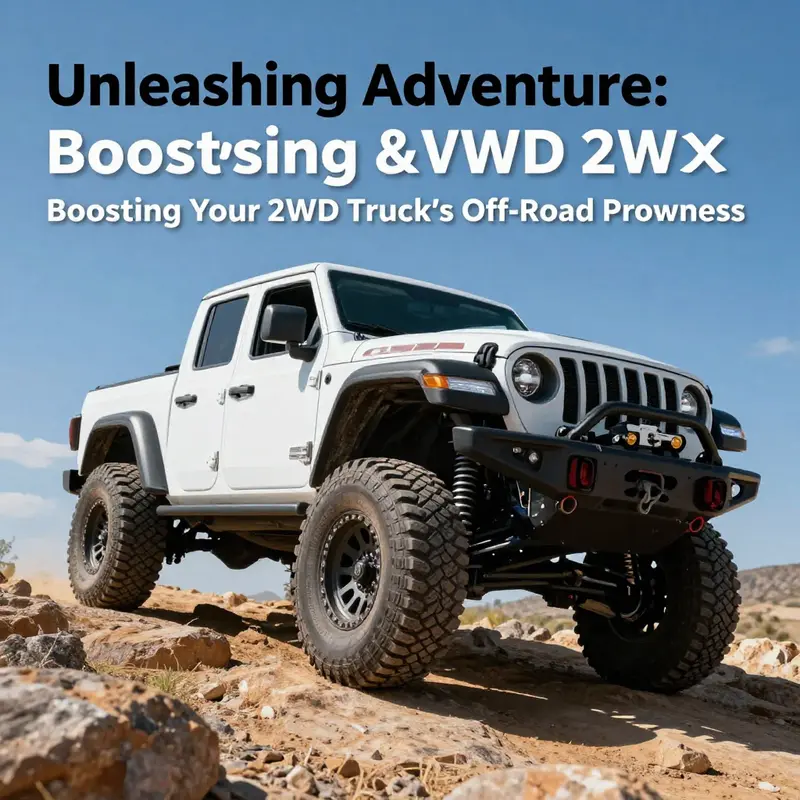
On the trail, a 2WD pickup lives and dies by what the suspension can do for it and how well the chassis plants its weight on the terrain beneath. When you don’t have the automatic traction of a four-wheel-drive system, the path to confident off-road capability is paved with a well-chosen suspension strategy, thoughtful ground clearance, and the discipline to balance height with steering feel and protection. The central idea is simple in concept but demanding in execution: lift the truck enough to clear obstacles and reduce bottoming, tune the suspension to handle rough surfaces with predictable, controlled motion, and preserve the vehicle’s integrity and driving feel on both pavement and rutted trails. With this approach, a 2WD truck can become a capable, trail-ready machine that climbs and crawls with confidence where stock geometry would falter. The journey begins with the suspension itself, because the ride height and how the chassis responds to uneven ground set the stage for every other improvement.
Suspension upgrade options sit on a spectrum from inexpensive to engineering-driven, and understanding the tradeoffs is essential. A body lift may add height without altering the suspension’s working angles, but it typically does little for handling or wheel travel and can complicate driveline angles. A true suspension lift, by contrast, changes the geometry in a controlled way to improve travel, maintain or improve ride quality, and deliver more meaningful gains off-road. When choosing a system, the key components to consider are the shocks, the springs or damping elements, and the control arms that define how the axle behaves as the wheel moves up and down. A modern setup often combines coilover shocks with longer control arms and sway bar links. Coilovers bring adjustable ride height and damping, and they are designed to work as a single, integrated unit with the spring and the damper tuned to work in concert. Adjustable damping is not a luxury; it is a necessity on rough trails where the terrain can switch from loose dirt to jagged rock in a few yards. The ability to dial in stiffer or softer damping helps the truck maintain tire contact with the ground, reducing the likelihood of wheel lift or sudden impact that ejects the driver from control.
Longer control arms are another important upgrade. They restore better suspension geometry after a lift, reducing bump steer and widening the wheel’s arc of travel. The more accurate the steering geometry, the more predictable the vehicle becomes when the front tires encounter irregular surfaces. In tandem with stronger control arms—ideally forged or high-grade steel—the system resists the flex and fatigue that come with aggressive off-road driving. Upgrading materials is not merely about strength; it’s about resilience. Off-road environments demand components that hold their shape and flex characteristics under repeated cycles of compression and rebound, under loads that can surprise a stock setup. Using higher-grade metals and more robust joints helps prevent fatigue cracks, bend points, and compromised alignment, all of which can undermine control when the trail turns nasty.
A critical aspect often overlooked in the push for more height is the effect on damping characteristics. Off-road conditions expose the suspension to rapid changes in terrain height, and the damping must respond quickly enough to keep the tire in contact with the ground while still delivering a controllable ride. Shocks with adjustable damping give you a practical tool: you can tune the force of the rebound to prevent the tire from bouncing back aggressively after an impact, or you can soften the response for smoother sections where you want to preserve traction and steering feel. The result is not just longer travel; it is more consistent grip across a wider range of surfaces. The best setups provide a range of damping options that can be dialed in for the situation, whether you’re crawling through a rock garden or cruising between desert washes.
Ground clearance follows closely behind suspension in the upgrade ladder, and its benefits are tangible the moment you roll onto a rough trail. A lifted suspension increases approach, breakover, and departure angles, which directly affects the truck’s ability to clear rocks, ledges, and ruts without the undercarriage meeting the ground prematurely. The choice of tire size and type plays a major role here. Increasing ride height by a few inches while using off-road tires with appropriate tread patterns can yield a remarkable gain in clearance, but it comes with caveats. Taller tires change the overall gearing, affecting acceleration and throttle response. They also increase the biomechanical leverage the suspension must manage and can exaggerate steering effort if the steering system isn’t upgraded in tandem. For this reason, a coordinated approach is essential: raise the chassis with a properly matched suspension kit, select tires that maximize grip without creating excessive drag, and ensure the steering and alignment can accommodate the new geometry.
Tire choice matters as much as the lift. Off-road tires designed for rugged terrain deliver the bite you need when roads go soft or uneven. The size jump matters too. Many drivers find that moving from stock 29–30 inch tires to 31–35 inch options increases ground clearance meaningfully, provided the wheels and fenders allow it. The wider grip helps in sand and mud by increasing the contact patch, while the narrower footprint can help with rock traction in some conditions. The tire’s sidewall stiffness and tread pattern influence how the tire deforms under load and how quickly it returns to its resting shape after a strike. All-terrain tires offer a balanced performance for mixed terrain, while mud-terrain tires push traction further in deep sand or clay, but at the cost of greater on-road noise and longer stopping distances. The tire pressure strategy becomes another pivotal element when trail conditions shift from hardpack to soft ruts. Lower pressures can increase the contact patch and grip on loose surfaces, but they also raise heat buildup and risk bead failure if the setup isn’t designed to handle it. A disciplined approach to tire pressure—reducing it for challenging terrain and re-inflating for highway segments—can unlock a surprising amount of performance without requiring new hardware.
Another practical consideration in this equation is the use of wheel spacers. When you lift the truck, you may need additional offset to prevent the tires from rubbing the inner fender or suspension components. Spacers must be chosen with proper hub-centric design to preserve wheel alignment and reduce vibration, and they should be sized so that they don’t introduce undue scrub or steering effort at the extremes of travel. It’s a small detail that pays big dividends in avoiding rubbing, which can polish away protective coatings and permit dirt and moisture to intrude into critical areas.
After the hardware goes on, the real work begins in alignment and safety. A post-install alignment ensures the steering geometry matches the new ride height and wheel position. Incorrect alignment can accelerate tire wear, increase steering effort, and create unpredictable handling characteristics that defeat the purpose of the upgrade. Racing or extreme off-road scenarios demand careful torque verification of all suspension fasteners as well. When you’re changing the suspension’s geometry, you are altering load paths through the chassis; ensuring every bolt is torqued to spec reduces the risk of fastener fatigue and component failure in inhospitable environments. The dynamic consequences of a lift—altered CV angles, driveshaft geometry, and possible steering bump—need to be considered as part of a broader assessment of driveline and steering system health.
With these upgrades, the benefits become tangible. The truck gains the ability to navigate rocky sections that would bottom out a stock configuration, and the increased travel helps the tires stay in contact with the surface through uneven terrain. You’ll notice more confident rock sections, deeper ruts, and more stable climbing angles, especially when the weight of the vehicle is well distributed across the axles. The ride can remain comfortable enough to keep you in control at moderate speeds, and the improved chassis rigidity helps reduce body roll that often plagues taller 2WD builds on rough terrain. Of course, all this comes with a responsibility to balance height with safety. A higher center of gravity demands more attention to load management, braking distances, and the potential for rollover in aggressive maneuvers. As such, the goal isn’t simply to go higher; it is to go smarter—optimizing suspension geometry, tire choice, and protection so the truck remains predictable no matter the situation.
The reach of a suspension upgrade extends beyond the trail. A better ride height and improved wheel travel can also help when carrying gear or towing in rough conditions, by keeping the undercarriage away from the ground and by maintaining consistent tire contact under load. It’s important, however, to keep in mind that increasing ride height and stiffness can alter on-road behavior as well. The same damping adjustments that help you conquer a rock garden can make highway cruising feel busier if not tuned appropriately. This is why a versatile setup with tunable dampers and a framework that allows progressive changes—chemistry between the spring rate, the tire, and the chassis—is so valuable. The best results come from testing a plan in stages, validating performance on familiar trails before expanding to more challenging environments.
All of these elements culminate in a coherent strategy: start with a suspension lift that preserves geometry and travel, couple it with appropriate coilovers and longer control arms, choose tires that complement the new ride height and terrain, and then address alignment and safety with careful torqueing and inspection. The process is an iterative loop—measure, install, test, refine. It is also a process that benefits from a clear understanding of your typical trail conditions and the compromises you’re willing to accept between on-road civility and off-road capability. This approach is how a 2WD truck can evolve from a pavement-pounder into a trail-worthy machine that respects the terrain, protects its critical components, and remains controllable under an array of challenging conditions.
For readers who want to explore related mechanical principles in greater depth, there is value in broadening the conversation to other areas of vehicle maintenance and upgrade philosophy. A practical, hands-on reference is available at Mastering Diesel Mechanics: Your Step-By-Step Path To Success, which offers foundational insights into how mechanical systems respond to upgrades and how to structure a plan that minimizes risk while maximizing payoff. Mastering Diesel Mechanics: Your Step-By-Step Path To Success. This resource complements the suspension-focused guidance here by reinforcing the discipline of approach, measurement, and iteration that underpins successful off-road projects.
As you advance, keep in mind that the upgrades described here are part of a broader strategy to improve off-road capability. Ground clearance, suspension dynamics, tire performance, and protection all work together to deliver a more capable and reliable platform. In practice, you’ll often find that the combination of a well-chosen suspension lift, appropriate tire sizing, and a thoughtful protection plan yields the most meaningful gains. Protective elements—like underbody shields and reinforced rock guards—work in concert with the suspension to reduce the risk of damage on rough routes. And while these modifications can dramatically improve performance, they remain a balance between capability and daily usability. A well-planned, staged approach helps you maintain daily driveability while still delivering the off-road potential you seek.
External resource for broader context and additional perspectives on the upgrade process can be found here: https://www.offroadspecialist.com/blog/2024/08/26/how-to-upgrade-your-2wd-truck-for-off-road-performance. This external guide offers practical insights and additional considerations that complement the foundational framework laid out in this chapter.
Tires, Pressure, and Traction: Engineering Off-Road Capability for Your 2WD Truck
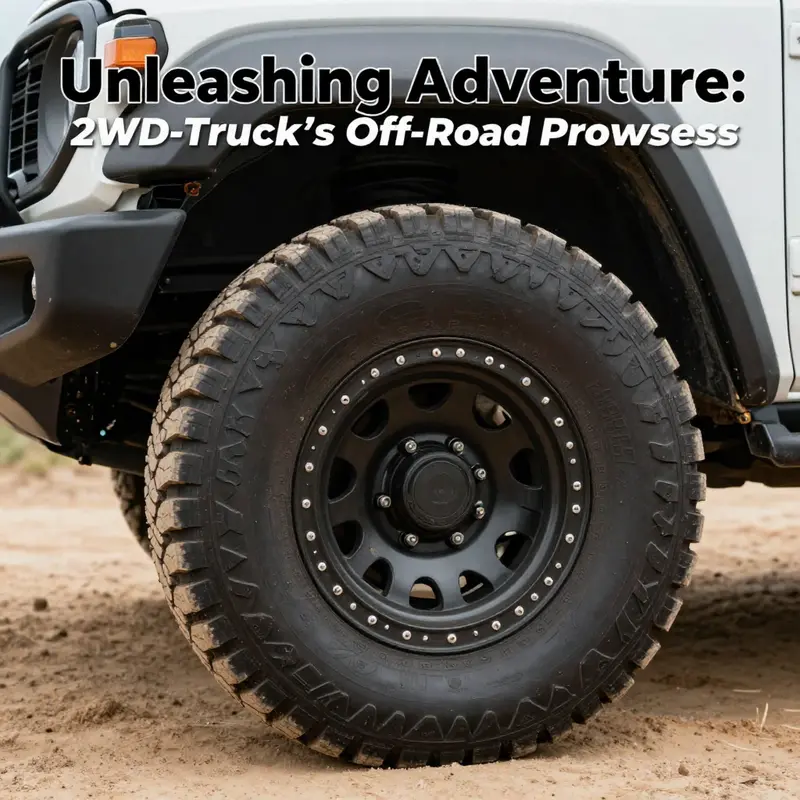
A two-wheel-drive truck can be stubborn about staying confident off-road, but tire choice and tire pressure are the levers that determine how often it proves you right rather than you fighting the terrain. In a 2WD setup, the contact patch—the only link to the ground—escapes the benefits of a powered front axle. Every inch of grip has to be earned by the tire itself, and that makes tire selection come into sharp relief. The goal is not to transform a two-wheel-drive into a true off-road machine, but to cultivate a chassis that can negotiate variables with less drama and more predictability. Read as a single, continuous practice rather than a series of gadgetry, tire strategy for a 2WD truck blends the realities of road comfort with the harsh demands of dirt, mud, sand, and rock. It starts with recognizing that there are two broad tire families designed to offset the lack of four-wheel traction: all-terrain and mud-terrain. All-terrain tires are engineered for a practical compromise. They offer quieter operation, better on-road efficiency, and longer tread life thanks to a more moderate tread pattern and siping that supports wet traction. Mud-terrain tires, by contrast, present a more aggressive stance: larger, more open tread blocks and wider voids designed to maintain grip in deep mud, loose sand, or challenging rock faces. For the typical 2WD truck owner who spends a substantial portion of time on pavement but occasionally ventures off the beaten path, the all-terrain option often emerges as the smarter, more durable investment. The balance it provides matters more when every gram of contact with the ground counts and when you still need the truck to behave predictably on the highway. That said, there are scenarios—deep clay mud, sand where the vehicle risks digging in, or slick rock—where a mud-terrain setup truly shines. In those moments, the aggressive tread can be the difference between a successful climb and a stuck fiasco. The decision hinges less on marketing and more on terrain geography and how you drive. A reasonable rule of thumb is to consider terrain usage patterns in a rough percentage. If you find yourself spending about 70 percent of your time on paved roads and the remaining 30 percent off-road, an all-terrain tire is the prudent, sensible choice. If your excursions tilt heavily toward challenging terrain—deep mud, soft sand, or rock crawls—the mud-terrain option can deliver the necessary bite. Those general guidelines are useful, but the real nuance lies in how the tire’s design translates into traction in specific conditions. All-terrain tires typically feature a balanced tread with tighter voids and siping that aids wet traction without sacrificing too much road comfort. The result is a tire that hums less on pavement, wears more evenly, and remains capable when the surface turns slick. Mud-terrain tires, conversely, employ more open channels, larger blocks, and more aggressive edges that grip loose material by actively evacuating it from under the tread. This is the type of design that conquers softness but pays a price in highway noise, fuel economy, and wear life. For most practical purposes, and especially for a 2WD truck used as a daily driver with occasional off-road forays, an all-terrain tire offers a durable, predictable, and cost-conscious path forward. That decision, though, should be paired with a disciplined approach to tire pressure management. Lowering tire pressure in off-road conditions increases the tire’s footprint and the tread’s ability to conform to irregular surfaces. The benefit is a larger contact area, which translates into improved grip on rutted trails, through soft sand, or across slick rock. The core principle is straightforward: you want the tire to deform just enough to match the terrain without compromising sidewall integrity or bead seating. A practical range for severe off-road engagement is typically around 20 to 25 psi. This reduced pressure lets the tire sidewalls bulge slightly and the tread to press into the ground with more surface area, creating more contact while you maneuver through challenging terrain. When the ground hardens or you’re back on the road, reinflate to the manufacturer’s recommended road pressure, usually in the mid-thirties psi, to restore stability, fuel efficiency, and tire life. The discipline of adjusting pressure is not a one-time adjustment but a habit you cultivate before, during, and after off-road running. The process begins with a careful check of the terrain you expect to encounter and the vehicle’s load. Heavy loads and high-speed driving require a more conservative approach to pressure because heat buildup and sidewall stress can accelerate damage. Carrying a compact, portable air compressor becomes essential, along with a reliable pressure gauge. The compressor is not just a gadget; it is a safeguard against being stranded and a tool for maintaining control when you need to maximize traction on a given obstacle. In the context of a 2WD truck, tire choice and pressure management must be paired with smooth throttle input. The last thing you want is to mount up a set of aggressive tread blocks and then power through obstacles with a heavy right foot, which can sling the tire and bottom out the chassis. Off-road traction, in any setup, is as much about how you apply power as it is about the tire’s capability. The practice is to approach soft or uneven surfaces with a controlled, steady pace that allows the tire to bite and the tread to evacuate. This is particularly important for 2WD vehicles, where abrupt wheel spin can quickly become a loss of momentum and traction. A careful approach also lowers the risk of damaging tread or bead on sharp rocks or debris that often populate off-road trails. The tire choice should also reflect the vehicle’s weight distribution. A 2WD truck, depending on its build and modifications, can have a front-biased weight bias when off-road. The effect is that the front axle does not get the benefit of a drive torque to help push through turns; instead, the steering and the load on the front tires determine how easily you maintain grip. In practice, this means choosing tires with robust sidewalls and steady handling characteristics; the tires should support the vehicle at lean angles and protect the bead from damage when negotiating obstacles. The alignment of the wheel geometry becomes part of this discussion as well. Unbalanced wear can lead to unpredictable steering and reduced grip, especially on uneven off-road surfaces. Ensuring that your alignment is within tolerance keeps the contact patch correctly oriented relative to the terrain. This is not an extended ritual but a straightforward maintenance discipline that pays off in predictable behavior. The interdependence of tire choice and the rest of the truck’s systems is an important consideration. A vehicle that has been lifted or altered in suspension or ride height changes the contact patch’s behavior in ways that can either help or hinder grip. When lifting a 2WD truck to gain ground clearance, you often simultaneously alter weight distribution, steering response, and how the tire deforms under load. In such cases, tires with a slightly stronger sidewall and a more forgiving footprint can help maintain confidence across a range of terrain. Reading about maintenance fundamentals and how components interact can illuminate this decision. For those who want a broader maintenance framework that complements tire choices, a solid guide such as Mastering Diesel Mechanics: Your Step-by-Step Path to Success can provide practical, field-tested insights that apply across a wide spectrum of off-road readiness. Those perspectives emphasize how keeping the engine, fuel system, and drivetrain in good shape supports traction when you are navigating tricky surfaces at the edge of grip. Beyond the tire and pressure conversation, the practical execution of off-road readiness includes a few safety-minded habits that keep you moving. Regular inspection becomes a ritual: check tread depth, scan for cuts or bulges, and confirm that the bead seats properly, especially after deflating or inflating. A puncture or bead failure on uneven ground becomes a serious safety risk, so err on the side of caution and perform the checks with the tires cool. The goal is to maintain a consistent and predictable interface with the surface, not to chase every new gadget or a single optimal setup. The truth is that a well-chosen tire with disciplined pressure management, backed by careful weight distribution and alignment, forms the backbone of off-road capability for a 2WD truck. This approach recognizes the 2WD constraint while exploiting what tires can do best: shape traction through contact, conform to terrain, and sustain control through variable conditions. As you prepare for a trip, a mental checklist can help you stay aligned with your tires’ capabilities. Determine your typical terrain, set a target pressure range based on that terrain and load, and carry the tools to adjust pressure on the fly. Inspect the tires for any early warning signs of wear, and keep the driving style adaptive to the surface rather than forcing the truck to act like a vehicle designed for much more traction. In this way, tires and pressure become not a liability but a trained, responsive system that yields more consistent performance from a 2WD platform. The discussion about tires and their management could stand alone as a detailed guide, but the true strength lies in the integration with the rest of the truck’s modifications and the driver’s approach. The combination of tire choice, pressure discipline, and careful handling can significantly improve off-road performance without compromising daily usability. For the off-road enthusiast who wants to balance on-road comfort and off-road capability in a 2WD truck, the path is clear and pragmatic: select an all-terrain setup if your mix leans toward road use, or a mud-terrain option if your excursions demand extreme grip. Then, learn to modulate pressure with terrain, load, and speed, and keep your alignment and suspension in harmony with those choices. In this integrated practice, tires become the decisive factor that elevates a 2WD truck from a paved-lane cruiser to a more capable partner on the trails. External resource: https://www.tirerack.com/tires/tiretech/techpage.jsp?techid=194
Fortress on Four Wheels: Protective Armor Strategies for a Durable 2WD Off-Road Build
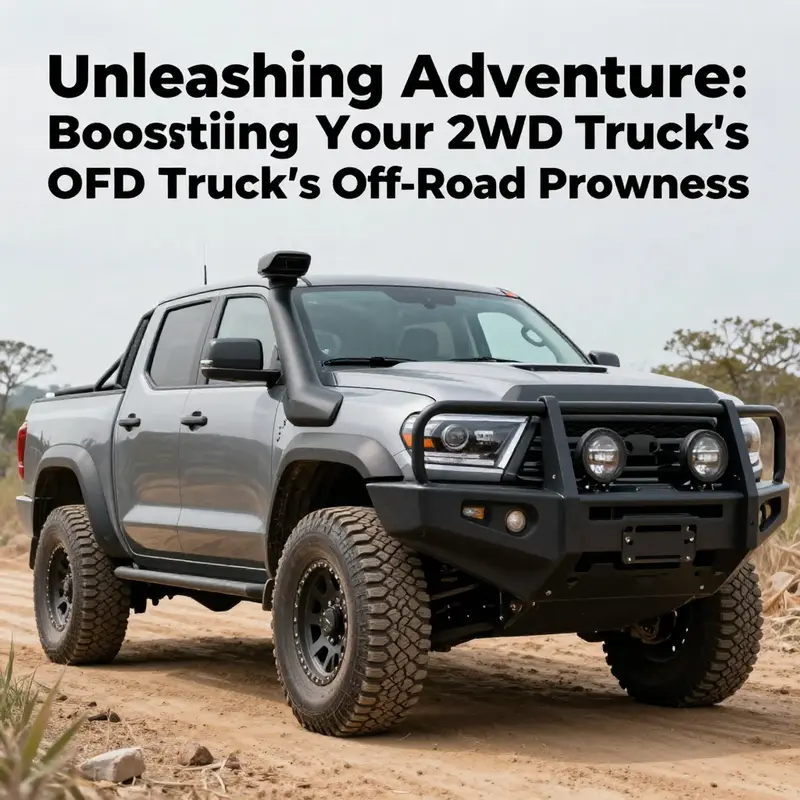
Off-road dreams for a two-wheel-drive truck hinge on more than power and tires. When the trail turns rough, the chassis becomes your primary shield. Armor isn’t merely cosmetic; it changes the risk calculus on every rock, root, and rut. On routes like Lu-Ya, where sharp gravel bites, steep sections demand careful line choice, potholes appear in abundance, and rockfall is a constant threat, a proper armor system can extend trips and keep you rolling. This chapter delves into the essential protective upgrades that transform a 2WD platform from curious traveler to reliable trail partner. You’ll see how coverage, material strength, and thoughtful design interplay to guard the heart of the truck—the engine, transmission, transfer case, differential, and fuel system—while preserving ground clearance and predictable handling. The goal isn’t to turn a 2WD into a 4WD; it’s to build a shield that reduces damage, slows the rate of wear, and makes the vehicle a confident participant on demanding backcountry lanes.
The most fundamental upgrade is full-coverage underbody armor. True protection starts beneath the frame where rocks, branches, and uneven terrain can wrench the oil pan and dent vulnerable housings. A robust skid plate system uses high-strength materials such as 8 millimeters of aluminum-magnesium alloy or high-tensile steel with yield strengths exceeding 500 MPa. These plates should extend across critical areas—not just the main engine sump, but also the transmission case, transfer case, and differential housings. The value of this approach is not merely in resisting single-episode impacts; it is in maintaining oil integrity, lubrication paths, and the alignment of powertrain components after jarring landings. When a plate is properly mounted to a rigid portion of the frame, it can deflect energy that would otherwise chase a brittle, high-cost repair later on.
A well-conceived armor set also guards the fuel system. A reinforced fuel tank guard built from an alloy-plastic composite offers a forgiving interface between the tank and obstacles. The concept here is energy absorption and puncture resistance, with a design that allows for heat dissipation and debris deflection. The Lu-Ya route emphasizes a corridor of shale and gravel that can puncture or crack a vulnerable tank if left exposed. An armoring solution that buffers impact and shields vulnerable lines reduces the chance of leaks and fuel loss on long, remote detours. In practice, these guards must be compatible with venting and fill procedures, and they should preserve service access for inspections and potential field repairs. The last thing you want is a guard that severs a hose or blocks a vent during a lunch stop or a late-night bivouac.
Side protection rarely gets as much air time as underbody armor, yet it plays a dual role for a 2WD truck. Rock guards and reinforced sidesteps provide a barrier against side-scrapes and scuffs on narrow trails, but they also function as a practical emergency jack point when you need to address a tire, a stuck wheel, or a processor-driven recovery. A robust rock guard made from high-strength alloy steel shields rocker panels and sills from shale debris, brush, and protrusions that can gouge a panel and destabilize the vehicle. Importantly, these guards should not crowd ground clearance. They must blend with the sills to maintain approach and departure angles while offering a solid, repeatable mounting surface. The upshot is a chassis that can absorb lateral hits without transmitting excessive vibration to the body or steering components.
Another layer of resilience comes from underbody coatings and protective paints. A thick, elastic sealant coating—approximately 5 millimeters in thickness—applied across the undercarriage acts as a sacrificial barrier. This layer reduces corrosion from road salt, moisture, and muddy spray, and it smooths the tiny abrasions that snowball into rust if left untreated. The coating also helps to minimize wear on brake lines, exhaust hangers, and control arms by reducing drag and stone-chipping at the lowest points. While coatings don’t add structural strength, they do contribute to long-term reliability by slowing the onset of corrosion and easing cleanup after a wet, sandy, or salty trail. A complementary aesthetic benefit often accompanies this approach: the rugged, uniform appearance that signals a dedicated, purpose-built off-road ethos.
Protective body armor can be enhanced further with a dedicated protective finish on the exterior. An anti-impact, nano-composite coating can improve scratch resistance, UV stability, and chemical resilience. The practical impact of such coatings is modest in the moment, but over time they help preserve the paint and reduce the torque required to free stuck branches or rocklets from delicate panels. The value lies in maintenance intervals and the ability to keep the truck looking deliberate and capable after repeated exposures to brush and gravel. The composite’s hardness and its ability to resist abrasion translate into fewer touch-up jobs and less downtime—benefits that compound with every rugged excursion.
A crucial mindset accompanies armor installation. Off-road armor is a balance between protection and weight. Added mass alters approach and departure angles, and it shifts the team’s dynamics during climbs or descents. That means you must factor in the aft and forward weight distribution to avoid impairing steering response or accelerating wear on suspension joints. In practical terms, the best armor systems are designed to mount securely to frame rails or reinforced subframes, with attention to heat dissipation around the exhaust and catalytic converter zones. Proper torque specifications and anti-corrosion fasteners matter as much as the armor itself. A sloppy installation invites rattles, fatigue, and periodic re-tightening—none of which helps your reliability on a difficult trail.
The Lu-Ya experience illustrates why a holistic approach matters. On such routes, where rock ledges can lift a wheel and sudden transitions can twist the chassis, armor must be reliable in edge cases as well as routine bumps. It should survive a sequence of back-to-back impacts without losing alignment. The most durable installations are integrated into maintenance plans, not treated as one-off upgrades. Regular inspection after a trip becomes a ritual: check the underbody plates for bending or deformities, confirm that bolts remain snug at frame connections, verify that the coating has not chipped to expose bare metal, and ensure that fuel tank guards have not shifted and are not rubbing the filler neck or vent lines.
Beyond the hardware, protection is also a practice. Tire choice and air pressure management remain essential for maximizing traction. A well-armored truck benefits from a corresponding discipline in load distribution and driving technique. You’ll still need to pick the right line, respect ground clearance, and maintain momentum through obstacles rather than stalling. Armor gives you a margin of safety, not a free pass to reckless speed. The synergy among armor, suspension, tires, and driver judgment defines a capable 2WD off-roader. In that sense, armor is the quiet partner that enables the more obvious upgrades—suspension lifts, robust tires, and careful alignment—to deliver a practical, predictable, and repeatable off-road experience.
Ultimately, armor is not about showing off; it’s about surviving. The investment pays off when you can keep exploring rugged corridors without fear of a punctured tank, a torn oil pan, or a dented rocker panel becoming the next day’s repair job. The goal is durability that feels invisible during normal street use but becomes invaluable when the trail narrows and the terrain tests your limits. When approached with care, a 2WD truck can evolve from a casual weekend warrior into a trusted companion on challenging routes, where protection, reliability, and resilience matter most.
For readers seeking an actionable takeaway, the core idea is simple: prioritize coverage that protects the heart of the truck, select materials capable of absorbing and deflecting energy, and ensure that the install preserves ground clearance and serviceability. Combine that with thoughtful coatings and exterior protection, and your 2WD becomes a sturdier platform ready for extended adventures. The result is a vehicle that can negotiate rough lanes with a steadier ride, a lower risk of catastrophic damage, and a longer service life between visits to the shop. As you plan upgrades, remember that armor should complement—never replace—the fundamental steps of suspension tuning, tire selection, and safe driving practice. The trail is not forgiving, but with a well-executed armor strategy, your 2WD can meet it with confidence and grace.
External resource:
For a broader look at undercarriage coatings and their practical benefits, see this Car and Driver feature: Undercarriage coatings pros and cons.
null
null
Final thoughts
Your 2WD truck can be transformed into an off-road warrior with the right upgrades and enhancements. From elevating ground clearance to selecting the most appropriate tires, each modification builds upon the last, significantly boosting your vehicle’s performance on uneven terrains. As you embark on this journey, remember that safety and protection remain paramount. Invest in quality upgrades and gear, ensuring your truck—and your driving experience—remain secure while you explore the great outdoors. Adventure isn’t just for those with 4WD; it’s for anyone willing to push boundaries and elevate their 2WD experience.