

Off-road trucks are more than just vehicles; they are rugged companions built to conquer nature’s challenges. Enthusiasts know that tackling extreme terrains, from rocky trails to muddy pathways, demands more than just a standard pickup. To embark on these demanding adventures, specific modifications are not only valuable—they are vital. This article discusses the essential components that elevate any truck into an off-road powerhouse. From heavy-duty suspension systems that ensure superior handling to all-terrain tires that grip onto the toughest surfaces, understanding these components will empower adventurers to prepare their trucks to face any challenge head-on. Each chapter dives deep into these must-haves, setting the foundation for reliable performance and safety on the most treacherous trails.
Suspension as the Spine: Building a Heavy-Duty Foundation for Off-Road Mastery
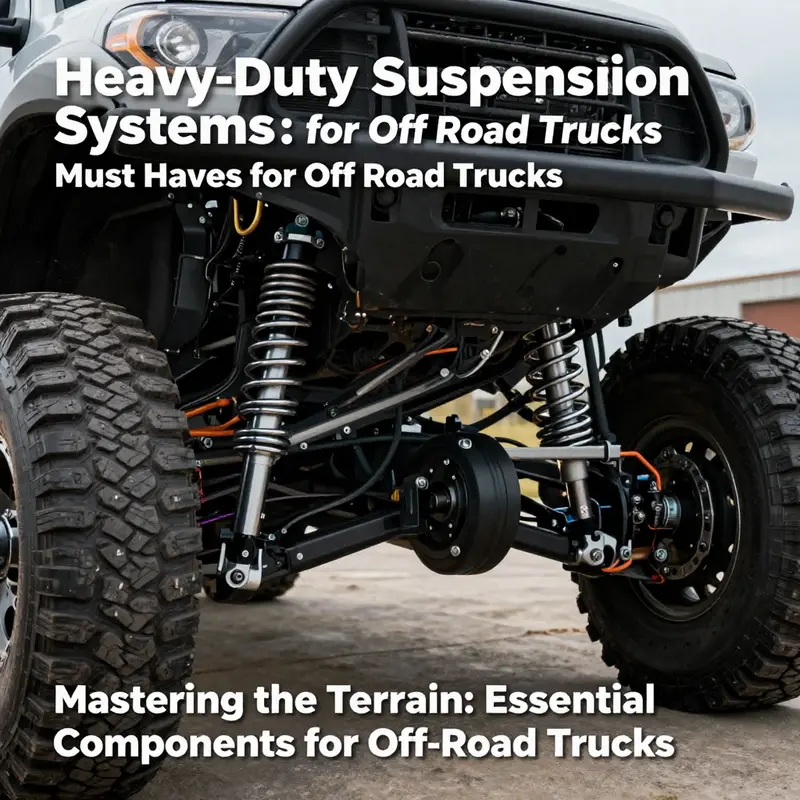
The truth about capable off-road trucks begins with what sits between the tires and the frame: the suspension. It is more than a cushion against rocks and ruts; it is the spine that translates intent into action on uneven ground. When terrain stiffens into shale, mud, or deep ruts, a heavy-duty suspension keeps wheels in contact with the surface, preserves control, and protects the drivetrain from the shocks that would otherwise ripple through the chassis. This chapter unpacks why a robust suspension is non-negotiable, how its core components work together, and how to balance performance, reliability, and longevity without getting lost in a sea of gadgets and jargon. In the end, a well-chosen suspension system threads the needle between aggressive capability and everyday practicality, turning a trail truck into a trustworthy partner on the long, unpredictable journeys that define off-roading. For those who want to dive deeper into the mechanics behind these systems, see Mastering Diesel Mechanics: A Step-By-Step Path To Success.
At the heart of any off-road build is the principle that travel speed and stability on rough surfaces come from controlled movement rather than sheer brute force. A heavy-duty suspension does not simply raise ride height; it enlarges the truck’s working envelope. More travel means the wheels can articulate around obstacles instead of banging over them. More robust springs tolerate heavier loads, preventing the axle from bottoming out and the tires from losing grip. And then there are the dampers, which govern how quickly the suspension moves in reaction to terrain. Monotube turbocharged damping systems deliver smoother heat rejection and consistent performance under repeated impacts, while multi-tube designs may offer superior heat management in longer, tougher runs. Adjustable damping adds another layer of versatility, letting the driver tailor firmness for different terrain and comfort levels for long highway stretches. The control arms, tie rods, and associated bushings form the steering and alignment backbone, keeping wheels properly oriented as the suspension moves. Durable bushings and heavier-duty control arms resist looseness over thousands of miles of rough roads and rock faces. All of these elements must harmonize with the chassis, not fight it. If the suspension is tuned too stiffly for rock gardens, the truck ignores subtle changes in the trail and transmits vibrations straight to the cab. If it is too soft for payloads or steep climbs, wheel alignment suffers and traction drops under load. The balance is achieved through careful design choices, precise installation, and time spent dialing in the suspension for the driver’s preferred terrain mix.
The practical benefits of a heavy-duty suspension extend beyond raw off-road prowess. The system’s stiffness and travel track with ground clearance directly influence how well the truck can handle steep approaches and departures. In deep ruts or on ledges, travel allows the axle to stay parallel to the surface, preserving grip and preventing the tire from binding or lifting off the ground. Adequate ground clearance reduces the likelihood of scraping the differential or exhaust components, a common concern on trail corridors crowded with rocks and exposed undercarriage hazards. When wheels remain in contact, traction is easier to maintain, especially on loose surfaces where grip is scarce. Alignment and camber remain within designed limits more reliably when the suspension is robust and properly serviced, which translates to steadier steering, shorter stopping distances, and more accurate throttle modulation during climbs or descents. In other words, the suspension does not just keep you upright; it keeps your tires doing the work of staying planted, which is where traction lives.
Durability is inseparable from performance in the terrain where off-road trucks prove their mettle. A heavy-duty suspension is engineered to absorb repeated high-impact landings, prolonged vibration, and heavy loads without succumbing to fatigue. High-strength materials—whether forged steel, heat-treated components, or structural alloys—play a big part in resisting bending, cracking, and joint wear. Reinforced bushings and heavier-duty control arms resist looseness over thousands of miles of rough roads and rock faces. This durability also translates to better longevity for related systems. When the suspension absorbs shocks more effectively, the drivetrain, frame, and axles experience reduced stress, lowering the risk of premature wear and costly repairs. The payoff is a truck that can endure longer trips between services, with fewer unplanned breaks that derail adventures. In practical terms, a well-built suspension becomes the foundation on which all other upgrades—be it larger tires, upgraded protection, or recovery gear—can operate with confidence rather than compromise.
Designing a suspension strategy for off-road use means aligning three core objectives: capability, reliability, and maintainability. First, capability must be tuned for the terrain you expect most often. A vehicle that spends a lot of time on rocky trails needs more wheel travel and a damping system that can manage abrupt compression without losing control. A truck that spends significant time in mud or loose sand may benefit from different damping characteristics and a suspension geometry that promotes wheel articulation while preventing excessive suspension squat under acceleration. Second, reliability demands that components withstand harsh environments, from grit and water intrusion to temperature swings and repeated impacts. Seals, bushings, and joints must resist wear, and the system should be forgiving of occasional misalignment that occurs after aggressive rock crawling. Third, maintainability keeps the truck ready for the next expedition. Components should be accessible for inspection and service, with straightforward replacement paths for springs, shocks, and linkages. Regular maintenance—checking mounting bolts, inspecting joints for play, and verifying bump-stop clearance—extends the life of the system and preserves its performance characteristics. The business of upkeep becomes a routine that saves money in the long run, because a suspension that is allowed to deteriorate quietly will bite back with unexpected handling changes and escalating wear.
Choosing the right path for a heavy-duty suspension is less about chasing the latest trend and more about matching the vehicle’s purpose, the driver’s style, and the expected terrain. For many drivers, a system that offers a generous front and rear travel combined with adjustable damping provides the most useful flexibility. The ability to fine-tune damping to firm settings on dry rocks, then soften for a long, washboard section, gives a truck a living, adaptive quality that a fixed setup cannot match. The integration with other off-road essentials becomes crucial here. A suspension tuned for traction will not shine if the tires are ill-suited to the terrain or if the 4WD system lacks effective locking differentials when grip is scarce. Skid plates and reinforced bumpers complement the suspension by protecting the undercarriage and maintaining the vehicle’s approach and departure geometry when the trail nose dives into a rock garden. A winch, though not a suspension component, becomes a practical partner for the same reason: it gives you a controlled way to recover when ground contact is compromised, preserving the suspension’s trained behavior rather than letting a stuck tire dig deeper and bend the control arms.
From a driver’s seat perspective, the human element cannot be ignored. A capable suspension invites a more confident driving style, but it also demands a disciplined approach to speed, line choice, and throttle control. A well-sorted system rewards smooth inputs, precise steering, and deliberate pacing. The result is fewer missteps and a lower risk of suspension bottoming out or causing chassis damage in tight terrain. With time, the driver learns to anticipate how chassis movement will respond to different obstacles, adjusting braking and steering inputs to stay in touch with the terrain while maintaining momentum where appropriate. In this sense, the suspension becomes a partner in exploration rather than a rigid constraint. It is the difference between a rough ride and a trail experience where flow and control are preserved, even when the path is unpredictable.
For those who want to explore deeper mechanics and practical guidance on implementing a disciplined approach to suspension upgrades, the narrative of diesel-focused maintenance and integration offers valuable insights. The resource Mastering Diesel Mechanics: A Step-By-Step Path To Success provides a grounded perspective on how to reconcile engine, drivetrain, and suspension upgrades within a holistic maintenance mindset, emphasizing methodical testing, careful installation, and conservative expectations. Engaging with the material there can help a reader translate generic principles into concrete steps that fit a specific vehicle and mission profile. As terrain and goals evolve, the suspension remains the anchor, enabling the truck to adapt without losing its core character or reliability.
Ultimately, the heavy-duty suspension is not a single part but a philosophy of how a truck lives with rough ground. It is the assurance that a vehicle can carry its load, absorb the inevitable shocks, and keep the tires on the surface where traction lives. It is the confidence to point toward a distant pass, to climb a grade with control, and to descend with predictable, repeatable behavior. It is the realization that performance is a sum of parts working in harmony—springs, shocks, arms, and bushings coordinating with tires, 4WD capability, and recovery tools to create a machine that can traverse terrain with dignity and endurance. That is the essence of a must-have heavy-duty suspension: a foundation that makes every other enhancement meaningful, and every adventure a little less uncertain. As you progress through the rest of this guide, keep this spine in mind. A truck is only as capable as the suspension that carries it, and the suspension is only as reliable as the care you give it on the trail and in the shop. If you want to compare perspectives and test data further, you can consult a broader synthesis of suspension engineering in the external resource linked here, which offers a wide view of how modern heavy-duty systems perform under extreme conditions: https://www.autoblog.com/2024/12/05/best-heavy-duty-suspension-systems-off-road-trucks.
Grip at the Edge: Mastering All-Terrain and Mud-Terrain Tires for Off-Road Trucks
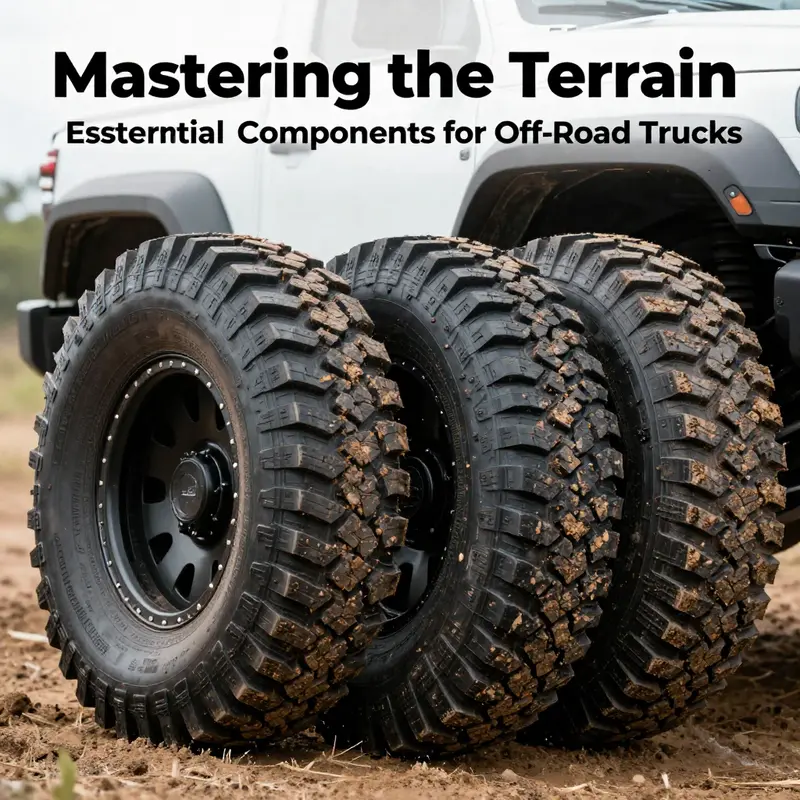
Tires are the quiet workhorses that translate power into progress when a truck leaves the smooth pavement. In an off-road build, tires sit at the center of performance, safety, and durability. They are the contact point with the ground, the first line of control across uneven terrain, shifting soils, and obstacles. The choice between all-terrain and mud-terrain tires is one of the most consequential decisions, as each tire family speaks a different language to the ground. Traction is the currency that keeps you moving and protects your investment. All-terrain tires occupy the middle ground between on road manners and off road tenacity, delivering reasonable highway comfort while offering stepped up performance for light to moderate off road opportunities. Mud-terrain tires are built for extreme off road conditions, with large blocks and deep channels designed to shed mud and maintain grip in deep ruts. Each type carries compromises: all-terrains can be louder on pavement and wear more in dirt, mud-terrains deliver maximum traction at the expense of daily comfort and faster wear.
Choosing between them hinges on your primary use. If the rig spends time on dirt roads and occasional rough trails, all-terrain tires provide a balanced solution. If you chase technical trails, deep mud, and long days off pavement, mud-terrain tires give the best grip where it counts most. Real-world performance also depends on tire pressure management, suspension setup, and protection under the chassis. The tire is part of a system; pairing the right tire with tuned suspension and a capable drivetrain yields predictable handling and lasting capability.
Seasonal and climate realities matter too. Softer compounds with deeper treads grip wet or muddy surfaces but wear faster on hot pavement. Stiffer compounds and shallower tread patterns improve highway efficiency but may struggle in sticky mud. The best drivers treat tire choice as a living decision that adapts to terrain, trips, and seasons, always balancing grip, noise, wear, and efficiency.
In the end, both all-terrain and mud-terrain tires can serve an adventurous driver well when chosen for the terrain profile and aligned with the rest of the vehicle’s setup. The goal is a cohesive package where tire, suspension, driveline, and protection work in harmony to deliver confidence, control, and resilience on trail or road. Remember: grip is earned through design, vehicle setup, and disciplined maintenance.
Traction That Transforms: Building an Off-Road Truck Around a Robust Four-Wheel-Drive System
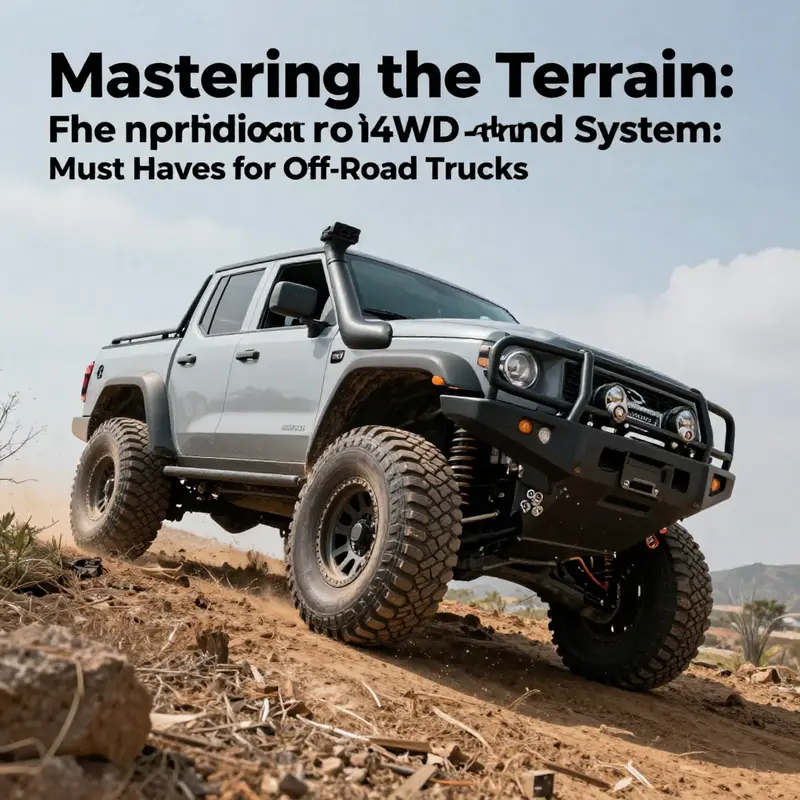
Traction is not a mere attribute of off-road capability; it is the very language by which a truck negotiates a hostile landscape. In the rough, where rock, mud, sand, and sudden ruts conspire to throw a vehicle off balance, a robust four-wheel-drive (4WD) system becomes the central nervous system of the machine. It is the mechanism that translates driver intent into controlled motion, maintaining momentum where hesitation would strand a truck and turning a stubborn obstacle into a navigable feature. When the core 4WD system is well designed, the truck feels less like a heavy tool fighting gravity and more like a precise instrument tuned to the terrain. The rest of the vehicle—the suspension, the tires, the protection undercarriage, and even the lighting—works in concert with that system to deliver not just capability, but confidence in every turn, crest, and rut. At its essence, a 4WD drivetrain takes power from the engine and distributes it to all four wheels rather than concentrating it on just two. This distribution is not a simple balance of torque to the front and rear axles; it is an intelligent, adaptable choreography that varies with surface and demand. On a slick granite slope, the system works to keep wheels from stalling, sharing torque to maintain grip rather than allowing one wheel to spin away uselessly. On loose soil or deep mud, the same architecture provides a wider net of traction, so a driver can maintain forward pressure without clutching at the steering wheel in frustration. This capability hinges on several interlocking features that, while individually familiar, must be designed and calibrated to work together seamlessly. A critical element is the low-range gear setting inside the transfer case. This gear reduction multiplies torque while reducing movement speed, which is exactly what you want when you are crawling over large rocks, negotiating a steep ledge, or pulling through dense mud. The lower gearing lets the engine pull with greater force at a controlled pace, enabling the driver to modulate power with fine precision. The transfer case becomes less about speed and more about stubborn persistence, allowing traction to be built gradually as each wheel finds grip. Without such a low-range option, a truck may struggle to begin motion or have to rely on momentum instead of torque, which can be dangerous on unpredictable terrain. Closely tied to the low range is the locking differential. A differential that can be mechanically or electronically locked forces both wheels on an axle to receive equal power, even if one wheel is perched on a rock or perched in a rut with minimal grip. In practice, locking the differential prevents a wheel from spinning away while the other wheel lacks purchase, a situation that often ends with a driver spinning tires and losing momentum. When the terrain offers mixed grip—say, a rock edge on one side and slick dirt on the other—the ability to lock the differential becomes the difference between a successful ascent and a stranded moment. It is not a feature to be used casually; rather, it is a deliberate tool that, when deployed at the right moment, multiplies the vehicle’s ability to traverse obstacles that would otherwise halt progress. A robust 4WD system also demands a durable drivetrain. The axles, driveshafts, and differentials must endure repeated impacts, flex, and the torque spikes that come from negotiating uneven ground. Off-road driving places unusual stress on components that in a street-driven pickup flow through without notice. When a system is designed with reinforced shafts, heavy-duty materials, and careful tolerances, it not only survives the abuse of rough terrain but does so with predictable response. The driver gains trust because the power delivered to the wheels does not arrive as a surprise—there is a clear relationship between pedal input, terrain, and wheel behavior. In modern applications, electronic controls augment the mechanical backbone. Traction control systems monitor wheel slip and reduce power or brake individual wheels to maintain grip. Hill descent control can automatically modulate speed on steep grades, allowing drivers to focus on steering rather than the micro-management of brake and throttle. These electronic aids are not a substitute for skill; they are force multipliers that help keep traction within the driver’s intended path. They also provide a layer of safety in environments where the line between getting through and getting stuck is razor-thin, such as a narrow forest trail or a slick rock face after a rain. Yet these systems function best when the mechanical platform is sound: a transfer case that engages cleanly, a differential that can lock reliably, and a drivetrain that can sustain repeated loading without unfolding into misalignment. The interplay between the 4WD system and the vehicle’s suspension is another crucial consideration. A robust 4WD setup often travels with an upgraded suspension that offers more wheel travel and better articulation. When the suspension can respond to terrain with adequate droop and compression, the tires remain in contact with the ground longer, maximizing traction. Increased wheel travel helps absorb the impact of rocks and ruts, reducing the tendency of the chassis to bounce or bottom out. Suspension work and 4WD capability are mutually reinforcing; a system that can place power to a wheel that has a solid contact patch against the ground will outperform one that cannot maintain traction even if it has substantial torque. The aim is to balance travel with stability, avoiding a setup that is so soft it wallows on a slope or so stiff it cannot keep the tire pressed to the surface. It would be easy to focus solely on the mechanical and electronic facets, but the human element remains central. A knowledgeable driver understands when to engage low range, when to lock diffs, and when to switch modes that may affect yaw, throttle response, and braking bias. The best 4WD systems deliver a sense of predictability that translates into driver confidence. This confidence reduces the cognitive load required to read the terrain and decide where to place wheels, how to approach a rock ledge, or when to pick a line that avoids a rut filled with water. When the system, suspension, tires, and driver operate in harmony, the truck becomes not just a vehicle but an extension of the driver’s will, capable of navigating landscapes that would overwhelm a lesser setup. Maintenance and regular inspection are the quiet guardians of this capability. A 4WD drivetrain depends on clean fluids, properly torqued fasteners, and timely checks of CV joints and driveshafts. The transfer-case oil should be changed at intervals that reflect the driving environment, not just the miles on the odometer. Worn boots, torn axles, or loose mounting points undermine the reliability of the entire system. It is not glamorous work, but it is essential work, and it should be treated with the same respect as the more visible parts of the vehicle. The toughest trails find the weak link, and the cost of neglect is often a roadside encounter with a rock outcropping or a stubborn mud pit rather than a victorious descent of a hill with control and composure. As conversations about off-road readiness mature, a holistic view emerges. The 4WD system is not merely a feature stacked onto a truck; it is the spine that unites power, control, and resilience. When paired with suitable tires, protected undercarriage components such as skid plates, and complemented by reinforced bumpers and recovery gear, it enables a level of capability that makes challenging trails approachable rather than intimidating. The objective is not to chase extremes but to create a dependable platform that can adapt to varied terrains while keeping occupants safe and comfortable. In practice, a thoughtfully configured 4WD system helps a driver maintain momentum, pick safer lines, and recover gracefully from slide or stall. It is a testament to how engineering choices, when aligned with practical off-road needs, can transform a truck from a utility vehicle into a reliable partner for exploration and work alike. For those who want to deepen their mechanical understanding and sharpen maintenance habits, there is value in learning the fundamentals of diesel and drivetrain mechanics. A guided, step-by-step exploration of diesel mechanics can provide practical, behind-the-scenes knowledge that translates directly to real-world reliability on rugged trails. See the detailed path here: Mastering Diesel Mechanics: Your Step-by-Step Path to Success (https://dirtantrucks.com/mastering-diesel-mechanics-your-step-by-step-path-to-success/). While the 4WD system sets the stage, the ongoing maintenance and hands-on understanding ensure that performance is sustainable across seasons and miles of rough terrain. And for a broader look at how the four-wheel-drive concept translates into controlled, confident handling, a deeper dive into external resources can illuminate the mechanics behind traction and torque distribution. For a deeper technical explanation of how a modern 4WD system functions in challenging environments, consult Car and Driver’s detailed explainer on 4WD systems: https://www.caranddriver.com/trucks/jeep/wrangler/features/a30826719/jeep-wrangler-4wd-system-explained/.
Shielding the Trail: How Skid Plates Turn Risk Into Reliability for Off-Road Trucks
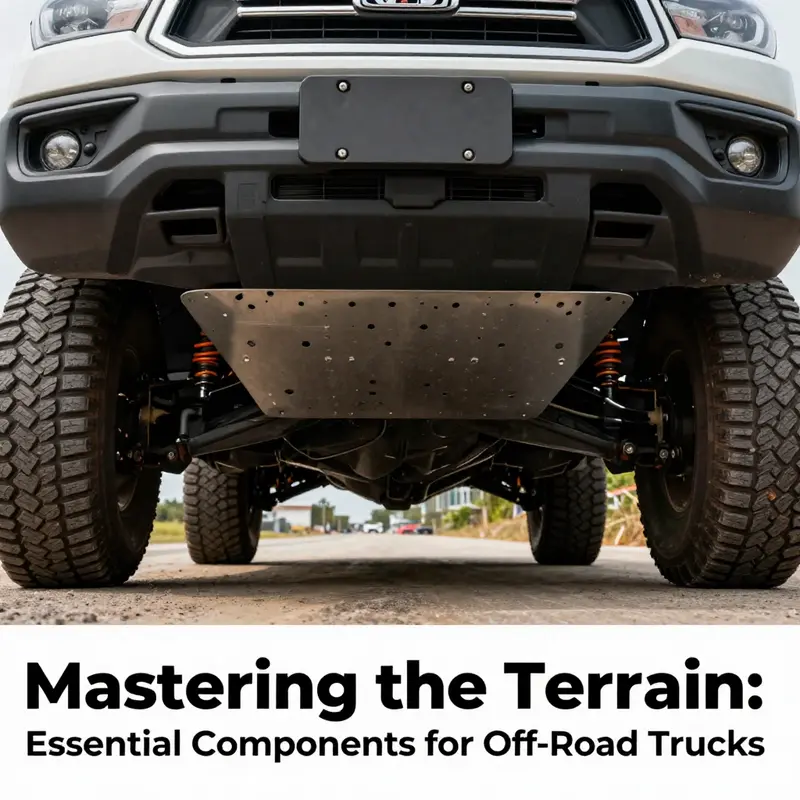
The off-road world tests more than just horsepower. It tests metal, geometry, and judgment. A misplaced rock, a hidden rut, or a protruding root can turn a straightforward climb into a near-mission failure if the undercarriage isn’t prepared to take the strike. This is where skid plates and undercarriage protection step in as a practical, often overlooked, cornerstone of a capable off-road truck. They act as a discrete shield, a constant companion on every trail, ensuring that the most vulnerable parts of the vehicle—the engine, the transmission, the fuel system, and the oil pan—remain protected when the terrain refuses to cooperate. In the harsh profile of demanding terrain, protection isn’t about vanity; it’s about turning risk into reliability and keeping the truck moving when the trail gets nasty.\n\nProtection begins with a simple premise: the undercarriage is the vehicle’s quiet liability. A well-designed skid plate deflects and disperses the energy of impact, turning a potential point of failure into a controlled, survivable encounter. Hitting a rock can bend a pan or pinch an oil line; losing oil pressure on a rocky slope is a costly, time-draining affair. A plate that covers the critical regions—oil pan, transmission casing, engine oil sump, fuel lines, and cross-members—acts like a guardrail above the most valuable components. When a wheel drops into a rock alcove, the plate takes the brunt so the engine can keep spinning, the transmission can stay filled, and the drivetrain can march forward rather than halt in a vulnerable position. This kind of protection translates directly into fewer tow-truck calls, fewer roadside repairs, and more opportunities to explore, because the truck is less prone to strand you mid-adventure. The peace of mind that comes with that reliability is not mere sentiment; it’s a practical multiplier for time, budget, and opportunity.\n\nThe value of skid plates goes beyond simply stopping a puncture or a dent. In off-road environments, a damaged engine oil pan or transmission pan is more than a repair bill; it’s a risk to long-term durability. Potholes, fallen branches, and uneven rock shelves are common on rough trails, and the plates’ job is to shield the components from multiple hits over a long day. When the undercarriage is protected, the truck can sustain higher speeds on challenging terrain, with less concern about the long-term consequences of a misjudged line. This isn’t about turning a rugged trail into a test track; it’s about making a rough route a repeatable experience. Reliability becomes a measurable trait—less downtime, more miles, and more confidence behind the wheel.\n\nA critical consideration in choosing skid plates is materials and fit. The recommended baseline often cited in off-road communities is a robust 3mm steel plate. It represents a pragmatic balance: thick enough to resist punctures and gouges, yet not so heavy that it drags the ground or saps fuel efficiency. The right thickness must be paired with a design that matches the vehicle’s geometry. A plate designed for a specific model—such as a Ford Ranger T6 or a similar platform—will shield the exact contour lines that matter most. Fitment matters as much as material. A plate that overhangs critical points or interferes with the suspension or steering linkage can create new problems even as it prevents old ones. The best options cradle the front cross member, oil pan, and transmission pan with minimal intrusion and a precise cut pattern that follows the vehicle’s undercarriage like a tailored suit. The installation should feel like a straight-forward upgrade rather than a retrofit struggle; clean bolt holes, pre-drilled mounting points, and clear hardware lists help keep the process accessible to enthusiasts without sacrificing rigidity.\n\nPractical design considerations also shape a skid plate’s effectiveness. A plate must offer strong edge protection to absorb sharp impacts and resist spalling when it encounters jagged stones. The joint areas—where plates meet each other or where a plate meets the body—need robust fasteners that won’t loosen with vibration. A well-engineered plate is not just a sheet of steel slapped under the frame; it is a carefully engineered shield that accounts for ground clearance, approach angle, and drainage. If a plate is too thick or too bulky, it can reduce clearance and hinder articulation on rock gardens. Conversely, a plate that is too thin or poorly vented can crack or deform under repeated strikes. Therefore, the best protection systems balance rigidity with a rational level of clearance, allowing the truck to wade through debris and still clear an obstacle without snagging on the next rock shelf.\n\nEase of installation is another practical lens through which to assess skid plates. For many owners, the right product should arrive with a straightforward mounting plan, a complete set of hardware, and diagrams or instructions that respect the user’s time and skill level. A well-fit plate can be installed with basic tools, and it should be removable for inspection and maintenance without a battle. The best designs also consider serviceability. For instance, a plate that can be removed quickly for oil changes or inspections without dismantling half the undercarriage makes routine maintenance easier and reduces the temptation to skip protection during a busy season of travel. The reliability payoff from a simple, repeatable installation process is substantial; it keeps the protection functional year after year rather than gathering dust in a garage corner because it was too onerous to maintain.\n\nSourcing is a practical reality of adding reliable undercarriage protection. The market features a spectrum of options—from factory replacement panels to aftermarket systems offered by global suppliers. When evaluating a skid plate package, buyers should consider material quality, thickness, fitment accuracy, and the ease of installation. The most robust options are designed for specific vehicle models, ensuring that the protective shield aligns with the vehicle’s contours and does not require heavy modification. For those exploring international sources, platforms that connect buyers with manufacturers can be a valuable resource, but due diligence is essential: verify the plate’s coverage, inspect mounting hardware, confirm edge finishes are smooth to prevent debris snagging, and review installation guides or videos before purchase. The process is about ensuring you get a plate that truly protects the critical undercarriage rather than a generic shield that offers only partial coverage.\n\nBeyond the material and fit, there is a broader philosophy at play. Skid plates are an invitation to extend your vehicle’s capabilities with fewer compromises. They encourage a more intentional approach to line selection and speed management, especially on rock-strewn trails where a misstep can escalate quickly. In this sense, protective plating changes not just the vehicle’s physical defenses but the driver’s approach to terrain. It lets you push a little farther, knowing that your most vital components are shielded from the consequences of hard, unanticipated contact. That peace of mind matters when you’re miles from the paved road and daylight is dwindling. It’s a practical, tangible upgrade that complements the other must-have systems—heavy-duty suspension, capable tires, a solid 4WD setup, locking differentials, and the recovery tools that keep you moving when the best route is not obvious.\n\nThe discussion of protection must also acknowledge the role of maintenance and inspection. No plate is a permanent talisman against damage. After a long day on rugged ground, a careful post-run check is wise: inspect the edges for cracks or gouges, confirm bolts are tight, and verify there is no interference with skid plate movement during suspension articulation. A plate that shows signs of significant wear can indicate where the undercarriage is most exposed or where the terrain has been particularly aggressive. Addressing these findings early preserves the vehicle’s robustness and minimizes the chance of a surprise failure on the next expedition. This practical discipline dovetails with broader vehicle care practices and keeps your off-road truck resilient across seasons and miles.\n\nFor readers who want to connect maintenance discipline with broader mechanical fundamentals, consider this practical cross-link: Mastering Diesel Mechanics: Your Step-by-Step Path to Success. It’s a reminder that protection is part of a larger system of reliability. A well-protected engine and drivetrain rely on clean fuel, proper lubrication, and regular inspection to stay in peak form. Skid plates buy time and reduce the risk of catastrophic punctures, but the ongoing health of the vehicle still hinges on routine maintenance and attentive driving. When protection is integrated with good maintenance habits, a truck becomes a durable companion for remote trails and long weekends alike.\n\nIn the end, skid plates and undercarriage protection are about giving you more confident miles with less drama. They are a straightforward, practical upgrade that aligns with the broader goal of off-road preparedness: to traverse challenging terrain with greater assurance that the vehicle will endure the journey. The choice of material, the precision of fit, the simplicity of installation, and the discipline of maintenance together define how effectively these plates perform. When done right, they do more than defend metal; they defend your plans, your time, and your willingness to chase the next horizon. The trail is unpredictable, but with a well-protected undercarriage, you can face that truth with a steadier hand and a longer horizon.\n\nExternal resource: https://www.alibaba.com/product-detail/Skid-Plate-Engine-Protect-Plate-Bash-Plate_1600728945829.html
Radiant Readiness: Essential Lighting for Off-Road Trucks and the Edge It Gives on Any Trail
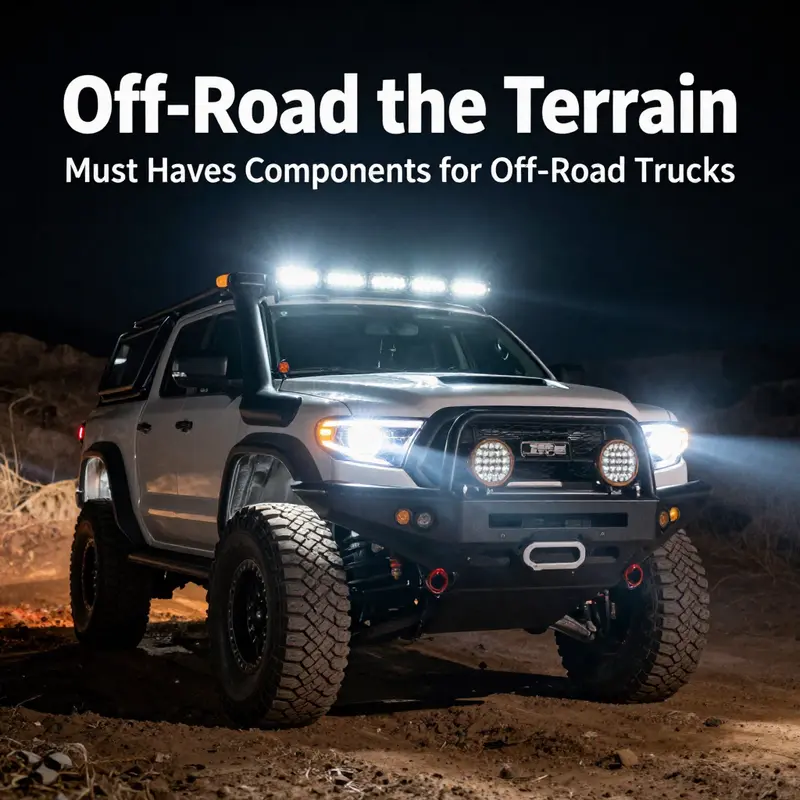
Lighting is more than a convenience on open trails; it is a critical element of performance, safety, and resilience that runs parallel to every other must-have a truck carries into rough terrain. Just as a heavy-duty suspension, reinforced tires, and a robust four-wheel-drive system shape a vehicle’s capability, a well-planned lighting setup shapes how clearly the driver perceives the way ahead, detects hazards, and signals intentions to others on the trail. The right lamps do more than illuminate the path; they extend visibility, reduce fatigue, and enable quicker, more confident decision-making in environments where a split-second choice can mean the difference between a smooth passage and a costly scrape. In this chapter, the discussion centers on lighting as a strategic component of off-road readiness, one that integrates with the truck’s overall platform to keep both machinery and operator in a safer, more capable state on daytime ridges, moonless canyons, and everything in between.
At the core of any lighting plan is brightness, but brightness alone is not enough. Off-road conditions demand a balance of long-range clarity and close-range detail. A high lumen output supports distant visibility across rocky gullies or desert flats where obstacles loom far ahead but must be identified well before they become threats. Yet along narrow trail sections, washouts, or whoops, the driver benefits from diffused, close-in illumination that reveals ruts, roots, and debris without washing out the entire scene. Therefore, the most effective setups employ a mix of beam patterns that can be tailored to the terrain. A spot-focused beam provides the long-range reach needed for high-speed, open-country sections, while a flood or wide-beam pattern enhances near-field visibility for slow, technical sections. When used in combination, these patterns create a flexible lighting matrix that the driver can adapt as the trail demands, rather than a single static light that only serves one scenario.
Durability is the other pillar of off-road lighting. The harsh conditions that trucks face—dust, mud, vibration, and abrupt temperature changes—demand housings and lenses engineered to endure. Materials such as aircraft-grade aluminum for housings and impact-resistant polycarbonate for lenses are not optional luxuries; they are necessities that prevent housing deformation, lens cracking, and degraded light output over time. A minimum IP67 dust and water resistance rating is a baseline in the roughest environments, ensuring the lights survive immersion during water crossings or deep mud without internal corrosion or failure. Beyond ingress protection, rugged construction must withstand constant vibration and jolts from rock-studded trails, which means secure mounting, reinforced seals, and fasteners that won’t loosen under impact. In other words, a light that looks strong on a showroom shelf must perform for years in the field.
Thermal management is the invisible keeper of reliability. LED-based lighting systems generate heat, and without effective cooling, efficiency drops, color shift occurs, and the light’s lifespan can shorten. Advanced thermal strategies—such as integrated heat sinks, optimized airflow paths, and thermally conductive housings—keep light output steady even during extended runs. A light that can sustain high duty cycles without dimming is essential when night navigation becomes a multi-hour test or when trail scouting and recovery work demand continuous operation. The goal is to maintain consistent brightness and color temperature from the first mile to the last, not to endure a sudden drop in performance as temperatures rise.
Optical design shapes how drivers interpret the environment. The choice between spot, flood, or combo beams is not arbitrary; it reflects real-world needs. A long-range spot beam is invaluable when maintaining speed on open stretches or spotting distant obstacles that might be hidden by undulating terrain. A flood beam dominates during close-in trail navigation, where reading the texture of the ground and spotting sudden hazards like a hidden rock or a drop-off matters most. Combo configurations blend both approaches, providing a balanced field of view that remains useful as terrain transitions from open to technical. The ability to modulate between modes—whether through manual switch, automatic sensing, or selectable dimming—adds a layer of versatility. It isn’t about more light; it’s about more useful light, delivered in a way that aligns with the driver’s immediate priorities.
Installation and integration considerations matter just as much as the light output. Lights should harmonize with the vehicle’s electrical architecture, not strain it. Compatibility with the truck’s wiring system, power demands, and protective circuits ensures reliable operation without compromising other critical systems. A well-designed installation also respects balance and aerodynamics; mounting positions on the bumper, roof, or behind the grille should maximize the driver’s field of view while minimizing glare for oncoming traffic and the driver’s own eyes during nighttime driving. A properly engineered harness, weather-sealed connectors, and secure mounting hardware prevent loose cables and rattling, which could create distracting noise or lead to accidental damage in rough terrain.
Beyond hardware, the lens of lighting is the law of regulation and responsibility. Lighting must stay within safety standards that govern glare, light distribution, and color temperature. The objective is not only to illuminate the trail but also to minimize glare that could blind oncoming vehicles or confuse pedestrians and trail partners. Compliance with recognized standards ensures that lighting is predictable, safe, and lawful in diverse jurisdictions, a crucial consideration for any off-road adventure that crosses borders or enters protected areas.
The decision to invest in better lighting goes hand in hand with choosing durable, well-wired, and performance-focused equipment. It is a choice to prioritize a driver’s ability to perceive terrain accurately and to respond with confidence. It is also a choice to invest in equipment that can withstand repeated exposure to dust and mud, vibrations from uneven surfaces, and the high heat of a desert sun or a cold, damp forest night. For this reason, the lighting system deserves thoughtful planning as part of the vehicle’s broader off-road package. When the suspension is tuned for control and the tires are ready to bite, the eyes of the truck—its lights—should be prepared to reveal every terrain nuance.
From a practical standpoint, one of the most valuable aspects of a robust lighting setup is its adaptability. Drivers can reconfigure their approach depending on the trail. On a sandy wash with a distant horizon, the long-range capability of a spot beam can help avert sudden drops or hidden ditches. In a rocky, forested sector, the benefit shifts to a bright, uniform flood that makes shallow ruts and loose stones obvious. On a misty or dust-filled section, higher-quality optics with good beam control reduce stray light and improve contrast, helping the driver discern texture and depth rather than chasing ghosts in the glare. The driver’s awareness is elevated not merely by more light, but by the right light—one that reveals what matters without creating new distractions.
The mindset of lighting as a core system also extends to maintenance and reliability. Regular inspection of mounts, seals, and connectors prevents the kind of corrosion or loosening that can leave a traveler stranded after a long day. Cleaning lenses to remove buildup from mud and dust ensures consistent brightness and color rendering. Periodic testing of all modes and dimming levels confirms that the system remains responsive and predictable, a quiet confidence that becomes essential when the trail tightens around night and the truck becomes a small, bright island in a wide landscape.
Choosing a lighting system is not about chasing the most lumen or the brightest glow alone. It is about building a balanced, durable, and adaptable setup that harmonizes with the vehicle’s other must-haves and fits the driver’s specific off-road philosophy. It is about recognizing that the light, like the suspension and tires, has a direct impact on what the truck can achieve and how safely it can reach the farthest corners of a map. In the end, radiant readiness is the edge that lets a driver push a little farther, see a little clearer, and return with a story that starts the moment the first light pierces the night.
External reference for further technical guidance on off-road lighting standards and design: https://www.offroadlighting.com/
Final thoughts
In conclusion, preparing your off-road truck for rugged terrain encompasses more than mere equipment; it is about forging a vehicle capable of overcoming nature’s most formidable challenges. Each essential component discussed—the heavy-duty suspension system, specialized tires, reliable 4WD system, protective skid plates, and superior lighting solutions—plays a crucial role in ensuring performance, safety, and durability. By investing in these must-haves, off-road enthusiasts, adventurers, and racers can experience the thrill of conquering the wilderness confidently, pushing the limits of their trucks to new heights. Now is the time to assess your vehicle and reinforce it with these components, turning it into a true off-road beast.