
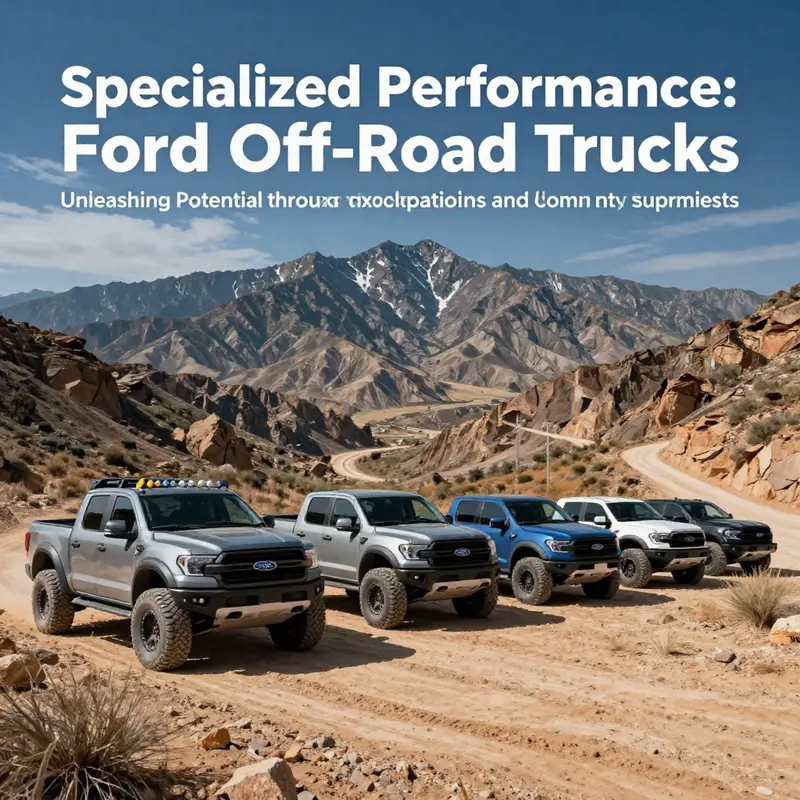
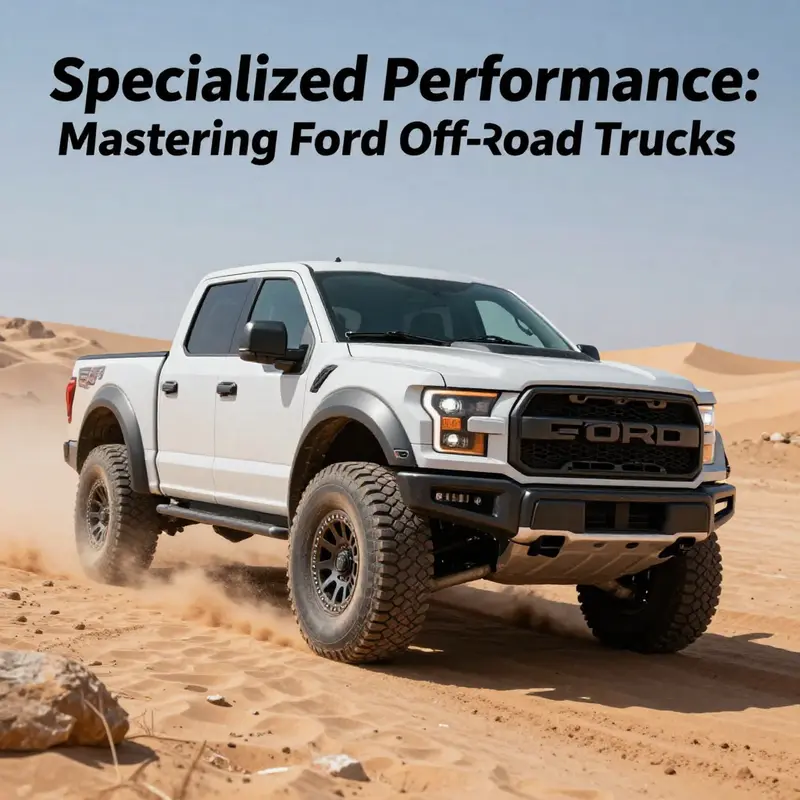
In the world of off-road trucks, few things resonate with enthusiasts like the rugged spirit of Ford’s off-road models. With a robust lineup, particularly the F-150 series, passionate experts and communities have emerged, dedicated to enhancing these vehicles. From tuning and performance upgrades to specialized parts and adventurous modifications, companies like Roush Performance and Baja Designs stand at the forefront. Coupled with thriving online forums and the acclaimed Ford F-150 Raptor, this article uncovers how enthusiasts can elevate their Ford trucks into true off-road warriors, highlighting the importance of expertise, community, and innovation in this exhilarating landscape.
Desert Tracks, Tuned Circuits: How Ford Off-Road Trucks Found a Specialized Niche Through Craft, Community, and Performance
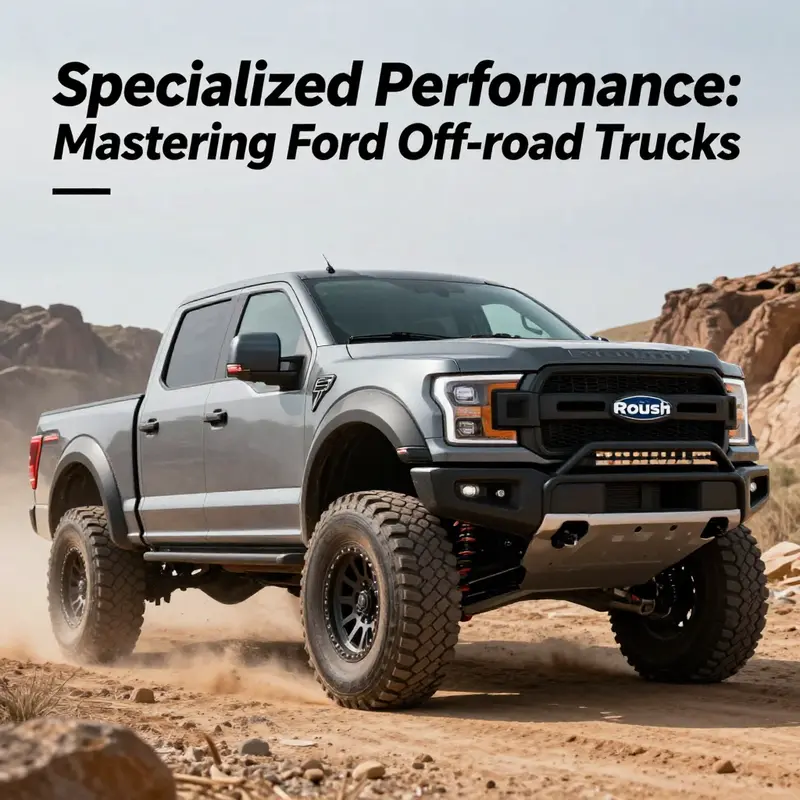
A subculture has grown around Ford’s off-road trucks, a niche where builders, drivers, and dreamers rescue a pickup from the ordinary and remap it for dirt, rock, sand, and rough desert trails. It isn’t driven by one company alone, but by a network of manufacturers, tuners, and enthusiasts who treat the pickup as a platform rather than a single product. The result is a specialized ecosystem where performance gains are achieved not merely through raw power, but through careful choices in suspension, chassis, protection, lighting, and power delivery. In this world, a factory-backed performance ethos blends with aftermarket ingenuity, producing trucks that are as capable in the backcountry as they are dependable on the highway. The story of Ford off-road specialization is really a story of collaboration—between the factory staff who set a baseline of capability and the enthusiasts who push that baseline toward new extremes. It’s a story of how a single model line can become a canvas for experimentation, and how a community can formalize around the idea that off-road ability is a measurable, repeatable attribute rather than a lucky combination of parts and luck.
At the core of this specialization lies a twofold dynamic: a steady, dependable platform engineered to endure punishing terrains, and a flourishing array of customization options designed to extend that endurance into higher performance realms. Ford’s full-size pickup line provides a framework with strength, torque, and adaptability, but it is the aftermarket and the factory’s performance-minded partnerships that unlock the deeper potential. Engine tuning that can wake up a recalcitrant idle and squeeze more usable power across a broad RPM range. Upgraded exhausts that balance flow with heat management, letting the engine breathe without sacrificing reliability. Suspension systems that transform body roll into controlled handling, even when the driver points toward a looming wash of rutted dirt. Brakes that don’t fade after a mile of braking into tight switchbacks. Aerodynamic kits that reduce drag on the highway while still providing needed downforce and cooling for desert runs. And protective armor and skid plates that turn jagged rock from a hazard into a negotiable obstacle. All of these elements come together in a way that makes the off-road capability of Ford’s trucks feel less like a factory spec and more like a dynamic, continually evolving skill set that owners actively cultivate.
The most visible sign of specialization is the emergence of dedicated performance programs that sit alongside the standard production line. A well-known tuning house, recognized for its long-running pursuit of power and handling within Ford’s lineup, demonstrates how an off-road-ready truck can be reshaped for greater desert stamina and rock-crawling confidence. The approach is not simply about adding horsepower; it’s about tuning the entire system to work in harmony. When a vehicle’s engine is pushed harder, the drivetrain, cooling, braking, and chassis all share the load. The result is a more coherent, durable performance envelope that still respects everyday usability. The broader lesson here is that specialization is not a single bolt-on set of parts. It is a philosophy: a way of evaluating how a truck performs in the rough, and what changes are needed at the right time to make it a reliable partner in extreme conditions.
In practice, this philosophy plays out in the real world as a balance between improvements that are visibly dramatic and improvements that are quietly essential. A lifted stance and oversized tires catch the eye and announce capability. But the more significant gains arrive from tuning that preserves a comfortable highway ride while sharpening throttle response, refining throttle mapping to keep one’s traction control from pulling too aggressively on loose surfaces, and calibrating dampers to maintain tire contact with changing terrain. You can hear the story in the conversations that unfold on enthusiast forums and in garage doors where builders trace the chain of decisions that led to a successful backcountry trip. The sense of shared learning is powerful: a new driver finds a path that someone else already tested, a fellow builder shares a technique for protecting the drivetrain before a long desert sprint, and a veteran explains how to set up the suspension for a particular kind of terrain. The end result is a living body of knowledge built around Ford’s truck platform, a repository that grows with every road trip, every race, and every day in the shop.
From a community perspective, Ford off-road specialization is less about a catalogue and more about a culture of improvement. The forums dedicated to Ford’s off-road offerings—where members dissect heat management, lift geometry, shell protection, and lighting—function as an informal college of practical knowledge. The conversations aren’t purely theoretical; they’re built on shared experiences and the honesty that comes from long days of testing in mud and dune. Owners trade stories about how a particular set of springs fairs under heavy loads on rocky trails, how a given wheel offset alters steering feedback on washboard roads, or which protective plate configuration keeps vital components safe when the rocks knock back. This is where the idea of specialization becomes personal: the truck you drive from your driveway to a remote trailhead is the same truck that you’ve likely spent weeks or months upgrading, adjusting, and tuning for your own style of terrain and your own tolerance for risk.
A key part of this ecosystem is the relationship between Ford as a manufacturer and the people who customize its trucks. Ford’s own performance-oriented programs, while distinct from a pure aftermarket approach, set benchmarks for capability and engineering discipline. They establish the baseline for what the platform can handle with a degree of confidence that a buyer can trust after months of casual use and hard miles. That baseline is then expanded through aftermarket innovations that extend the truck’s capabilities into more specialized domains—be it desert racing dynamics, rock crawling precision, or endurance endurance on long, technical trails. The dialogue between factory engineering and aftermarket ingenuity is not a zero-sum encounter; it is a collaborative process that clarifies what a vehicle can do and where further improvements make sense. Where the factory might curate a broad, reliable performance envelope, the tuner translates that envelope into a tailored, mission-specific capability. The two tracks converge in the hands of the owner who treats the truck not as a finished product but as a platform that can be reimagined in the service of adventure. In this, the specialization becomes a living practice rather than a fixed product category.
Importantly, the specialization is not limited to power and speed. It encompasses durability, weight distribution, cooling, lighting, and even the ergonomics of driver interaction. A good off-road setup is a thoughtful blend of protective elements and performance tools. Skid plates and rock sliders protect crucial components while remaining accessible for maintenance. High-output auxiliary lighting expands the usable window after dusk, raising the driver’s confidence at low speeds and high speeds alike. A well-chosen exhaust tone serves to improve throttle response and heat reduction without becoming intrusive in daily commuting. A refined interior layout reduces driver fatigue on long treks, with controls placed where they make sense during a demanding ascent or descent. In short, specialization in Ford off-road trucks is a holistic pursuit; it requires attention to the mechanical, the logistical, and the human factors that influence how a vehicle behaves when the road ends and the trail begins.
The influence of this specialization can be felt in the way people approach modifications. Rather than treating a truck as an opportunity for a single, dramatic upgrade, many builders map out a phased plan: they identify a core set of changes that unlock a reliable baseline capability and then gradually layer more refined improvements as experience grows. This is partly an economy of risk management—understanding what a platform can endure without compromising reliability—and partly a craft tradition that values the long game. A novice learns the importance of cooling and heat soak during a desert run, then adds a calibrated intake and exhaust strategy to optimize airflow. An experienced driver recognizes how a certain suspension geometry will respond to both payload and terrain, and then designs a ballast plan to balance weight distribution for ultimate traction. And in every case, the modifications are measured against real-world outcomes: driveability, predictability, and the ability to complete a challenging route with a margin of safety.
The Ford off-road specialization also raises interesting questions about the relationship between stock capability and customized performance. Some owners maintain stock-grade reliability and then invest in mission-specific gear that doesn’t push beyond the limits of the platform. Others chase a broader, more aggressive approach, accepting increased maintenance demands in exchange for greater off-road prowess. The decisions are guided by clear criteria: the intended terrain, the availability of repair resources, and the owner’s willingness to engage with the vehicle as a temporary laboratory rather than a fixed transportation solution. In practice, the most compelling builds find a balance that preserves road manners while enabling a meaningful step up in off-road competence. They don’t rely on a single miracle upgrade but on a disciplined sequence of improvements that, together, yield a practical, capable, and repeatable system.
Community and factory efforts together also influence the way this specialization is perceived by potential buyers. When a buyer encounters a forum thread about a particular approach to rock crawling or desert racing, they are drawing on a collective memory of what has worked and what hasn’t. The shared stories become a kind of experiential curriculum, enabling newcomers to avoid common missteps and to imagine configurations that fit their own ambitions. This communal knowledge, combined with the credibility that comes from factory-backed performance projects, creates a space where specialization feels accessible, not esoteric. People can appreciate the idea of a high-performance off-road pickup without having to build it themselves from scratch; they can also recognize that there is room to grow, and that the best results come from a blend of official engineering and personal experimentation. The result is a vibrant, practical culture in which the Ford off-road truck is not merely a vehicle but a platform for ongoing learning and achievement.
If one looks closely at the arc of this specialization, it becomes clear that the path forward is defined as much by the community’s way of testing and validating ideas as by any single set of parts. Each successful desert crossing, each long-range expedition, each new trail conquered becomes a reference point that others use to shape their own projects. The goal is not to chase a fleeting trend but to cultivate a sustainable capability that can endure the rigors of real-world use. This is why the ecosystem thrives when information is shared openly, when builders document their setups and explain the rationale behind each choice, and when the broader community recognizes that different terrains demand different approaches. In the end, the specialization of Ford off-road trucks emerges as a collaborative craft—part engineering discipline, part outdoorsmanship, and part patient, iterative practice.
For readers who want to trace the broader contours of this field, a look at the larger Ford truck community in online spaces offers a clear lens into how specialization has become normalized and valued. The conversations extend beyond mere horsepower, embracing the complexities of heat management, durability under extreme conditions, and the logistics of long-haul backcountry travel. It is a testament to how a vehicle platform can anchor a vibrant subculture that thrives on shared challenges and collective problem solving. The story here is not simply about the parts that go onto a truck; it is about the people who bring those parts to life through testing, feedback, and persistence. It is about a landscape where a factory’s baseline, complemented by the knowledge of a global community, yields off-road capabilities that feel engineered for the terrain and proven by the miles that drivers carve into the earth.
For those who want to explore the community’s voice and the practical experiences behind these developments, the Ford truck enthusiast forums offer a starting point to hear directly from owners and builders about the decisions that shape a given build. They provide a living record of what has worked, what has failed, and what the next frontier might be. In this sense, the question does anyone specialize in Ford off-road trucks is answered not by a single institution or product line, but by a collaborative ecosystem that recognizes specialization as a practice. It is a discipline where factory design meets aftermarket ambition, and where the road to capability winds through shared knowledge, tested ideas, and a relentless curiosity about how to turn a capable street truck into a trusted partner on the most demanding terrains.
If you want to dip into that world, a gateway to ongoing discussions and practical guidance can be found at a long-running community hub that hosts extensive debates and advice about Ford trucks, including off-road setups and modifications. There, practitioners, enthusiasts, and casual riders alike exchange experiences, critique designs, and celebrate the ingenuity of a platform that keeps inviting further exploration. The dialogue is ongoing, and it continues to shape what specialization means within the Ford off-road universe, turning what could be a simple upgrade into a sustained, shared journey toward greater capability and confidence behind the wheel.
External resource: https://www.roushperformance.com
Illuminating Ford Off-Road: Lighting for Trail and Terrain
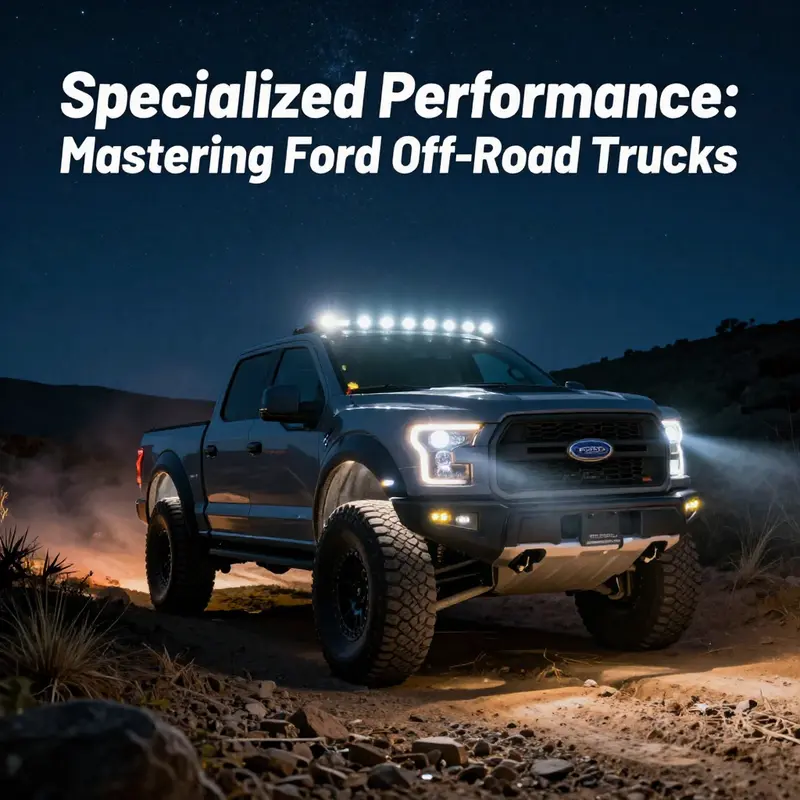
On Ford off-road builds, lighting is not an afterthought but a core element of capability and safety. Specialists who work on Ford-powered trucks design lighting systems that integrate with the vehicle’s electrical architecture, mounting strategy, and weather exposure. They balance long-range beams for depth perception with close-in lights to illuminate shadows, dust, and uneven surfaces. The best shops map a driver’s intended use – desert racing, rock crawling, overlanding, or rugged daily driving – and translate that into a staged upgrade plan that preserves daily drivability while expanding night-time capability. Proper lighting requires durable housings, sealed connectors, and wiring routes that minimize flex, spray, and heat. Regulations and on-road use considerations are reviewed so that auxiliary lights stay compliant and safely separated from factory headlamps. The result is a cohesive system rather than a collection of bolted-on lamps: a calibrated set of components that works with suspension, tires, and protection gear to maintain balance, center of gravity, and approach angles. Communities and forums provide a living repository of tested configurations, helping owners avoid pricey missteps and share practical lessons from long nights on remote trails. In short, Ford off-road lighting is a craft that blends durability, beam control, and system integration to empower confident, safer night runs and reliable daytime usability. External resources, suppliers, and integrators are part of a broader ecosystem that supports this specialization, ensuring that a truck remains a purpose-built tool for exploration, rescue, or work in harsh environments.
The Ford Off-Road Tribe: How Community Knowledge Shapes Builds, Breakages, and Bold Adventures
On the dusty edge between trail and street, a shared language forms among owners of Ford off-road capable pickups and SUVs. It is not merely a space to trade parts or swap stories; it is a living archive built by hands that have wrestled a rig through mud, sand, and rock. What makes this space durable is not just the enthusiasm of a few at a local meetup, but the patient, cumulative wisdom of many individuals who have confronted similar challenges and chosen to document, critique, and refine their solutions. The Ford brand, famous for its dual identity as a workhorse and an explorer’s companion, has nurtured a distinctive ecosystem where knowledge is exchanged openly. Enthusiasts who spend weekends dialing in ride height, protecting underbody hardware, and planning recovery strategies become both students and mentors. In this ecosystem, the value of community learning extends beyond the thrill of a hard-earned victory on the trail. It builds a safeguard against avoidable missteps, helps owners understand the realities of real-world use, and cultivates a culture that prizes safety, responsibility, and shared expertise as much as performance gains.
The official space dedicated to Ford truck enthusiasts sits at the intersection of manufacturer insight and user-generated experience. It is a forum and a library rolled into one. Here, builders post detailed build threads that walk readers through goals, constraints, and the rationales behind each modification. Photos archive the evolution of a rig from stock to something that has learned to navigate rough terrain with confidence. Video walkthroughs offer a front-row seat to the technical steps involved in complex upgrades, from suspension work to tire and wheel choices, with commentary that translates sometimes opaque mechanical language into practical, actionable guidance. This kind of multimedia documentation matters. It captures the nuance of what works, and just as importantly, what does not when real trucks push hard in real environments. In a world where product brochures glamorize capabilities, the gritty honesty of user-generated content serves as a necessary counterbalance.
The community functions as a living laboratory, where trial and error is not hidden but shared. Members describe the conditions under which a modification succeeded—and where it might falter under different loads or temperatures. They discuss not only the hardware toggles that alter a truck’s behavior, but the context that shapes those choices: daily driving needs, weekend excursions, and the unpredictable demands of off-road exploration. It is this context that separates casual tinkering from meaningful, durable upgrades. A lift, for example, is not just about higher clearance; it involves managing steering geometry, payload balance, center of gravity, tire fitment, and even the risk of rubbing on structures or trails. The discussion threads illuminate these interdependencies in ways a vendor brochure seldom does, helping owners make informed decisions that respect the integrity of the vehicle and the safety of the driver.
Another crucial facet of the community is its gatekeepers—both seasoned owners who earned their knowledge through long shoots on the trail, and moderators who ensure the conversation remains constructive and accurate. Moderation is not censorship; it is a stewardship designed to prevent the spread of misinformation that could lead someone to perform a modification that compromises reliability or safety. Moderators encourage sources that are testable, verifiable, and repeatable. When a member asks a nuanced question about a particular scenario—say, how an underbody protection system might interact with a certain suspension setup in a specific climate—the conversation often expands beyond a single answer. Experienced members reference their own builds, compare notes from different terrains, and propose a framework for evaluating options. The result is a collaborative knowledge map that grows richer with every new post.
The social architecture of this community also matters. Trust in this space accrues through demonstrated expertise, transparent testing, and a willingness to share both wins and missteps. A build thread that documents a mistake, explains why it happened, and details corrective steps can be as valuable as a flawless success story. This transparency helps newcomers avoid repeated errors and accelerates their learning curve. It also invites constructive critique, which, when delivered respectfully, becomes a catalyst for better decisions. The culture rewards curiosity and accountability: questions are welcomed, but the most valuable exchanges emerge when members back up recommendations with measurements, trail data, or direct observations from their own long-term use. In this way, the community becomes not just a forum for opinions, but a repository of tested knowledge, where experience is codified in a way that others can study, challenge, and ultimately apply.
Within this ecosystem, the lifecycle of knowledge mirrors the lifecycle of the trucks themselves. Early curiosity leads to small, incremental upgrades that reflect practical needs—improved heat dissipation for long climbs, protection for vulnerable undercarriage components, or better recovery options for difficult terrain. As owners gain more miles and more pages in their build threads, their insights often evolve. A practical upgrade may reveal new bottlenecks, such as steering response under load or the added weight of protective hardware affecting ride quality. The community has learned that no single upgrade exists in a vacuum; each choice triggers a cascade of related decisions that must be revisited. This is why the documentation in the build threads tends to remain dynamic. Posts are updated, addendums are included, and readers can see how a setup ages under real-world conditions. The best threads read like diaries of engineering practice, not just catalogs of parts. They present a nuanced narrative: what was attempted, why it was chosen, how it performed, and what was learned along the way.
For those new to off-road ownership, the community offers a welcoming gateway that demystifies the jargon and lowers the barrier to responsible experimentation. Rather than being overwhelmed by a wall of acronyms, newcomers can observe a conversation that moves from questions about basic maintenance to more ambitious topics like load distribution, approach and departure angles, or the dynamics of wheel travel. They can see how veterans approach problem solving in a structured way: define the problem, frame the constraints, propose multiple options, quantify potential trade-offs, and then test the most promising path. This problem-solving mindset—clear, iterative, and collaborative—translates well beyond the trail. It informs how owners think about safety, reliability, and the long-term health of their rigs. The community thereby becomes a sandbox for not only technical experimentation but also responsible ownership, where the social norms encourage careful planning, real-world testing, and documentation that others can rely on when they face similar decisions.
The value of this collective intelligence extends to the broader ecosystem around the truck. Enthusiasts often develop informal mentoring relationships that bridge generations of owners: veterans who have learned from harsh winter crossings, flood crossings, or steep desert grades share guidance with newer members who are learning the ropes. The mentoring is accompanied by an exchange of practical tips that are easy to apply yet sometimes overlooked by novices. For example, they remind newcomers to carry recovery gear, to practice proper tire pressure management for different terrains, and to plan trips with contingencies for weather, fuel, and repair access. The emphasis is not only on speed and capability but on operational readiness—how to keep a rig functional in the field and how to get help when it is needed. This is especially important for vehicles built to endure demanding conditions, where a small oversight can成为 a long, uncomfortable day on the trail.
The community does not exist in a vacuum. It interacts, though in a measured way, with the manufacturer’s own channels of information. Members often reference official guidelines, recall notices, and published service information when they evaluate a modification. In some cases, the manufacturer’s representatives participate in discussions, answering questions, clarifying limits, and acknowledging practical experiences drawn from real-world usage. This kind of interaction helps align the community’s knowledge with the broader realities of engineering and safety, while preserving the bottom-up wisdom that only comes from hands-on use. The balance between experiential knowledge and official guidance is delicate but essential. It guards against the drift that can occur when forums become echo chambers, and it invites a continuous dialogue that respects both the science of engineering and the craft of practical, field-tested modification.
Participation in the community is accessible to owners at different points in their journey. A visitor can lurk and absorb, learning through well-documented threads and etiquette-guided questions. A curious driver with a few miles on the clock can start a simple post asking for advice on a specific problem and receive a breadth of perspectives from peers who have faced similar situations. A more engaged member may chronicle a complete build, providing a timeline, the rationale behind each decision, inclusive photographs, and a candid ledger of outcomes. Across all these modes of participation, the law of the land is humility: the acknowledgment that off-road ownership is a continuous learning process, where every victory has a caveat and every failure contains a lesson. This ethos of continuous learning is what sustains the community through changes in terrain, weather, and even equipment availability.
As readers move through the chapter, it becomes clear that the strength of these communities lies not in any single solution, but in a culture of shared responsibility. Members celebrate ingenuity and craftsmanship, but they also champion careful planning, honest reporting, and a commitment to safety. The community’s sense of stewardship extends beyond personal satisfaction to a reassurance that others can enjoy similar adventures with lower risk. The result is a resilient knowledge base that travels with owners from their first trips into the backcountry to more ambitious expeditions that demand careful preparation and precise execution. The narrative thread that weaves through these stories is consistent: a rig is not just a machine but a partner in exploration, and its longevity depends on the care, discipline, and communal wisdom invested in it.
For readers who want to deepen their understanding of how to apply this collective knowledge, a practical path lies in bridging the gap between theory and hands-on maintenance. The community demonstrates how to sandbox a plan before committing to it: study the existing build threads, sketch a project plan, note potential risks, simulate outcomes where possible, and then execute with measured steps. When done well, a modification becomes less about chasing a dream of ultimate capability and more about achieving reliable, repeatable performance that aligns with the owner’s day-to-day life and their planned adventures. The social aspect—sharing, critiquing, and refining—transforms the learning process into a durable resource that can be revisited as needs evolve. In this way, a simple question about a modification becomes the seed for a careful, well-documented journey that others can borrow, critique, and improve upon.
For those who want to explore this world further, the official manufacturer-supported community offers a gateway to a broader ecosystem of knowledge and experience. The conversations you read there will often reference considerations that go beyond a single model or a single terrain. They reflect themes that recur across different trucks and different climates: the importance of drivetrain integrity, the need for sensible recovery strategy, and the central role of maintenance in keeping a rig on the trail. The resulting knowledge network is dynamic, inclusive, and practical, capable of guiding both seasoned veterans and curious newcomers toward safer, more enjoyable off-road experiences. It is a reminder that communities built around a shared passion can become powerful engines of learning, not just social spaces, and that the best advice often comes from those who have dared to test it in the field and then documented the journey with honesty and care.
For readers interested in a broader context of mechanical stewardship and hands-on learning in the trucking and off-road field, one resource worth exploring emphasizes the kind of foundational technical understanding that underpins practical upgrades. Mastering diesel mechanics — your step-by-step path to success offers a structured approach to diagnosing, repairing, and maintaining powertrains under demanding conditions. Though the exact engine configurations may vary, the approach to problem solving—defining the issue, gathering data, testing hypotheses, and validating outcomes—resonates with the community ethos described here. It reinforces the idea that technical competence, patience, and meticulous documentation are universal assets for anyone who longs to push a Ford truck further into the backcountry while preserving longevity and safety.
As this chapter closes, the sense remains that the Ford off-road community is not merely a collection of buyers and modifiers but a culture of care and curiosity. It embodies a model of knowledge sharing that others in the automotive world can learn from: open channels for learning, clear standards for testing and reporting, and a commitment to safety that ensures the trails stay accessible for future generations of enthusiasts. The conversations, photos, and walkthroughs preserved in official threads become not just a ledger of individual projects, but a map of collective experience. They guide newcomers as they plan their first trail runs, seasoned owners as they pursue more ambitious builds, and everyone in between as they navigate the realities of off-road ownership—where curiosity, preparation, and community work together to turn ordinary weekends into extraordinary, well-supported adventures.
External resource for further reading and official community engagement: https://www.fordowners.com/community/truck
null
null
Final thoughts
As the world of off-road trucks continues to evolve, Ford remains a central figure in this thrilling domain. With specialists like Roush Performance and vital innovations from Baja Designs, along with thriving communities advocating for improvements and modifications, Ford trucks are more capable than ever. The unparalleled performance of the F-150 Raptor serves as a testament to how specialization has transformed these vehicles into true adventurers. For those ready to embrace the off-road challenge, understanding the blend of expertise, community sharing, and specialized parts becomes essential in crafting an unparalleled driving experience.