
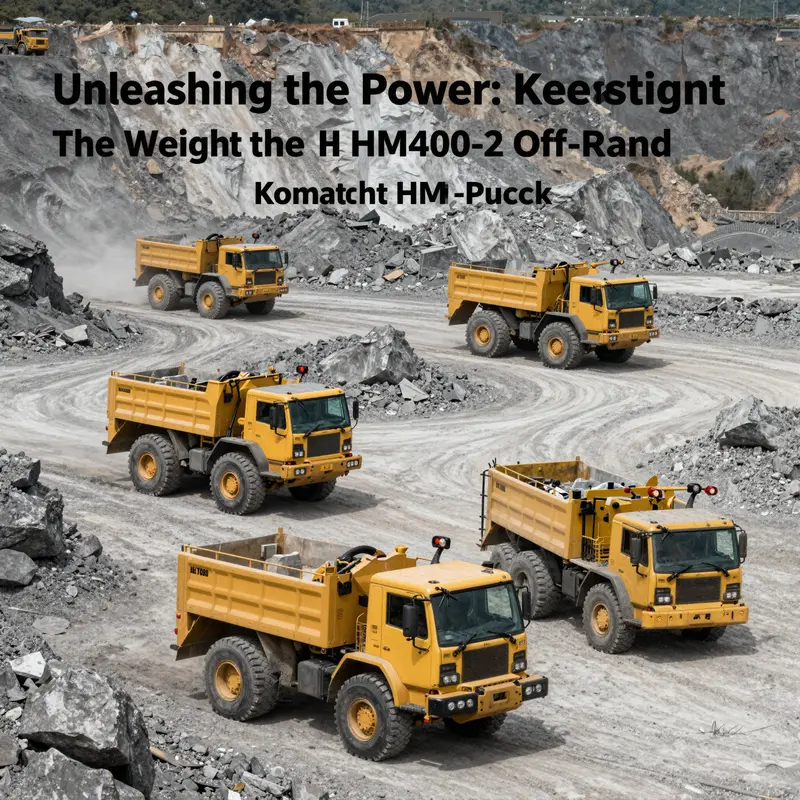
For off-road enthusiasts, adventurers, and those committed to trucking operations, understanding the weight dynamics of your equipment is crucial. The Komatsu HM400-2 off-road truck stands as a titan in the heavy machinery category, boasting a maximum gross vehicle weight of 74,125 kg. This article will delve into the gross vehicle weight specifications, explore its load capacity and utilization, and assess its operational efficiency related to weight. Each chapter will equip you with essential knowledge, fortifying your understanding as you navigate the rugged terrains where this incredible machine excels.
Weighing the Giants: Interpreting the GVW of the Komatsu 400 Off-Road Hauler and Its Implications for Mining Operations
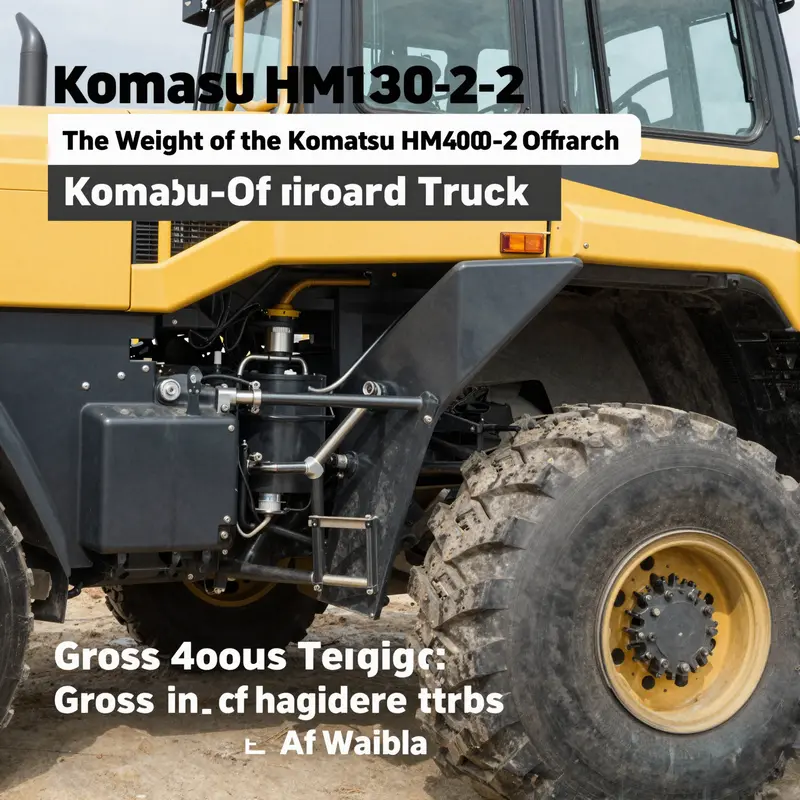
When planners and engineers start sizing a mine haul fleet, one metric rises above most others in practical consequence: the gross vehicle weight, or GVW. Weight governs everything from the design of haul roads and bridges to the size of the braking system and the limits of payload a truck can carry in a single cycle. It shapes the way a mine operates, the speed at which ore and waste can be moved, and the kind of maintenance schedule a fleet requires. Within the world of large off-road trucks, the story of GVW is not a single line but a set of closely related measures that often appears contradictory at first glance. On one hand, you have the standard, widely cited figure for a well-known HM400-2 class machine, which places its maximum gross vehicle weight just over 74 metric tons. On the other hand, there are specifications for the Komatsu 400 off-road truck that report a GVW in the vicinity of 400,000 kilograms, or roughly 881,849 pounds. Those numbers are not the same, and they reflect different realities about the machines in question, their payload capacities, their variants, and the contexts in which the numbers are defined. To understand what these figures mean, and how they affect the day-to-day reality of moving ore on a mine site, it helps to trace the meaning of GVW itself, tease apart the relationships between tare weight, payload, and gross weight, and then apply that understanding to the operational demands of large-scale mining. In this chapter, we will walk through those ideas with care, using the numeric anchors provided in the research materials while keeping the discussion anchored to practical outcomes for mine planning, road design, and fleet maintenance. We begin with a clear distinction between the figures that are often cited in publicity sheets and the measurements that operators actually manage in the field. The GVW figure often appears as if it were a single, monolithic attribute—one number that somehow captures everything the truck can do. In truth, most GVW specifications are the sum of two more fundamental quantities: the vehicle’s own mass when empty, sometimes called the tare weight, and the payload, which is the mass of ore or waste material loaded into the truck. The sum of those two components gives the GVW at the moment of loading. If you think of the truck as a precise weighing system, GVW becomes a snapshot of a particular operating condition: a fully loaded platform, full fuel tanks, lubricants, and any ancillary ballast that participates in a given haul. The careful observer will also note that different configurations, options, or regional models may skew the number slightly, simply because accessory equipment, tire choices, or even calibration for axle loads can shift the published figure by a few percent. The HM400-2, a heavy-duty, off-road truck that sits in the same general category as the Komatsu 400 series, is commonly cited with a GVW around 74,125 kilograms. That value, roughly 74.1 metric tons, reflects a machine whose design emphasizes robust reliability on the rough roads of a mine, with a payload appropriate to a certain ore type and a defined mine layout. It is a world apart from the 400 off-road truck’s stated GVW in the provided material, which presents a figure of 400,000 kilograms. The discrepancy invites a careful reading of context. The HM400-2 is a specific model with its own tare and payload characteristics, while the Komatsu 400 off-road truck—by virtue of its naming and its intended market segment—appears to be described in a way that emphasizes a far higher GVW, suggesting either a different payload envelope, a different instrumentation protocol, or a distinct variant designed for a different class of mining duty. In practice, what this means for a mine operator is not simply a headlining number to memorize, but a framework for planning the loading cycle, the sequencing of trucks on a haul route, and the engineering requisites of the road and the bridge networks that carry those loads day after day. To translate GVW into actionable design and operations, it is essential to keep the relationship between tare weight and payload firmly in view. If the truck’s empty weight is Wempty and its payload capacity is P, then GVW = Wempty + P. The maintenance and design implications sit on two tracks at once: one track governs how much weight the structure and chassis can bear across multiple axles and over long hours of operation, and another track governs the ramp, grade, and surface required to move that weight safely and efficiently. On a mining site, axle load distribution matters just as much as the total GVW. A truck may be rated to a target GVW, but the actual load shared among axles—often expressed as axle loads—drives decisions about road reinforcement, tire selection, braking architecture, and suspension tuning. If a truck is operated at or near its GVW, the axle distribution must stay within design limits for each axle group. Any deviation, such as an overweight payload concentrated toward one end of the bed, can increase peak axle loads and stress the drive train in ways that reduce component life and raise maintenance costs. The numbers become even more consequential when you consider the ore’s density and the material gradation. In mining, payload is not simply mass; it is a blend of material types, moisture content, and compaction on the haul bed. A payload with higher moisture or more fines can behave differently in terms of tractive effort and slope performance. For a truck in the 400,000 kilogram GVW range, even modest shifts in payload composition can alter the center of gravity enough to affect stability margins on gradients and turns, making the difference between a smooth haul and a weight-induced drama on a corner or a slope. These practical concerns show why the GVW specification cannot be viewed in isolation. It is the keystone of a larger system—the vehicle’s energy budget, its traction on the haul road, the thermal and mechanical load on brakes, axles, and the driveline, and the even more strategic question of how many trips per shift the truck can complete without slowing the mine down. The mine’s throughput plan rests on a careful choreography of trucks and loads. A higher GVW usually implies a larger payload per cycle, but it can also entail longer stopping distances, more heat generated by braking, and a greater requirement for catchment volumes in the road’s drainage and surface integrity. Operators weigh these factors against haul road width, curvature, and surface conditions, because the last thing a mine wants is a truck negotiating a curve with payload shifting its weight distribution and increasing the risk of a tire blowout or a tire pile-up. The numbers do not exist in a vacuum; they are a language spoken by bridge engineers, geotechnical teams, and fleet managers who must ensure that every kilogram carried by the truck is matched by confidence in the surrounding infrastructure. The figure of 400,000 kilograms for the Komatsu 400 off-road truck is therefore not merely a marketing headline. It is a specification that signals a design assumption about payload scale, roadway capacity, and the maintenance envelope necessary to sustain continuous operation in a mine’s harsh environment. Whether you interpret that GVW as the vehicle’s maximum allowed weight with full payload or as a nominal rating for a particular configuration, the underlying principle remains consistent: more weight demands more precise engineering, more rigorous maintenance, and more disciplined operations. At the same time, the juxtaposition with the HM400-2’s GVW—roughly 74 metric tons—serves as a reminder that the “400” in Komatsu’s line is not an absolute universal, but a class designation tied to payload targets that can vary across markets and models. It is not unusual for manufacturers to offer a family of trucks in the same generational line where each variant has a different payload and, consequently, a different GVW. In practice, a mine that contemplates a fleet of such trucks will approach GVW not as a single metric to be memorized but as a variable to be modeled across the fleet. Using a weight-capacity envelope, engineers will assess how many trucks can operate on the same haul road without risking congestion, how many cycles can be completed within a given shift, and how to sequence maintenance windows to avoid throughput dips. They will also consider the days when a truck might be loaded with a heavier ore mix or a heavier waste payload, and how those heavier days fit into the longer-term production plan. The practical implication for fleet maintenance and reliability programs cannot be overstated. Heavier machines with higher GVW demands may require more robust hydraulic systems, larger or more numerous brakes, and enhanced cooling capacity for the powertrain. The braking system must handle heavier kinetic energy during deceleration, and the cooling system must sustain elevated thermal loads during sustained climbs or heavy hauling in hot climates. Tires must be chosen for high load-bearing capacity and long service life on abrasive mine surfaces, and the suspension must manage the higher stir of dynamic loads without excessive wear. All of this contributes to a maintenance cadence that can differ markedly between a 74-ton machine and a 400-ton behemoth. It also shapes the economics of operations. The cost of ownership must account for the higher per-kilometer maintenance and, potentially, higher energy consumption per loaded kilometer. The operator’s choice of a given model often comes down to a balance between payload and the infrastructural capacity of the mine. If the surrounding haul roads and bridges are engineered to handle the GVW safely, the higher payload may deliver substantial throughput gains that outweigh the added maintenance and capital costs. If not, those same miles translate to excessive wear, frequent repairs, and reduced reliability. As a result, the interpretation of GVW is inseparable from the broader inquiry into mine design and logistics. The weight numbers must align with the ore body’s geometry, the mine’s road network, the climate’s demands, and the equipment’s maintenance strategy. The official documentation—where it exists—provides the authoritative frame of reference for these decisions. It is precisely in this area that the cited external resource becomes essential. For readers seeking the most authoritative technical data, the Komatsu global specifications page offers the formal statements about GVW, axle load distribution, engine performance, and dimensions for the 400 off-road truck. In practice, engineers will cross-check multiple data sheets, confirm regional variants, and then apply those figures through a reliability-centered maintenance plan and a road-stress model to ensure that the mine’s infrastructure can sustain long-term operation. The contrast between the HM400-2’s GVW and the 400 off-road truck’s GVW highlights a broader lesson about heavy-duty mining equipment: model numbers and published weight figures are starting points, not final answers, and they must be interpreted within the context of actual payload expectations, road design, and maintenance capabilities. This approach protects the mine’s throughput goals and contributes to the safety and longevity of the fleet. For practitioners, the key takeaway is to view GVW as a variable that integrates vehicle design, payload strategy, and infrastructure capability. The precise numbers matter, but what matters more is how those numbers align with the mine’s physical reality and maintenance discipline. It is a reminder that in the world of off-road mining trucks, weight is not simply a figure on a spec sheet. It is a living constraint that guides every engineering decision, every maintenance interval, and every operational plan that keeps ore moving from pit to processor with reliability and efficiency. External reference: Komatsu Global – 400 Off-Road Truck Specifications: https://www.komatsu.com/en/products/haul-trucks/400-off-road-truck/
Mass, Motion, and Mobility: Weighing the Komatsu 400 Off-Road Truck in Real-World Haulage
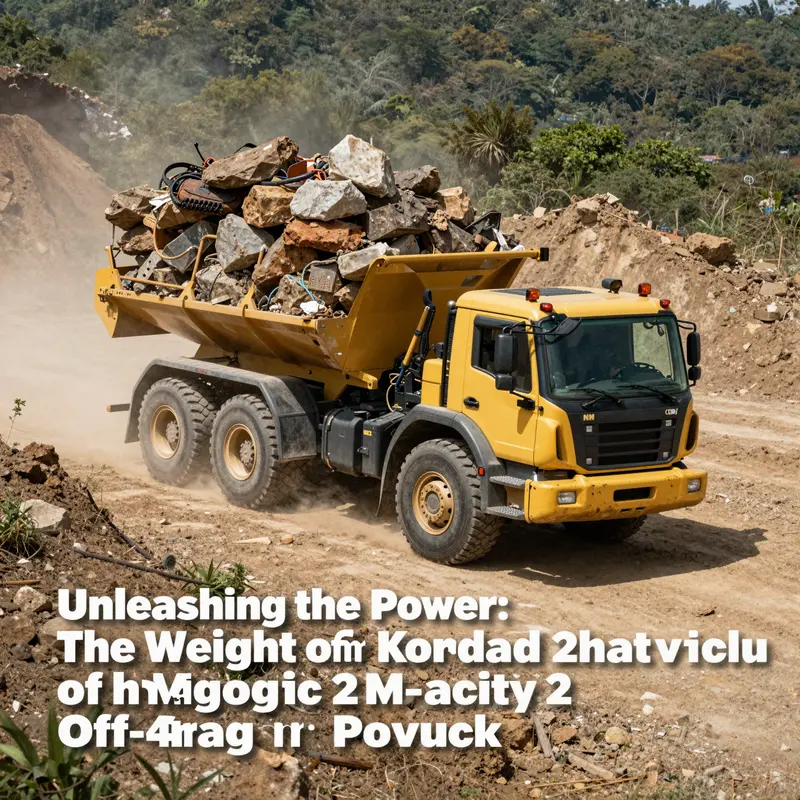
When a reader asks how much a Komatsu 400 off-road truck weighs, they are really asking about a blend of essentials: the machine’s own mass, the payload it carries, and how those numbers translate into performance, stability, and efficiency on rough ground. The question may seem singular, but the answer unfolds as a layered portrait of weight that matters in the field. The Komatsu HM400-5 Articulated Dump Truck (ADT) embodies the kind of mass distribution that keeps moving through soft ground, steep grades, and long haul cycles while preserving maneuverability that rigid-frame trucks struggle to match. In this class of equipment, weight is not a mere statistic; it is a practical determinant of throughput, surface impact, and the kind of tire life that operators are willing to accept for reliable production in demanding environments. The payload, the chassis, and the shared aim of mobility all converge to define what “weight” means in a machine designed to work where other trucks falter. The HM400-5’s payload capability, roughly 40 tons under typical operating conditions, anchors a broader understanding of weight as a tool for productivity rather than a constraint. This payload figure comes from the official design goals of the ADT family and is central to why the machine is chosen for medium-scale mining, quarrying, and construction tasks where the terrain requires a lighter touch and smarter steering than a rigid, non-articulated truck can deliver. Yet the total mass of the vehicle, when loaded, becomes a factor that operators and engineers must continually balance with traction, braking, and ground pressure. The art of operating heavy off-road trucks is as much about knowing how mass behaves on soft soils as it is about knowing how to move it efficiently from bench to dump site. In practical terms, the HM400-5’s 40-ton payload is a local maximum; the machine’s weight itself sits in a range that supports this load while preserving the low ground pressure that makes its articulation an advantage rather than a liability. A complete picture of weight thus merges three strands: the empty or “curb” weight of the truck, the payload it can carry, and the gross vehicle weight (GVW) that results when the two are combined. The empty mass, or curb weight, is a baseline that varies with configuration, options, and wear. In the HM400-5 class, the empty mass typically lands in the mid-range of heavy ADTs. It is designed to be robust enough to absorb the stress of rough terrain without adding unnecessary mass that would degrade traction on a soft surface. The payload, as noted, sits at up to 40 tons. This figure is what most operators track most closely for productivity calculations: it determines how many cycles must be completed to reach daily targets, how much fuel is consumed per ton hauled, and how often a dump site must be cleared to avoid bottlenecks. The resulting GVW, which is the sum of curb weight and payload, speaks to the total driving mass that the braking system, suspension, axles, and tires must contend with during each full cycle. In practice, the GVW for a machine like the HM400-5—when fully loaded—reaches a scale similar to other trucks in its category, roughly in the mid- to upper-70-ton range. This is not accidental. The design priority for articulated dump trucks is to balance payload capacity with ground contact and steering ease. A GVW in the vicinity of 74 metric tons allows the vehicle to carry substantial loads while distributing that mass across a pivoting joint that reduces the ground pressure on soft or uneven terrain. The practical implication of this weight balance is clear in the way the HM400-5 negotiates a mine face or a quarry entrance: the articulated joint allows the dump body to follow the terrain more faithfully than a rigid frame, meaning the tires stay in contact and the load remains stable even when the ground is loose or rutted. In other words, weight is not merely a number to be managed; it is a live parameter that governs traction, steering response, and the rhythm of each haul cycle. This is why operators think of the HM400-5 as a tool for mobility as much as a repository for mass. The full 6×6 all-wheel-drive system is an explicit counterbalance to the weight carried, channeling power to all wheels so that ground contact remains consistent. In muddy, sandy, or snowy conditions, that traction is the difference between a stalled cycle and a steady, predictable performance. The weight distribution also informs the braking system, which in the HM400-5 is designed to manage heavy charging and continuous cycles. The brakes are large-capacity, continuously cooled, wet-multi-disc units that resist fade under long or downhill runs. The braking architecture is not a courtesy add-on; it is a core feature that allows the operator to maintain control while the vehicle is delivering a full 40-ton payload. The relationship between weight and braking is especially important when negotiating slopes. In these conditions, weight acts both as a stabilizing force and a potential hazard if speed is not managed correctly. A heavier load can provide inertia that helps the vehicle maintain momentum on a grade, but it can also demand more braking effort to stay within safe speeds. The HM400-5’s control systems and braking capacity are therefore engineered to keep this balance within predictable bounds. When the vehicle is loaded and traveling on a downgrade, the operator relies on the combination of traction, articulation, and braking to prevent wheel slip and to sustain a steady travel rate. The weight of the vehicle also contributes to ground pressure, which is an essential consideration on soft ground. Excessive ground pressure can cause rutting, compaction, and surface damage that increase resistance for subsequent cycles and complicate the operator’s job. The HM400-5’s articulated design, in contrast to a large rigid truck, helps to distribute weight more evenly across the contact patches and reduce peak pressures. This is not just a matter of surface preservation. Lower ground pressure can also translate into more predictable steering and better drivetrain longevity, reducing maintenance costs over time. It is worth noting that there are trade-offs to this weight philosophy. The HM400-5, like its articulated peers, trades some payload efficiency for greater maneuverability and terrain adaptability. The result is a machine that excels in environments where space is constrained and the ground is unpredictable. A rigid, ultra-class mining truck might carry more payload per cycle when operating on stable ground, but its weight distribution, turning radius, and ground contact can become liabilities on soft or uneven terrain. The HM400-5’s design philosophy—prioritizing mobility and reduced ground damage—reflects a broader strategic choice made by many mid-size mining and quarry operations: optimize for operational flexibility and site-specific conditions rather than chasing the largest possible payload in every scenario. From a maintenance perspective, weight is also a lens on service needs. A vehicle with higher mass and more complex articulation joints requires robust maintenance planning to sustain peak performance over time. The HM400-5 is built to support heavy-duty use, but the trade-off is clear: articulated joints add mechanical interfaces that demand attention. This is why regular inspection of the pivot points, hydraulic lines, and brake cooling circuits is essential in a fleet that measures its success in cycles per shift rather than miles per hour. The practical takeaway for anyone weighing a Komatsu 400 off-road truck—or any machine in this class—is that weight is a multi-faceted variable. It affects how the truck engages with the ground, how well it accelerates and brakes under load, and how resilient it will be through a long haul day. It influences maintenance schedules and the cost per ton moved. It shapes the operator’s approach to loading, hill climbs, and dump-site turnover. And it underpins the decision to choose an articulated solution over a rigid-body option when the job demands superior mobility and gentler surface interaction. For readers comparing this class of equipment, it helps to anchor the discussion in a few concrete numbers: payload around 40 tons, a robust GVW in the same general magnitude as other machines in its class, and a design that emphasizes low ground pressure and agile handling rather than maximal mass alone. This perspective aligns with the broader guidance found in the official product documentation and with comparative analyses of ADTs in similar working envelopes. It also invites a consideration of the specific site factors that will ultimately determine whether a 40-ton payload and a sculpted weight profile deliver the most efficient cycle time on a given bench or quarry floor. And while the conversation may drift toward exact numbers on a spec sheet, the real story rests in how those numbers translate to daily production, maintenance planning, and the long-term health of the equipment and the operator workforce. In practice, operators who adopt an HM400-5 approach tend to optimize for sustained cycles, predictable traction, and steady braking performance rather than chasing the absolute highest payload at the expense of stability or tire life. That strategy harmonizes weight with work-rate and terrain, which is precisely why this class of ADT remains a popular choice for mid-scale operations that demand mobility without sacrificing payload capability. For readers who want to dive deeper into the mechanical and operational dimensions, a close reading of the official HM400-5 product documentation reveals the engine’s role in delivering power across a broad torque band, the hydraulic pump arrangement that feeds the articulated joints, and the braking system’s sophisticated cooling loops that keep heavy use sustainable. The documentation also highlights how the vehicle’s six-wheel-drive layout contributes to traction, turning radius, and consistency of performance in variable ground conditions. Where the numbers are most relevant—payload and gross weight resurface in daily planning, with operators calculating cycle times, fuel burn per ton hauled, and the wear rates on tires and brakes. As a closing throughline, the weight narrative for the HM400-5 ties back to a fundamental truth of off-road haulage: mass is not simply a bumper-sticker figure; it is the physics that define how much cargo can travel efficiently from point A to point B, on terrain that demands both resilience and finesse. Operators who understand this relationship, who plan around the vehicle’s mass and its distribution, can exploit the advantages of articulation while mitigating the costs that come with heavy-duty use. If you’re seeking a broader frame of reference on how weight interacts with diesel performance, drive cycles, and maintenance planning in this category of equipment, you can consult practical guides on diesel mechanics for heavy trucks, which provide foundational coverage of how mass affects engine loading, cooling, and wear patterns and how fleets optimize maintenance to sustain high payloads over long periods. For a concise official specification and broader context on the HM400-5’s capabilities, see the external resource below. The discussion here is designed to connect the operational realities with the numbers that operators rely on daily, offering a cohesive view of what the Komatsu 400 off-road truck weighs in practice and why that weight matters in the field. External reference: official Komatsu HM400-5 product page (https://www.komatsu.com/en/products/vehicles/articulated-dump-trucks/hm400-5/).
Mass in Motion: How Weight Shapes Efficiency in a 400-Class Off-Road Hauler
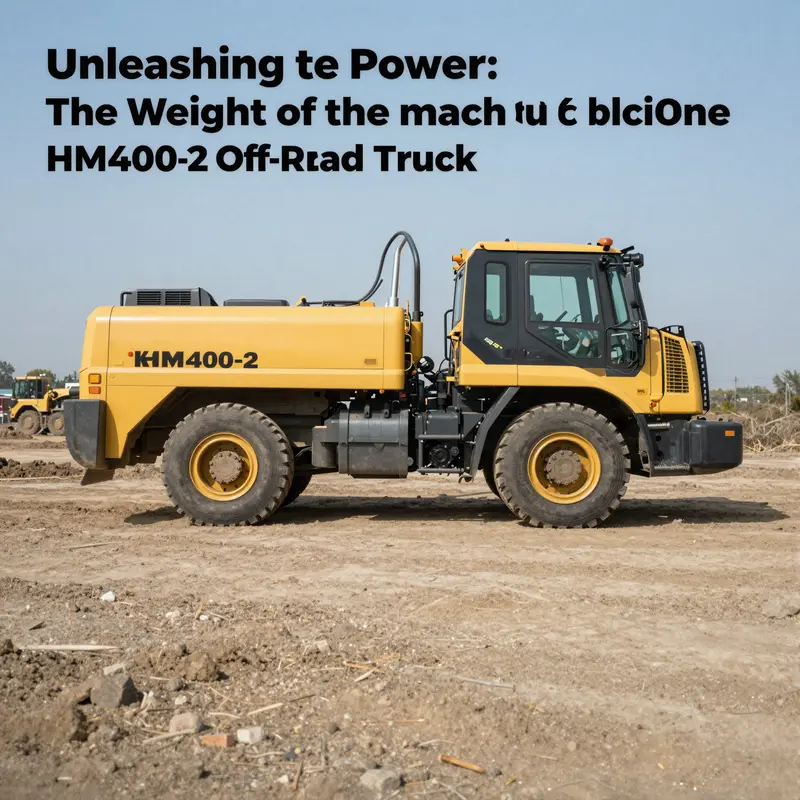
When operators ask how much a 400-class off-road hauler weighs, they are really asking about a key lever in the machine’s productivity. Weight is not a single datum point but a complex balance that governs power delivery, stability, fuel use, and the cadence of loading, hauling, and dumping. In this class of trucks, the gross vehicle weight (GVW) is typically in the vicinity of 74 metric tons. That figure represents the chassis and structure in combination with the load it carries, a mass carefully calibrated to maximize payload while staying within the safety and performance envelopes defined by the engine, transmission, brakes, and steering. To unpack what that mass means in practice, it helps to place it in the full context of the vehicle’s specifications and the physics of moving heavy loads over demanding terrain.
From a weight-forward perspective, the vehicle’s rated payload sits at about 36.5 metric tons. This payload is the practical limit that the structure, hydraulic systems, and powertrain are designed to move efficiently. The GVW of 74,125 kilograms means the truck can carry a heavy load while still maintaining the ability to accelerate, climb grades, and brake reliably. Understanding this relationship is essential for planning mine and quarry cycles, because every additional ton shifted within the payload reduces the margin for rapid maneuvering and tight switching in congested, uneven environments. In effect, weight acts as a constraint that engineers must balance against the operational need for higher throughput. As the load grows, the engine, transmission, and braking systems must work in unison to preserve cycle times without compromising safety or wear patterns on components.
The weight story is not just about kilograms; it also translates into volumes and distribution. The maximum payload volume—16.5 cubic meters for standard loading and up to 22.3 cubic meters when piled—reflects design choices that govern how weight is spread through the bed and how that distribution interacts with center of gravity and traction. A heavier, piled payload can improve material density and reduce the number of trips needed to move a fixed mass, but it also shifts the center of gravity higher and alters dump characteristics. In practical terms, this means operators and mine planners must think through how much material to load, how to stage dumps, and how to sequence cycles so the truck’s mass remains within performance and stability margins during acceleration, braking, and cornering at high speeds with a full load.
Powering this mass is a robust engine whose output—approximately 327 kilowatts (about 445 horsepower)—is tuned to deliver sustained torque under heavy loading. Power alone does not win cycles; it is the consistency of power delivery that matters. In the heaviest segments of a haul cycle, the ability to apply steady torque as the truck climbs climbs or accelerates out of a dump area determines cycle time and operator confidence. The engine’s role, then, is not just raw peak power but the capacity to maintain momentum across varied grades and payload states. This is where the drivetrain’s efficiency becomes equally critical. A high-power engine that loses significant energy through transmission or ancillary systems would quickly erode the advantages of carrying a large payload. The intelligence of the pairing—powertrain with a transmission designed for heavy loads—becomes visible in real-world performance.
The transmission in this class of hauler is a six-speed, with a control strategy that includes advanced shift control. The integration of a sophisticated transmission system translates power into motion with minimal parasitic loss, which is vital when every additional percentage point of fuel efficiency counts across a full shift or a sequence of cycles. The efficiency of gear changes matters because each shift can momentarily interrupt propulsion and waste energy that compounds as load and distance increase. In practice, the transmission’s role is to preserve momentum while safeguarding smoothness and control, thereby contributing to reliable uptime and predictable fuel consumption patterns. For operators, this means fewer jolts and more consistent performance, which translates into steadier cycle times and less wear on the driveline during aggressive yet controlled maneuvering under load.
The handling of weight inside the machine’s operational envelope also depends on steering and braking systems designed with high-load realities in mind. A full hydraulic power steering system provides the finesse needed to maneuver a 74-tonner through tight turns and constrained workspaces. The braking system, typically a wet-disk configuration, is engineered to provide reliable stopping power even when heavy payloads demand longer stopping distances. These are not cosmetic features; they are essential safety and control elements whose performance is inseparable from the vehicle’s mass. When a heavy load presses into braking zones, the combination of weight, brake temperature management, and hydraulic response determines whether the truck can decelerate smoothly without overheating or fading brakes. In high-speed sections—where the top speeds for loaded operation can approach the mid-50s kilometers per hour—the integrity of braking control becomes a direct function of weight management and system reliability.
All of these attributes—payload capacity, GVW, engine power, transmission efficiency, and safety-focused systems—work together to define operational efficiency across the haul cycle. The weight of the truck, when balanced with a properly matched engine and drivetrain, yields a predictable and consistent productivity profile. In many mine depots, the goal is to maximize the number of productive hours in a shift by ensuring each cycle is as efficient as possible: loading, hauling, and dumping occur with minimal downtime and optimal energy use. Heavier payloads can improve tonnage moved per cycle, reducing the number of trips required for a given material target. Yet that advantage only materializes if the vehicle can sustain the necessary propulsion, control, and braking without incurring excessive fuel burn, wear, or risk of instability. The weight thus becomes both a driver and a constraint, a design parameter that engineers tune to achieve the most favorable balance between throughput and reliability.
To appreciate how this balance plays out in real operations, it is useful to connect the performance story to the cycle physics. In loading phases, the truck’s mass remains a constant factor that influences acceleration and the time needed to reach cruising speed for a haul distance. A heavier payload does not simply add energy demand; it changes the dynamics of how quickly the truck can break free from the loading zone, whether the ramp is steep, and how quickly it can set a steady pace toward the dump area. Once in motion, the momentum carried by the GVW helps maintain a steady speed across modest grades, but that same mass becomes a larger energy sink when the truck must slow down and stop at the dump site or encounter slowdowns due to grade, wind, or rough terrain. Efficiency, therefore, is a function of harmonizing the mass with the drivetrain’s ability to deliver torque and maintain speed with minimal fuel penalty. The design intent is to ensure the machine does not waste energy fighting excessive mass when a more moderate payload would deliver similar material throughput with fewer energy costs.
The capacity to optimize weight usage extends into the operator’s daily routines and maintenance practices. For example, the distribution of the load within the bed matters as much as the total weight. A standard payload, with 16.5 cubic meters of material, presents one set of weight distribution characteristics, while piling the material to a fuller 22.3 cubic meters shifts the center of gravity and changes load dynamics. Operators learn to adjust haul routes, ramp angles, and dump timing to accommodate these variations without compromising stability or braking performance. The structural design supports such flexibility, but the operator’s skill—the alignment of hook-up technique, precise wheel load, and controlled acceleration—remains a crucial factor in maintaining consistent efficiency across cycles.
From a broader perspective, this weight-focused lens highlights how a 400-class hauler fits within the larger system of mining logistics. The truck’s mass interacts with ground conditions, tire materials and pressures, and even the profile of the mine’s roadwork. Weight, when paired with the right tires and suspension tuning, can optimize traction and reduce wheel slip in loose or uneven surfaces. The interplay among weight, traction, and momentum can yield impressive results in terms of fuel economy per ton moved, provided that all components are aligned to minimize losses during every shift. The net effect is that a well-specified GVW and payload package, supported by a capable powertrain and precise control systems, can unlock high productivity while constraining operating costs and ensuring safer operations under heavy loads.
In the practical sense, the weight of a 400-class off-road hauler is more than a static specification; it is a dynamic variable that operators and maintenance teams manage daily. The maximum gross vehicle weight defines the ceiling, but the actual daily practice involves choosing payloads, planning routes, and adjusting drive strategies for each assignment. The engine’s sustained power, the transmission’s efficiency in shifting, and the braking and steering systems’ reliability under load all contribute to a composite picture of efficiency that is greater than the sum of its parts. In this way, weight becomes a central thread—an anchor around which the cycle—and the entire operation is optimized to move the maximum practical mass with the least energy and the highest safety margin.
This integrated perspective of weight and performance is the backbone of effective mine logistics. It explains why engineers emphasize precise payload planning, why operators study grade profiles, and why maintenance teams focus on the health of powertrain and braking systems under heavy loads. The number 74,125 kilograms is not just a headline figure; it is a practical limit that shapes every decision in the field—from bed design and payload strategy to route planning and speed management. The result is a workflow where mass and momentum are harnessed rather than fought, where the heaviest loads can be moved efficiently without sacrificing control or safety. For practitioners, the takeaway is clear: understanding and managing weight is not a separate task from productivity; it is the core mechanism by which high-volume material movement becomes sustainable, predictable, and safe over the long arc of a mining operation.
For readers who want to dive deeper into the engineering underpinnings of engine and drivetrain efficiency in diesel-powered heavy haulers, a detailed examination of diesel-mechanics concepts provides useful context. A thorough resource on this topic is available at Mastering Diesel Mechanics: Your Step-by-Step Path to Success. This reference helps connect how torque delivery, fuel combustion efficiency, and transmission control combine to translate heavy mass into consistent performance, especially when payloads approach their upper limits. Mastering Diesel Mechanics: Your Step-by-Step Path to Success.
In summary, the weight of a 400-class off-road hauler is a foundational factor shaping every phase of the haul cycle. Its GVW ceiling of around 74 metric tons accommodates a substantial payload while remaining within the limits of a well-integrated powertrain, transmission, and safety systems. The practical implications—payload strategy, cycle efficiency, stability, fuel use, and maintenance demands—underscore that mass, when managed with design precision and operational discipline, is a powerful driver of productivity rather than a mere constraint. This understanding sets the stage for the next layers of discussion: how payload optimization, route design, and preventive maintenance further refine the relationship between weight and efficiency in modern heavy-haul operations.
External resource: https://www.komatsu.com/en/products/haul-trucks/hm400-2.html
Final thoughts
Understanding the weight of the Komatsu HM400-2 off-road truck is pivotal not only for vehicle management but also for optimizing performance in demanding environments. With a gross vehicle weight of 74,125 kg, this truck epitomizes the power and capability needed in off-road operations. Its load capacity and efficiency underscore the advanced engineering behind its design, making it a go-to choice for professionals across various sectors. Ultimately, knowledge of the machine’s weight dynamics empowers enthusiasts and operators alike to make informed decisions and maximize the potential of this powerhouse vehicle.