

In the world of off-roading, one crucial choice can make or break your adventure: tires. For lifted trucks, selecting the right tires tailored to your driving conditions, performance demands, and durability expectations is paramount. This guide offers off-road enthusiasts and adventurers detailed insight into understanding terrain types, key performance factors, common pitfalls, and the best tire options for various conditions. By exploring these chapters, you will gain comprehensive knowledge to elevate your off-road experience, no matter how rugged the terrain.
Ground Truth: Reading Terrain to Guide Tire Choice for a Lifted Off-Road Truck
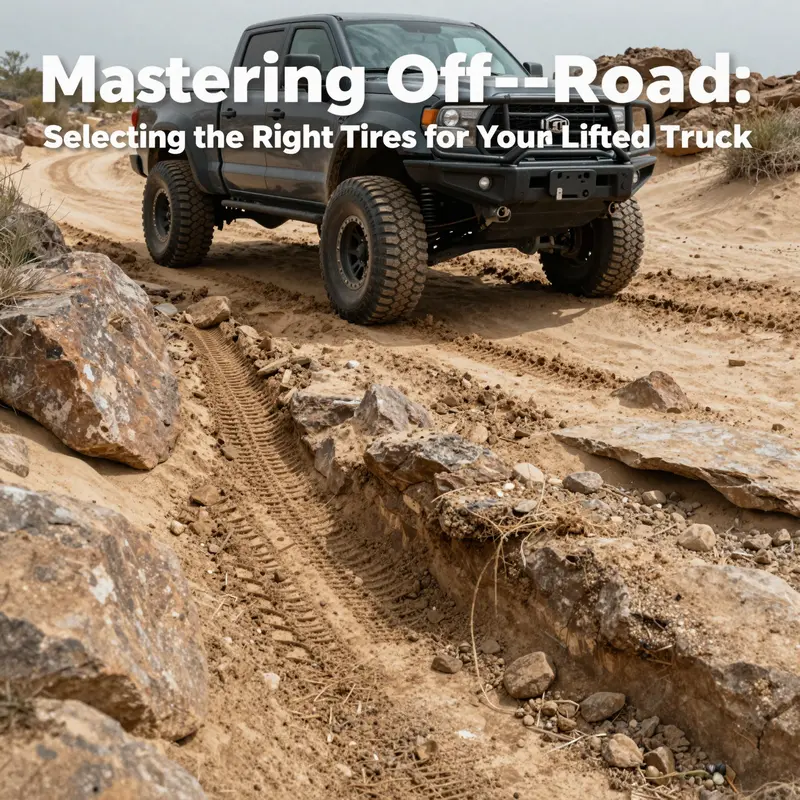
The moment you lift a truck and head toward uneven ground, terrain becomes the most critical factor in tire choice. Ground clearance and approach angles can’t compensate for a tire that won’t grip the surface you meet. In practice, terrain serves as the loudest advisor you have when deciding what rubber sits under the vehicle. The goal is to match tire design to the situations you will actually face, not to seek a single all conquering pattern. A lifted truck opens access to trails that would overwhelm stock setups, yet it also magnifies the consequences of a poor tire decision. The same vehicle that climbs out of a rut can also stutter on highway tar if tire noise or rolling resistance are a trade you refuse to accept on road. The balance point sits where you most often roam and where you want safety, confidence, and efficiency after a long day off pavement.
For many drivers the everyday footprint blends trail miles with highway miles. In this mixed use reality, the tires that fit a lifted truck best are those engineered for versatility. They should grip loose surfaces like sand and gravel without sacrificing stability on hard packed trails or pavement. A deeper tread helps bite soft ground but should remain refined enough to avoid excessive road noise at speed. In practical terms these are all-terrain or radial all-terrain patterns, designed to provide a workable compromise: grip when the surface loosens, and a quieter, more fuel efficient ride when it hardens. The lift changes geometry, so verify that the tire size you plan to run will integrate with your lift kit.
In terrain heavy landscapes such as desert tracks or forest roads, the tire profile should favor a moderate tread pattern. The goal is to retain engagement on soft surfaces while preserving predictable handling on rock and gravel. Deeper grooves and more open voids aid self-cleaning, which is essential when dirt or sand clings to the lugs. The tire should have reinforced sidewalls to resist cuts from rocks. A lifted suspension shifts more load to the tire shoulders, so you want robust construction that absorbs and distributes impact while maintaining grip. Off-road journeys rarely follow a straight line, so the tire profile must sustain stable steering through rock gardens and tight turns.
The tire’s load rating and speed capability matter too. A lifted truck often carries higher payload, so ensure load index meets or exceeds specifications. The speed rating matters if you drive long distances to reach trails. Matching or exceeding OE ratings helps keep handling predictable under load and at speed. The tire size also affects speedometer accuracy and steering geometry. A larger diameter increases leverage against the road, so plan tire size in concert with the lift kit.
In practice, terrain driven tire selection starts with where you spend most miles. If your adventures lean toward extreme mud or rock crawling, you’ll want a mud-terrain or similarly aggressive tire, accepting more road noise and lower tread life on pavement. If trips mix off-road with highway cruising, an all-terrain provides better highway comfort and fuel economy while remaining capable off road. For long overland routes or rough surfaces, a more specialized pattern with reinforced sidewalls may be warranted. The guiding principle remains the same: align tread depth, void spacing, sidewall reinforcement, and carcass construction with the terrain you expect most.
Finally, watch for common pitfalls: marketing labels can mislead and no tire excels in every terrain. Snow and ice performance depend on temperature tolerance as well as tread pattern. And changing tire type is best done by replacing all four tires, aligning, and rebalancing if needed. With a clear terrain map, you can tailor tire strategy to your lift and goals while maintaining safety and longevity.
External resource: For deeper reading see sources on terrain, compounds, and tread geometry in lifted off-road contexts: https://www.4x4wire.com/off-road-tire-selection-guide
Traction, Toughness, and Trust: Performance Factors in Choosing Tires for a Lifted Off-Road Truck
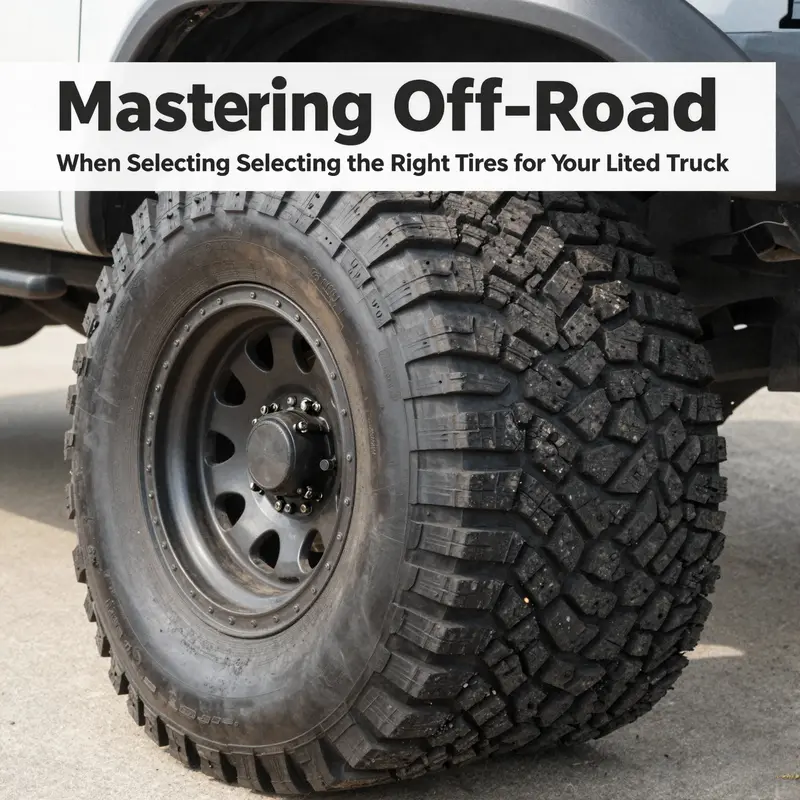
When you lift a truck for off-road use, the tires you choose become the single most influential component of how that vehicle behaves in the field. They are the interface between horsepower and terrain, between a smooth highway ride and a rock-strewn trail, and between reliability on long expeditions and the stress of daily commutes. This chapter outlines the core performance factors to consider when selecting tires for a lifted 4×4 used mostly off pavement. The goal is a practical framework that helps balance traction, durability, load capacity, and fit with your lift and wheel geometry without marketing hype or overly technical specs. The discussion covers traction, durability, load rating, size, noise and ride quality, and winter capability. Traction is foundational: aggressive tread blocks and widely spaced voids support self-cleaning and grip on mud, sand, and loose rock, while also maintaining sidewall grip when you encounter ruts or sharp edges. Durability matters through reinforced sidewalls, tough compounds, and design features that resist chunking over rocky terrain, with longevity supported by regular rotation and maintenance. Load capacity and speed rating ensure safe operation under heavier payloads or towing; verify that tires meet or exceed OEM ratings to avoid overheating and unpredictable handling. Size and fitment determine clearance and steering geometry; select a size that works with your lift kit and wheel wells without rubbing. Noise and ride quality reflect the trade-off between off-road grip and highway comfort; aim for a compromise that stays calm on long highway drives. Snow and ice traction should consider 3PMSF and cold-weather compounds for winter use, recognizing that classification alone does not guarantee peak winter performance. A disciplined selection process follows: define terrain and load scenarios, check lift-compatible sizes, verify clearance through articulation, and insist on four identical tires for consistent handling. For further reading on tire tech and sizing, consult tire manufacturer technical pages. In the end, there is no one perfect tire for every lifted truck; a well-reasoned choice prioritizes traction, durability, load capacity, fit, and comfort to deliver reliable off-road performance and predictable on-road behavior.
Avoiding Common Pitfalls: A Practical Guide to Off-Road Tire Selection for Lifted Trucks
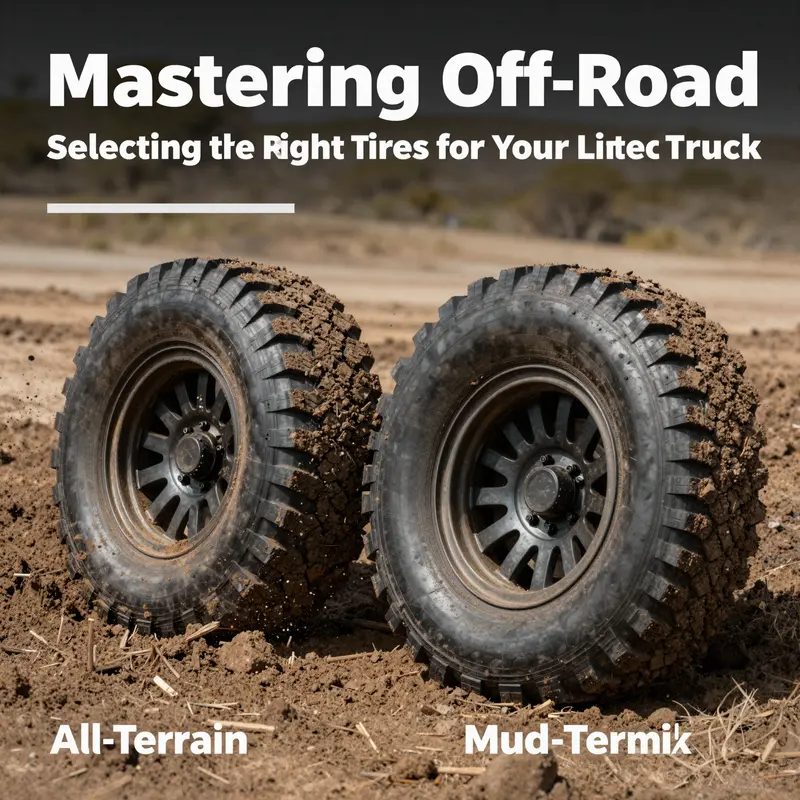
Lifted trucks draw eyes and stoke ambition, but they also demand a more deliberate approach to tire selection. The allure of bigger tires is strong—more ground clearance, brawler-ready aesthetics, and a sense of invincibility when the trail turns mucky or rocky. Yet the reality is different. A lifted truck with the wrong tire setup can become a handle-full, noisy, high-maintenance ride that punishes you at the worst moments. This chapter focuses on the pitfalls most owners encounter when choosing off-road tires for a lifted chassis and how to dodge them without compromising the core goals of your build: traction where you need it, predictable handling, and reliable, repeatable performance over the long haul.
The first pitfall is temptingly simple: choosing tires that are too large without accounting for how they alter steering, alignment, and the vehicle’s overall geometry. Oversized tires increase the leverage on the steering system and drag the chassis into new, unintended attitudes at highway speeds. Even with a meticulous alignment, the added tire mass and altered contact patch can cause steering wander, making long highway drives tiring and less precise. This is not just a matter of “more grip equals better control.” It is about balance. Lift, wheel offset, and suspension travel all interact with tire diameter. When you swap to significantly larger tires, you shift the vehicle’s center of gravity and suspension geometry enough to change how the steering feels at speed. And because lifted trucks already carry more stress in the suspension and joints, the added load of bigger tires can magnify any existing looseness or misalignment.
To navigate this, approach tire sizing as a system decision rather than a stand-alone cosmetic upgrade. You should verify that the new diameter can be accommodated by the lift kit without rubbing the fenders or drag links through full articulation. Even small interferences at full bump can translate into persistent scrubbing, which wears tires unevenly and creates unpredictable steering feel. The consequences aren’t purely cosmetic: wheel alignment can shift under load, toe and camber can drift, and steering wheel centering can wander. The result is driver fatigue and reduced safety on long, high-speed treks or when you’re negotiating off-camber sections where precise input matters as much as traction.
Beyond fitment, braking performance takes a hit when you run larger tires. Larger tires add rotational mass and increase the inertia the braking system must overcome. That extra weight compounds brake heat, pad wear, and pad bite consistency. It’s not just about shorter stopping distances on the street; it’s about a more sensitive brake pedal that can feel spongy or require more pedal effort during a long descent on a rocky trail. If your lift and tire choice push you toward noticeably heavier tires, consider upgrading components in the braking system or selecting tires with a lighter construction within the same diameter range. It’s not a zero-sum game, but it is a trade-off you should quantify before you finalize the purchase.
Another common pitfall is underestimating the practical limits these tires impose. A taller, wider tire does more than change performance; it increases overall vehicle height, which can complicate garage clearance, carport access, and even the ability to utilize standard ramps for maintenance. Wider tires also demand careful attention to wheel well geometry, fender clearances, and suspension travel. If your daily routine includes urban or suburban driving, you may be surprised by the additional space your tires require in tight parking lots or narrow streets. The height and width combination can also affect fuel economy and road noise, turning what once felt like a capable weekend warrior into a daily obligation with a higher maintenance overhead.
The type of terrain you spend the majority of your time on matters deeply, but even with a clear terrain profile, several subtler factors demand attention. The term all-terrain, as it’s marketed, can be misleading. All-terrain does not guarantee high performance in every environment. When a lift is involved, the tradeoffs become starker: the tire’s contact patch, the tread design, and the sidewall reinforcement all interact with the altered suspension geometry. On the road, ATs can deliver acceptable quietness and predictable handling, but they may exhibit slower self-cleaning in deep mud or soft sand. Conversely, mud-terrain patterns provide exceptional grip in extreme conditions but elevate road noise and wear. The choice should align with your primary use, but it must also acknowledge that switching between on-road comfort and off-road capability is not a seamless transition. You are trading one set of compromises for another, and a lifted truck magnifies every compromise.
Conscious tire selection also means respecting the vehicle’s load and speed capabilities. The load index and speed rating on your tires should not dip below the vehicle’s original specifications. This is non-negotiable: a tire that cannot carry the vehicle’s weight safely at highway speeds is a pathway to tire failure, loss of control, or reduced braking efficiency. It is easy to assume the numbers on a new tire will look similar to what the vehicle originally shipped with, but changes in tire width, construction, and profile can alter the allowable loads and speeds. Always consult the vehicle’s door jamb sticker or owner’s manual to verify the required load index and speed rating before selecting any tire size or pattern. If trade-offs are needed—say, a larger diameter for clearance but a slightly higher load index—check with a professional to ensure the combination won’t undermine safety.
A related pitfall concerns maintenance alignment and tire balance. Lifted vehicles are particularly sensitive to misalignment because the altered geometry magnifies any deviation. After installing new tires, a precise wheel alignment becomes essential, not optional. Poor alignment accelerates wear in one corner of the tire and can generate uneven handling, vibrations, and steering pull. Balanced tires, too, are crucial. Heavier, larger tires require high-quality balancing to prevent vibration at speed, which otherwise circulates fatigue through the driver and components. These checks cost time and money but are essential to turning a set of tires into a reliable, safe rolling platform for off-road adventures.
The decision to replace all four tires at once is not just a safety guideline; it is a practical safeguard against uneven tread wear and inconsistent behavior. Mismatched tire tread depths and compounds can produce unpredictable handling, especially when the terrain changes suddenly—from a slick rock face to a muddy shelf trail. Mixing new and old tires on a lifted chassis creates imbalanced response to steering and braking. When you commit to a different tire category—such as moving from highway-focused HT tires to a dedicated AT or MT setup—changing all four tires eliminates a host of potential handling anomalies and keeps the vehicle’s dynamics coherent across the full range of conditions you’re likely to encounter on the trail.
The process of selecting tires for a lifted truck, then, is not a one-step decision. It is a negotiation among ground clearance, traction, ride comfort, noise, fuel economy, and the mechanics of steering and braking. The safest path lies in clarity about your priorities. If you live where mud and loose rock define your expeditions, a purpose-built MT tire with reinforced sidewalls can provide the rugged edge you require. If your adventures are a mix of dirt roads, gravel, and the occasional long highway haul, an AT or RT tire offers a tolerable blend of on-road civility and off-road capability. Either way, never treat tire choice as a cosmetic upgrade; treat it as a fundamental integration with the lift, the suspension, and your driving habits.
For those who want practical maintenance reminders that complement tire decisions, a deeper dive into mechanical fundamentals can help. See Mastering Diesel Mechanics: Your Step-by-Step Path to Success for insights into how maintenance practices preserve the integrity of a lifted rig’s drivetrain and chassis under demanding off-road use. While not tire-specific, this resource reinforces the mindset of approaching upgrades as systems—where every component affects every other component—and helps you plan for reliability rather than chasing flashy one-off gains.
In the end, the path to avoiding these pitfalls is methodical rather than impulsive. Start with a clear assessment of your primary terrain and travel patterns. Then map the limitations imposed by your lift and wheel wells, and translate those into a tire selection that balances traction with control. Verify load and speed ratings against OEM specifications, ensure your chosen size fits within the lift geometry, and commit to four identical tires that perform consistently across the range of conditions you’ll face. If you can follow these steps, your lifted truck will not only conquer the roughest trails but do so with confidence, predictability, and a sense of safety you can rely on on every mile back to camp or home.
For readers seeking a grounded, field-tested perspective on avoiding key issues with lifted-truck tires, the linked external guide offers a comprehensive overview of common mistakes and practical fixes. It complements the principles outlined here by framing a broader context for decision making as you refine your build and gear up for longer adventures on tougher terrain. https://www.caranddriver.com/trucks/a49528376/lifted-trucks-guide-how-to-choose-and-avoid-key-issues/
Matching Tires to Terrain: Choosing the Right Rubber for a Lifted Off‑Road Truck
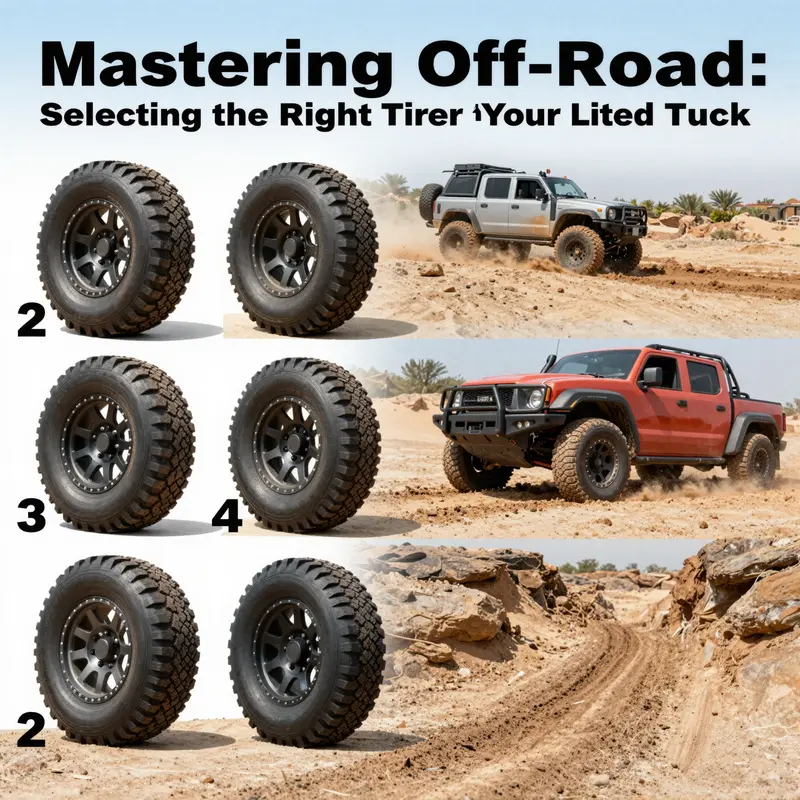
When you lift a truck, the tires you choose become far more than cosmetic. They define how the vehicle interacts with loose dirt, mud, sand, rocks and pavement. The right tire harmonizes with the lift, protects vulnerable sidewalls, and delivers predictable behavior under load. The wrong tire can turn confidence into compromise: premature failures, poor braking on wet roads, or a truck that wanders and vibrates at highway speeds. This chapter walks through the practical trade-offs and performance priorities that determine the best tire family for a lifted truck, and it explains how to match tire attributes to the conditions you actually drive in.
Begin by anchoring every decision to the terrain you will spend the majority of time on. If you spend most outings in deep, sticky mud or crossing unstable sand flats, you need a tire engineered to displace material and claw through soft surfaces. These tires use very aggressive, widely spaced tread blocks and deep voids to shed mud and sand. The self-cleaning action is essential: when lugs pack full of muck, traction disappears. Expect these aggressive designs to deliver the best possible bite in soft terrain and to excel at digging into vertical faces for climbing. The trade-offs are clear and unavoidable. On pavement they generate high rolling resistance, louder cabin noise, faster tread wear, and reduced wet braking performance. For trucks that rarely see long stretches of highway, the capability gained in the worst trails outweighs those compromises.
If your use is more balanced—regular highway driving, weekend trails, and occasional rough sections—look to a middle ground. Tires designed for mixed off‑road and on‑road service use a more moderate tread pattern that retains larger shoulder blocks and reinforced sidewalls while keeping the center ribs or closely arranged blocks to reduce noise. These designs provide sufficient traction on dirt, gravel and light mud while staying reasonably quiet and economical on asphalt. For a lifted truck, choose a mixed‑terrain tire with a proven reputation for durability under heavier loads; the sidewall construction should resist chipping and punctures from rocks encountered on overland routes. The best mixed designs also maintain traction in light snow by incorporating compound and siping features suited to cold temperatures.
Beyond the broad families of tread design, prioritize three technical attributes that matter most off-road. First, sidewall strength and protection: a lifted truck increases the lever arm between wheel and chassis when you impact obstacles, transmitting extra force into the tire walls. Reinforced sidewalls, internal plies with tougher textile or aramid layers, and exterior patterns that shield the bead area reduce the risk of cuts, pinches and bulges. Look for tires with explicit sidewall reinforcement technology and robust bead construction when you plan rock crawling or heavy trail use.
Second, analyze tread geometry for self‑cleaning and bite. Deep, open voids and staggered shoulder blocks bite into soft ground and spit out debris. Avoid tightly packed lugs if you expect mud or deep snow; they pack and lose grip. For rocky terrain, smaller interlocking tread elements with stone ejectors and reinforced tread edges can reduce stone retention and limit tread chunking. The optimal balance depends on whether you need continuous forward traction (favor larger voids) or repeated edges and lateral grip (favor interlocking, reinforced blocks).
Third, never compromise on load index and speed rating. Your lifted truck may carry recovery gear, aftermarket bumpers, winches, and heavier wheels. The new tire must meet or exceed the vehicle manufacturer’s load and speed specifications. An under‑rated tire can overheat and fail under sustained highway speeds or heavy loads. Always verify the correct ratings on the door jamb sticker or in the owner’s manual, and use only tires that match or exceed those numbers.
Tire size selection is another critical step. Larger diameters improve ground clearance and approach angles, but they change effective final drive ratio, speedometer accuracy, and steering response. Wide tires can increase scrub and strain suspension components. When moving up in diameter or width, confirm wheel offset, fender clearance and steering geometry with your lift vendor. In many cases a professional installer will recommend gear ratio changes or recalibration of the speedometer when tire diameter grows substantially.
There are common mistakes even experienced owners make. First, trusting marketing terms like “all‑purpose” without examining tread architecture and compound. No single tire excels in deep mud, loose sand, sharp rock and long highway runs simultaneously. Second, misreading winter symbols: a three‑peak mountain snowflake mark indicates the tire passed a minimum winter traction test, but actual cold‑weather performance depends on the rubber compound. If you drive in icy or snowy conditions regularly, choose a tire specifically developed for cold compounds in addition to looking for the snow symbol. Third, mixing old and new tires is risky. Replacing only two tires can upset traction balance and stability control behavior, especially on a lifted truck where suspension geometry is already altered. Replace all four tires whenever practical.
Installation practices matter as much as selection. Proper tire mounting, balanced wheels, and correct inflation under load are essential for long life. For off‑road use, learn to manage tire pressure actively: lower pressure increases footprint for grip on soft surfaces but raises the risk of bead unseating and sidewall damage on sharp rocks. Run proper bead locks or retainers where appropriate, and always clean and inspect the bead area and valve stems after heavy use. Carry repair plugs, a compressor, and a pressure gauge when venturing far from support.
Finally, think beyond the tires themselves. Protecting the truck and the tires can extend service life. Skid plates reduce impacts that would otherwise transfer shock to wheels and tires. Rock sliders and reinforced bumpers absorb strikes that might otherwise deform rims. Simple accessories like quality fender liners and running boards can prevent debris and mud from continuously abrading sidewalls. While these items are not tires, they influence how well a chosen tire performs and survives in the conditions you demand.
When weighing options, map your priorities: maximum off‑road bite at the expense of pavement civility, or a comfortable, durable compromise that handles both trail and commute. Let your primary terrain, the load you carry, and how much highway time you accept determine the family of tire to pursue. Match construction features—sidewall reinforcement, tread void design and compound—to that terrain. Pair selection with proper sizing, correct load ratings, and conservative installation to ensure your lifted truck behaves predictably no matter where the trail leads.
For a technical background on mud‑specific tread construction and common applications, see this industry overview: https://www.tireandwheel.com/blog/mudding-tires-for-trucks-material-composition-technical-standards-and-common-applications
Tires and Lifts: A Practical Guide to Off-Road Tire Selection
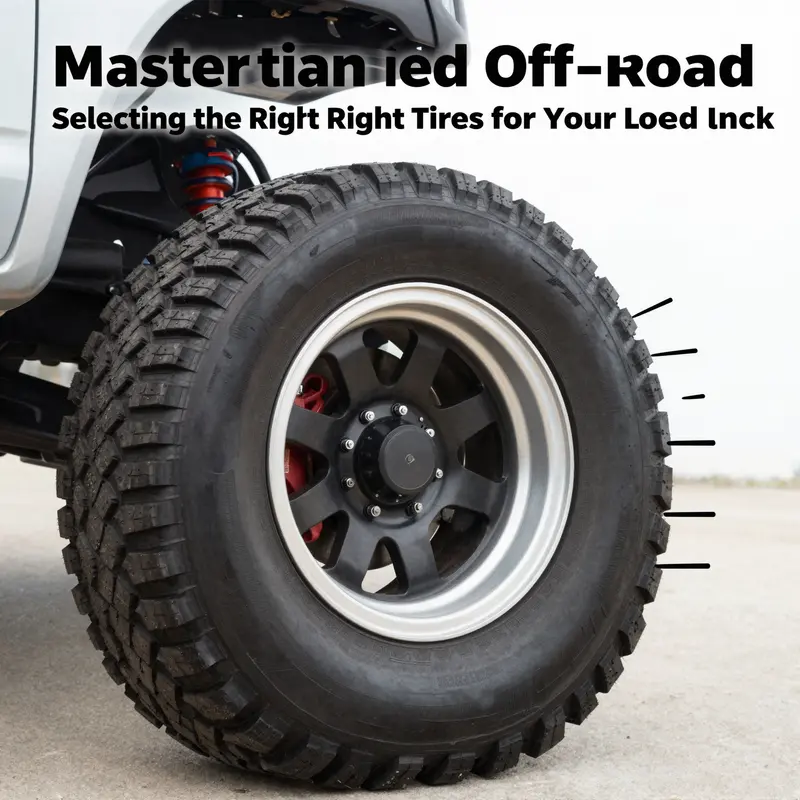
A lifted truck changes how the tire meets the ground, and the tire is the first weapon in your off-road arsenal. The goal is to match tire design to lift height, suspension geometry, and the terrain you expect to conquer, while keeping road safety and wear in check.
First, choose the terrain as your starting point: mud, rock, sand, or mixed trails. Mud-terrain tires offer maximum grip and self cleaning in deep mud and loose soil, but they tend to be louder on pavement and wear faster when driven on asphalt. All-terrain tires aim for a balance, delivering usable traction across dirt, gravel, and light mud with more predictable manners on the highway. For extreme rock crawling, specialty tires with reinforced sidewalls may provide the protection you need when the trail bites back.
Second, consider load and speed ratings. Lifted trucks carry more mass and often run larger diameter tires, which stresses the tire carcass and the drivetrain. The load index must meet or exceed the vehicle’s weight with full payload and anticipated off-road loads. The speed rating matters when you encounter brief highway bursts at speed; higher ratings generally tolerate heat better under load.
Third, sizing and fitment matter. A larger diameter tire increases ground clearance but can affect gearing, speedometer accuracy, and steering response. Width influences flotation and contact patch; too wide can rub or alter steering geometry in a lifted setup. Always verify tire, wheel, and fender clearance, and check for scrub radius changes with the lift.
Finally, consider sidewall protection, construction, and airing practices. Stronger sidewalls resist punctures from rocks and roots, while robust tread compounds help with cut resistance. Proper inflation pressure management reduces heat buildup and extends tread life. Align tires with suspension tuning and ESC/traction control settings to preserve predictable handling on varying surfaces.
For deeper technical grounding, consult tire manufacturers and industry standards to understand how compound, carcass construction, and reinforcement affect real-world performance in desert, forest, mud, and rock scenarios. A thoughtful, terrain-aware approach will keep you moving farther on the trail and safer on the road.
Final thoughts
Selecting the right tires for your lifted truck used off-road is a decisive factor in your overall driving experience and safety. By understanding your terrain, prioritizing performance, avoiding common pitfalls, and recognizing the best tire choices, you can enhance your ride’s capabilities. Every off-road enthusiast should pay careful attention to each aspect covered here to ensure optimum adventure and durability for your lifted truck. Equip yourself with the right knowledge and conquer every trail with confidence.