

Creating a formidable off-road truck involves a blend of mechanical prowess, innovative technology, and robust design. Whether you’re traversing rocky trails or navigating muddy terrains, a well-crafted truck is your greatest asset. This journey begins with constructing a powerful and reliable powertrain, mastering advanced 4WD systems, and designing an unyielding chassis. Each chapter will delve deeper into these critical components, helping you build a vehicle ready to conquer the wild. Prepare to embrace the adventure, as we explore the essential features that define a true off-road warrior.
From Torque to Terrain: Crafting a Balanced Off-Road Truck Platform
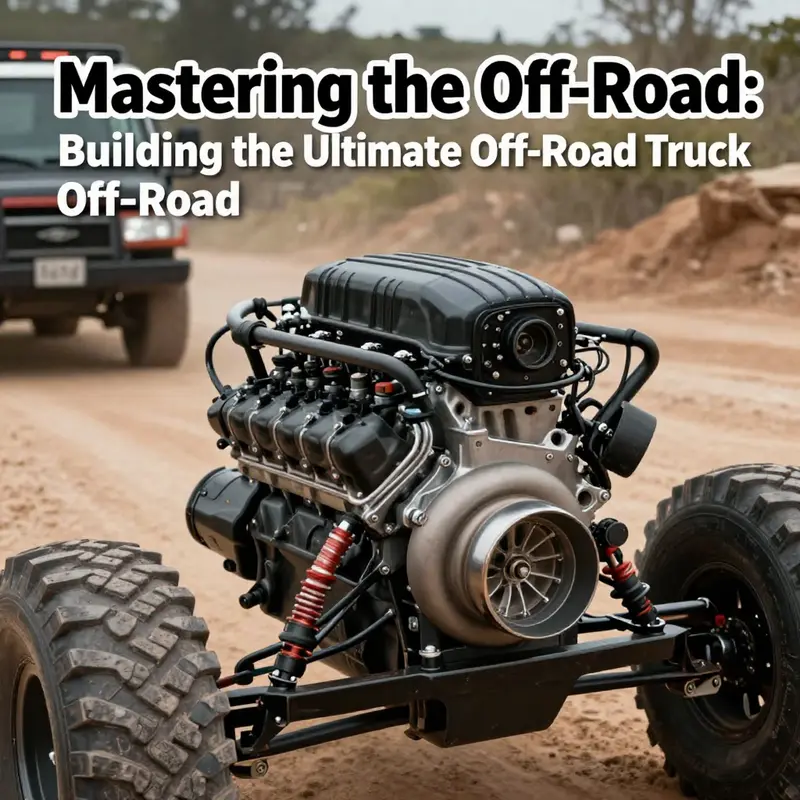
A good off-road truck is not a single powerful part but a cohesive platform that thrives on how well its parts work together under extreme conditions. The moment you set the vehicle down on a rocky trail, you are testing a system—engine or turbine, transmission, driveline, chassis, suspension, tires, and electronics—all at once. The goal is not merely raw power but predictable, controllable performance in a wide range of terrains. To achieve that, you design for synergy: you choose a power source that can sustain high torque at low speed, you pair it with a transmission and a gearing strategy that preserve that torque through the midrange, and you align every other subsystem to keep wheels in contact with the ground and the vehicle under control when the surface changes beneath you. This holistic approach is what transforms a heavy vehicle into a capable explorer rather than a fast-but-fragile machine. The heart of the effort is a disciplined balance between robustness and refinement, between the capacity to endure abuse and the ability to deliver precise, intuitive handling when the going gets harsh.
A high-torque, durable power source forms the starting point. In off-road contexts, engines that deliver maximum torque across a broad band of RPMs provide the most useful, controllable leverage. Diesel-type architectures remain popular for their sustained bottom-end torque and steady fuel delivery under load, which matters when you are crawling up a stubborn incline or pulling through churned mud. Yet even with a strong power source, straightforward throttle response won’t suffice. The driver’s ability to place and hold torque where it is needed depends on a carefully engineered transmission system and a drivetrain that can translate that torque to the wheels with reliable grip. The transmission should be tough enough to absorb shock loads from rock crawls and rutted trails, while also providing low-range gears that allow controlled progression when the surface grip is limited. A well-chosen low-range ratio—something that multiplies torque significantly—enables precise, deliberate movement at crawling speeds, which is essential for technical sections where a smooth, predictable power delivery matters more than outright speed.
The drivetrain that carries this power must do more than shuttle gears. A four-wheel-drive system with a transfer case that can switch between two-wheel drive, high-range four-wheel drive, and low-range four-wheel drive creates the strategic options a driver needs. A selectable low range allows real-time adaptation to terrain, while a locking differential—or at minimum a robust limited-slip differential—ensures that slip does not become the dominant mode of travel on loose or uneven surfaces. In practice, you want a system that distributes torque to the wheels that have traction while minimizing the spinning of wheels with poor grip. When the front and rear axles can independently receive appropriate torque, a vehicle climbs over obstacles rather than stalling on them. The controller that governs these decisions—whether it is a simple mechanical lock or a modern electronic system with traction analytics—must respond predictably, without dithering, and should provide feedback that the driver can feel through the accelerator pedal and steering wheel.
An equally important part of the package is the chassis and frame. For durability in harsh environments, a body-on-frame construction—where the frame bears most of the structural load—offers clear advantages in terms of impact resistance and reserve strength. A ladder-style or box-section frame can be reinforced with crossmembers and a purpose-built roll cage to improve rigidity and occupant safety during rollovers or heavy impacts. In rugged deployments, protection around critical components and underbody skirting becomes a practical necessity. Skid plates, rock sliders, and reinforced mounting points reduce the risk of structural damage when the vehicle abuts rocks or plows through uneven terrain. The chassis must also integrate seamlessly with the suspension geometry to ensure that the tires maintain contact with the surface over large undulations. A stiff yet thoughtfully tuned frame allows the suspension to work with the terrain rather than against it, preserving travel and maintaining line of travel through unpredictable sections.
Suspension choice and tuning lie at the heart of the vehicle’s ability to negotiate terrain. Long-travel suspensions paired with either a robust solid axle or a modern independent design can conquer rough terrain by keeping tires grounded as the body moves. The trade-offs between a solid axle and independent suspension are not purely academic; they determine how the vehicle handles, how much articulation is possible, and how predictable the ride feels when the truck is asked to navigate large rock gardens or deep ruts. Independent suspensions can offer excellent wheel contact across uneven surfaces, but a well-chosen solid axle with reinforced joints and high-load components can carry heavy loads and tolerate severe articulation with less risk of binding. The suspensions should be paired with dampers and springs chosen for durability, not just ride comfort. Adjustable or adaptive systems can deliver a firm, stable platform for high-speed traverses and a softer, more forgiving feel when crawling. These systems should also respond to payload and terrain, changing ride height, spring rates, and damping in concert with the driver’s intent and the surface being faced.
Ground clearance, approach, departure, and breakover angles play a functional role in how a truck handles obstacles. Maximizing clearance helps you clear obstacles without damage to the undercarriage, while adequate approach and departure angles prevent the vehicle from hanging up on boulders or steep ledges. Breakover angle—how the truck handles cresting a rock or a ridge—depends on the geometry of the suspension and the chassis, as well as the height of the drivetrain and exhaust routing. These angular metrics are the tangible expression of the engineering decisions made in earlier stages: frame height, suspension travel, axle articulation, and the location of critical components. The driver can exploit these angles with careful line choice, but the vehicle itself should be designed to avoid the worst-case contact scenarios. The practical result is a truck that can approach obstacles with confidence, slide over them with minimal cohort risk, and still descend steep sections with controlled precision.
Braking and stability are not afterthoughts; they are a critical part of maintaining control during downhill descents or emergency stops. Large, vented brakes with strong calipers help dissipate heat during prolonged braking on steep descents, reducing fade and maintaining pedal feel. A stability control system tailored to low-traction conditions—one that can modulate braking and throttle to preserve traction and direction—is particularly valuable in off-road contexts. Hill descent control, when present, is a reassuring companion. It manages brake pressure on steep grades, enabling the driver to focus on line selection and throttle input rather than the delicate balance between braking and steering. When integrated with the powertrain and suspension, such systems create a predictable, confidence-inspiring platform that refuses to punish the driver for challenging terrain. The objective is not to remove all risk but to manage risk with predictability, so the vehicle remains an extension of the driver’s intent.
Tire choice and wheel design are the vehicle’s only contact with the ground, and they deserve the same level of engineering attention as the engine. All-terrain and mud-terrain tires with deep, aggressive tread patterns and reinforced sidewalls provide traction on soft soils and rocky surfaces alike. The tires must resist puncture and carry a load while offering predictable behavior when transitioning from grip to slip. Light, stiff alloy wheels help reduce unsprung mass, improving suspension response and steering feel. However, the wheel-tire combination should be tuned for the vehicle’s load, torque, and intended terrain—not just for a bold look. A robust bead seating, reinforced sidewall construction, and a tire that tolerates aggressive off-road abuses enable the vehicle to sustain high-speed runs over rough surfaces and long expeditions without compromising safety or reliability.
Inside the cab, practicality and durability matter as much as performance. The interior should feature rugged seating that remains comfortable on long expeditions, weather-resistant surfaces that are easy to clean, and storage solutions that accommodate recovery gear, tools, and provisions. The controls should be easy to reach and operate with gloves on, and displays should provide clear telemetry on engine torque, drivetrain status, suspension position, and remaining ground clearance. The vehicle’s utility tailors itself to the mission—expeditioning, rock crawling, mudding, or cross-country travel—without sacrificing the core off-road capability. When a truck is built for exploration, the cabin becomes a staging area where equipment can be organized for the journey and the driver can monitor the vehicle’s health in real time.
Technology and safety systems have moved from optional upgrades to essential enablers of off-road capability. Terrain-responsive controls, adaptive damping, and hydraulic suspension systems can adjust stiffness and ride height on the fly to suit the surface beneath the tire. Electronic aids, such as traction control tuned for low-traction conditions and hill descent or descent rate regulation, help maintain predictable behavior across a broad spectrum of terrain. Beyond land-based sensors, satellite messaging and emergency communication capabilities become a practical necessity in remote regions, where cell coverage may be unreliable. These technologies support safety and resilience, turning an ambitious expedition into a feasible one by reducing the chance that a breakdown becomes a life-threatening situation.
To design with such complexity in mind, you must begin from a robust testing program. Real-world durability comes from rigorous testing that pushes components to their limits. Deserts test the cooling system and fuel system under extreme heat; arctic environments reveal cold-start performance and lubrication behavior; rocky trails expose frame stiffness, articulation limits, and underbody protection; and deep water crossings test seals and electronics. Test cycles should imitate a spectrum of mission profiles—from slow, technical climbs to long, high-speed traverses—so engineers can observe how the system behaves under sustained loads and sudden shocks. Only after mastering these responses can a vehicle be considered truly reliable in off-road condition. In practice, this means validating every subsystem in integrated trials, adjusting fly-by-wire calibrations, refining hydraulic responses, and tuning suspension to harmonize with tire performance, drivetrain torque, and chassis rigidity.
This is not merely theoretical. As you map out a build, consider how each choice reverberates through the whole truck. The engine’s torque profile should guide the transmission’s gear ratios and the range of speeds at which the vehicle can operate cleanly on rough surfaces. The chosen differential strategy should align with the terrain you expect to encounter, whether it is loose soil, slick rock, or steep grades. The suspension design should accommodate both high-speed stability and slow-speed articulation, ensuring driver feedback remains intuitive rather than surprising. The wheels and tires should be matched to the vehicle’s load and intended terrain, sustaining grip without compromising durability. Finally, the electronics should synthesize data from every corner of the vehicle—sensors on the drivetrain, suspension, and braking system—into actionable feedback for the driver and safe, automated control when needed.
As you work through these design elements, you may encounter conflicting priorities: the need for greater suspension travel versus the desire for lower unsprung mass, or the demand for maximum ground clearance against the risk of increased vehicle height and rollover tendency. The art of building a good off-road truck is learning to balance these tensions so that the end result feels deliberate and controllable in every context. It is about building a platform where power, grip, and stability reinforce one another rather than compete. When you succeed, the vehicle behaves like a well-drilled team: the engine provides the motive force, the transmission delivers it in digestible chunks, the drivetrain places it where grip exists, the chassis and suspension maintain that grip through rough terrain, and the tires translate that grip into forward motion with confidence. The driver experiences this harmony as predictability—the sort of reliability that invites long days behind the wheel and daring line choices without fear of sudden, destabilizing surprises.
For readers who want to pursue deeper technical grounding, the literature on powertrain engineering and off-road system integration provides a robust foundation. A comprehensive reference is the SAE International body of work on off-road powertrain engineering, which offers detailed analysis of how to balance raw power, mechanical resilience, and intelligent electronics across diverse terrains. This body of work reinforces the core idea that success in off-road truck design is not about chasing one miracle component; it is about orchestrating a platform where every element enhances the others. To connect practical, hands-on learning with broader engineering principles, consider exploring further resources on diesel mechanics and maintenance strategies. Mastering Diesel Mechanics: Your Step-by-Step Path to Success provides a pragmatic bridge between theory and field readiness, helping teams maintain reliability under the most demanding conditions.
In practice, the path from concept to capability involves iterative cycles of design, build, test, and refine. Early on, you sketch the platform with a focus on safe, sound architecture: a frame that can withstand torsional stress, a drivetrain that can deliver torque without overheating, a suspension system that can articulate without binding, and a braking system that remains effective as speeds vary with terrain. Then you validate your assumptions on controlled trails, gradually exposing the platform to more demanding tests. You observe how the vehicle accelerates through loose soil, how it maintains traction on slick rock, how it negotiates steep grades, and how it behaves when it encounters water or mud. Each test reveals a set of adjustments—perhaps a different suspension tuning, a revised differential strategy, or revised heat management under load. The aim is not to push the vehicle to histrionics but to promote reliability, predictability, and driver confidence, regardless of whether the expedition lasts hours or days.
Ultimately, a well-built off-road truck is a platform that makes exploration possible. It does not elevate speed as the sole objective but elevates the driver’s ability to choose lines, control momentum, and recover from missteps with minimal risk. It supports long journeys over challenging terrain, enabling drivers to focus on navigation, strategy, and the joy of venturing into the unknown rather than worrying about whether the vehicle will hold together. By designing with integration in mind—aligning powertrain dynamics, driveline behavior, chassis rigidity, suspension articulation, tire grip, and smart controls—you create a vehicle that meets the demands of the environment and the ambitions of the operator. This is how a truck becomes more than the sum of its parts: it becomes a capable partner in exploration, ready for whatever the road—or the trail—throws at it.
External reference for further reading: https://www.sae.org/publications/technical-papers/content/2025-01-0123
Traction Without Compromise: Building an Off-Road Truck Around Advanced 4WD Systems

The core question when designing a capable off-road truck is not only how much power or how big the tires are, but how reliably power can be delivered to the ground when terrain refuses to cooperate. Modern four-wheel drive systems are the heart of that reliability. They are not cosmetic but the primary engine of grip, control, and confidence. When integrated with the chassis, suspension, drivetrain, and control electronics, these systems turn a heavy vehicle into a capable partner on steep climbs, through scree, or across slick riverbeds. The goal is a symbiotic architecture where mechanical hardware, electronic sensing, and software logic work together so grip is maximized without sacrificing durability, safety, or daily usability. In the quiet moments before a trail, the strategy is to design a system that behaves predictably under load, adapts to changing traction, and preserves momentum when obstacles look unyielding. This is how a good off-road truck earns its keep on long expeditions and challenging routes alike.
A robust 4WD platform begins with the transfer of power and the way that power can be modulated across the wheels. Locking differentials offer a simple, decisive method to eliminate wheel spin when one wheel loses grip. A mechanical differential, in normal operation, sends more torque to the wheel with less resistance, which is ideal for paved roads but can be problematic when a wheel climbs into air or mud. A locked differential, by contrast, forces both wheels on an axle to rotate at the same speed, effectively knitting the axle into a single unit. On a trail where one wheel climbs a rock or sits in a trench, locking the differential forces the opposite wheel to contribute torque, often helping pull the vehicle out of a bind. The key is to pair locking with smart thresholds and predictable engagement. Manual or electronic lockers give the driver a clean, decisive response, but they also demand discipline to avoid engagement on high-traction surfaces, where locking can increase tire scrub and wear.
Beyond locking, the transfer case shapes traction and control over varying terrain. A two-speed transfer case with a low range provides torque multiplication for slow climbs or rock crawling. Low gearing lets the engine deliver high torque at modest speeds, reducing wheel spin and enabling precise placement on obstacles. The most capable builds use a transfer case that can shift into neutral or another gear ratio to suit a range of surfaces, from loose gravel to slick mud. The interplay between differentials and the transfer case creates a versatile foundation. If traction is lost, the system should redistribute power quickly and predictably, maintaining forward progress rather than letting the truck slide or stall.
Electronic traction control builds on this mechanical backbone. Modern off-road platforms use sensors to monitor wheel speeds, slip, and load, then apply targeted braking to specific wheels or modulate throttle to prevent slip from escalating. This electronic oversight reduces the need for constant driver adjustments, letting the vehicle maintain momentum while the driver focuses on line choice. Yet electronic traction control is not a substitute for mechanical grip; it complements that grip to exploit every available traction. The most capable systems balance proactive control with the driver’s intent, so throttle input leads to measured corrections rather than abrupt interventions. In the harshest conditions, a well-tuned traction control system acts as a guardrail for the tire contact patch, preventing wheels from breaking traction at the critical moment.
Terrain-specific driving modes elevate traction management from reactive to proactive. When a truck senses the surface type—soft sand, loose gravel, or slick rock—it can adjust throttle response, transmission shift points, brake pressure, and transfer-case behavior to suit the terrain. The driver benefits from a consistent baseline that adapts to conditions without constant manual recalibration. For example, a sand mode might soften throttle response and reduce peak torque to avoid digging, while still preserving momentum. A mud or rock mode could favor torque delivery and wiser traction control interventions to avoid wheel spin on a slick ascent. The most effective layouts offer a spectrum of modes that can be engaged as needed and, ideally, learn from repeated trips so performance improves with time as the system recognizes the driver’s preferred pace.
Hill Descent Control represents another essential tool, especially on steep grades. It maintains a steady, controlled vehicle speed by modulating braking pressure and throttle input, letting the driver focus on steering and line selection rather than brake modulation. On rugged terrain, the ability to descend a slope without locking up brakes or losing control is a major safety asset. When integrated with a smart suspension system, Hill Descent Control works with ABS and traction control to sustain deliberate motion down a slope, even as the terrain shifts beneath the tires. This synergy between chassis dynamics and drivetrain control makes challenging descents repeatable and manageable.
Off-road ABS finishes the safety matrix. While regular ABS helps in emergency braking on pavement, off-road ABS is tuned for loose, uneven ground where wheel spin is counterproductive. It prevents skidding while allowing some wheel slip that helps the tires bite into loose material. In a well-integrated system, ABS works with traction control and electronic differential locks to optimize braking stability during slow climbs and descents. The objective is consistent deceleration without abrupt yaw or loss of control, even when negotiating slick banks or deep ruts. Because off-road conditions rarely resemble smooth asphalt, a purpose-built ABS calibration becomes a reliability feature rather than a luxury.
Tire choice and wheel architecture must reflect the capabilities of these systems. The tires are the only contact point with the ground, so their behavior under load determines how effectively the 4WD package can deliver traction. Aggressive all-terrain or mud-terrain tires with deep, well-structured tread patterns improve grip in mud and rock while maintaining some efficiency on firmer surfaces. Sidewall reinforcement reduces puncture risk when the vehicle abuts sharp edges or exposed rocks. Matching tires to a strong, lightweight alloy wheel reduces unsprung mass, improving handling and suspension response while preserving durability for rough trails. The tire and wheel choice also influences braking performance, steering feedback, and ride quality; a balanced option set helps ensure that the 4WD system can exploit the driver’s inputs without fighting the wheel and tire package.
The interaction between 4WD architecture and the rest of the vehicle is a constant negotiation among weight, durability, and dynamic capability. Heavy platforms require sturdier frames, more robust suspension kinematics, and more capable braking systems to maintain control when the terrain demands traction. However, extra weight can blunt acceleration and increase energy demand, so the system must be tuned to deliver smooth, predictable responses rather than abrupt surges. A well-engineered truck prioritizes traction management as a holistic property. Powertrain outputs, drivetrain interfaces, chassis rigidity, suspension travel, and tire compliance must all harmonize so the vehicle feels confident in the driver’s hands, not unpredictable or fragile.
A practical path to achieving this harmony begins with clear design principles and thorough testing. During the engineering phase, planners map out the expected duty cycle: the types of trails, the frequency of use, and the severity of loads the truck will encounter. They design the differential strategy and the transfer case with sufficient margin to tolerate extended use under tough conditions. They specify an electronic control architecture that can maintain reliability under dust, heat, and moisture, while providing fail-safes and degradation modes so the system remains functional even when a sensor or actuator is stressed. Realistic testing then validates the model: testing on rocky grades, in sand dunes, through mud and water, and on gravel roads that demand precise steering corrections. The goal is to replicate the environments where owners will operate the vehicle and to quantify the behavior of the 4WD system under those conditions. In the field, these tests reveal how quickly the system responds, how well it preserves momentum when a wheel loses grip, and how predictable the response is when the driver makes a throttle input.
Crucially, the system must not be overbuilt to the point of becoming a maintenance liability. Complexity has a price. More sensors, more actuators, and more software mean more potential failure points. The best 4WD configurations minimize unnecessary redundancy while preserving essential reliability. They use modular designs that allow easier repair and maintenance in remote environments. They also rely on diagnostics that can surface issues early, guiding operators to service intervals before minor faults escalate into bigger problems. The maintenance philosophy should be proactive: regular inspection of differential seals, transfer case fluid, and drive shafts; periodic checks of sensor calibrations; and a plan for moisture management and dust sealing. A truck designed around advanced 4WD systems should perform reliably across seasons, without requiring heroic measures to stay on the trail. This is the seam where engineering rigor meets practical field use.
The concept of a good off-road truck is not simply about adding impressive hardware; it is about ensuring the integrated system can deliver predictable behavior under a wide range of loads and surfaces. The most successful builds enable the driver to choose a line with confidence and to execute it with consistency. The mechanism that makes this possible is a carefully balanced ecosystem where locking diffs, a flexible transfer case, electronic traction control, terrain modes, and hill descent logic work in concert with a well-tuned ABS system and a tire and wheel package designed for off-road service. Drivers learn to anticipate how the system will react to changes in surface and speed, and the vehicle grows more capable with experience rather than less intuitive. In this sense, advanced 4WD systems are not a bolt-on feature; they are the spine of the vehicle, the nervous system that interprets terrain and translates intent into controlled motion.
For readers who want to pursue deeper mechanical mastery, a practical route is to explore the logic behind the mechanical choices and the calibration strategies that align with the intended use. The path from basic four-wheel drive to a sophisticated, terrain-savvy system requires an understanding of torque distribution, control algorithms, and the limits of traction on diverse surfaces. It also requires a willingness to test, iterate, and refine. A well-designed 4WD backbone makes it possible to venture farther and to confront tougher terrain with a calm, deliberate pace. The driver remains the ultimate limiter or enabler of performance, but the vehicle provides the tools to execute with precision. The result is a truck that can move through a cliff line, glide past a sloping ledge, or crawl over a boulder with controlled power rather than brute force.
In sum, the advanced four-wheel drive framework is more than a set of components; it is a philosophy of traction. It demands careful matching of mechanical layout, electronic control, power management, and human input. The payoff is a vehicle that remains predictable when the ground underfoot changes suddenly and that can maintain momentum through the most challenging segments of a trail. As with any high-performance off-road design, the temptation to over-engineer must be resisted in favor of reliability, clarity, and consistency. A good off-road truck treats grip as a dynamic resource that shifts with soil, moisture, temperature, and slope. The 4WD architecture should illuminate that resource, provide practical means to exploit it, and do so without compromising safety or daily drivability. When all of these threads come together, the truck becomes more than the sum of its parts: it becomes a dependable partner on the journey across rough landscapes, a vehicle whose traction and control empower the driver to write a new line through every obstacle.
If you want to explore a deeper, more technical framing of the underlying systems and how they translate into practical maintenance and tuning, a resource that focuses on the nuances of diesel mechanics and powertrain fundamentals offers a structured pathway. mastering diesel mechanics. This pathway helps translate theory into hands-on action, ensuring the engine and drivetrain can sustain the demanding load profile that advanced 4WD systems require.
For those seeking a broader technical lens on the electronic control elements that govern 4WD performance, a comprehensive external perspective on 4WD switch design and behavior provides additional depth. A detailed discussion of how switch logic interacts with different drive modes, locking mechanisms, and traction control is available at https://www.offroad-technology.com/4wd-switches-explained/. This resource complements the practical, hands-on guidance presented here by illuminating how electronic interfaces influence system stability and driver experience under varied terrain and speed conditions.
The Backbone of Adventure: Designing Heavy-Duty Chassis Systems for Off-Road Trucks
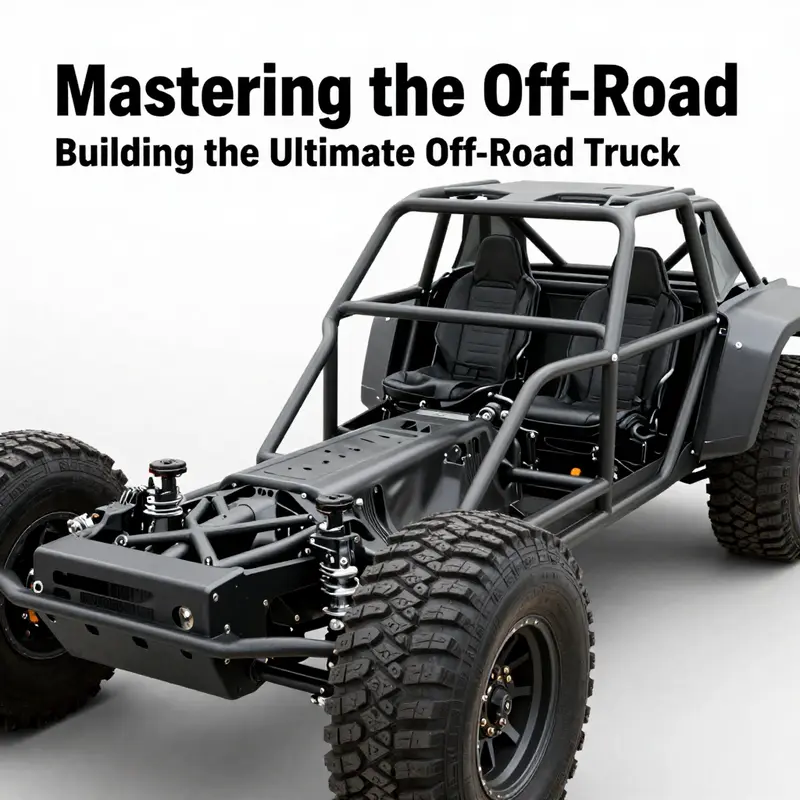
The chassis is more than a skeleton; it’s the unbroken line that determines how a truck behaves when pressure, heat, mud, rock, and weather test its mettle. In off-road design, the chassis must be simultaneously rigid where needed and forgiving where it matters, capable of carrying payloads, resisting fatigue, and granting the suspension the freedom to articulate. This is where engineering intuition meets rigorous analysis. A well-conceived heavy-duty chassis acts as both foundation and interface: it anchors the powertrain and drivetrain while hosting mounting points for suspension, steering, and body systems. When you design with that dual role in mind, you begin to see why material choice, frame geometry, crossmember placement, and integration with safety features are not discrete tasks but a single, cohesive discipline. If the goal is to build a truck that can roam remote trails without mercy and return with confidence, the chassis must be conceived as a living structure—one that can absorb energy, distribute loads, and maintain alignment between the tires and the roadless world they must conquer. The design conversation starts with material choice and then moves to geometry, manufacturing realities, and a philosophy of safety that acknowledges the vehicle will live on the edge of control far more often than on smooth pavement. The result is a chassis that can endure desert heat, arctic cold, rocky climbs, and water crossings while keeping the rest of the vehicle aligned with the mission. In this context, the study of heavy-duty chassis design, including insights from peer-reviewed research and industry practice, becomes an essential guide for builders who refuse to compromise on durability, safety, or performance. A rigorous, design-centered approach ensures that every bolt, rail, and weld contributes to a coherent system rather than a collection of resilient parts that happen to share space on a single vehicle.
Material selection anchors the discussion. The strongest chassis systems for extreme terrain lean on high-strength materials that resist torsional and bending stresses without adding unmanageable weight. Alloy steels and advanced high-strength steels (AHSS) offer a practical balance: they provide high yield strength to withstand bending moments during side-slope traversal and impacts, while allowing the frame rails to remain manufacturable and weldable. The goal is not to chase the absolute maximum strength in every section, but to tailor thickness, alloy choice, and heat treatment to the actual load path the frame will experience. For a ladder-frame or body-on-frame approach, which remains a staple in rugged trucks, the crossmembers and rail geometry must accommodate loads that travel along the frame when tires are negotiating irregular surfaces. In such a system, the frame is not a purely straight element; it behaves like a network that distributes forces from the wheel contacts toward the driveline, engine mounts, and roll cage. The frame must therefore combine stiffness with a measured amount of give where dynamic loads are concentrated, especially around mounting points that connect to the suspension and drivetrain. The integration of flexible mounting points can help the chassis absorb torsional twists without transferring sharp, localized stresses into critical joints. On the durability side, corrosion protection and surface preparation cannot be treated as afterthoughts. Off-road chambers are aggressive environments: mud, salt spray, and abrasive water can accelerate fatigue failure if coatings are inadequate. Protective coatings, proper sealing of joints, and attention to drainage paths are all part of the holistic approach that makes a chassis last through repeated cycles of flexing and impact.
Geometry and load paths define how a chassis behaves under real-world conditions. A robust chassis design uses a clear understanding of load paths to ensure that the body, suspension, and engine interface in a way that promotes predictable handling. The frame must provide generous ground clearance without sacrificing torsional stiffness. It should resist twist when the suspension articulates through deep ruts and rock steps, ensuring that the wheels remain in contact with the surface long enough to recover traction. This is where dynamic analysis becomes essential. Finite element analysis (FEA) and multi-body dynamics simulations allow engineers to model how the frame behaves under combined loading scenarios: heavy payloads, dynamic road irregularities, and sudden decelerations on steep grades. These tools reveal where stress concentrations accumulate and which crossmembers or rails are most critical to reinforce. The outcome is not simply a heavier frame; it is a smarter frame, with reinforcement where needed and lighter sections where the loads are lower. The aim is to minimize weight while maximizing stiffness and energy absorption in the right places. A well-balanced chassis design also contemplates the geometry of attachment points for the suspension and drivetrain. The axle location, the position of engine mounts, and the arrangement of transfer cases or differentials all influence how loads are transmitted through the frame. In some configurations, engineers optimize weight distribution by distributing components along the length of the chassis so that the center of gravity remains within a favorable window for stability on uneven ground. The ability to tune this balance is crucial for maintaining predictable pitch and roll characteristics when descending a long scree field or cresting a rocky ascent.
Another critical axis of design concerns off-road capability enhancements that interact directly with chassis integrity. The frame must accommodate reinforced crossmembers, skid plates, and robust anchor points for protective elements that shield vital components from damage. The chassis should support features that the driver may rely on for controlled progress over obstacles: mount points for skid plates that can be reinforced without requiring a complete teardown, and provisions for additional bracing where articulation is greatest. In practice, this means a frame layout that anticipates the need for additional bracing around the transfer case, powertrain mounts, and the steering gear. The chassis must also provide clear, serviceable routes for wiring, fuel lines, and cooling ducts, because off-road use increases the likelihood of abrasion and flexing that could compromise essential systems if lines are not properly protected. The dynamic load distribution analysis becomes especially important when considering how the vehicle’s suspension will interact with the frame. Heavy-duty suspensions, whether long-travel independent designs or solid-axle configurations, transfer substantial loads into the frame at multiple contact points. The frame must be capable of handling those loads without deforming in ways that would alter alignment or degrade steering feel. In addition to mechanical connections, the chassis must accommodate safety features such as roll protection. A properly integrated roll cage, whether as a structural member or as a separate add-on, becomes part of the chassis itself. The interplay between roll cage and frame rails helps maintain cabin integrity during a rollover while also contributing to overall torsional stiffness. The design philosophy here is to seek integrated resilience rather than add-on strength. The result is a chassis that remains predictable under duress, letting the suspension do its work and the driver maintain control.
The rigorous verification of chassis integrity rests on a combination of simulation, testing, and safety standards. Modern practice does not rely solely on static strength calculations; it requires validation under representative, mission-driven conditions. Engineers use multi-axial loading scenarios to simulate how the frame responds when the truck negotiates a jagged trail at speed, when a wheel drops onto a protruding rock, or when the vehicle experiences sudden deceleration on a slope. These tests reveal how load sharing among rails and crossmembers occurs and whether any part of the frame is approaching the yield limit or fatigue threshold. Fatigue life estimation is essential because the vast majority of real-world failures arise from repetitive loading rather than a single catastrophic event. Accordingly, the design process integrates endurance testing that mirrors harvest cycles of salt spray and abrasion, as well as thermal cycling to simulate desert heat and winter cold. This precaution prevents cracks from propagating unnoticed and ensures that the joint configurations, especially welded connections, maintain their integrity after thousands of cycles. The SAE-family safety standards offer a compass for these efforts, guiding the chassis engineer toward appropriate material properties, joint designs, and inspection criteria. A chassis designed with explicit compliance in mind not only reduces the risk of field failures but also simplifies serviceability and end-user maintenance, which are crucial considerations for expedition-style use where field repairs may be necessary.
Manufacturing realities shape the final form of the chassis just as much as the theoretical analysis does. The choice of weld processes, joint geometry, and assembly tolerances dictates how the frame behaves as a continuous structure. Precision in welding quality matters; inconsistent welds can become initiation points for cracks under cyclic loading. The manufacturing plan should specify non-destructive testing (NDT) to verify weld integrity and rail continuity after assembly and during lifecycle maintenance. In addition, the frame’s modularity can support field modifications without undermining reliability. A well-conceived chassis allows for reinforced sections to be added or replaced in response to new mission requirements, whether that means heavier payloads, longer wheelbases for stability, or additional armor for protection. The interface to body panels, cooling systems, and fuel storage is also critical. Proper routing and protection help ensure that the chassis remains functional even when the vehicle is challenged by tight passages, deep ruts, or crossing streams where debris can abrade lines and hoses.
This integrated approach to chassis design finds practical resonance in the broader literature on heavy-duty truck chassis engineering. It emphasizes material optimization, robust chassis architecture, and advanced analysis tools to validate performance under extreme conditions. The goal is not merely to survive rough terrain but to enable controlled, confident, and safe progression across it. When the chassis is designed with that intention, the rest of the truck—the suspension, the drivetrain, the tires, and the safety systems—can be optimized to work in concert rather than at cross purposes. The result is a platform that remains predictable through a wide spectrum of off-road scenarios, from steep climbs to rock gardens to water crossings, while preserving driver confidence and component reliability. As with any advanced engineering discipline, the ongoing refinement of chassis design benefits from cross-disciplinary insights, historical data, and ongoing research. The referenced study on heavy-duty vehicle chassis design provides a foundational perspective on material selection, structural optimization, and the interplay between chassis geometry and load paths, underscoring that durable performance in extreme environments rests on a solid core. With this foundation, builders can pursue iterative improvements—refining brace locations, experimenting with alternative materials, and validating innovations through simulation and controlled testing—while maintaining adherence to safety and quality standards. In parallel, practical considerations such as repairability, serviceability, and component accessibility ensure that the chassis remains a usable platform for real-world expeditions, not just a machine fitted for peak theoretical performance. For professionals and enthusiasts alike, the chassis represents a disciplined convergence of science and stamina, a backbone capable of transforming ambitious off-road visions into reliable, repeatable adventures.
External reference for further resonance with the chapter’s themes: Design and analysis of heavy duty vehicle truck chassis. Design and analysis of heavy-duty vehicle truck chassis discusses structural optimization, material selection, and validated performance under demanding operating conditions, offering foundational context for modern off-road chassis development. https://www.researchgate.net/publication/325478614Designandanalysisofheavydutyvehicletruck_chassis
Internal resource for deeper mechanical insights: master the fundamentals of durable powertrain integration and chassis interaction through a practical exploration of diesel mechanics and system resilience. mastering-diesel-mechanics-your-step-by-step-path-to-success
Final thoughts
The journey of building a reliable and capable off-road truck is substantial yet rewarding. By focusing on a powerful powertrain, advanced 4WD systems, and a rugged chassis, you are not just constructing a vehicle; you are crafting an adventure-ready machine. Every component plays a pivotal role in ensuring your truck can withstand the harshest terrains while delivering the thrilling experience every off-road enthusiast craves. Gear up and embrace the trails ahead with confidence and robustness.