
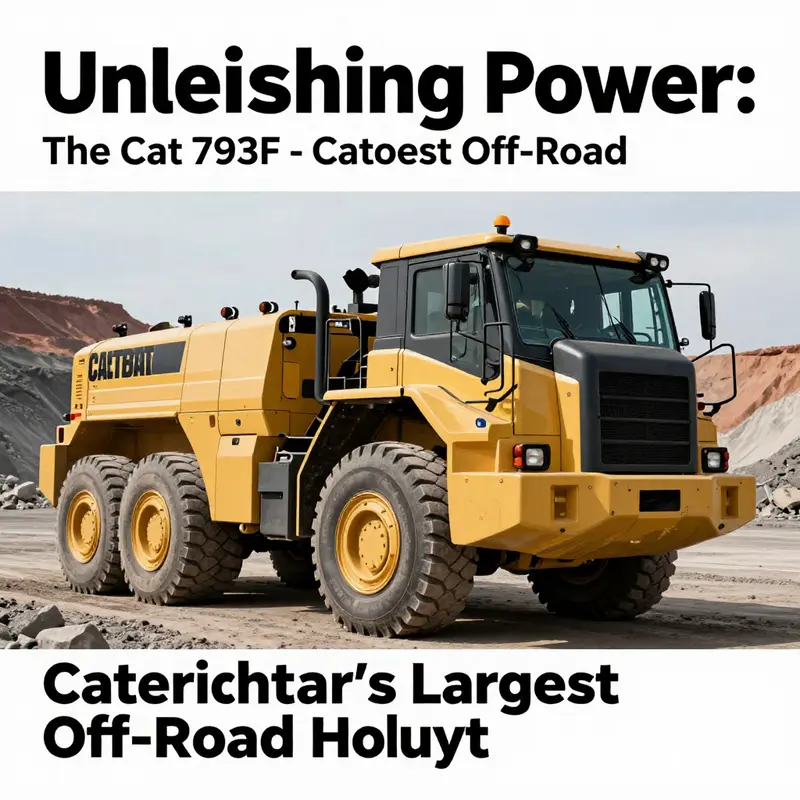
When it comes to heavy-duty off-road vehicles, the Caterpillar Cat 793F stands as a titan in the mining sector, redefining what efficiency and power mean in the industry. With a payload capacity of 140 tons (approximately 127 tonnes) and equipped with a robust Cat C18 engine, this mammoth machine embodies the rugged engineering at the heart of Caterpillar’s innovations. From its advanced specifications to its superior performance in mining operations, the Cat 793F is not just a vehicle; it’s an economic powerhouse. Each chapter of this discussion will peel back the layers of what makes the Cat 793F the pinnacle of off-road haul trucks. We’ll explore its specifications and features, dive deep into its performance during mining operations, and analyze the economic implications of employing such a capable machine in today’s competitive landscape.
Scale, Power, and Precision: Inside the Largest Off-Road Haul Truck That Drives Modern Mines
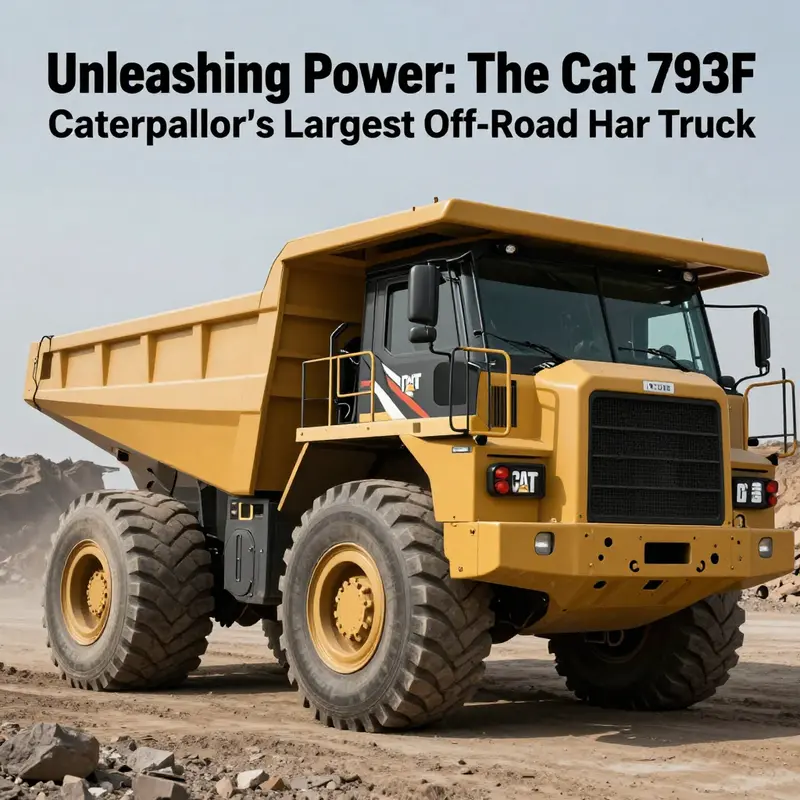
The mining landscape is defined not merely by ore grades or cutting-shear productivity, but by the sheer scale of the machines moving material from bench to crusher, from stockpile to market. Among these leviathans, one class stands apart for its combination of mass, reach, and endurance: the largest off-road haul truck in a manufacturer’s lineup. It is a machine built to swallow hundreds of tons of rock and ore in a single load, to traverse vast mine drains and steep ramps, and to do so with a reliability that makes its uptime almost as important as its payload. This chapter follows the arc of that machine—from the design impulses that govern its size and shape, through the powertrain and control systems that translate weight into work, to the daily realities of operation in the world’s toughest mining environments. It is a portrait of engineering where kilogram-for-kilometer economics matter as much as horsepower and torque, and where every decision about volume, weight, and speed is a direct lever on the mine’s bottom line.
At the heart of the largest haul truck in the program is a deliberate marriage of payload and stability. In open-pit mining, material flow is the yardstick by which a truck’s efficiency is measured. The truck’s rated payload sits at the upper end of the industry’s mass spectrum, a testament to an engineering approach that prioritizes the ability to move massive volumes in fewer trips. The payload capability is complemented by a large, heaped cargo box whose geometry is tuned for efficient loading and reliable dump performance. When the truck is loaded to its maximum, the total vehicle mass swells into the hundreds of tonnes, reflecting a heavy-lift paradigm where the machine is almost a moving mass of rock rather than a conventional vehicle. This mass is not merely inertia; it is a designed phenomenon—an asset that, if managed correctly, yields higher material throughput and lower cycle times. In practice, this means more rock moved per hour and fewer stops for reloading, which translates into a lower cost per ton and a more predictable production schedule for the mine.
The dimensions of such a machine are not an incidental curiosity. They are the physical expression of its role in a fleet. The length stretches toward the far end of the scale while the width and height keep the platform stable, balanced over a set of large tires that provide traction and damping in the rough terrain that mines routinely present. The loaded weight sits in the neighborhood of four hundred thousand kilograms, and the empty weight—though still heavy—leaves room for the payload to sit above the ground without compromising stability. In terms of volume, the cargo box can accommodate a substantial range of material, with capacity specified in cubic meters that reflect both the practical realities of heaping and the need to keep material within the confines of the box so that a safe, controlled dump remains feasible on uneven ground.
Powering this behemoth is a source that is as much about endurance as it is about raw drive. The plant is a vast diesel powertrain with a very large displacement, designed to deliver sustained high-output torque across the entire operating envelope. The engine’s architecture is chosen to sustain maximum output through the long, harsh cycles that mining demands. The result is a drive system capable of delivering multiple thousands of horsepower to the wheels, enabling the truck to start and move even when deeply loaded, climb grades that would stall lesser machines, and maintain a productive cadence in the face of rolling resistance, loose ground, and steep ramps. The exact numbers—while impressive—are better understood as a reflection of the system’s intent: to provide a stable, high-energy thrust that keeps the cycle time short and the uptime high. A machine of this class is engineered not only for peak power, but for consistent power over long shifts and across the variances of real mine conditions.
The drive train relies on a control philosophy that treats gear selection as a time-saving, efficiency-raising decision rather than a mere mechanical function. A six-gear, automatic transmission translates engine power into wheel torque with carefully tuned shift points. The aim is to minimize the time spent in suboptimal gears while preserving traction on slick or uneven ground. In practice, this control sophistication reduces cycle times and stabilizes the load transfer during acceleration and braking, which in turn protects the tires, chasses, and the payload against undue stress. The result is a machine that can maintain a steady tempo, even when the rock face is steep and the path to the dump site is interrupted by undulations or tight switchbacks. This strategic alignment of power and control makes the truck less a simple transporter and more a finely tuned piece of a larger, highly synchronized mining system.
Fuel capacity is another facet of that reliability. In the field, refueling opportunities are not always immediate, and an operation’s productivity hinges on the ability to run for long stretches without interruption. The largest of these machines carries a substantial fuel reservoir, designed to support extended cycles between fills. The practical effect is a mine that can sustain higher daily tonnage without sacrificing equipment availability. In mining, where a single hour of downtime can translate into tens or hundreds of thousands of dollars in lost productivity, the value of a large fuel capacity becomes a direct, measurable contribution to the bottom line. The logistics of fueling—tankering, on-site refueling rigs, and the like—are thus part of the overall design philosophy, embedded in the machine’s operational envelope and maintenance planning.
Payload, volume, and weight form a triad that makes the machine’s value proposition clear. The rated payload sits at a level that pushes the envelope of what is considered practical in the largest trucks. The heaped volume aligns with loading practices at modern dumps and shovels, ensuring that material is captured and retained efficiently during loading and holds until the dump cycle is completed. The total loaded weight, including payload, sheds light on how the vehicle interacts with the ground and with the mine’s transport network. This total mass must be managed in a way that preserves the roadability of the haul route, mitigates ground pressure on softer ground, and maintains braking and steering control at the truck’s maximum speeds on level ground or graded slopes.
The owner-operator and fleet-manager perspectives converge on a simple truth: the economics of mining hinge on throughput, reliability, and cost per ton. Throughput depends on cycle time and payload; reliability depends on uptime and serviceability; cost per ton depends on both, plus the efficiency of fuel use and the durability of the drivetrain. In a machine of this scale, even marginal gains in cycle times or uptime can accumulate into significant economic benefits over the life of the asset. These gains come not from a single dramatic feature but from an integrated package: robust structure, a high-energy powertrain, precise control logic, a fuel system capable of long runs, and a chassis engineered to endure the loads and environmental challenges of large-scale mining. The design team’s goal is to push the machine to the edge of what is physically feasible while keeping it safe, maintainable, and ready to perform day after day—without interruption.
The workflow in a modern open pit is a ballet of material movement, where the largest hauler has to synchronize with the shovels, loaders, and the next stage in the ore-handling chain. The truck’s role is not simply to carry rock; it is to maintain a rhythm that supports the entire mine’s plan. On a typical shift, dozens of trips may be scheduled, and each trip involves loading, hauling, dumping, and returning to pick up another load. Shorter cycle times translate into more trips per hour, and more trips per hour directly correlate with higher daily tonnage. The truck must therefore be able to maintain this cadence across various conditions—firm ground or soft, dry days or heavy rain that can alter traction, and hills that test the limits of climb performance. To achieve this, the design incorporates a balance among weight distribution, tire or wheel assembly selection, steering geometry, and the way the powertrain delivers torque to the ground. The result is a vehicle that can handle steep grades and high rolling resistance terrain with a steadiness that is reassuring to the operator and predictable for the fleet’s planning software.
Lowering the cost per ton is more than a matter of raw payload. It involves maintaining high availability, minimizing downtime for repairs, and controlling the energy or fuel used per ton moved. In practice, a machine of this scale often features design choices that favor long service intervals, the use of high-strength materials, and easily accessible maintenance points. With a frame and body built to resist fatigue from hundreds of cycles, the truck can endure years of service in the most demanding environments. A durable body, strong joints, and robust wear parts all contribute to a longer life and lower life-cycle costs even as the initial purchase price remains substantial. The maintenance philosophy for such equipment emphasizes proactive inspection, timely replacement of wear components, and the ability to perform diagnostics in the field so that unscheduled downtime is minimized. The fleet’s operation is only as strong as the support system around it, including on-site technicians, spare parts availability, and the logistics of getting parts to remote mine sites. Taken together, these elements form a holistic picture of reliability that complements the machine’s raw mass and power.
Advances in technology further elevate the capabilities of the largest trucks. Operator comfort and safety are not afterthoughts; they are part of the design specification because a comfortable operator can sustain attention and performance over longer periods. Modern cabs emphasize visibility, ergonomic controls, climate control, and sound dampening to reduce fatigue. In addition, the trend toward automation and semi-autonomous hauling means that these machines are increasingly integrated into a smarter mine. Autonomy or assisted-operations features reduce the need for human presence in hazardous zones while preserving the operator’s role in supervising the process and managing exceptions. The combination of comfort, safety, and optional automated capabilities helps ensure not only performance but also a safer work environment for crews who rely on these machines every day.
From a broader industry perspective, the ascent of machines of this size signals more than a single model’s capabilities. It speaks to a mining paradigm that optimizes material flow through macro-scale equipment, synchronized with the planning and dispatch tools that govern a mine’s day-to-day activities. In this context, the largest off-road haul truck is less a vehicle and more a working platform for a high-throughput, reliability-driven workflow. It embodies a philosophy that combines weight, power, and control to achieve throughput with a lower risk of downtime, a lower cost per ton, and a safer, more predictable operation for the crew and the mine as a whole. As the industry evolves, this class of machine remains the benchmark against which future improvements—whether in power density, fuel efficiency, or intelligent control—will be measured.
The broader narrative around these machines also points toward a future in which electrification and advanced control schemes become more central to the design philosophy. Industry observers increasingly highlight how a shift toward electric propulsion, energy recovery, and smarter fleet management is changing the expectations for what the largest trucks can deliver. The conversation around electrification is not about replacing the heaviest machines overnight; it is about expanding the envelope of what is possible—improving efficiency, reducing emissions, and enhancing safety through automation. In this evolving landscape, the largest haul trucks serve as the proving ground where engineers test new ideas about traction, energy use, and control strategies against the harsh reality of real mines. The continued exploration of electrified drivelines and autonomous capabilities suggests a future in which the operating costs and environmental footprint of these machines are significantly altered, even as their scale and importance in the world’s mining supply chains remain, in kind, unchanged.
To illustrate how the industry is framing this shift, consider the broader conversation about electrification and intelligent equipment in mining and construction. A notable thread in this dialogue is the ongoing exploration of how electric, autonomous, and energy-efficient systems can deliver comparable, if not greater, productivity with different cost structures. The path is not purely about retrofitting old machines with batteries; it is about designing next-generation platforms that can operate efficiently on a mix of power sources, integrate with intelligent sensing, and engage with fleet-management software that optimizes loading, routing, and maintenance in real time. In this sense, the largest off-road haul truck—while rooted in a diesel, large-scale tradition—serves as a bridge to a future where the combination of scale, durability, and control meets a new spectrum of energy and autonomy.
As readers consider how this machine fits into the broader landscape of mining technology, they can observe a parallel narrative in the way other sectors are rethinking heavy-duty mobility. The shift toward electrification in construction equipment, and the push toward autonomous operation in complex environments, illustrate how the core goals of large-haul trucks—maximize payload, minimize cycle time, and sustain uptime—remain the organizing principles, even as the means to achieve them evolves. The result is a mining industry that is not only about raw mass but about the intelligent orchestration of mass, power, and efficiency. The largest off-road haul truck thus stands as a monument to industrial ambition: a machine built to endure, to move, and to do so with a precision that tightens the link between the mine and the market it feeds.
For readers seeking a glimpse of the broader industry context, the evolution toward electrified and intelligent equipment offers a useful frame. As a point of reference, the ongoing transformation in other heavy-duty sectors—where electric propulsion and digital control are reshaping performance expectations—serves as a reminder that the evolution of the largest haul trucks is part of a wider shift. In the end, the success of these machines rests not only on their formidable payloads and raw power but on how well they integrate with a modern, data-driven operation that can optimize every link in the mining chain. This is the essence of the value these machines bring to today’s open-pit mines: scale tempered by reliability, and ambition tempered by practical, day-to-day performance.
As mining engineers and fleet managers continue to push the boundaries of what is possible, it is useful to reflect on the progress of the broader industry. The shift toward electrification and smarter control systems is not a single leap but a series of incremental improvements that collectively redefine what the largest off-road haul trucks can achieve. The design ethos remains anchored in payload and endurance, but the means of delivering those outcomes are increasingly powered by energy-aware, software-driven controls that optimize every cycle. In short, the largest haul truck embodies a philosophy: move more material more reliably, with a system that learns and adapts to the mine’s changing demands. It is not merely a machine; it is a critical node in a manufacturing-style flow of ore that sustains entire supply chains and, in doing so, helps define how the mining industry thinks about efficiency for years to come.
As a final note, the landscape surrounding these colossal machines continues to evolve. The industry’s willingness to embrace electrification, autonomy, and connected operations hints at a future where the largest machines can deliver even greater productivity while reducing environmental impact. In the meantime, the current generation of these trucks stands as a benchmark of scale and capability, reminding us that the pursuit of efficiency in mining is not only about how much you haul, but how consistently you haul it, and how well you safeguard the people and the environments that make mining possible. For readers who want to explore related discussions about the electrification and modernization of heavy equipment, a related industry trend worth watching is the broader movement toward electrified construction equipment and the accompanying shifts in fleet management and automation. Volvo electric construction equipment revolution
External resource: official mining truck specifications. Learn more about how these extreme machines frame the economics of modern mining at the source of detailed specifications and design rationale. official mining truck specifications
Mass in Motion: Redefining Throughput with Caterpillar’s Largest Off-Road Haul Truck in Open-Pit Mining
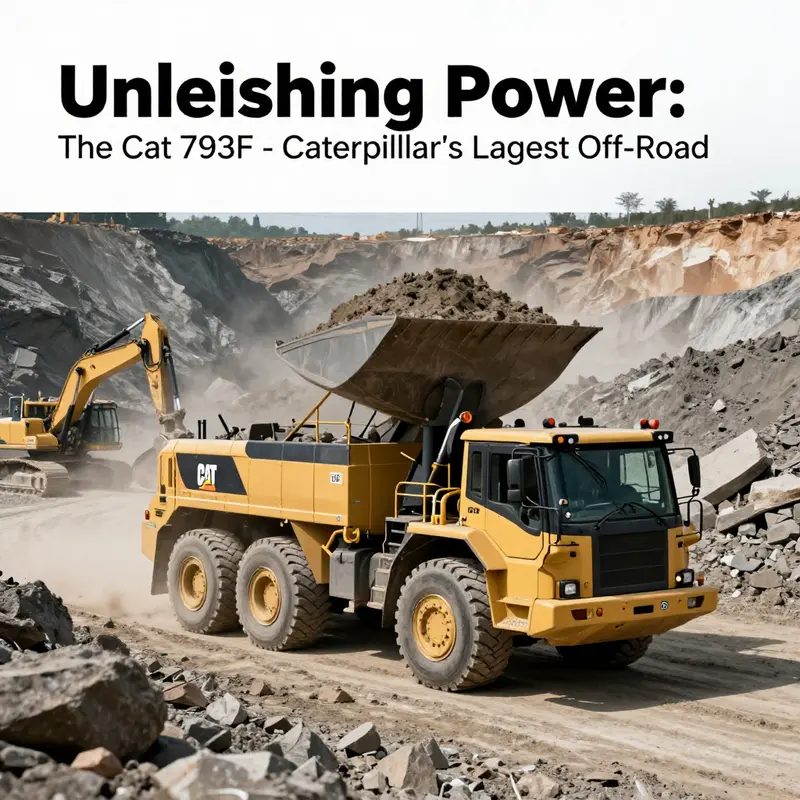
In the sprawling realm of modern surface mining, where every ton hauled translates into a measurable descent on the mine’s cost curve, the role of the haul truck is pivotal. It is more than a machine that moves material from face to dump; it is a moving pillar of productivity, uptime, and strategic volume. Among the heavyweights that populate the bench of Caterpillar’s mining fleet, one model stands taller than others in terms of scale, capability, and the quiet authority with which it handles earth’s hardest tasks. The Cat 793F, often described in industry chatter as Caterpillar’s largest off-road haul truck, embodies a philosophy of mass, momentum, and machine intelligence that mining operators chase as relentlessly as ore. Its size and power are not merely about brute force; they are about the efficient choreography of heavy motion, the precise harnessing of torque and inertia, and the stubborn refusal of the machine to yield to gradients or fatigue. The chapter that follows threads through the synthesis of capacity, powertrain sophistication, durability, and the evolutionary edge brought by emerging automation and digital controls. It is a narrative of a vehicle designed to move mountains of material with a blend of reliability and speed that only a machine of its class can deliver, and it examines how that blend translates into real-world outcomes on the mine floor.
To speak in concrete terms, the 793F stands as a beacon of payload and gross vehicle mass in large open-pit environments. In some configurations, the payload ceiling is described in terms that place the truck among the production leaders in its category, enabling operators to move substantial volumes of ore and waste rock in fewer cycles. The gross vehicle weight, a robust figure in this category, underscores the structural demands placed on the chassis, axles, and tires, and it foreshadows the careful balancing act operators must perform when it comes to ramp grades and road design within the pit. These machines are designed to swallow heavy, abrasive loads with a front end that can sustain the shock and rolling resistance common to rough quarry roads while delivering a smooth, repeatable cycle time that contributes to predictable throughput. In practice, the interplay of payload, weight, and cycle speed translates into a clear economic signal: more material moved in less time, reduced cost per ton, and a more linear relationship between uptime and production targets.
At the heart of the 793F’s performance is a powertrain that reads like a masterclass in engineering for high-load, long-duration operation. The most detailed, field-accurate specifications point to a high-performance Cat engine paired with a rigorously designed transmission system that keeps the machine moving with confidence across steep grades and uneven ground. The engine’s capacity, measured in kilowatts, is matched by torque management and a multi-gear arrangement that ensures rapid acceleration and power delivery where it matters most—out of the loading face, across the haul route, and during the crucial dump sequence. The six forward gears and a single reverse gear are not merely a transmittal of power; they constitute a carefully tuned ladder of torque optimization. Each gear is selected to maintain momentum, reduce rolling resistance, and minimize the energy lost to heat, which, in turn, supports longer hours of operation with fewer interruptions for cooling or maintenance checks.
A distinctive thread in the truck’s design is its emphasis on uptime and component longevity. Industry observers frequently highlight the model’s availability—figures that exceed typical expectations for machines of this size and class. Availability in mining equipment is not a tidy statistic; it is the product of robust core components, thoughtful design margins, and the availability of precise, field-ready maintenance plans. The 793F’s reputation for high availability is closely tied to the durability of its undercarriage, powertrain components, and hydraulics, all of which are engineered to resist the punishing wear that characterizes long, heavy-haul cycles in open pit mining. In this context, uptime becomes a primary performance metric, often standing alongside payload and cycle time as a driver of annual throughput.
Automation and smart technology—areas once deemed speculative for large haul trucks—have become tangible differentiators in the 793F’s ecosystem. The integration of autonomous and intelligent solutions elevates performance beyond the mechanical domain into the realm of system optimization. Operators are increasingly able to leverage automated features, telematics, and intelligent torque control to maintain forward momentum even under challenging conditions. In practical terms, this translates to smoother climbs on grade, more stable speed maintenance on rough surfaces, and more predictable cycle times during peak production windows. The result is a measurable uplift in productivity when automation is deployed at scale, with industry notes pointing to improvements in speed and a significant overall gain in throughput when automation is combined with rigorous maintenance and fleet management practices. On the mine floor, this is not just about faster trucks; it is about a more consistent rhythm of loading, hauling, and dumping that reduces the variability that can erode annual production targets.
One of the more compelling aspects of the Cat 793F’s operating profile is the consideration of mass as a lever for efficiency. When configured with the High Performance (HP) body option, the truck experiences a meaningful reduction in total mass—up to around 5 metric tons. That decrement might sound modest in isolation, but in the context of heavy-haul logistics, it yields tangible benefits: lower inertia during acceleration, reduced rolling resistance on undulating roads, and improved fuel economy across longer haul segments. The net effect is a modest but real bump in payload efficiency per cycle, especially under heavy loading conditions where every kilogram shaved from the truck’s mass compounds into lower energy consumption and improved dynamics on steep grades.
Fuel efficiency itself is a cornerstone of the 793F’s ongoing evolution. The broader New Cat 793 series introduced in late 2022 underlines a philosophy that prioritizes not just more payload, but smarter consumption and reduced operating costs. The engine and transmission controls have benefited from refined calibration, with advanced strategies designed to minimize fuel burn during critical phases of the cycle, such as uphill climbs, idle reductions, and precise torque modulation on the approach to dumps. In practice, operators report that these calibrations translate into more predictable fuel use per ton moved, a key reliability signal in mines where fuel costs represent a substantial slice of the operating budget and where fuel supply logistics must align with production plans.
When we zoom out from the specifics of power and torque, the 793F embodies a broader design philosophy that mining fleets have increasingly adopted: vehicles intended to operate for years, not months, require a balance of brute power, durability, and intelligent control that makes them active partners in productivity. The truck’s chassis, frame, and structural members are engineered to absorb the impact of heavy, abrasive payloads while preserving the integrity of critical systems. The cab’s ergonomics, visibility, and control layout contribute to operator effectiveness, reducing fatigue on long shifts and supporting the kind of steady performance that translates into higher annual throughputs. The importance of reliability cannot be overstated in open-pit environments, where downtime is expensive and the next shift’s schedule can hinge on a single truck returning to service.
The narrative around the 793F also intersects with the mine’s broader operational ecosystem. The truck does not work in isolation; it is part of a quarry or pit’s transport loop, interacting with loading equipment, primary crushers, and a fleet management system that orchestrates the flow of material across the mine. In this setting, the machine’s performance is measured not only by its own cycle times and fuel curves but by how well it integrates with a loading shovel’s rhythm, the fleet’s scheduling software, and the maintenance regime designed to keep every link in the chain strong. Advanced telematics and remote diagnostics empower mine engineers to monitor wear, vibration, and fuel efficiency, creating a feedback loop that informs maintenance planning, parts stocking, and even routing decisions that minimize bottlenecks.
The numbers that often gravity-center conversations around the 793F—payload, gross vehicle weight, and engine power—are the most visible indicants of capability. Yet the operational reality is that the truck’s true power lies in its ability to translate those raw figures into consistent, high-quality production. The combination of a heavy payload with a resilient drivetrain and a disciplined maintenance discipline yields a machine that not only moves a lot of material but does so with a robustness that reduces the risk of unplanned downtime. In a mine where every hour of operation matters, the 793F’s ability to stay online and perform with minimal interruptions becomes a decisive factor. In other words, it is not simply the number of tons that can be moved in a cycle that matters; it is the proportion of those cycles that start and finish on time, with the truck ready to repeat the sequence again and again.
The concept of readiness extends to design choices that may appear esoteric to outsiders but have material effects on daily operations. The HP body option’s mass reduction does more than improve fuel economy; it alters the truck’s dynamic response when pulling heavy loads uphill or accelerating at the base of a ramp. Lighter mass in the payload-dedicated portions of the truck translates into sharper acceleration and more forgiving handling on variable surfaces. Enhanced torque control during gear shifts smooths the transition from one gear to the next, enabling faster cycle times without compromising safety or vehicle health. These nuanced improvements, layered atop the core strength and reliability of Caterpillar’s manufacturing ethos, culminate in a machine whose performance is not just a function of horsepower, but also of sophisticated control logic and careful material selection.
For operators and engineers, the promise of the 793F is twofold: the immediate, measurable gains in throughput and the longer-term potential for stable, predictable operation across cycles and shifts. The machine’s inherent capacity to maintain momentum—from loading through hauling to dumping—reduces the probability of underutilized assets and ensures that the mine’s fleet remains aligned with production targets. The absence or scarcity of downtime is the quiet driver behind more predictable annual outputs, improved arithmetic of cost per ton moved, and fewer disruptions that cascade into delays across the entire mining plan. In practice, the 793F’s blend of high payload and enduring reliability means that a mine can plan for higher-scale operations with greater confidence, installing a capability that is as much about strategic advantage as it is about raw mass.
Within this landscape, the topic of autonomy arises as a powerful amplifier of the 793F’s strengths. Industry conversations increasingly acknowledge that automated or semi-automated control can magnify already strong performance characteristics. Automation reduces operator variability, optimizes route selection, and minimizes the time spent idling in the pit or waiting at loading points. The potential productivity gains cited in industry analyses suggest that when autonomous solutions are coupled with reliable, high-availability platforms like the 793F, the fleet can see substantial improvements in velocity and throughput. The synergy is not simply about removing a driver; it is about enabling a precise, repeatable operational tempo, one that aligns with the mine’s cycle plans and safety protocols while extracting every ounce of efficiency the truck can contribute.
The broader narrative also recognizes that the 793F operates within a continuum of Caterpillar’s innovations in mining technology. The model’s ongoing development—whether through enhanced engine calibration, advanced transmission strategies, or integration with autonomous control packages—reflects the industry’s shift toward smarter, more resilient heavy equipment. It is a shift that acknowledges the financial realities of large-scale mining: equipment costs are weighed against fuel efficiency, maintenance intervals, uptime, and, crucially, the ability to sustain high-volume production across long operating horizons. In this regard, the 793F is not merely a product spec; it is a platform for continual improvement, a moving benchmark that pushes operators and engineers to rethink how mass, power, and control can come together in service of production and profitability.
What emerges from this synthesis is a portrait of a machine that embodies both the old physics of mass and the new physics of intelligent optimization. Its enormous payload, high gross vehicle weight, and powerful yet carefully managed powertrain enable it to perform reliably in the harshest mining environments. Its durability, high availability, and potential for automation mark a path toward more predictable pipelines of material and more stable, lower-cost per ton operations. And while the numbers—payload in the hundreds of tons, engine power near two thousand kilowatts, and a technology suite designed to minimize waste and maximize uptime—provide a clear snapshot, the real story is in how those elements combine to deliver a sustained, real-world advantage across the mine’s calendar year. The Cat 793F thus stands not only as Caterpillar’s flagship in the heavy-haul category but as a symbol of modern mining’s balancing act: mass with maneuverability, power with efficiency, durability with adaptability.
For readers seeking a reference point to the most detailed technical specifications and performance data, consult the official Caterpillar page dedicated to the 793 family. The site provides the canonical figures, servicing guidance, and engineering notes that ground the numbers discussed here in the company’s latest published specifications. Additionally, for more nuanced explorations of how autonomous solutions are being validated and deployed in real-world haulage contexts, one can explore industry discussions summarized in recent articles on autonomous truck validation trials, which offer insight into how automation interfaces with high-capacity mining fleets such as the 793F. autonomous-truck validation trials.
In closing, the 793F’s status as Caterpillar’s largest off-road haul truck—within the scope of the company’s conventional mining lineup—rests on a coherent blend of capacity, power, reliability, and modern control. It is a machine that not only carries heavy loads but also carries forward the industry’s ambitions for higher uptime, lower costs per ton, and smarter, more automated operations. The payload and weight figures, the engine and gearbox dynamics, the emphasis on high availability, and the integration of intelligent technologies all serve the overarching purpose: to transform the enormous task of moving earth into a repeatable, predictable, and economically sustainable process. As mines around the world push toward larger open pits and more aggressive production schedules, the 793F remains a critical reference point—a tangible demonstration that when engineering excellence meets strategic fleet management, the mass in motion becomes a force for lasting value.
External resource: For detailed technical specifications and performance data, refer to the official Caterpillar site: https://www.cat.com/en/products/mining-trucks/793.html
Power on the Open Pit: How Caterpillar’s Cat 793F Transforms Economics in the World of Large Off-Road Haul Trucks
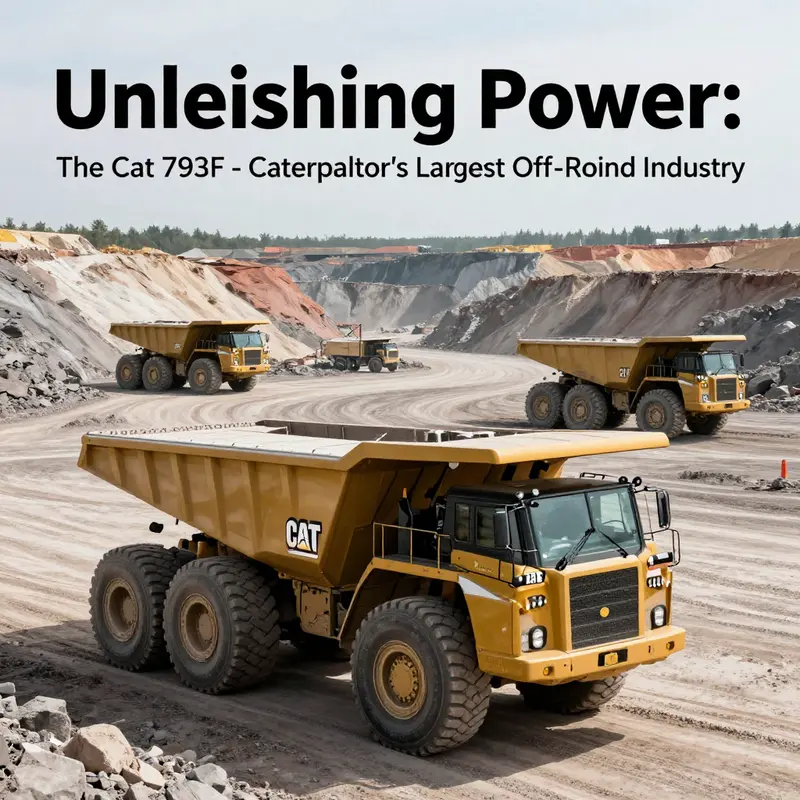
The largest off-road haul trucks that power modern surface mining aren’t simply behemoths of metal and torque. They are the engines of a bigger economic system, where every ton hauled, every hour of uptime, and every drop of fuel saved can tilt the balance between profit and margin compression in a market that prizes scale and efficiency. In this landscape, Caterpillar’s Cat 793F stands out as a focal point. It embodies a philosophy that links engineering ambition with the practical economics of mining at scale. Its design decisions—the payload, the powertrain, the operating efficiencies, and the safety features—are not isolated specifications. They are components of a broader strategy that mines larger deposits more cost-effectively, coordinates with fleets across a mine site, and ultimately reshapes how mining companies think about capital investment and operating discipline.
At the heart of the Cat 793F’s economic story is payload capability. With a nominal payload of up to about 140 tons (roughly 127 metric tonnes) and a heaped capacity around 115 cubic yards (88 cubic meters), the machine is built to move substantial volumes of copper, coal, iron ore, gold-bearing rock, and other mined materials in a single cycle. This isn’t just an act of physical strength; it is an optimization problem solved in steel and hydraulics. Fewer trips to the dump site mean lower cycle time per unit of material moved, which translates into higher energy conversion per hour and lower per-ton costs over a shift, a month, and a year. In large-scale mines where every minute of loading and hauling can accumulate into tens of thousands of dollars in savings, the sheer scale of the Cat 793F’s payload is a strategic advantage. It matters not only in productivity metrics but in the way the mine’s material flow is designed and tuned for efficiency.
The power source that drives this payload is equally consequential. The Cat 793F is equipped with a robust Cat C18 engine, a platform that has been engineered for strong, reliable power delivery under the demanding conditions of open-pit mining. The engine’s role goes beyond raw horsepower. It is designed to deliver sustained torque through a wide operating envelope, which supports consistent cycle times even as material characteristics shift—think copper ore’s varying density, or the weight differences that accompany different bench faces and blast designs. In practice, this means fewer slowdowns caused by power constraints and a more predictable relationship between engine load, traction, and uptime. The result is a truck that not only hauls more in a given hour but does so with a more stable fuel burn per ton of material moved. Since fuel is a dominant operating expense in surface mining, even modest gains in fuel efficiency per ton-mile become meaningful over the life of the fleet.
Caterpillar reports that the 793F delivers more than 10 percent better fuel efficiency compared with earlier versions in its lineage. While the absolute figure can vary by site, mining method, and haul profile, the underlying implication is clear: better fuel economy per ton carried reduces the energy cost component of the overall cost per ton—one of the most sensitive levers in mining economics. When you multiply a 10 percent improvement across hundreds of trucks and thousands of cycles, the aggregated savings can be substantial. The logic is straightforward: if a truck uses less fuel per ton of ore moved yet still completes its cycles within the same time frame, the fleet’s average cost per ton goes down. That reduction compounds when combined with improved uptime and higher payload, creating a cumulative effect on operating margins that is felt at the bottom line. In markets where commodity prices swing and margins can tighten quickly, such resilience is not merely desirable but essential.
Yet efficiency is not a single-number proposition. It is a system-level attribute, reinforced by design choices that touch durability, maintenance, and uptime. The 793F is engineered for maximum uptime, with reliability features that reduce the frequency and duration of maintenance-induced outages. In a mine, downtime is expensive, not only because the truck is idle but because the entire hauling loop loses its rhythm. When a truck breaks down, the delay ripples through the ore supply chain—loading crews gather, face equipment is reassigned, and other trucks may queue to maintain the pace. The best-in-class uptime philosophy begins with components designed for harsh conditions and long service intervals, continuing with modular maintenance access and diagnostic systems that let crews identify issues before they escalate. Operator cabs are designed with comfort and visibility in mind, reducing operator fatigue and contributing to fewer mistakes on the bench and in the dump area. These human factors matter, because even the most rugged machine relies on the operator to maximize cycle times and maintain steady productivity.
The safety and accessibility features embedded in these trucks contribute to both risk management and continuity of operations. Advanced safety features reduce the probability and severity of incidents, enabling maintenance teams to access critical components with greater confidence and at shorter times. Operator comfort—ergonomic seating, intuitive control layouts, and good visibility—translates into more consistent performance across shifts. In practical terms, safer, more comfortable operation lowers the risk of disruptions that would otherwise lead to costly downtime, spillages, or equipment damage. And with fleets that may span many rigs across a single mine, safety and accessibility features translate into uniform maintenance practices and easier onboarding for new operators, which in turn shortens the learning curve and stabilizes productivity across the workforce.
From a financial perspective, the combination of high payload, strong power delivery, and fuel efficiency translates into a compelling return on investment profile for mining companies that deploy the Cat 793F. The higher payload reduces the unit production cost by moving more material per cycle, while the improved fuel economy lowers the energy expense per ton moved. When you combine these advantages with enhanced uptime and safety, the overall operating cost per ton produced trends downward, supporting improved cash flow and stronger competitiveness in a market where global suppliers compete for the same limited ore bodies. The ROI is not merely a speculation about a single metric; it is the result of a coordinated improvement in throughput, reliability, and energy efficiency that compounds as the mine scales up its operations.
The economic argument is not solely about the immediate cost per ton. It also encompasses the broader reliability and lifecycle cost that mining companies must consider when evaluating capital investments. A heavy haul truck is not a disposable asset; it is a long-lived component of a mine’s operating backbone. The Cat 793F’s design supports not just immediate productivity but long-term durability and ease of maintenance, factors that strengthen fleet reliability in the face of brutal mining conditions. When a mine commits to such machinery, it does so with a view toward predictable performance over years of operation, a factor that makes budgeting and capacity planning more robust. The resulting stability in throughput, paired with the fuel savings and higher payload, reinforces a strategic advantage: a mine that can move more material at a lower cost per ton is naturally better positioned to weather commodity price cycles and maintain competitive leverage in the market.
To place this in a broader context, the Cat 793F does not operate in isolation. It sits within Caterpillar’s flagship line of mining trucks, designed specifically to handle the most demanding environments while maximizing productivity and lowering the cost per ton of material hauled. This positioning matters. In a mining operation, the best trucks are those that can stay on the job for longer periods, complete more cycles per shift, and deliver material with a level of consistency that reduces variability in feed to crushers and processing plants. A more stable feed to ore processing reduces bottlenecks downstream, which translates into more predictable plant throughput and, ultimately, a gentler ramp between extraction and processing. When plants operate more smoothly, the entire mine begins to realize reduced downtime and better utilization of capital equipment, ultimately strengthening the mine’s overall cost structure and cash-flow profile.
At the same time, the 793F’s performance feedback loops are designed to support continuous improvement across the fleet. Fleet reliability improves when maintenance data are leveraged to optimize service intervals, spares provisioning, and technician planning. The interplay between the truck’s on-board diagnostics, the maintenance planning cycle, and the availability of parts determines how quickly a truck can return to service after a fault. In a world where spare parts availability and service response times are critical, a well-supported fleet can maintain its average annual uptime target, which further reduces the annualized cost of ownership and maintains predictable production schedules. In such environments, the combination of high payload, reduced fuel consumption, and improved uptime creates a virtuous circle of efficiency that keeps the company profitable even when mining economics are under pressure.
From an organizational perspective, the Cat 793F also shapes how mining operations plan for capital expenditure and fleet renewal. In mines with long life cycles and heavy capex commitments, the choice of truck becomes a central pillar of the overall operating strategy. The truck’s reliability and serviceability influence maintenance budgets, training programs for operators and technicians, and the design of the mine’s surface haulage cycles. A fleet of trucks that share a common platform and maintenance ecosystem simplifies spares management, reduces the learning curve for maintenance staff, and lowers the total cost of ownership over the life of the fleet. Moreover, since the 793F sits at a high tier in Caterpillar’s mining truck lineup, its adoption can influence supplier relationships, financing terms, and the mine’s ability to negotiate favorable maintenance contracts or service-level agreements that further stabilize costs. In this way, the truck becomes a strategic asset rather than just a piece of heavy equipment.
It is important to recognize that the economics of a single piece of equipment must be judged in the context of the mine’s overall operating strategy. The highest payload is of little use if the mine cannot keep the truck moving due to frequent downtime or if fuel costs erode margins faster than throughput gains. That is why the design philosophy behind the 793F is not just to build the largest truck, but to build the most dependable and efficient machine within its class. It is a tool calibrated to deliver consistent, repeatable performance under pressure. The mining industry’s demand for lower cost per ton, higher uptime, and safer operations finds its answer in this kind of integrated approach that links payload capacity to powertrain efficiency, maintenance accessibility, and operator-centered design.
For readers who want to connect these insights to practical maintenance and reliability practices, a deeper dive into diesel mechanics provides a complementary perspective. A practical diesel mechanics guide offers a step-by-step approach to keeping powertrains like the one in the 793F in top condition. Such resources illuminate how routine maintenance, component wear management, and diagnostic workflows contribute to uptime and lifecycle cost containment. The relationship between maintenance rigor and fleet performance is not purely theoretical; it translates into measurable outcomes in a mine’s daily operations. Keeping the engine, transmission, hydraulics, and electrical systems in harmony with the metal framework is what allows a vehicle of this scale to perform consistently over long hours in challenging environments. By prioritizing preventive maintenance, predictive diagnostics, and disciplined spare parts management, mining operators can extend service intervals, reduce unplanned outages, and preserve the reliability that underpins the economics described above.
Taken together, the Cat 793F represents more than an impressive payload rating or a high-horsepower engine. It embodies a disciplined approach to mine economics, where every design choice feeds into a broader objective: lowering the unit cost of production through higher throughput, lower energy intensity, and fewer disruptions. The economic impact is not merely a matter of headline figures. It ripples through capital planning, maintenance strategies, and day-to-day operations, shaping how a mine schedules cycles, allocates resources, and buffers against the volatility of commodity markets. In this sense, the 793F is both a tool and a philosophy—an embodiment of how one large, meticulously engineered truck can influence a mine’s financial performance, its operational discipline, and its capacity to compete on a global stage.
External resource: Cat 793F official page: https://www.cat.com/en/products/mining-equipment/trucks/cat-793f-mining-truck.html
Final thoughts
The Caterpillar Cat 793F isn’t just the largest off-road haul truck; it represents the zenith of engineering excellence for the mining industry. With specifications designed for heavy-duty performance, this truck can maximize productivity and minimize operational costs significantly. Its powerful engine and expansive hauling capacity make it indispensable for large-scale mining operations. Understanding its capabilities provides insight not only into Caterpillar’s innovative design philosophy but also into the broader economic implications of utilizing such state-of-the-art machinery in today’s mining landscape. As we continue to witness advancements in technology, the Cat 793F will undoubtedly lead the charge, ensuring that the mining industry remains efficient, competitive, and profitable.