
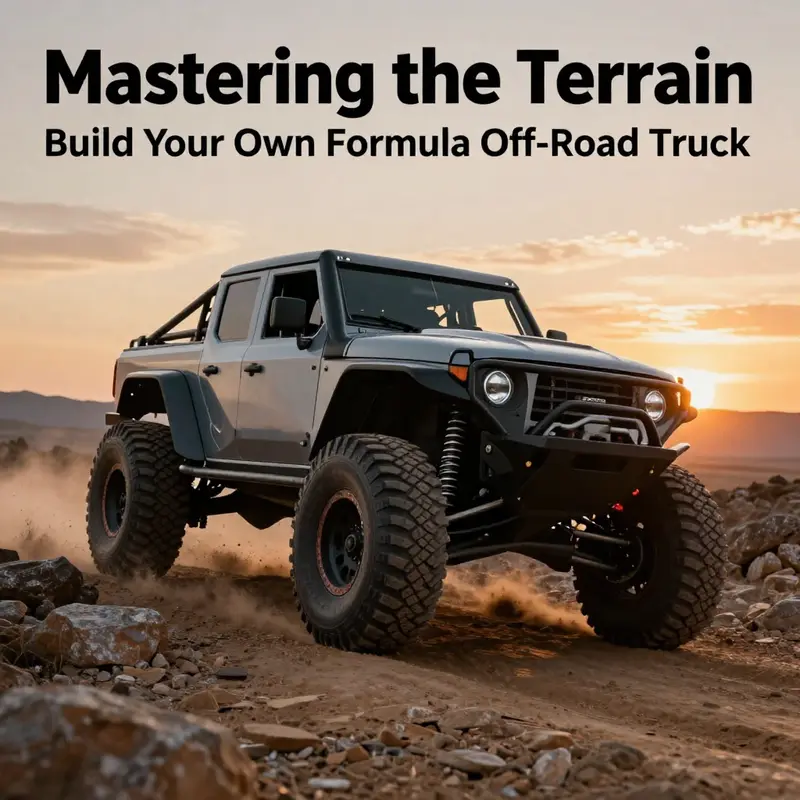
Building a formula off-road truck combines engineering precision with a passion for adventure, creating a vehicle that can conquer the toughest terrains. Recognizing your purpose is foundational, whether for racing, off-road exploration, or agricultural utility; it sets the tone for your project. Choosing the right chassis is equally vital, as it forms the base for all modifications and upgrades. Finally, the suspension system is crucial for providing the handling and resilience needed on rugged landscapes. Dive into each chapter to transform your vision into reality.
null
null
The Backbone of Performance: Selecting a Chassis for a Formula Off‑Road Truck
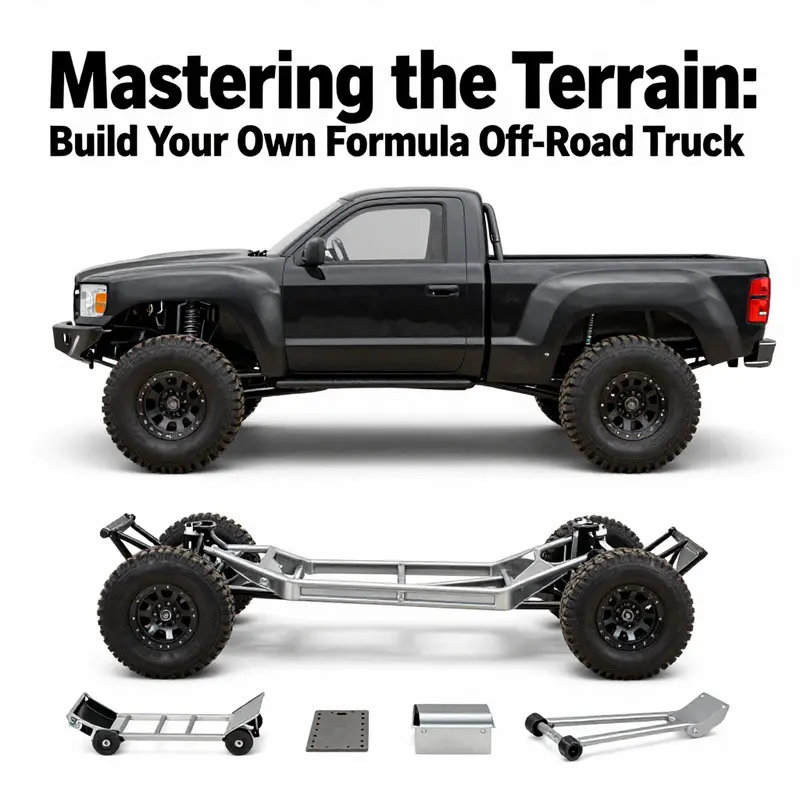
The chassis is more than a skeleton. In a formula off‑road truck it is the spine that translates raw power into controlled speed across sand, rock, and mud. It defines how weight sits over the wheels, how the tires stay attached to the ground, and how a driver survives a brutal landing. In this lineage of machines, the chassis carries a heavy burden: it must be strong enough to endure high‑speed impacts and repeated fatigue, yet flexible enough to tolerate the unseen irregularities of extreme terrain. A well‑chosen chassis does not merely connect the engine to the axles; it aligns the entire package with the terrain, the driver, and the mission, be that a desert sprint, a rough mountain pass, or a long endurance test across rutting soil. The choice reverberates through every subsequent decision—from suspension geometry to fuel strategy, from weight distribution to safety systems. When you set the chassis right, you gain a platform that can be tuned toward speed without spilling the vehicle’s stability, and toward durability without sacrificing handling. The art lies in balancing rigidity with compliance and in foreseeing how loads travel through the structure during a jump, a drag strip run, or a tight corner on a rocky shelf. That balance is not an abstract ideal; it is the threshold where performance becomes repeatable and predictable under the harsh conditions that define formula off‑road racing, events like the Dakar or Baja where a single frame flaw can end a race and a season alike.
Material choice forms the first decisive brushstroke on the chassis canvas. In serious off‑road formula work, engineers favor high‑strength steel tubing because it offers a compelling mix of strength, fatigue resistance, and workability at a manageable cost. The most common specification leans toward tubes about 1.75 inches in diameter with a wall thickness around 0.120 inches. This 44 mm tubing, when properly sourced and treated, carries a tensile strength that tolerates the repeated bending, twisting, and hammering of off‑road events. Two material families frequently surface in this conversation: ASTM A500 Grade B and AISI 4130 chrome‑moly. A500 B delivers dependable, robust performance with excellent weldability, while 4130 offers premium strength‑to‑weight characteristics when lighter weight is a priority and fabrication expertise is available. Either choice is a deliberate trade‑off among weight, stiffness, cost, and the ease of assembly. The goal is a frame that resists fatigue, holds its geometry under load, and does not continuously deflect at the worst moment. This is where the science of materials meets the craft of fabrication. The tubes must be straight, round, and clean, with properly prepared welds that do not become stress concentrators under heat or vibration. When you read a chassis‑design guide from racing communities, this is the baseline you will notice—rigidity distributed evenly, with joints that will not crack when the frame flexes a little on a rocky crest or a jump landing. It is not merely about raw strength; it is about predictable behavior under extreme duty cycles.
But strength alone does not win races. The chassis design itself—the geometry and the layout—shapes how that strength is used. A tubular space frame offers exceptional rigidity and a stated advantage in crash protection versus body‑on‑frame designs. The idea is to weave a lattice of tubes into a shell that channels loads along predefined paths. In practice, this means a framework that embraces the engine, transmission, fuel system, and cooling network inside a geometry that minimizes unwanted flex while staying forgiving to the inevitable misalignment caused by terrain. Space frames also simplify the integration of a robust roll cage. In a high‑speed roll, what matters most is that the frame maintains its integrity and keeps vital systems intact while the occupant remains protected. A central roll cage, reinforced front and rear bars, and strategic bracing prevent catastrophic flex and help the vehicle land more predictably after a jump. These features are not ornaments; they are the direct consequence of a chassis designed to handle dramatic stances and sudden shudders without losing alignment.
The design process for a formula off‑road chassis hinges on thoughtful consideration of what the truck is expected to do and how it will be powered. A donor chassis—such as a robust pickup or SUV—can offer a solid baseline and a lower initial cost. It provides a ready‑made mounting surface for the engine, transmission, and some of the suspension components, but it also imposes limitations in geometry and weight distribution. A custom tubular frame built from scratch, while more expensive and time‑consuming, grants complete control over wheelbase, track width, mounting points, and the overall packaging. When you opt for a custom frame, you can tailor the geometry to optimize weight transfer, center of gravity, and suspension attachment geometry, all of which influence how the truck behaves on the trail and on the tarmac. The right choice becomes a question of mission economics and the level of engineering ambition you want to pursue. Either path requires rigorous planning, because a misstep at this stage can cascade into handling issues, excessive vibration, or early component failure.
A critical element of chassis design is suspension mounting geometry and how the frame interfaces with the drivetrain. The frame must host the engine and transmission without creating bottlenecks for cooling lines, fuel routing, or exhaust routing. It must also accommodate a take‑off that may place significant vertical loads on the front and rear ends. The alignment of mounting points in relation to the wheel hubs governs how the suspension moves through its travel. If these points are off, you can end up with toe, camber, or bump steer errors that degrade traction and steerability. The chassis must also enable the installation of a robust steering system and drive‑shaft runs that do not conflict with the fuel tanks or exhaust. In effect, the chassis is a three‑dimensional puzzle where every piece must fit with precision to avoid unwanted interference during high‑speed turns or rough landings.
Packaging is another practical concern. The chassis has to swallow the engine, transmission, radiator, intercooler or cooling stack, fuel cell, and exhaust within a compact envelope. A low center of gravity is a coveted trait because it improves stability in fast chicanes and reduces the propensity to roll during aggressive cornering on uneven surfaces. The tubes, joints, and bracing must be arranged to produce a frame that is stiff not only in straight lines but also in lateral, torsional, and diagonal loading conditions. The result is a frame that behaves predictably when the driver asks for aggressive acceleration or sudden deceleration in a dune washout. The geometry of the frame, the mouth of the radiator, and the path of the cooling system all influence how heat manages to escape under the demands of long‑distance stages. Inefficient cooling does not merely threaten performance; it invites reliability problems that can derail a race day.
Time and again, the strategic choice between a donor chassis and a bespoke frame boils down to a few critical questions. How aggressive is the plan for cornering at high speed? How much suspension travel and wheel articulation is truly needed to maintain contact with the ground on the roughest surfaces? How much weight can be saved by eliminating superfluous mass from the original structure without compromising safety? How easily can the design be welded, brazed, or riveted in a workshop that is often a patchwork of tools, lifts, and makeshift jigs? The answers guide whether you invest in a factory–style jig and a dedicated tube bender or whether you repurpose a donor’s mounting points and then reinforce them with additional bracing. There is no single correct path; there is, however, a clear responsibility to ensure that every mounting point is deliberate, every brace is purpose‑built, and every welded joint passes a rigorous quality check. The strongest frames come from a disciplined process that treats fabrication not as an improvisation but as a carefully choreographed sequence of steps—cut, fit, weld, inspect, and rework when necessary.
The chassis also has to accommodate safety systems that protect occupants during the extreme events the vehicle is built to endure. A roll cage integrated into the tubular frame provides the most meaningful protection by creating a rigid structure around the occupant and the primary controls. The frame and cage must be welded and gusseted in a way that distributes loads evenly rather than concentrating them at a single joint. This is why many builders insist on a continuous bracing philosophy: every tube that carries a load ties into another tube that carries a load, creating a lattice that resists the tearing effects of a hard landing or a heavy impact. The bodywork, though often light, should be chosen with an eye toward minimizing mass while preserving protective integrity. Lightweight panels can reduce weight and improve acceleration but must not compromise safety. In other words, the chassis is not an isolated component; it is the core that ties together seat mounting, belts, harness anchor points, and the roll cage with the rest of the truck’s safety architecture.
In practical terms, the process of choosing and shaping a chassis unfolds through a sequence of strategic assessments. Start by mapping the intended mission—speed over long straights, controlled precision on rocky trails, or a blend of endurance driving and obstacle negotiation. Then translate those demands into a target wheelbase, track width, and center of gravity. A longer wheelbase can improve high‑speed stability but may hinder obstacle clearance and steering responsiveness in tight trails. A wider track can enhance stability, but it must align with the suspension geometry and the shared space of the engine bay and fuel system. Finally, ensure the frame geometry permits a sensible packaging of the radiator, intercooler, or cooling fin arrays, plus a fuel system that can survive long segments without frequent stops for refueling. The more deliberate and explicit the packaging, the less chance there is of discovering during testing that a tube interferes with a hose, or that a misrouted feed line chafes against a suspension mount.
As you approach the final stages of chassis fabrication, it is natural to seek a practical benchmark for what constitutes “good enough” alignment and rigidity. A tubular space frame with carefully measured joints and gussets can deliver a high level of predictability. The frame should demonstrate minimal flex under simulated loads, retain geometry within tight tolerances, and maintain proper alignment between the engine, driven axles, and driveline accessories. This is where validated design guides from racing associations can prove invaluable. They offer a shared language for describing the geometry, tolerances, and safety features that have proven themselves in demanding environments. If you choose to consult such resources, you can translate their general rules into your own build plan, adapting them to your vehicle’s size, power, and intended terrain. The result is a chassis that not only speaks the language of speed but also respects the physics of hard landings and rough roads. This is the foundation on which the rest of the truck—suspension, drivetrain, tires, and safety systems—will stand.
For readers seeking a deeper dive into the mechanical side of chassis and drivetrain integration, practical guidance mirrors the general approach described here. You can explore more on mastering diesel mechanics and how it feeds into the broader picture of a reliable, high‑torque powertrain that a chassis must carry. Mastering diesel mechanics: your step‑by‑step path to success This resource helps translate engine performance into a coherent packaging strategy for a championship‑style platform. At the same time, the chassis design itself benefits from external validation and guidelines, and for a more formal exploration you can consult racing‑focused design guides that outline the essential geometry, bracing, and safety features that define modern tubular space frames. These documents emphasize the importance of a robust front and rear roll cage, a centralized roll protection structure, and bracing that prevents flex under high loads. They also highlight the need for precise chassis alignment to ensure predictable handling and long‑term reliability across repeated stages of extreme driving.
The journey from concept to capable chassis is long but rewarding. With a solid frame as your spine, you unlock the ability to tune the rest of the truck for the specific demands of formula off‑road competition. You gain not just a machine that can survive brutal terrain but a platform that can consistently deliver the speed and control demanded by the race‑inspired vision you started with. The chassis is where design intent becomes measurable performance. It is the discipline that makes a truck more than a sum of its parts, turning steel tubes into a machine that can grip sand, crush rock, and glide through washboard with a composure that feels almost tactical. In this light, the chassis is not a mere construction step; it is the essential philosophy of your project expressed through geometry, materials, and the craft of fabrication. The better you design it at the outset, the more you will understand about the tradeoffs you will face later—from suspension tuning to weight management and, ultimately, race results. The chassis is the cornerstone of a formula off‑road truck, and choosing it with care sets the trajectory for the entire build.
External resource for deeper grounding: For a thorough, formal treatment of chassis design and safety considerations in off‑road racing, consult ORRA’s Chassis Design Guide: https://www.orra.org/chassis-design-guide
Suspension as the Spine: Designing the Fluid, Fearless Ride of a Formula Off-Road Truck
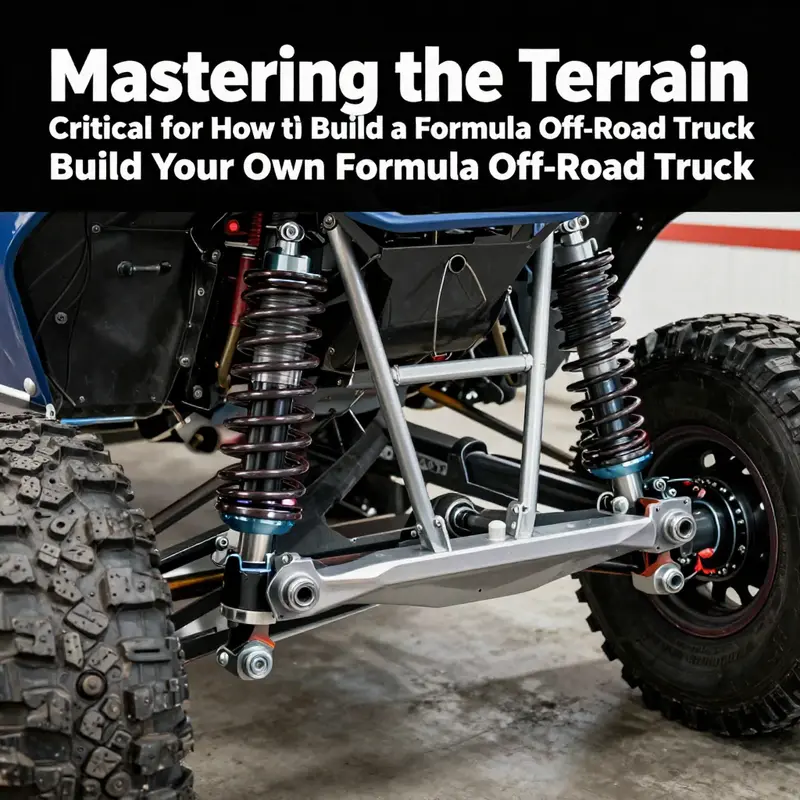
The suspension is the spine of a Formula Off-Road Truck, the quiet control system that turns brutal terrain into a manageable stage for speed and endurance. It is not merely a set of springs and rods but a carefully tuned conversation between chassis, tires, and driver. In the most demanding courses, where rock gardens, whoops, and steep climbs meet loose sand and sudden drops, the suspension must absorb shocks, maintain tire contact, and preserve stability without sacrificing steering precision or throttle response. A well-executed setup lets the suspension absorb a jagged hit and immediately translate that energy into forward motion, rather than letting it cascade into body roll, wheel tuck, or rearward weight transfer that steals traction. To build a machine capable of handling such conditions, the suspension design can no longer be an afterthought; it must be integrated with the truck’s overall geometry, weight distribution, and drivetrain goals from the very start. Every choice—whether to pursue independent wheel motion or a solid axle layout, the number of control arms or links, and how damping and spring rates are distributed across the chassis—reverberates through handling, durability, and everything a driver feels on rough, demanding courses.
The core function of a competitive off-road suspension is deceptively simple: keep the tire and ground in continuous, close contact, while allowing enough wheel travel to absorb obstacles without transferring violent loads into the rest of the rig. That requirement becomes progressively more complex when speed is added. A high-speed truck must control not only static weight but dynamic forces created by fast transitions across rock faces or dune faces. The suspension’s role then expands beyond simply lifting the tire over a lump; it becomes a dynamic system of leverage, inertia, damping, and timing. The design must balance three crucial elements: articulation, travel, and control. Articulation is the ability of one wheel to move independently of the others, essential for maintaining traction on irregular terrain. Travel is the vertical movement allowed by the suspension before it limits or binds, a measure that increases with the intended terrain. Control includes how quickly the system returns to neutral after a bump (rebound) and how it compresses under load (compression), all while preserving predictable steering and braking responses. The conversation among these elements is what shapes a truck that can surge across a washboard section, land cleanly from a mid-sized bump, and still settle into a stable lane as speed climbs.
From a practical standpoint, the choice between independent front suspension and a solid rear or full solid-axle arrangement becomes a statement about how you intend to use the vehicle and what you value most in ride quality and durability. Independent suspension excels in maintaining tire contact on uneven ground because each wheel can respond to its own surface, reducing the chance that a single obstacle destabilizes the entire vehicle. It tends to offer smoother ride quality and more precise steering during slow-speed maneuvering, which benefits technical sections and tight courses where traction control matters more than raw bump absorption. A solid axle, conversely, is renowned for robustness and predictable geometry under extreme loads. It distributes impact forces along a single axis, which can simplify maintenance and improve durability in the roughest environments, where a misalignment could spell disaster on rock-strewn trails. The final choice often comes down to a careful assessment of the course profile, driver preference, and the weight implications of additional linkage complexity. In many formula-off-road projects, engineers blend approaches: a robust solid rear with independent front suspension to preserve steering feel and wheel control while delivering the resilience needed for long-distance events.
Three- or four-link configurations bring another layer of control over how the wheel moves through its travel. These multi-link systems govern how the wheel attaches to the frame, how it pivots, and how the suspension geometry interacts with the chassis during compression and extension. A three-link design often prioritizes simplicity while delivering a surprising degree of wheel control, whereas a four-link arrangement can optimize for a flatter roll center, better anti-squat behavior, and improved wheel alignment through large deflections. The goal is to achieve a favorable balance: enough roll stiffness to keep the tire under the body’s weight during cornering, yet enough articulation to keep the tire on the ground when a wheel encounters a rock or a trough. The geometry matters as much as raw travel. Subtle shifts in link length, mounting points, and pivot angles can alter bump steer, the tendency of the wheel to steer slightly under compression, and the alignment of the wheel during droop and rebound. In a formula-off-road context, where courses demand speed with precision, these effects become cup-and-saucer terrain between driver input and tire response.
A well-tuned suspension also relies heavily on damping and spring rates that respond to both the vehicle’s weight and its role on a given course. The dampers, without naming specific products, must handle heat buildup during long races and maintain consistent performance from start to finish. The spring rates should be selected to achieve the desired balance between ride comfort and control. Too soft a setup may swallow bumps and allow excessive body roll, while too stiff a setup can reduce tire grip by skipping over obstacles rather than absorbing them. The tuning process is iterative and data-driven. Designers begin with a baseline that reflects the vehicle’s weight, anticipated terrain, and the driver’s input style. They then adjust preload, compensation curves, and the ratio of compression to rebound damping in targeted ways. The aim is to create a responsive system that settles quickly after a bump, returning the tire to the ground with minimal delayed rebound, so steering remains direct and predictable even when a wheel drops into a rut or climbs out of a dune trough.
Beyond the numbers, the suspension’s physics must align with practical realities of fabrication and maintenance. The choice of materials influences both weight and durability. Tubular steel or chromoly linkages can provide high tensile strength while allowing for relatively lightweight assemblies that resist fatigue under repeated flexion. The joints—or a more general term, the link connections—must tolerate high misalignment without binding. The design should avoid sharp corners or excessive stress concentrations at the mounting points, since these are common initiation sites for cracks in extreme environments. Fabrication quality matters as much as the design itself. Clean welds, proper gusseting at stress points, and careful alignment checks during assembly can extend life dramatically in the face of thousands of kilometers of rough terrain. In practice, teams often reinforce key stress points around the mount towers, control arms, and subframes to create a robust yet serviceable assembly that can be inspected and replaced incrementally as wear becomes evident.
The integration of suspension with the rest of the truck is a choreography, not a single act. Wheel travel must harmonize with tire geometry, brake system layout, and steering knuckles. A careful alignment strategy helps ensure that as the suspension compresses, the wheels do not toe out or in excessively, which would undermine stability and steering. The center of gravity plays a pivotal role here. A vehicle with a higher CG demands a different approach to dampening and sway control than a lower-slung machine, particularly when approaching the apex of a turn at speed or landing after a jump. The suspension should support the driver’s line without inviting roll that could unsettle the vehicle at the limit. The geometry must be forgiving enough to tolerate imperfect surfaces yet precise enough to encourage bold, fast lines through technical sections. In this sense, suspension design embodies both physics and art: it must be rigid and resilient under load, yet flexible enough to respond to the unpredictable grammar of an off-road course.
Testing and iteration are where theory becomes performance. Builders typically begin with measured bench tests and controlled on-road evaluations before exposing the system to real terrain. Instrumentation tracks travel, damping rates, and mounting stresses, while session feedback from the driver informs adjustments to preload, damper tuning, and linkage geometry. A key part of this process is understanding how energy flows through the system—from the moment the wheel encounters a bump to the moment the tire re-engages with the ground. Small adjustments in ride height, link lengths, or rebound can translate into meaningful gains in grip, stability, and steering accuracy. The timing of these changes matters; improvements in one course segment can reveal new weaknesses on another. A suspension that excels on a smooth desert straightaway might behave differently on a rocky wash, where high-frequency chatter tests damping performance and endurance. The driver’s feel, the data, and the mechanical intuition of the engineering team converge to guide the next iteration, a rhythm that repeats until the truck speaks a single language with the terrain.
The human factor in suspension design should not be underestimated. A driver’s preferences—how aggressively they push through corners, how quickly they commit to line changes, how they absorb a rough entry into a dune bowl—shape every tuning decision. A well-designed system supports those instincts rather than fighting them. It offers a predictable, repeatable response that a driver can trust under pressure. The driver’s feedback is especially valuable in calibrating high-speed behavior, where subtle differences in rebound characteristics may translate into dramatic shifts in stability after a jump or in deep whoops. In this sense, the suspension becomes not only a mechanical system but a partner in performance, shaping how confidence translates into speed and safety on the course.
A holistic view of the vehicle, including the suspension, also considers maintenance and logistics. Multi-link systems, with their additional joints and mounting points, require careful inspection and sometimes more frequent servicing. The design should accommodate straightforward inspection intervals, with clear access to wear items and joints that may require lubrication or replacement after hard miles. When planning a build, teams weigh the benefits of complexity against the realities of field maintenance, spare parts availability, and the time needed to service a race truck between stages. A robust plan anticipates these needs by simplifying critical components, designing with modularity in mind, and selecting joint interfaces that can be serviced with standard tools. The aim is a system that remains resilient across long events, where nights in the bivouac become opportunities to adjust setup based on the terrain anticipated for the next stage. In this balance between sophistication and practicality, the suspension design finds its place as the practical heartbeat of the machine.
For readers who want to connect the dots between chassis, powertrain, and suspension at a deeper level, consider exploring the broader mechanics of how engine torque translates into tire grip and how the suspension modulates that transfer under varying load conditions. The journey from concept to capability is rooted in a foundational understanding of the interactions among stiffness, damping, mass distribution, and geometry. A useful starting point for more technical exploration is the practical knowledge embedded in diesel mechanics and system integration, which can illuminate how powertrain behavior informs suspension tuning. You can dive into a concise overview here: Mastering Diesel Mechanics. This resource can help a builder appreciate how engine performance interacts with the vehicle’s overall dynamic envelope, especially when torque curves and driveline characteristics meet the high demands of off-road racing. The more a builder understands these interactions, the more effectively they can tailor the suspension to harness available power while preserving control and rider safety.
As the design matures, it becomes clear that no single component decides success. The suspension is part of a system that includes the frame, the drivetrain, the tires, and even the driver’s strategic choices about line and pace. A well-conceived three- or four-link arrangement may provide the ideal balance of complexity, weight, and performance, but its real value emerges only when matched to a chassis that favors those advantages and a driving style that can exploit them. In the end, the most durable lesson is that suspension is not a bolt-on afterthought. It is a strategic, high-stakes investment that determines how a truck translates raw power into controlled motion on ground that refuses to be tamed. With careful geometry, disciplined tuning, and relentless testing, what starts as a collection of tubes, links, and dampers becomes a living system—one that can carry a driver from calm to chaos with confidence, speed, and safety on even the harshest courses.
For readers seeking a broader technical compass on this topic, the field guide to off-road suspension design offers calculations, geometry, and material considerations that can anchor a more rigorous engineering effort. This resource provides practical insights into suspension geometry, material selection for durability and weight efficiency, and kinematic analyses that can help tailor a system to specific vehicle weight, CG, and ride characteristics. In this regard, the suspension design process mirrors the best traditions of engineering practice: start with clear goals, build a credible model, test under controlled conditions, and iterate toward the most robust, repeatable performance possible. In the spirit of hands-on learning and continuous improvement, the suspension remains the central, defining element that makes a Formula Off-Road Truck capable of sprinting across harsh terrain with speed, precision, and lasting durability.
For readers seeking external depth beyond the chapter, a comprehensive field guide on suspension design is available online. It presents calculations for geometry, materials, and kinematic analysis that can help you refine a three- or four-link system for your specific truck and course profile. See the Off-Road Suspension Design Guide for a deeper dive into these topics: https://www.offroad-suspension-design-guide.com/
Final thoughts
In the journey of building a formula off-road truck, every aspect—from defining your purpose to selecting the right chassis and crafting a stellar suspension—plays an integral role. Each decision shapes the vehicle’s performance and versatility. Enthusiasts who embark on this path not only create a machine built for rugged landscapes but also cement their connection to the off-road community. So gather your tools, embrace your vision, and get ready to dominate the trails with your custom-built truck.