
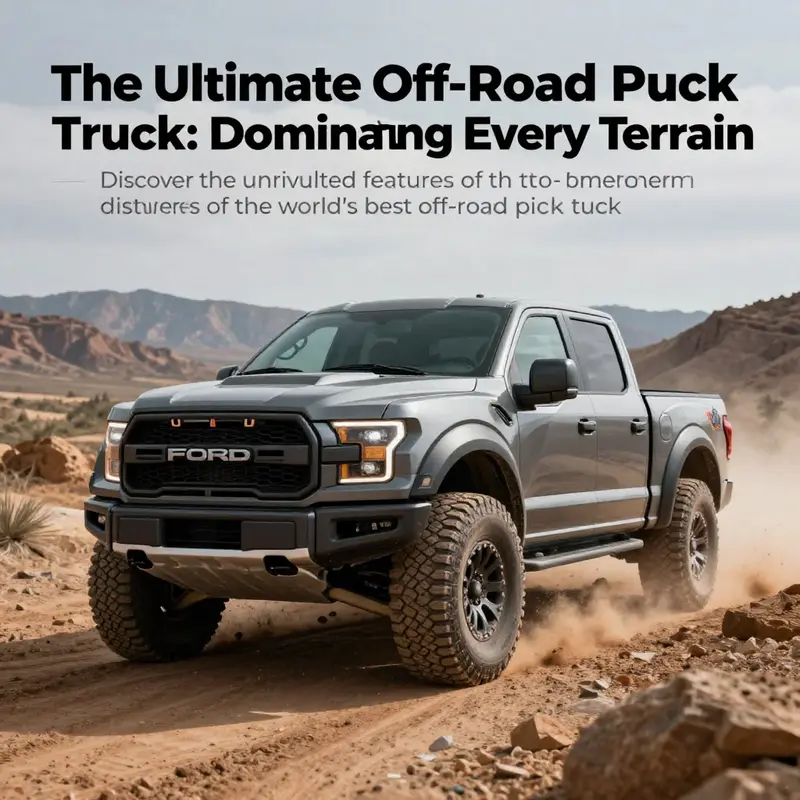
For off-road enthusiasts and adventurers alike, the right pickup truck is not just a vehicle; it’s a gateway to freedom, exploration, and adrenaline. Among the plethora of options available, one name shines brightly: the 2026 Ford F-150 Raptor. Lauded for its remarkable off-road capabilities, powerful engine, and cutting-edge technology, this rugged machine redefines what it means to ‘go off the beaten path.’ From its exceptional performance over bumpy terrains to a suite of advanced features designed for control and comfort, the Raptor stands tall as the best off-road pickup truck. This article will delve into its unmatched performance, engine power, and innovative technology, illuminating why this truck is the ultimate choice for off-road racing fans, landowners, and modification enthusiasts.
Trail Rules: Redefining the Benchmark for the Best Off-Road Pickup Truck in 2026
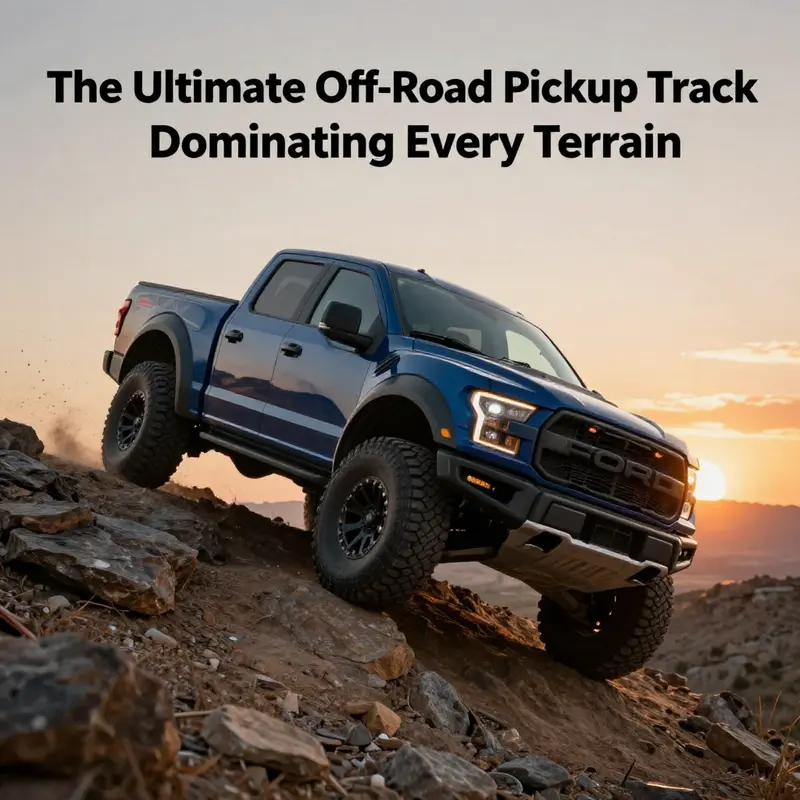
The best off-road pickup truck in 2026 isn’t defined by a single superlative one-liner about power or a flashy suspension showcase. It is defined by a painstaking balance of raw capability and day-to-day usability, a harmony between extreme terrain mastery and the quiet confidence to navigate everyday roads without apology. When a vehicle can conquer rocky slopes, root-strewn trails, slick mud, and sandy whoops, all while delivering a composed ride on pavement and maintaining a calm, practical interior, it earns a place at the top of the class. The leading option in this arena is recognized not just for peak numbers or a single standout feature, but for a coherent, stock-ready package that remains approachable for drivers who want to take the truck straight from the showroom to the trail without wrestling with aftermarket tuning or after-hours refinements. In 2026, the benchmark off-road pickup achieves what enthusiasts have wanted for years: a vehicle that makes the most challenging backcountry terrain feel navigable, predictable, and almost routine.
Power is a foundational element, but it is power with precision. The flagship model that dominates the conversation derives its strength from a high-output V8 that produces more than seven hundred horsepower in its extreme variant. This is not a raw numbers play; it is engine design that emphasizes a broad, usable torque curve, rapid throttle response, and a delivery that respects traction as much as it rewards it. The aim is to transform aggressive hill climbs and steep, loose rock faces into calculated, controlled progress. Torque delivery is tuned to ride smoothly across uneven surfaces, so the driver doesn’t have to compensate with counterproductive throttle or brake input. In practice, the result is a truck that can surge forward on a sandy grade or in a rocky trench, while still feeling manageable and predictable when the trail narrows and the line becomes critical. It is this sense of controllable power that turns a high-performance engine into a practical tool rather than a mere spectacle.
But horsepower alone does not win the day on real-world trails. The chassis and suspension work in tandem with the engine to keep the vehicle planted where the terrain demands. The top contender uses a purpose-built suspension setup with long travel and robust, high-durability dampers that resist stalling under extreme articulation. The goal is not a ride that is plush on a highway but a system that can flex through deep ruts, step down into g-outs, and rebound without a jolt that unsettles the driver. The dampers and springs are tuned to maintain tire contact with the ground, a critical factor when passing over jagged rocks or negotiating rutted ruts after rainfall. The result is an unmistakable sense of cadence under foot—a rhythm that tells the driver the truck is responding, not reacting, to the terrain. In this context, the suspension is less about suspension tuning for sport and more about resilience, reliability, and the ability to carry the vehicle’s mass through uncompromising terrain without compromising control.
A cornerstone feature that amplifies this capability is the advanced traction and drive-system architecture. Four-wheel drive is standard in the top tier, but the real magic lies in how torque is managed and distributed to the wheels with the deftness of a well-calibrated hand. Modern off-road trucks in this class offer multiple drive modes that tailor throttle response, traction control, steering assist, and, where applicable, electronic differential behavior to the surface at hand. A Terrain Management System, with selectable modes such as Sand, Rock, and Baja, translates driver intent into mechanical response with a precision that makes even unfamiliar surfaces feel comprehensible. Sand mode softens throttle response to prevent bogging, Rock mode tightens traction control for careful wheel placement, and Baja mode optimizes stability and throttle for fast, wide-open runs across rough, open terrain. The clever bit is that these are not gimmicks; they are integrated systems that adapt the vehicle’s character to the landscape in real time, letting the driver focus on line selection, speed management, and the occasional brave pass over a stubborn obstacle.
Ground clearance is another nonnegotiable criterion. The best off-road pickup of 2026 sits higher than the average pickup, creating a generous chasm between the undercarriage and the ground that translates into fewer scrapes on jagged rocks and more opportunities to roll over obstacles rather than slam into them. With greater clearance comes the ability to tackle steep approach angles and challenging rock faces without constant route-scouting and feathering of the throttle. Yet this advantage is not won at the expense of on-road manners. The leading truck balances height with a chassis that maintains predictable handling and a stable center of gravity, so it remains drivable on pavement and in traffic. The tires play a crucial role here; the best trucks pair robust, off-road-appropriate tread patterns with sidewall constructions designed to resist punctures and deliver stable cornering grip on both dirt and asphalt. The protection under the truck is equally important; skid plates safeguard vital components from rocks and debris and ensure that a misstep on a trail does not translate into a long workshop visit.
With power, suspension, and ground clearance working in concert, the tires and the protection they rely on complete the practical equation. Durable off-road tires provide the grip required to maintain momentum on slick surfaces while offering sidewall resilience that keeps a driver confident when negotiating ridge lines or rooted steps. Skid plates shield the vulnerable underbelly from rock strikes and hidden hazards, turning potential damage into a remote inconvenience rather than a show-stopper. This is not about blasting through terrain without regard for the surface; it is about choosing lines with assurance and allowing the hardware to absorb the impact. The best trucks offer a well-thought-out balance of tire choice, protection, and geometry, ensuring that the driver can pursue more challenging routes in safety rather than waiting for daylight or a tow truck.
A complete off-road experience also hinges on driver feedback and vehicle communication. The internal interfaces—the displays, the instrument cluster, the instrumented readouts that indicate axle torque distribution, ground clearance, and suspension travel—are not mere amenities; they are essential tools. They give the driver the sense of what is happening beneath the vehicle, even when a ledge or a rut interrupts the line. This feedback loop keeps the pilot in control and reduces the cognitive load of negotiating a difficult section. It also supports safer decision-making, because the driver can anticipate when the chassis is approaching its grip limits or when torque needs to be redistributed to a wheel that is not getting traction. In sum, the best off-road pickup of 2026 is not a one-trick pony; it is a well-integrated system whose parts work in concert to deliver traction, balance, and confidence across a broad spectrum of terrain.
The character of the vehicle’s on-trail demeanor—its willingness to accept abuse, its predictability when confronted with a sudden change in surface, and its ability to recover from a miscalculation without dramatic yaw or brake drama—translates into a broader appeal. It is a truck that invites exploration rather than rewards risk. The driver can push a little further, attempt a line that was previously considered impractical, and trust that the machine will respond with composure rather than settle into a chaotic slapstick of wheelspin and scrapes. This is not about being reckless; it is about enabling a consistent, repeatable, and humane approach to backcountry navigation. In this sense, the best off-road pickup of 2026 becomes not just a vehicle but an instrument for outdoor storytelling—the kind of tool that allows a driver to craft narratives about remote places with the confidence that the hardware will stay with the story rather than derail it.
Beyond the trail, the practical virtues matter just as much. The lead option is engineered for reliability and durability under demanding use. It is designed to withstand repeated off-road sessions with minimal downtime, and to provide a comfortable, usable cabin for long days on rough backroads. The interior is not a luxury overcompensation but a purposeful, durable space where controls are intuitive and where climate, seating, and cargo management can stand up to mud, dust, and the occasional splash of water. The result is a vehicle that remains a credible daily driver, not a one-trick-steed that must be parked in the garage after a weekend of abuse. This kind of balance—exceedingly capable off-road performance coupled with everyday practicality—defines the current cutting edge in the segment. It is this blend, more than any single capability, that gives the top truck its edge over others that may be strong in one domain but fall short in another.
In comparing the field, industry evaluators emphasize consistency of performance across a range of surfaces, from slick mud to loose gravel to smooth pavement. They look for predictable throttle response, linear braking, and a chassis that communicates with the driver rather than hides behind a curtain of electronic aids. They measure how the vehicle handles at speed on a rough section and how easily a driver can recover after an off-line moment. They also weigh the degree to which stock configuration remains effective without aftermarket upgrades, because a turnkey solution that requires no immediate investment in suspension components or tires is, in itself, a form of efficiency and reliability. The 2026 benchmark, therefore, is not merely about raw numbers but about a holistic, proven package that invites drivers to venture farther and more often.
For readers who want to dig deeper into maintenance and mechanical realities that support such capability, a practical resource on diesel mechanics offers a path to deeper understanding. It frames what it means to keep a high-performance powertrain in peak condition, particularly when the vehicle is routinely asked to perform in harsh environments. The guide emphasizes systematic upkeep, careful inspection schedules, and a disciplined approach to preventative maintenance that pays off on the trail. Mastering diesel mechanics: your step-by-step path to success is a useful companion for enthusiasts who want to translate the performance narrative into a sustainable ownership story.
As a final reflection, the best off-road pickup of 2026 embodies a philosophy about capability. It signals that top-tier off-road ability can be accessible, reliable, and practical. It invites a wider community of drivers to imagine what a serious backcountry program could look like when the vehicle is engineered to endure, adapt, and thrive with minimal modification. In that sense, the benchmark is less a destination and more a direction—toward a future where the line between road-going daily driver and trail-commuting expedition vehicle is intentionally blurred for the better. The result is a category that grows not just in horsepower or top speed on rough surfaces but in harmony between power, control, and resilience. As the trail invites, so too should the driver’s confidence follow, carried by a vehicle that has earned its place at the top through thoughtful design, rigorous testing, and the quiet, stubborn promise that you can go farther, safer, and with more certainty than you might have imagined.
External context helps anchor these impressions in a broader conversation about off-road capability. For a comparative, journalist-tested view of top performers in this space, see the widely cited evaluation that Car and Driver released, which highlights models that stand out for off-road capability, reliability, and overall performance. This external reference provides a structured framework for understanding how the leading truck in 2026 stacks up against other contenders across a spectrum of rugged contexts.
Powering the Trail: Engine Mastery and the Off-Road Pickup Champion
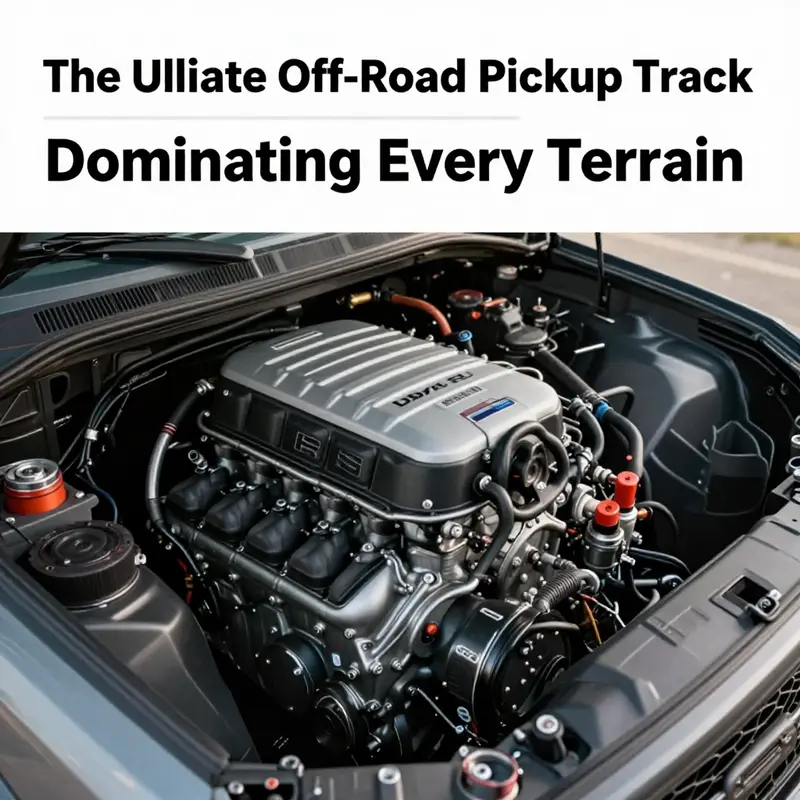
The heart of any off-road pickup lies in its ability to translate raw power into controlled movement across terrain that tests grip, ground clearance, and momentum. Engine power is not a solitary virtue; it is part of an integrated system where torque curves, throttle response, gearing, and drivetrain layout must harmonize with suspension and traction management to keep a vehicle confident on rocks, mud, sand, and steep grades. In this chapter, we explore how power and performance come together in a way that makes a pickup genuinely capable off the pavement, without relying on aftermarket miracles, and why certain configurations have become nearly standard bearers in 2026.
A modern, high-output engine is more than a single number on a spec sheet. Horsepower draws attention, but torque—especially low-end torque—grabs the ground and keeps a vehicle moving when the going gets steep or slippery. A robust engine with strong torque at low revs helps the truck climb loose grades, break through muddy ruts, and maintain momentum when wheelspin is the enemy. In practice, peak horsepower matters most when ground conditions allow for sustained acceleration or when cresting a dune or a rock face where momentum can be the deciding factor between a successful ascent and a stubborn stall. Yet it is the torque curve that defines real-world off-road capability: a broad, flat plateau of twist at low to mid revs keeps the vehicle moving as soon as you ask the throttle, without needing to wind the engine into the upper reaches of the tachometer.
Among the most influential powertrains in the off-road pickup segment, a few configurations consistently push the envelope. A contemporary flagship option can deliver a 3.5-liter twin-turbo V6 in the lower-to-mid 400 horsepower range with torque peaking well into the 500- to 550-pound-feet region. This combination yields brisk acceleration on level ground, but more importantly, the torque availability under load keeps front tires planted when the trail climbs become deliberate and the surface underfoot demands traction rather than drama. For those who crave straight-line fury, a larger displacement, naturally aspirated or supercharged V8 can deliver a different power curve entirely. A 6.2-liter supercharged V8, for example, can push horsepower past the 700 mark in certain variants and deliver a muscular wave of torque that reaches its peak lower in the rev band. In the storm of a sand wash or a rocky switchback, that steady surge of twist—when paired with the right gearing—can be the difference between a controlled crawl and a costly misstep.
But raw power is not the whole equation. In off-road driving, how power is delivered matters as much as how much power is available. This is where the drivetrain architecture comes into play. A vehicle designed for rough terrain must be able to allocate torque where it is needed most, and to do so with predictability. Electronic locking differentials, when engaged, can weld the left and right wheels on an axle so that any surplus torque on the slowest wheel is transferred efficiently to the wheel with traction. This is crucial on rocky terrain where one wheel might be perched on a rock while the others are on loose soil; the lock ensures that the stationary wheel does not become a total energy sink. In mud, a similar logic applies: locking the differentials reduces the chance of a wheel spinning away without the rest of the truck gaining any grip. The interplay between engine torque, differential strategy, and transfer-case behavior becomes the backstage crew that allows the visible spectacle of power to translate into reliable forward motion.
Equally important is how the powertrain communicates with the driver through throttle response and gearing. A responsive throttle means the moment you press the pedal, the engine responds with a predictable and usable surge of torque. For off-road work, this often means a calibrated throttle map that reduces turbo lag and keeps the engine in a range where torque is readily available, not buried behind a steep torque curve that leaves you waiting for the revs to climb. Modern automatics and advanced manuals alike favor software that can anticipate load changes and adjust shift points to maintain momentum. In practice, a well-tuned transmission avoids the dreaded “lug” condition, where the engine fights to regain revs after a gear change, and instead preserves momentum by selecting a gear that keeps torque flow continuous through the next obstacle.
The synergy between engine power and chassis dynamics is what ultimately determines the success of off-road performance. You can have an exceptionally powerful engine, but if the suspension and tires are not tuned to exploit the available torque, the gains can disappear in a plume of dust and stalled wheelspin. A robust suspension is not simply about ride comfort; it is an essential instrument that enables the engine’s power to do its work. Independent front and rear suspension architectures, when paired with adaptive damping, help maintain tire contact with uneven surfaces, allowing the tires to bite into the terrain and translate engine torque into forward movement rather than wasting energy as the vehicle wallows or bounces. The combination of higher-end dampers, larger-diameter springs, and properly tuned anti-squat and anti-dive geometry ensures that as torque is delivered, the wheels find grip rather than sliding into instability.
Engine power must be delivered with controllable finesse as well as raw force. Terrain-aware traction systems and drive modes are often the unsung heroes of off-road performance. When drivers select a mode aligned to their surface—sand, rock, mud, or snow—the powertrain recalibrates throttle mapping, torque distribution, and throttle sensitivity to maximize traction and prevent wheelspin. In loose sand, for instance, a subtle throttle input can maintain forward motion while limiting the tendency for the rear tires to dig in. In rock crawling, a more deliberate throttle with a higher crawl ratio helps the vehicle maintain traction while the tires seek contact with small ledges for grip. These driving modes are designed not to replace skill, but to extend capability by shaping how power is applied in real time.
A practical measure of engine performance for off-road work is the ability to sustain speed across varied surfaces without overheating or losing momentum. Trail climates are rarely forgiving; heat soak and lubrication challenges can take their toll if the engine is pushed too hard for too long without adequate cooling. Vehicles that manage heat effectively thanks to well-designed intercooling, improved airflow, and efficient cooling circuits maintain power consistency over longer ascents and through switchbacks where engine demand remains high. In the most demanding scenarios, power is not just a factor of peak numbers but of sustained torque delivery across temperatures and altitudes.
To contextualize these considerations, imagine a representative high-output engine paired with an advanced transfer case and a set of tuned dampers designed to handle a staircase of obstacles. The engine can deliver a surge of torque as soon as the throttle opens, allowing the driver to pick and choose lines with confidence. The transfer case distributes that torque to the axle that has traction and can alter the gearing ratio to reduce wheel rotation and increase torque at the wheels when needed. The shocks, tuned for high-speed desert crossings and slow, technical rock crawling, keep the chassis stable while the tires search for grip. The overall effect is a system that feels cohesive: power appears when needed, is modulated by the driver’s input, and is translated into controlled movement rather than abrupt surges that can unsettle the vehicle or unsettle the driver.
This is not merely theoretical. In practice, the best off-road pickups in 2026 exhibit a comprehensive integration of power and control. The engines provide robust peak outputs, but what matters is how those outputs translate into grip and momentum across terrain. The most capable trucks offer a combination of high-torque low-end delivery, smooth linear power through the mid-range, and a crest of horsepower that can power the vehicle through longer sections without requiring constant gear hunting. They pair this with adaptive suspensions and active dampers that adjust to terrain while maintaining body control. They offer electronic or mechanical locking differentials that engage when needed, and they enable drivers to choose terrain-specific drive modes that optimize torque delivery and traction. They provide a cockpit experience where throttle feel is intuitive, transmission shifts are predictable, and the driver’s confidence grows with every mile of trail.
In conversations about engine power and off-road performance, it is also important to acknowledge how context shapes value. A high-horsepower machine with extreme top-end power may excel in wide, open landscapes where speed can be exploited. On tighter trails with shale and boulders, the same level of horsepower can become a liability if the truck cannot modulate torque precisely or if its drivetrain architecture makes slow-speed control awkward. Conversely, a truck that emphasizes torque and grip at low revs, even if it sacrifices a few horsepower, can outperform a higher-powered rival on arduous climbs and through deep mud. In that sense, the best off-road pickup is not the one with the most horsepower but the one with the most coherent and usable power delivery, matched to a chassis and traction architecture that can translate that power into reliable progress uphill, over rock, or through water.
For readers who want to explore the mechanical implications behind these dynamics, a deeper dive into diesel and gasoline engine behaviors can be instructive. The guide on mastering diesel mechanics offers a step-by-step path to understanding how engines breathe, compress, and deliver torque under load, illuminating why some powertrains feel more immediate or more forgiving on uneven surfaces. Mastering Diesel Mechanics: A Step-by-Step Path to Success
Beyond the engine and basic drivetrain, it is worth noting how the chassis and tires complete the circle of performance. The grip that matters most on rough terrain is often the grip the tires can muster when aided by a well-managed powertrain. Larger, specialized tires can widen the contact patch and improve traction on soft surfaces, while the suspension geometry determines how much wheel travel is available to maintain ground contact as the terrain tilts and drops away. In practice, a well-balanced system keeps the tires in contact with the surface across a wider range of angles, which means the engine’s power can be used to move forward rather than overcome wheelspin. The best-off road pickups in 2026 tend to feature front and rear suspension architectures that maximize wheel travel without compromising stability. When combined with a robust engine and a smart drivetrain, the result is a vehicle that can maintain speed across varied terrain without sacrificing control or driver confidence.
Engine power and performance cannot be isolated from cooling, lubrication, and reliability. On long, hot climbs, sustained power can be challenged by heat buildup and oil temperature. A powertrain that includes effective intercooling and efficient cooling channels in the engine bay is better prepared to handle back-to-back ascents and long, rough stretches. In the most severe conditions, the ability to keep engine temperatures within a safe window becomes a reliability feature, not a cosmetic one. Likewise, lubrication systems must ensure oil pressure remains stable under load and during aggressive wheel-to-ground transitions. A robust lubrication system reduces the risk of friction-induced power loss and ensures the engine can deliver peak torque without a dip that could jeopardize traction or take the vehicle out of its chosen mode.
The interplay of powertrain sophistication, chassis engineering, and driver control results in a vehicle that can turn a challenging trail into a tractable route. The best off-road pickups do not reduce to a single good attribute; they excel because they connect engine output with traction, chassis stability, and intelligent control software in a feedback loop that favors confident decision-making. When a driver points a vehicle at a rock face or a washboard stretch and applies the throttle with intention, the truck should respond with a predictable, usable surge of power that the suspension can harness to keep the tires in contact with the ground. The result is not merely speed, but the assurance that momentum can be maintained, line after line, obstacle after obstacle.
In summary, engine power and performance in the best off-road pickups of this era emerge from a deliberate blend of high-torque capability, responsive throttle behavior, smart shift programming, and a drivetrain that can lay that power down where it matters most. A torque-rich approach at low revs, combined with a well-mated four-wheel-drive architecture and a suspension tuned for rugged terrain, forms the foundation for true off-road capability. When these elements come together, the vehicle becomes more than a machine that can accelerate on pavement. It becomes a partner on the trail—one that can surmount obstacles, preserve momentum, and maintain control through the toughest lanes a driver dares to navigate.
The next chapter will bridge engine power with practical real-world testing, where we translate laboratory numbers into trail-time performance. It will also consider durability and confidence across repeated trials, altitude changes, and evolving off-road conditions, reinforcing the idea that the best off-road pickup is the one that couples efficient power generation with an orchestrated system that communicates clearly with the driver, inspiring trust on every mile of the journey. For readers curious about the deeper mechanical underpinnings of how power translates to performance, the diesel mechanics guide offers a practical framework for understanding the ways engines breathe, torque, and sustain traction under load, providing a complementary perspective to the behavior described here. The narrative of power on the trail, after all, is a story about balance as much as about raw force.
External resource for further reading: https://www.motortrend.com/cars/ford-f-150-raptor/
High-Tech Armor on the Trail: How Advanced Systems Define the Best Off-Road Pickup

Across the modern landscape, where crossings of rock and sand demand more than brute torque, the best off-road pickup truck is defined by a quiet, integrated intelligence. It is not enough to claim power alone; the vehicle must translate that power into controlled motion on grades, through rutted canyons, and along slick river beds. In 2026, the leading machines fuse mechanical prowess with a sweep of highly capable electronic systems that work in concert, so the driver spends less time wrestling the terrain and more time exploring it. The result is a working tool and adventure platform rolled into a single, purpose-built machine whose technology is more partner than upgrade. To understand what separates the best from the rest, one can trace how four families of features—mechanical drivetrain refinement, terrain management and chassis tuning, visibility and awareness systems, and interior computing and driver assistance—cooperate to deliver performance, safety, and a more confident sense of control when the going gets unpredictable.
First, the backbone of any off-road machine must be a drivetrain that can deliver torque to where it is needed most, precisely when it is needed. The most capable off-road pickups use true locking differentials or mechanically locking differentials that can be engaged to force torque to the wheels with traction while equalizing speed across axles. In practice, this kind of system ensures that even if one wheel leaves the ground or finds a slick surface, the others still contribute to propulsion. The concept is simple in theory—maximize grip by locking the available drive paths—but in execution it relies on a robust mechanical design, refined torque transfer, and predictable behavior under load. The boats and buggies that navigate rocky, slippery, or deeply rutted trails demonstrate the value of a “real three‑lock” approach, where front, center, and rear locking mechanisms cooperate to keep the vehicle moving. When such systems are paired with a high-torque, high-revving engine—one tuned to deliver broad, usable broadside power without sacrificing low-end response—the vehicle can conquer steep grades and uneven surfaces that would stall lesser machines.
Yet torque alone does not decide a vehicle’s fate on the trail. A high-performance suspension system—designed to absorb sharp impacts, maintain wheel contact, and preserve ride quality—complements locking differentials by keeping tires planted as the body moves. Modern off-road suspensions use large-diameter dampers and specialized shocks that can be tuned to respond to sudden changes in terrain. This is not simply about softer or stiffer; it is about a controlled series of adjustments that maintain tire contact with the ground, reduce squat and dive under braking and acceleration, and maintain a more linear transfer of energy from the road to the suspension components. In the best rigs, this system is paired with a drive-by-wire throttle and electronically managed torque distribution, so the suspension and drivetrain respond in harmony as the terrain changes from compact track to sand wash to slick mud.
The path to peak off-road performance is rarely linear, and that is where terrain management systems enter the conversation. The most capable platforms expose a suite of driving modes that can range from mud and sand to rock and snow. Some designs extend this set with a broader nine-mode footprint, automatically adjusting engine response, transmission shift logic, damping, and stability controls to suit the surface. The goal is to translate the driver’s intent into a calibrated response from the vehicle’s powertrain and chassis—no micromanagement required. In practice, that means when the wheel shows slip in mud, the system opens torque to the wheels with traction, tightens the stability constraints to prevent spin, and shifts the suspension to a mode that gives just enough wheel deflection to find grip. In a rock crawl scenario, the system reduces throttle sensitivity, adjusts the transmission’s point of engagement to avoid stalling, and opens up the suspension articulation to keep the tires on the most stable contact patch. With a nine-mode configuration, the vehicle can systematically tailor traction control, throttle mapping, and damper behavior to specific surfaces, letting the driver focus on line selection and the rhythm of the climb rather than keystrokes and adjustments.
A crucial leap forward in off-road confidence is the visibility and awareness package. The best trucks deliver more than a driver’s-eye view; they synthesize sensor data into a comprehensive, real-time picture of the environment. A panoramic 540-degree view system—an amalgam of 360-degree camera feeds and an under-vehicle vantage point—lets the operator understand the vehicle’s position in relation to rocks, ruts, and obstacles without having to rely on guessing from the mirrors. In practice, this kind of system becomes a practical partner on tight switchbacks, slope transitions, and low-speed maneuvering where the risk of a scrape or a misstep is high. The undercarriage feed is particularly valuable on steep approaches or when fording streams, where ground clearance and line of sight to the ground surface are crucial. The result is greater situational awareness with less cognitive load, a combination that reduces the chance of an off-camber misjudgment or a stumble into an unseen rut.
Inside the cab, technology changes the relationship between the driver and the vehicle in a different but equally important way. The interior has evolved into a smart and connected command center that blends large visualization surfaces with a responsive software stack. A sizable central touchscreen can become the primary interface for vehicle settings, navigation, and media, while a digital instrument cluster presents critical telemetry—gear selection, torque output, suspension mode, and real-time traction and stability status. The software behind these displays is designed for speed and clarity, with fast boot times, snappy transitions, and smooth interaction. Modern systems emphasize not just how much information can be displayed, but how meaningfully it can be presented. For example, a logically organized hierarchy of menus reduces the time required to adjust drivetrain and suspension parameters, while persistent, context-aware widgets keep crucial data in the driver’s field of view during demanding maneuvers.
A truly sophisticated cockpit goes beyond raw information to include a refined human–machine interface. Voice control becomes more than a convenience; it is a safety feature when hands must stay on the wheel, eyes on the terrain. A visible-to-say voice interface can accept natural language requests and return results quickly, enabling the driver to query satellite navigation, adjust audio, or set climate preferences without taking attention away from the trail. The system integrates with the vehicle’s other functions to ensure that responses are relevant to the immediate driving task, such as dimming the screen in low-light conditions or muting navigational prompts during a critical maneuver. The interior is also designed to be resilient to off-road environments, with rugged switchgear, sealed ports, and a tactile interface that remains legible and functional when dust coats the cabin.
Connectivity inside the cabin matters for more than entertainment. Modern pickups are designed to be fully compatible with a broad ecosystem of car-connectivity platforms, so drivers can mirror their phones, access maps, and use streaming services with minimal latency. This is not simply about convenience; it is about reducing distraction and enabling the driver to stay informed about route conditions, weather, and potential obstacles while keeping their attention on the terrain ahead. In the best systems, this connectivity is paired with a robust operating environment that minimizes lag, supports rapid startup, and handles multi‑tasking without degradation in responsiveness. The software stack is designed to be extensible, allowing updates that add features and improve reliability over time, which is essential for a platform that must remain useful across many years of rugged use.
The most consequential benefits, however, arise from the intersection of visibility, control, and safety. Advanced driver assistance systems have matured to a point where a high density of sensors—front cameras, radar, and other proximity devices—provide a comprehensive safety net. A dozen or more sensors can feed into a suite of functions: adaptive cruise control that remains effective on variable surfaces, lane-keeping assistance that can handle uneven terrain, emergency lane keeping when a line becomes obscure, and automatic emergency braking in the event of a sudden obstacle, whether that obstacle is a hidden rock or a stray animal crossing the path. When you combine a robust sensor suite with panoramic visibility and intelligent processing, you gain a level of confidence that is hard to achieve through brute force alone. You can anticipate and adapt to conditions rather than reactionary mitigate them, which is especially valuable on long expeditions where terrain changes rapidly and help can be far away.
All of these technologies are not just about performance; they also influence the practicality of off-road work. The modern off-road pickup is often a tool for work as well as an enabler of adventure. In this dual role, the vehicle must be able to plan a route that considers load, fuel, terrain difficulty, and time windows, and it must execute that plan with a reliability that makes long trips feasible. The software underpinning these capabilities—whether in a fleet-management context or in a consumer-focused navigation and telemetry suite—needs to be robust, intuitive, and responsive. One relevant angle for fleets is to consider how dispatching software and on-board vehicle systems can work in concert. For fleets that rely on both capability and schedule adherence, it is useful to consider how in-cab information can feed back into overall logistics planning. A thoughtful integration can help operators optimize routes, manage resources, and respond to changing trail conditions with agility. This is not a one-way street from the truck to the office; it is a dynamic loop that helps a crew stay informed, coordinated, and safe across remote landscapes. For fleets that want to explore these possibilities, a practical starting point is to examine the must-have features of dispatching software and how those capabilities might interface with the vehicle’s onboard systems. must-have-features-of-dispatching-software.
In aggregate, these elements form a cohesive philosophy of the best off-road pickup truck. It is not enough to claim a vehicle has off-road capability; it must demonstrate how mechanical and electronic systems collaborate to produce predictable behavior in the most demanding environments. The best platforms present a spectrum of power, control, awareness, and connectivity that is greater than the sum of their parts. They invite the driver to pursue challenging routes with less fear, because the car’s systems are already tuned to manage the risks. They translate raw performance into a confident, intuitive experience. They enable longer journeys with fewer adjustments and less downtime, which, in practical terms, means more time on the trail and more time doing the work that brought you there in the first place.
The implications for drivers and fleets alike are meaningful. A truck that can automatically adjust to the surface beneath its tires reduces the chance of getting stuck and minimizes the wear on tires and suspension, translating into lower maintenance costs and higher uptime. A panoramic view system and a robust sensor suite can lower the cognitive load for the operator, which is particularly valuable in challenging settings where split-second decisions matter. A modern interior with fast, responsive software ensures the driver can access critical information without scrolling through multiple menus or waiting for the system to catch up, and it can synchronize with other devices and platforms so maps, weather data, and messaging are available when needed. The more intelligent the truck’s interface, the easier it is to operate in a way that preserves both safety and momentum, whether the goal is a high-speed dash across a desert wash or a careful rock crawl that requires precision plating and careful wheel placement.
This is the current trajectory of the best off-road pickups: a blend of proven mechanicals with adaptive electronics that anticipate terrain rather than simply respond to it. It is a design philosophy that respects the complexity of off-road travel, acknowledges the limits of human perception in demanding environments, and seeks to extend the limits of what a single vehicle can accomplish. The machines that embody this philosophy are not just tools; they are advisers in the wild—quiet, capable, and relentlessly composable as the trail unfolds. As technology continues to evolve, the line between off-road beast and intelligent platform will blur further, making the best option for many drivers not a single model but a system of integrated capabilities that can be tailored to the demands of the expedition at hand. In practice, that translates to more reliable getaways from steep climbs, more confident navigation through uncertain terrain, and a more efficient workflow that keeps drivers and vehicles in step with each other, mile after mile, rock after rock, dune after dune.
Final thoughts
The 2026 Ford F-150 Raptor is without a doubt the best off-road pickup truck, perfectly blending power, advanced technology, and unparalleled performance. Whether you are an off-road racing participant or an agricultural landowner, this beast of a truck is designed to tackle challenging terrains while providing the comfort and functionality needed for everyday use. Embrace the rugged adventure that awaits with the Ford F-150 Raptor and discover the true essence of off-road capability.