
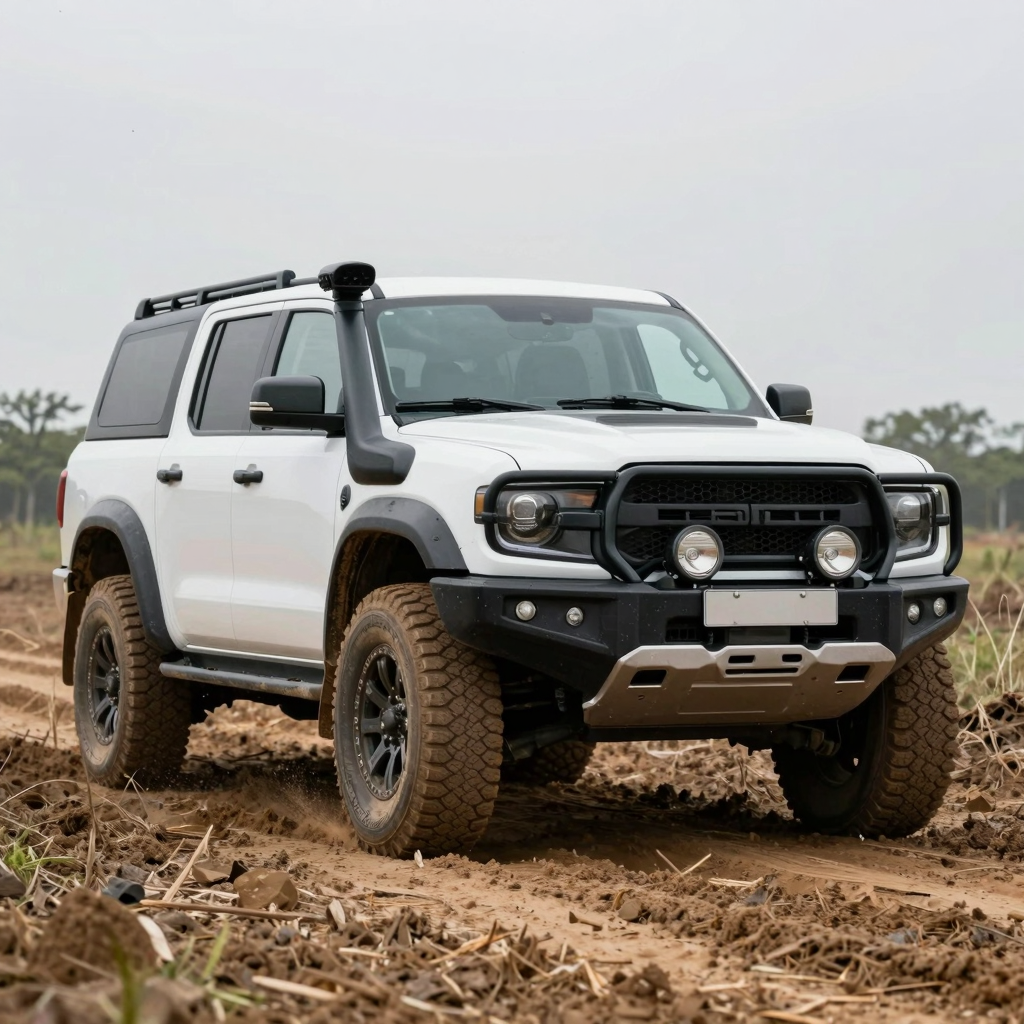
The Thrill of Building Your Off-Road Truck
For off-road enthusiasts and adventure seekers, nothing matches the exhilaration of conquering rugged terrains, navigating through mud, or deftly maneuvering over rocky landscapes. The adrenaline rush that comes from driving an off-road truck through challenging environments instills a sense of freedom unlike any other. But to truly embrace this passion, you need more than just the desire to explore; you need to build an off-road truck that is not only durable but also tailored to your unique driving style and adventure goals.
Crafting the perfect off-road truck is a journey in itself-a blend of mechanical expertise, creativity, and a keen understanding of performance enhancements. As each off-road adventure presents its own set of challenges, building a truck that can withstand these conditions becomes paramount. From fortified suspension systems to rugged tires that grip the earth, every component contributes to your vehicle’s ability to endure the extremes of off-road conditions.
Moreover, the satisfaction that comes from personalizing your off-road truck allows not only for functional upgrades but also for expressing one’s individuality. Whether you are a weekend warrior or a serious off-road racer, the ability to customize and modify your truck will not only improve performance but also enrich your experience behind the wheel. Imagine the thrill of tackling an incline that once seemed insurmountable, all because you took the time to research and apply the right modifications to your build.
By dedicating time to understand how to build an off-road truck, you empower yourself to explore new territories. With the right tools and knowledge, you can transform a simple vehicle into a beast that takes on the wild. Join us as we delve deeper into the techniques and secrets of building the ultimate off-road truck that captures the spirit of adventure and defies the limits of the roads less traveled. Let’s embark on this exciting journey together-because the off-road awaits!
Learn more about optimizing truck fleets and discover how customized modifications can elevate your off-road experience.
Building Your Off-Road Truck: Essential Components
When it comes to building an off-road truck, enthusiasts place considerable importance on specific components that define performance and durability in rugged terrains. Whether you’re navigating rocky trails or muddy landscapes, the right features are crucial to your success as an off-road adventurer. Here’s a detailed look at the key components necessary for building an exceptional off-road truck.
1. Robust Four-Wheel Drive (4WD) System
A four-wheel drive system is non-negotiable for any capable off-road truck. It distributes power to all four wheels, ensuring maximum traction on slippery and uneven surfaces. This component is vital for maintaining control and stability, especially when tackling steep inclines or navigating through obstacles.
2. Heavy-Duty Suspension System
The suspension system serves as the backbone for off-road performance. Long travel heavy-duty suspensions are designed to absorb shocks from rough terrains, allowing for better wheel articulation and maintaining consistent tire contact. This setup reduces the risk of body roll and enhances overall stability on treacherous trails. The integration of shock absorbers rated for extreme use is necessary to withstand harsh impacts, ensuring a smoother ride.
3. High Ground Clearance
To avoid undercarriage damage during off-road excursions, a high ground clearance is essential. It not only helps in overcoming obstacles like rocks and logs but also aids in preventing mechanical failures caused by scraping against the ground. Ideally, you want a clearance that allows your truck to navigate diverse landscapes without compromise.
4. Durable Off-the-Road Tires
The choice of tires can make or break your off-road experience. Tires specifically designed for off-road conditions (OTR tires) usually feature aggressive treads that provide superior grip on loose surfaces like sand, mud, and gravel. Durability is key; these tires must withstand punctures and abrasions that are common in off-road settings. The right tires will significantly enhance traction and stability, crucial for tackling unpredictable terrains.
5. Reinforced Chassis
An off-road truck’s chassis must be robust to handle the stresses encountered in rugged conditions. A reinforced chassis not only contributes to the structural integrity of the vehicle but also protects vital components from damage during extreme activities. The ability to withstand torsional forces is essential for durability.
6. Low-Range Gearing and Differential Locks
For increased torque at low speeds, a transfer case with low-range gears is vital. This feature allows the truck to climb steep grades and traverse challenging landscapes. Differential locks ensure that power is distributed evenly to both wheels on an axle, maximizing traction when one wheel encounters slippery surfaces. These components are indispensable for maneuvering through difficult terrains effectively.
7. Safety and Recovery Features
No off-road setup is complete without safety and recovery features. Equip your truck with skid plates to protect the undercarriage, tow hooks, and winches for self-recovery in case you get stuck. Reinforced bumpers can also provide additional protection against collisions with rugged objects, enhancing the overall safety of your off-road adventures.
Conclusion
The key components of building an off-road truck revolve around durability, performance, and safety. By investing in a robust 4WD system, heavy-duty suspension, high ground clearance, durable tires, a reinforced chassis, low-range gearing, and adequate safety features, you’ll be well-equipped to take on any adventure that comes your way.
Build wisely, and your truck will not just be a vehicle but a trusty companion on all your off-road journeys.
For more detailed information on enhancing your truck’s performance, check out our guide on diesel mechanics.
Comparison of Off-Road Truck Suspension Systems
Understanding the differences between various off-road suspension systems can greatly influence your truck modifications for improved performance and comfort. Here’s a detailed comparison of three popular suspension systems: Leaf Spring, Coil Spring, and Air Suspension.
| Feature | Leaf Spring Suspension | Coil Spring Suspension | Air Suspension |
|---|---|---|---|
| Primary Material | High-carbon steel (e.g., 20x75mm, 24x76mm) | Steel or alloy steel coils | Air bladders (rubber/nylon composite), metal components |
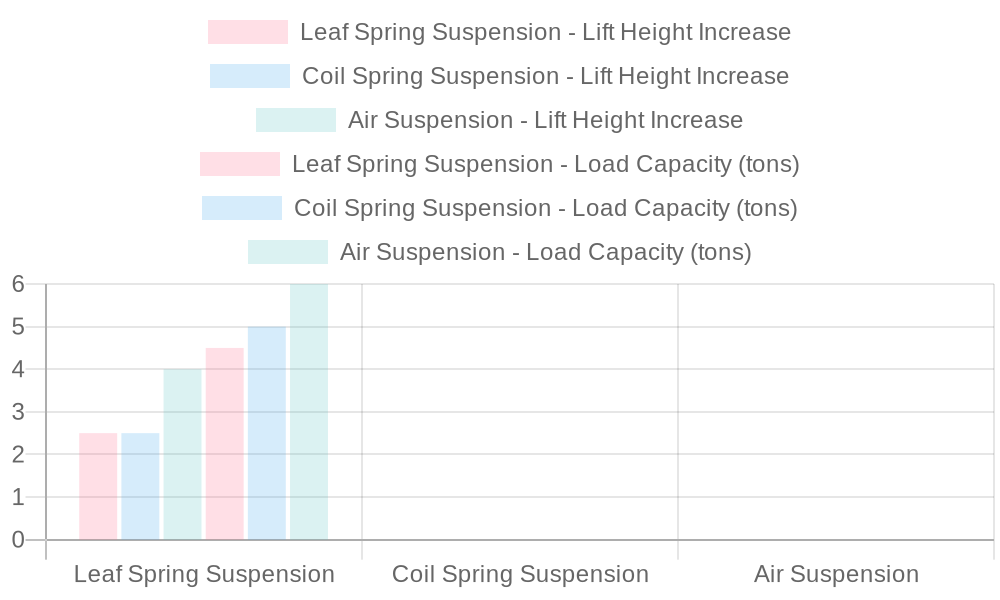
| Typical Lift Height Increase | ~2-3 inches (as seen in universal lift kits like Kinggo AD002) | Varies by design; typically 1-4 inches | Adjustable from 0 to several inches (via air pressure control) |
| Load Capacity | 3-6 tons (common for trailer and off-road truck applications) | Typically 2-8 tons depending on coil strength and design | 2-10+ tons; highly adjustable based on inflation level |
| Durability & Resistance | High resistance to deformation under heavy loads | Good durability; resistant to fatigue under repeated compression | Moderate durability; susceptible to punctures and wear over time |
| Ride Quality | Rigid; provides a harsher ride on uneven terrain | Smoother than leaf springs; better shock absorption | Excellent; offers a very smooth, adjustable ride quality |
| Adjustability | Fixed height; limited to factory or bolt-on lift kits | Limited adjustability; some aftermarket kits offer height adjustment | Highly adjustable; real-time ground clearance and ride height control |
| Maintenance Requirements | Low maintenance; simple inspection of bolts and bushings | Moderate; requires periodic inspection of coils and mounting hardware | Higher; requires air compressor system, hoses, valves, and regular checks for leaks |
| Cost (Initial) | Low to moderate | Moderate | High |
| Common Use Cases | Commercial trucks, off-road hauling, heavy cargo transport | Off-road vehicles, performance SUVs, light to medium-duty trucks | Luxury off-road vehicles, high-end trucks, commercial vehicles requiring load leveling |
| Advantages | – Proven reliability – Simple design – Cost-effective – Excellent load-bearing capacity – Resistant to deformation |
– Better ride comfort – Compact design – Improved handling – Lighter weight than leaf springs |
– Smoothest ride quality – Adjustable ride height – Automatic load leveling – Reduces stress on frame and tires |
| Disadvantages | – Harsh ride quality – Less effective on rough terrain – Limited adjustability – Can sag over time under heavy load |
– Lower load capacity compared to leaf springs – More complex installation – Susceptible to coil failure under extreme stress |
– High initial cost – Complex system prone to failure – Requires constant air supply – Vulnerable to damage from sharp objects |
Summary
When choosing the right suspension for your off-road truck, consider your specific needs, including expected load capacity, ride comfort, and terrain types. For rugged durability and load-bearing, consider Leaf Springs. For better ride quality on varying terrains, opt for Coil Springs. If you’re looking for adjustability and comfort, then Air Suspension is the way to go.
For more information on building and customizing your off-road truck, learn more about advanced suspension technologies.
Conclusion
Building an off-road truck involves careful consideration of many components, including suspension. Each type of suspension system has its own unique set of advantages and disadvantages, and understanding these will guide you in making an informed choice that suits your off-road adventures.
Word Count: 670
Choosing the Right Tires for Off-Road Adventures
When it comes to building your off-road truck, selecting the right tires is crucial for maximizing performance in various terrains. The tires you choose will greatly affect your truck’s handling, traction, and overall driving experience.
Understanding Terrain Types
Different terrains demand different types of tires. Here are some common conditions and the recommended tire types:
- Sand: Look for tires with wide, paddle-like treads designed to float over soft sand, such as sand-specific Mud-Terrain (MT) tires.
- Mud: Tires with deep, aggressive tread patterns are essential here. Mud-Terrain tires are ideal as they help to clear mud effectively while providing necessary traction.
- Rocks: When tackling rocky trails, opt for tires that have reinforced sidewalls to prevent punctures and offer superior grip.
- Mixed Terrain: All-Terrain (AT) tires provide a balanced option, suitable for those who encounter both on-road and off-road conditions. These tires offer decent traction in various conditions while being comfortable for on-road driving.
Selecting Tire Sizes
In addition to terrain types, tire size is an important facet of off-roading. Here are some tips:
- Stay True to Specifications: Ensure that the tire size matches or is close to the manufacturer’s recommendations. If you’re considering increasing the size, upgrading by one to two inches is generally advisable, as this enhances ground clearance without major modifications.
- Larger Tires: While larger tires (like 33” or 35”) can provide better traction and ground clearance, they may require lift kits and can affect vehicle dynamics. It’s important to consult your truck’s manufacturer guidelines or a certified mechanic before making alterations.
Recommended Tire Brands
Some of the best off-road tire brands include:
- BFGoodrich: Known for their All-Terrain T/A KO2, it excels in off-road traction and durability across various conditions.
- Michelin: The LTX A/T2 offers a great balance between comfort and off-road capability, making it a versatile option.
- Toyo Open Country: This line is well-regarded for maintaining performance in rugged environments and soft terrains.
- Nitto Trail Grappler: A solid choice for aggressive off-road enthusiasts, providing reliability in heavy-duty conditions.
Conclusion
Choosing the right tires is essential for optimizing your off-road adventures. By considering the terrain you’ll encounter and adhering to size recommendations, you can enhance your truck’s off-road capabilities significantly. With the right tires, you’ll be set to tackle any adventure, ensuring that every trip off the beaten path is thrilling and safe. For more tips on how to build your off-road truck, check out our guide and become the ultimate off-roading expert!
Essential Safety Features for Off-Road Trucks
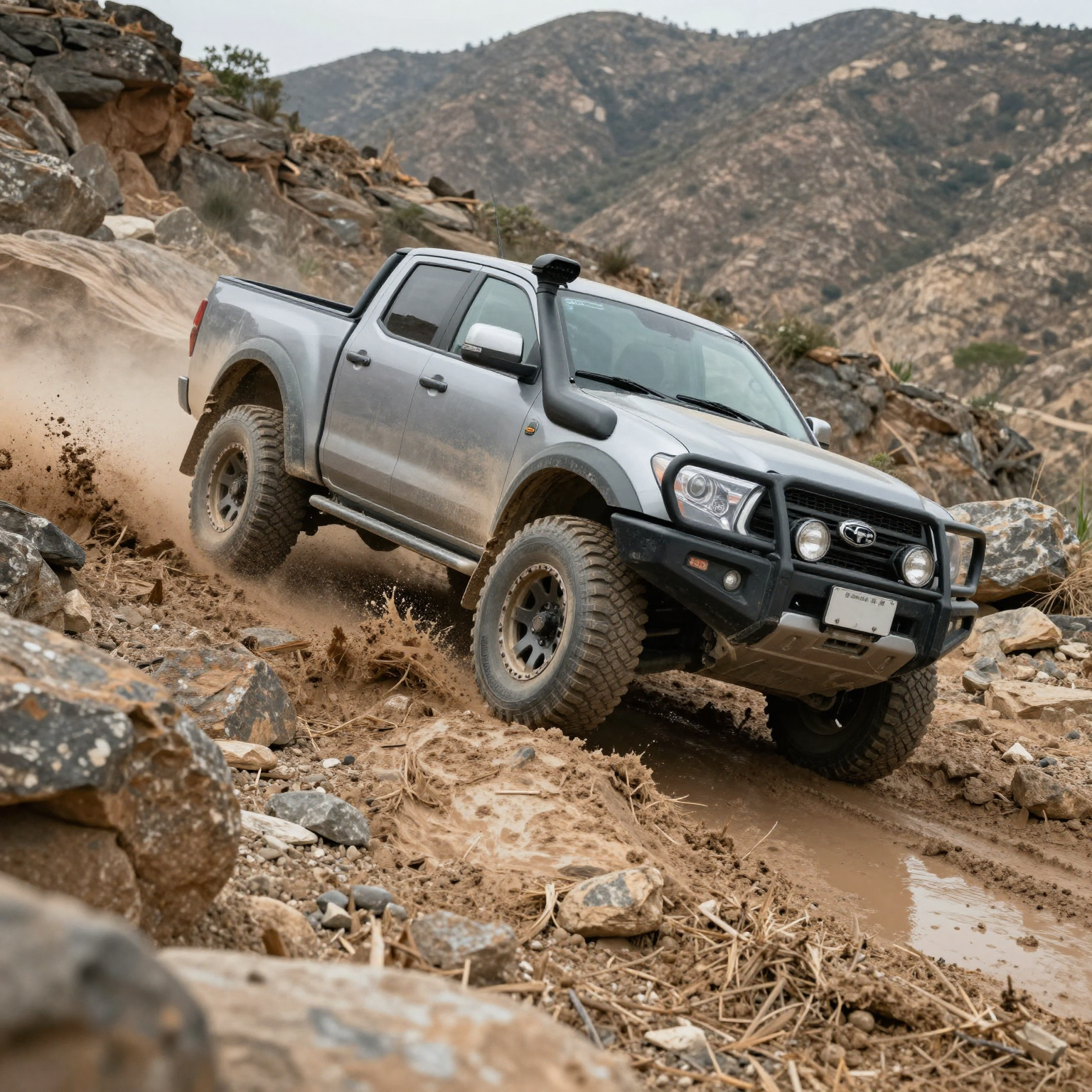
When venturing into rugged terrains, ensuring the safety of your off-road truck is paramount. Here are five essential safety features to consider when building or modifying your vehicle:
1. Advanced Suspension System
A robust suspension system absorbs shocks and maintains vehicle stability on uneven surfaces. It is vital for providing both comfort and control during off-road activities, especially in rocky and hilly areas. Without proper suspension, the risk of losing control significantly increases.
2. High-Performance Tires
Off-road tires are designed to provide better traction on various surfaces, from mud to snow to rocky paths. Their unique tread patterns help prevent slippage and enhance grip, allowing for safer navigation in treacherous conditions.
3. Roll Bars and Cages
Installing roll bars or a full roll cage improves the truck’s structural integrity and protects the occupants in the event of a rollover. This feature is crucial, as off-road driving often includes sharp turns and obstacles that may lead to hazardous situations.
4. Proactive Safety Features
Incorporating advanced safety technologies such as Anti-lock Braking Systems (ABS) and Electronic Stability Control (ESC) can significantly enhance safety. These features help prevent skidding and maintain vehicle stability during abrupt maneuvers, reducing the likelihood of accidents.
5. Safety Harnesses and Restraints
Replacing standard seat belts with four or five-point harnesses offers added security for drivers and passengers. Safety harnesses keep occupants securely seated, minimizing the risk of ejection during sudden impacts or loses of control.
In summary, integrating these safety features when building your off-road truck not only ensures the well-being of everyone on board but also enhances the overall performance and reliability of the vehicle. For more details on building a truck equipped with safety in mind, check out our guide on mastering diesel mechanics.
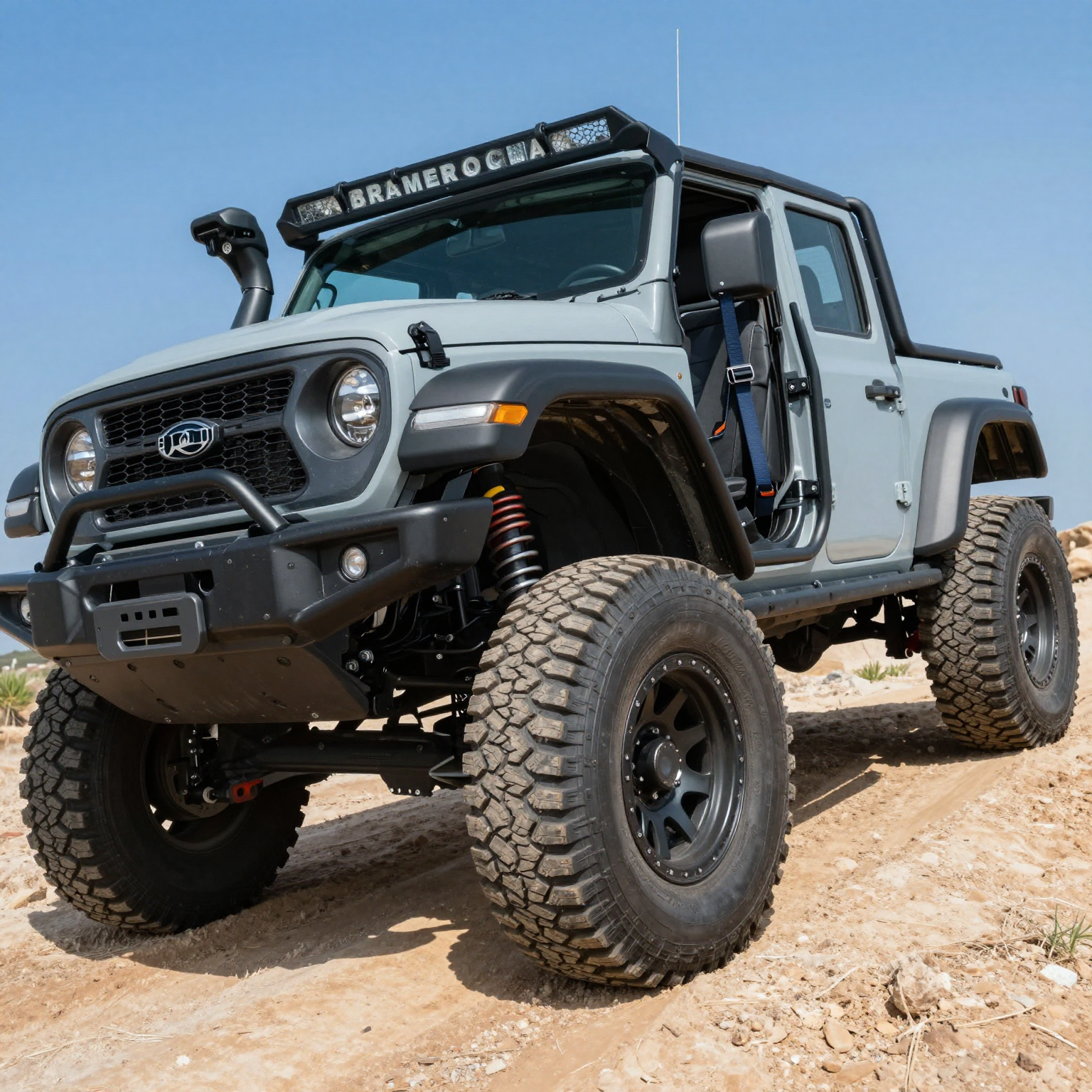
“The integration of CTIS and advanced suspension systems in vehicles like the Stewart & Stevenson M1200 represents a significant leap in off-road mobility. These enhancements reduce operational downtime and improve mission success rates in unpredictable environments.”
- Dr. Elena Rodriguez, Senior Systems Engineer at the U.S. Army Research Laboratory
Conclusion: Building Your Off-Road Truck Adventure
As we come to the end of our journey on how to build your perfect off-road truck, it’s essential to reflect on the critical steps that lead to your off-road adventure. From selecting a solid chassis to upgrading every aspect of your truck, creating a machine that can tackle the toughest terrains requires passion, precision, and a clear vision.
Key Steps in Building Your Off-Road Truck:
- Choose the Right Platform: Starting with a reliable chassis is crucial. Popular choices include the Ford F-150 or RAM 2500, offering a strong foundation for modifications.
- Suspension Upgrades: Enhancing your suspension with lift kits ranging from 2.5 to 6 inches not only improves ground clearance but also ensures superior shock absorption for those bumpy rides.
- Tire Selection: Opt for larger, aggressive tires (33+ inches) designed for mud-terrain for maximum traction on loose surfaces.
- Frame Reinforcement: Protect vulnerable components with reinforced frames and skid plates to withstand harsh obstacles.
- Engine Modifications: Upgrade your engine with power enhancements, like diesel conversions or turbochargers, to boost torque for climbing and towing.
- Accessorize Wisely: Integrate essential accessories such as winches, recovery straps, and roof racks that enhance safety and increase functionality in extreme off-road conditions.
In every step, the goal is to create a vehicle that is more than just a truck; it becomes a companion for adventure, a vehicle ready to conquer the wild.
Don’t forget, the journey doesn’t end with building your truck. It’s about venturing into uncharted territories and living the off-road lifestyle. As you embark on this exciting journey, consider exploring Summit Fairings’ offerings for the best parts and accessories to complement your build and enhance your off-roading experience.
Get ready to unleash your wild side and take your off-roading adventures to the next level!
Off-Road Truck Maintenance Tips
Maintaining your off-road truck is crucial for ensuring longevity, performance, and safety, especially when traversing rugged terrains. Here are some essential maintenance tips aimed at off-road truck enthusiasts and adventurers alike:
1. Routine Inspections
Always start with a thorough inspection before hitting the trails:
- Tire Checks: Inspect the tire pressure, ensuring it’s appropriate for the terrain. Lower tire pressure is typically better for softer surfaces while higher pressure suits rocky paths. Regularly check for tread depth and visible damage, such as cuts or bulges.
- Suspension System: Before every off-road session, examine the shocks, struts, and control arms for wear or leaks, as the suspension takes a beating in off-road environments.
- Fluid Levels: Check engine oil, coolant, and brake fluid levels before any trip. Contaminated fluids can cause critical failures, especially under stress.
2. Cleaning is Key
After venturing into mud, sand, or water, cleaning your truck is not just aesthetics:
- Undercarriage Cleaning: The undercarriage is susceptible to rust and corrosion from mud and debris. Clean it thoroughly using a hose and, if needed, a mild detergent to remove dirt. Avoid high-pressure washers close to seals to prevent damage.
- Engine Bay Care: Cleaning the engine bay is equally important. Mud trapped in the engine bay can cause overheating. Use a gentle spray, and ensure all components are dry afterward.
3. Regular Upkeep
Maintenance is not only about pre-trip checks but also regular upkeep:
- Fluid Changes: Change engine oil, transmission fluid, and differential oil more frequently than your on-road counterparts. Off-roading generates more heat and grime, necessitating more regular fluid checks and swaps.
- Brake System Maintenance: Regularly check brake pads and rotors, especially after heavy off-road use. Dust and dirt can significantly wear the braking components down, making them less effective.
4. Use Quality Parts
Utilizing high-quality replacements and upgrades can dramatically enhance durability:
- Synthetic Oils: These can withstand the rigors of off-road conditions better than conventional oils, offering better protection and performance.
- Aftermarket Enhancements: Consider investing in high-performance tires, suspension upgrades, and reinforced undercarriage protection (like skid plates) that cater specifically to off-road conditions.
5. Documentation
Keep a maintenance log:
- Track Services: Maintain records of all maintenance performed, part replacements, and fluid changes. This log can help you identify patterns and anticipate future issues, preventing breakdowns in remote locations.
By following these off-road truck maintenance tips, you can ensure your vehicle remains in optimal condition, ready for the next adventure. Proactive care not only extends the life of your truck but also enhances performance on those rugged terrains.
For an extensive maintenance checklist, check out the 4×4 Magazine’s Off-Road Maintenance Guide.
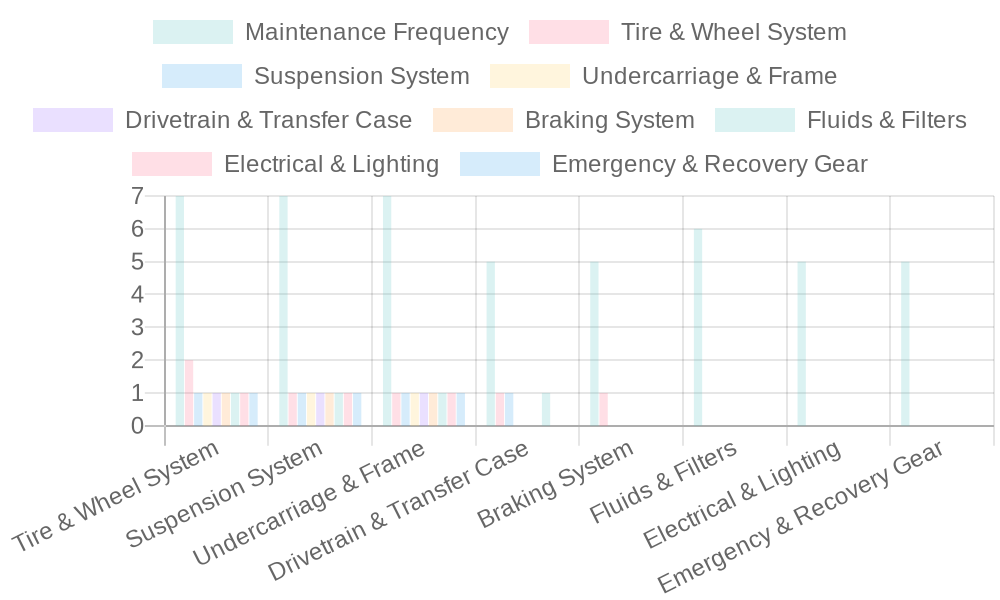
Click the chart for a comprehensive overview of maintenance tips.
Common Off-Road Truck Modifications
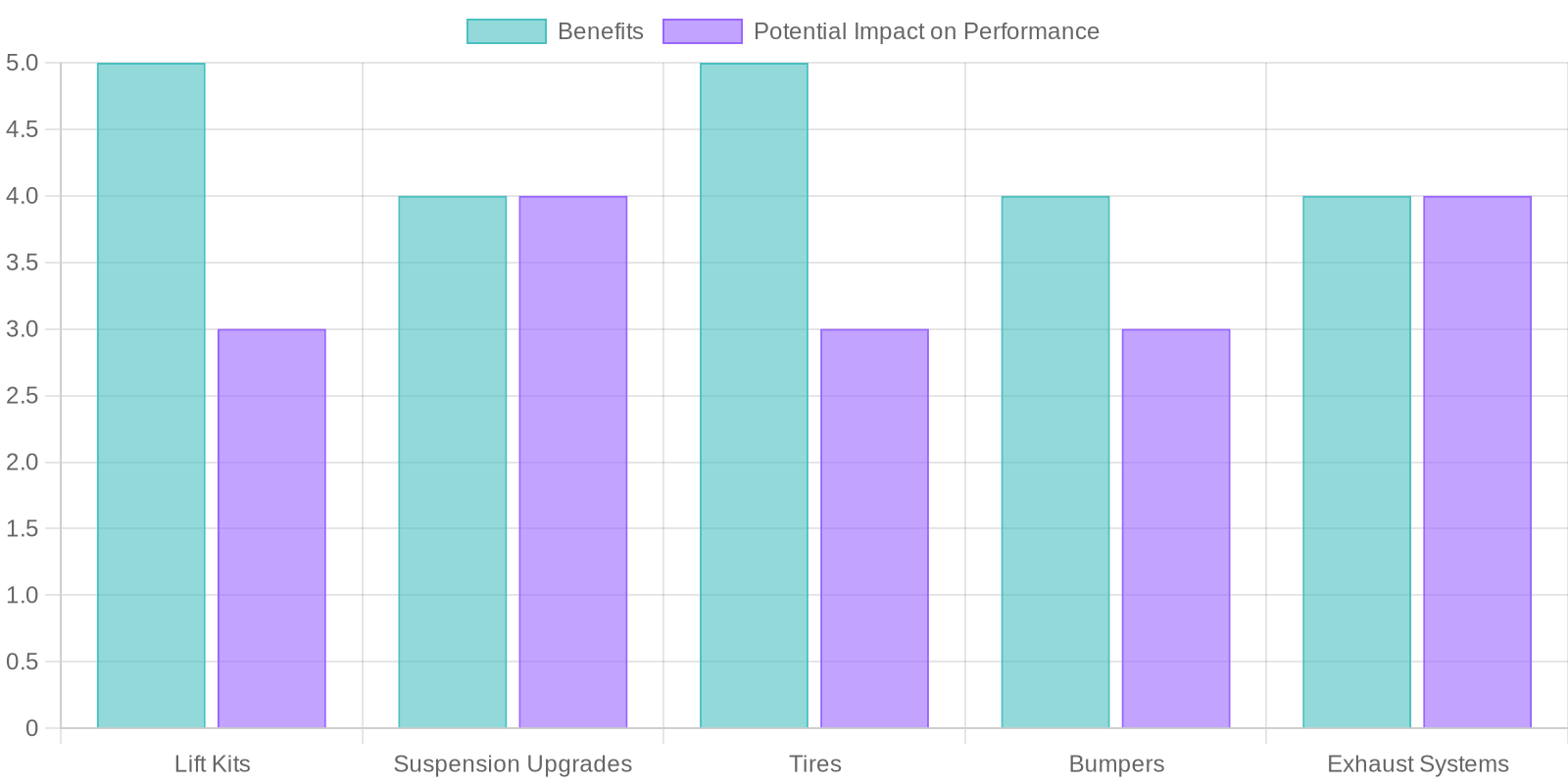
Off-roading is an exhilarating experience that demands the right modifications to your truck. Below is a chart illustrating the most common off-road truck modifications, their benefits, and potential impacts on performance.
| Modification | Benefits | Potential Impact on Performance |
|---|---|---|
| Lift Kits | Increases ground clearance, allows installation of larger tires, improves approach and departure angles | Enhances obstacle clearance and off-road capability; may affect on-road handling and stability at high speeds |
| Suspension Upgrades | Improves off-road handling, increases suspension travel distance, enhances shock absorption | Provides better control over rough terrain, reduces body roll, but may require alignment adjustments and can affect ride quality on paved roads |
| Tires | Offers superior traction on mud, sand, rocks, and snow; increased durability for harsh conditions | Significantly improves grip and mobility in challenging environments; heavier tires can increase unsprung weight and reduce fuel efficiency |
| Bumpers | Provides protection against impacts from rocks and debris; often designed to improve approach angles | Enhances front-end protection and off-road geometry; added weight may affect acceleration and braking |
| Exhaust Systems | Improves engine breathing, increases power output, enhances exhaust flow and efficiency | Boosts engine performance and throttle response; may require tuning for optimal results and can affect noise levels |
For more insights on improving truck performance, you can learn more about technical upgrades or get tips on truck upgrades.