
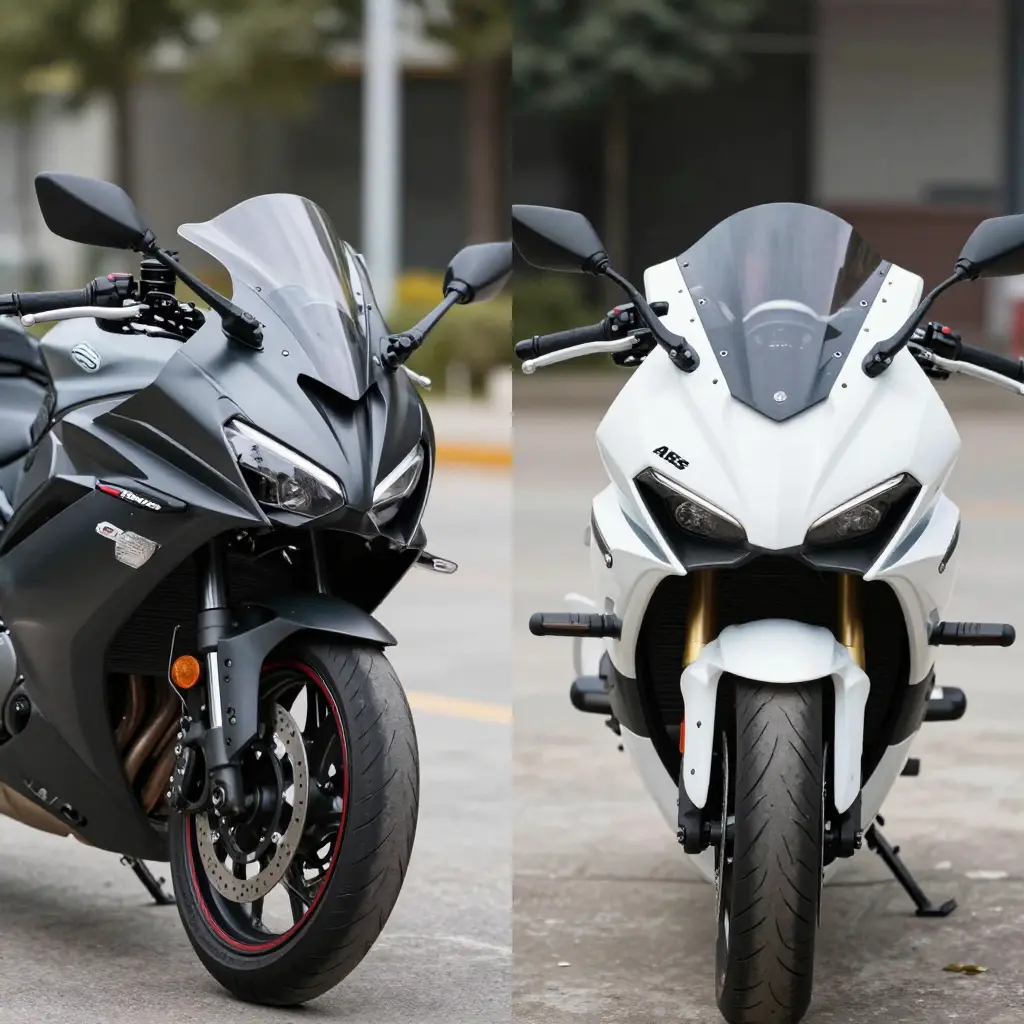
What a Motorcycle Fairing Actually Does
A motorcycle fairing is not decoration. It is a body panel that changes how air moves around the bike and the rider, and each of its jobs depends on how the panel is made.
Aerodynamics. Smoothing airflow over the front of the bike lowers drag and lift. Less drag means the engine works less to hold speed; less lift keeps the front tire loaded. Shape matters, but so does rigidity: a panel that flexes under load cannot hold the airflow path it was designed for.
Wind and debris protection. The fairing pushes wind pressure, rain, and road debris away from the rider’s chest, hands, and legs. That cuts fatigue on long rides and takes the sting out of small impacts that would otherwise reach the rider.
Airflow routing for engine cooling. Fairings are not solid walls. Ducts, vents, and channels send cool air to the radiator, oil cooler, or cylinder heads and pull hot air away. Route the air badly and the engine runs hotter than it should.
Impact and abrasion shielding. In a slide or a tip-over, the fairing usually hits the ground first. It absorbs and spreads impact energy and gives up its own surface to abrasion, which protects frame components and the rider.
Why material choice drives the outcome. All four jobs come back to the motorcycle fairing material. Aerodynamic stability needs stiffness; debris protection needs toughness; cooling needs panels that keep their molded shape under heat and vibration. Stiff, heat-stable materials hold their geometry, so ducts and airflow paths stay true. Tougher materials resist cracking and road rash. That is why fairing durability is not only about surviving a crash; it is about whether the fairing keeps doing its job season after season.
The takeaway: a fairing earns its keep only when its material delivers stiffness, heat resistance, and abrasion toughness at the same time.
Fairing Anatomy: Know Your Panels Before You Compare Materials
Before comparing how ABS and fiberglass behave on the road, it helps to agree on names. Every sportbike fairing is a jigsaw of individual panels, and each one takes a different kind of beating over a riding season. The diagram below is the map: when the subject is a tip-over, a lowside scrape, or highway vibration, the part in question is almost always one of these five sections.
The front cowl wraps the nose and headlight housing and takes the most wind pressure and the most bugs. The windscreen sits up top and flexes constantly as it moves air over your helmet. The side panels cover the mid-flanks and the radiator area, where heat and road spray work slowly. The belly pan guards the underside of the engine and exhaust, so it meets curbs and gravel shoulders first. The sculpted tail section ties the rear together, often carrying the seat unit and taillight while staying rigid enough not to rattle loose.
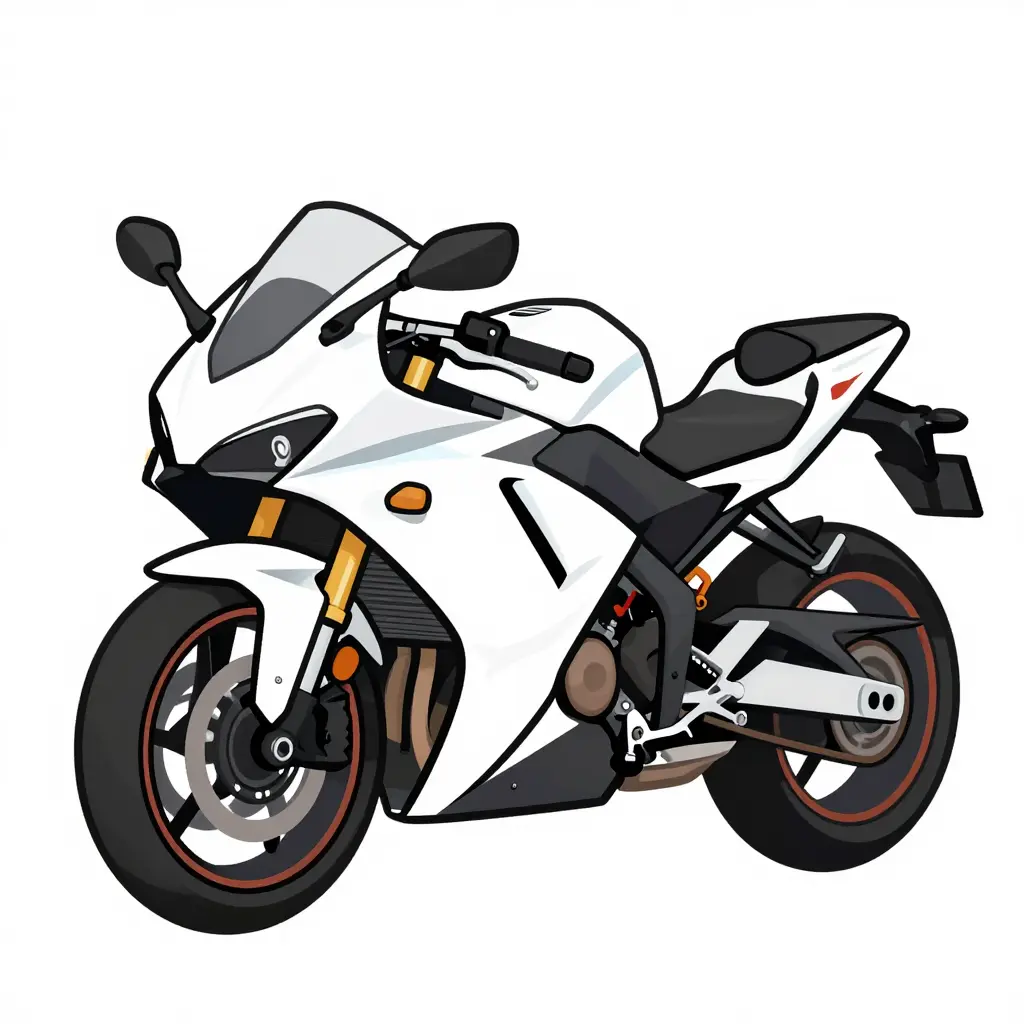
Keep these five zones in mind. The material comparison that follows depends on where a panel lives and how it is expected to fail. A part that needs to flex and spring back has different demands than one that must hold a crisp shape, and once you can point to the section, the ABS-versus-fiberglass trade-off gets more concrete.
ABS Fairings: The Injection-Molded Standard
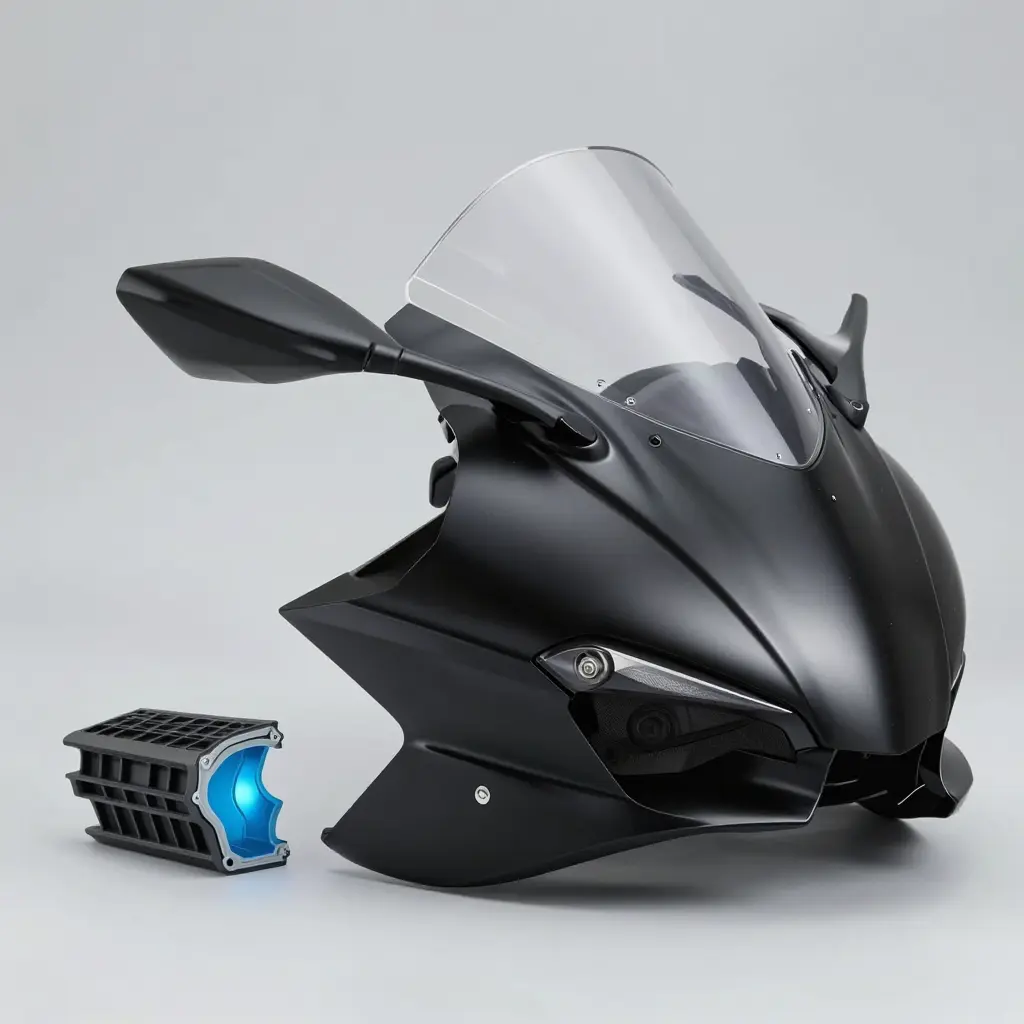
How the material behaves
ABS (Acrylonitrile Butadiene Styrene) refuses to pick a side between hard and soft. Its acrylonitrile and styrene give it rigidity and a clean, glossy finish; the butadiene rubber phase adds a springy toughness. The result is a plastic that bends before it breaks, which matters when a stone, a knee, or a curb finds your bodywork.
The evidence
ABS is injection molded: molten pellets are forced into a heated steel mold, so every panel leaves the factory with consistent thickness, smooth curves, and molded-in mounting tabs. No hand-laying, no trapped air pockets. That consistency is why an ABS motorcycle fairing material shrugs off the constant buzz of road vibration; the rubber phase absorbs energy that would otherwise seed a stress fracture. ABS is a thermoplastic, so a minor dent can often be pushed back out, and gentle heat lets you soften a panel and work it toward its original shape.
Why it matters to riders
Most manufacturers use ABS as original equipment, so replacement panels bolt straight on and match factory gaps. That means less downtime, lower repair bills, and bodywork that flexes through the riding season instead of cracking in it.
If you enjoy getting hands-on with your machine, building practical vehicle repair skills makes jobs like this easier.
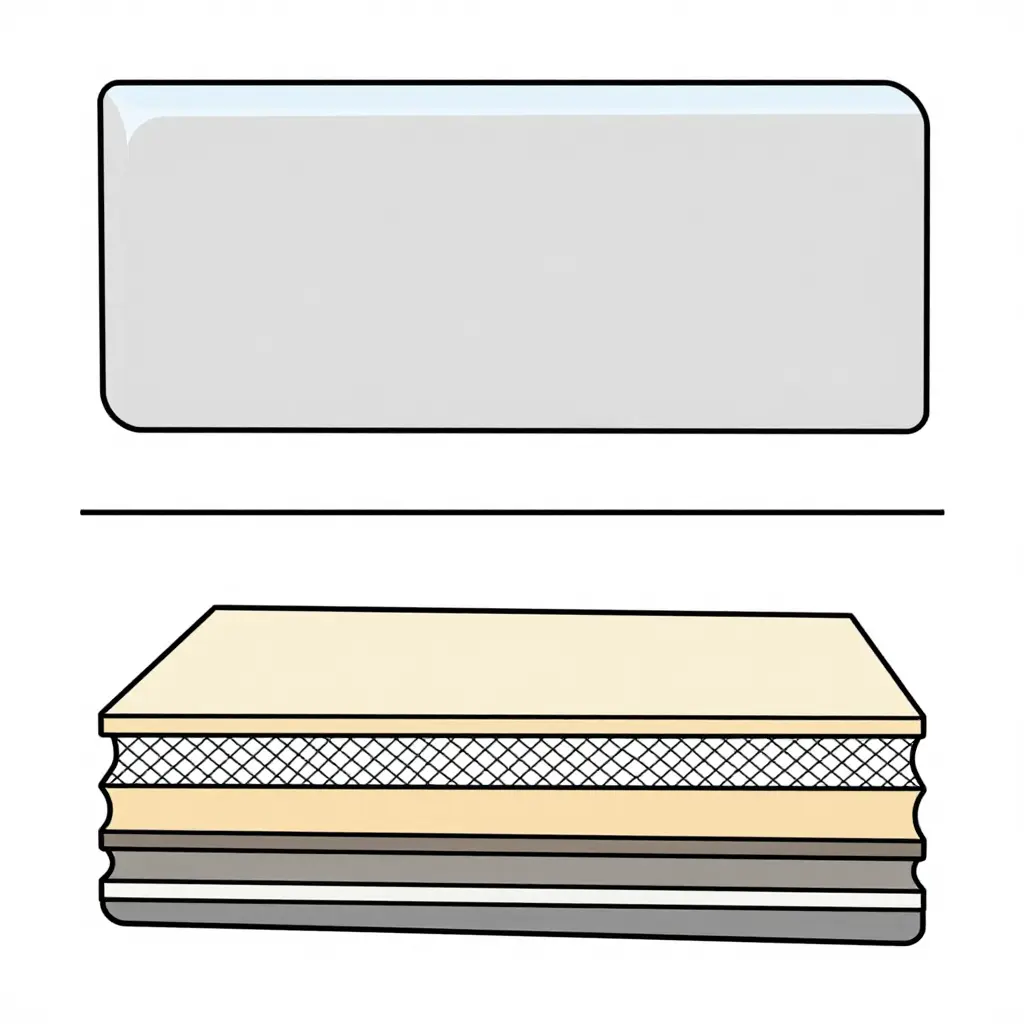
Fiberglass Fairings (FRP): The Race-Bred Material
Fiberglass, or FRP (fiber-reinforced plastic), is one of the oldest materials in motorcycle bodywork and still one of the most respected. Builders keep returning to it for reasons that matter to riders too.
How a Fiberglass Fairing Gets Built
There are two main production routes. In hand layup, a worker drapes woven glass cloth into a mold and saturates it with resin, layer by layer. It is labor-intensive, but it lets small shops sculpt one-off shapes, which is why custom builders favor it. In compression molding, layers of glass and resin are pressed between matched metal dies under heat, producing a denser, more uniform part at higher volume. Either way you get a stiff shell that holds its shape far better than many thermoplastics.
Why Riders Like the Physics
The selling point is the strength-to-weight ratio. Glass fibers carry large tensile loads while the resin locks them in place, so a fiberglass motorcycle fairing stays light for its stiffness and resists flex at speed. That stiffness gives stable aerodynamics, less vibration through the bars, and bodywork that stays true through hard cornering. Race teams use it to shed grams without giving up crash resistance.
Fiberglass is also forgiving in a way molded plastics are not. Cracks and gouges can be sanded, filled with resin, and relaminated; sections can even be heated and reshaped for custom fitment. That repairability, plus low tooling costs for short runs, is why fiberglass dominates race paddocks, track-day builds, and one-off customs rather than mass-production commuters.
The Rider’s Takeaway
If you care about tuneable stiffness and the ability to repair or reshape your bodywork instead of replacing it, fiberglass is a strong pick. The trade-offs are a stiffer, more brittle shell in low-speed impacts and occasional finishing work. For racing and custom projects, that is usually a fair bargain.
ABS vs Fiberglass: Head-to-Head Comparison
The table below compares how each material holds up across the properties that matter most to everyday riders.
| Property | ABS | Fiberglass | Winner |
|---|---|---|---|
| Weight | Injection-molded thermoplastic, thin-walled and usually lighter for the same coverage | Resin-and-glass layup is denser, though a thin race layup can be lighter than street ABS | ABS |
| Impact Resistance | Flexes on low-speed tip-overs and parking-lot drops, then springs back instead of cracking | Rigid shell cracks, chips, and spider-webs on hard contact, though it spreads load across a wider area | ABS |
| Flexibility | Bends under stress and returns to shape, shrugging off vibration and minor flex | Stays stiff and unforgiving, so it transfers force to the frame instead of absorbing it | ABS |
| Repairability | Harder to fix cleanly; needs plastic welding or patch kits and can leave visible seams | Easy to repair with fresh resin and glass mat, sanded smooth for a near-invisible mend | Fiberglass |
| Cost | Cheap to mass-produce in high volumes, so complete fairing sets stay budget-friendly | Labor-intensive hand layup costs more per unit unless you are producing a one-off custom piece | ABS |
| UV/Weather Resistance | Fades and grows brittle in strong sun unless protected by a quality clear coat | Gelcoat and automotive paint hold color longer, though the coat can chalk over seasons | Fiberglass |
| Paint Finish Quality | Takes paint well but flexing can lead to hairline cracks in the finish over time | Accepts deep automotive paint and clear coat for a smooth, showroom-grade gloss | Fiberglass |
| OEM Fitment | Molded to tight factory tolerances, so panels bolt straight on with no trimming | Aftermarket panels often need drilling, shimming, or trimming to line up with stock mounts | ABS |
How to Read the Scorecard
ABS wins on everyday durability, weight, cost, and factory fit, which makes it the practical choice for commuters and riders who want panels that hang on through a full season. Fiberglass wins on repairability, paint depth, and long-term weather resilience, which is why track-day builds and custom projects often lean that way. Riding style and budget should settle the tie, not the spec sheet alone.
ABS vs Fiberglass: The Durability Scorecard
Numbers settle arguments faster than adjectives. To cut through the marketing talk, the chart below scores both materials across the four traits that decide whether your fairing survives a full riding season. Each metric is rated on a 1 to 10 scale, where a higher number means better real-world performance. For weight, a higher score means lighter, which is what you actually want bolted to your bike.
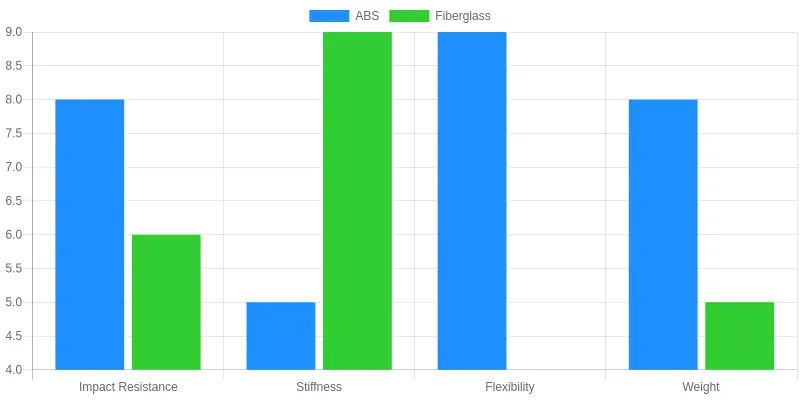
What the chart shows:
- Impact Resistance: ABS edges ahead with an 8 versus fiberglass at 6. ABS absorbs a knock and flexes back, while fiberglass tends to crack and spiderweb on hard contact.
- Stiffness: Fiberglass dominates here at 9, compared to ABS at 5. That rigid structure is why race-oriented fairings favor fiberglass, but stiffness and brittleness often travel together.
- Flexibility: ABS runs away with a 9, leaving fiberglass at 4. This flexibility is the secret behind ABS surviving low-speed tip-overs and parking-lot drops that would leave fiberglass in pieces.
- Weight: ABS takes the lighter crown at 8 against fiberglass at 5. Less weight means less strain on mounting points and a slightly nimbler feel on the road.
The Takeaway
The scorecard describes a familiar trade-off. If you want a fairing that forgives the occasional mishap and sheds a few pounds, ABS is your material. If you demand maximum rigidity and don’t mind a heavier, more fragile setup, fiberglass still has its place. Most street riders logging everyday miles will find the ABS scores line up better with how a riding season actually unfolds. Whichever material you pick, regular inspections and record-keeping keep any machine road-ready.
Weight and Performance: How Mass Shapes the Ride
Where fairing weight sits matters as much as how much there is. An ounce added high and forward, near the steering axis, resists the small corrections you make constantly. For the same coverage, an injection-molded ABS panel is usually lighter than a thick street fiberglass layup, though a thin race layup can undercut both. That difference changes how the front end feels in your hands.
Handling and Steering
The less weight sits above the forks, the quicker a bike transitions from side to side. ABS bodywork usually lets the steering respond with less effort, so mid-corner adjustments feel neutral instead of heavy. A heavy fiberglass shell asks for more input on tight, technical stretches.
Acceleration and Braking Feel
Less mass means the engine has less to move, so acceleration feels sharper without touching horsepower. On the brakes, a lighter nose dives more predictably and settles faster, which translates into more confidence at the lever. Heavier fairings can dull that feedback, making the front end feel vague under hard deceleration.
Fuel Economy
Weight and aerodynamic drag both shape fuel use. A lighter fairing demands slightly less energy to accelerate and climb, which can nudge economy upward over long, varied rides. The gain is modest, but it compounds when lower weight and a cleaner profile work together.
The Takeaway
ABS is the lighter choice for most street bikes, and that weight advantage is part of why it feels easy to steer. A thin race fiberglass layup can be lighter still, which is one reason track builders accept its brittleness. Match the material to how you actually ride.
Cost and Value Analysis: ABS vs Fiberglass Fairings
Before you commit to a material, it helps to reason through the money. Riders often fixate on the headline number, but the true cost of a fairing lives in three layers: what you pay upfront, what you spend finishing it, and what it costs you every time you have to replace a panel. Lay those three side by side, and the “cheaper” option stops looking so cheap.
Upfront Cost: Where the Sticker Shock Begins
An ABS fairing kit price for a full aftermarket set usually lands between $300 and $800. ABS is injection-molded in volume, so manufacturers pass along lower production costs. Fiberglass kits, by contrast, are hand-laid and labor-heavy, pushing complete sets into the $400 to $1,200 range.
Painting and Finishing
This is the hidden line item. ABS kits frequently ship pre-primed or even factory-color-matched, so finishing might only add $150 to $350. Fiberglass usually arrives as raw gel-coat, meaning you budget an extra $300 to $600 for prep, primer, base coat, and clear coat.
Long-Term Replacement Costs
This is where the verdict changes. ABS flexes on impact, so a slow-speed tip-over often leaves it scuffed but intact. Fiberglass is rigid, and rigidity cracks; a single drop can mean replacing whole sections at $350 to $900. Over several seasons, an affordable motorcycle fairing material that survives minor mishaps usually wins on total cost of ownership.
| Cost Factor | ABS Fairings | Fiberglass Fairings |
|---|---|---|
| Upfront kit price | $300 – $800 | $400 – $1,200 |
| Painting and finishing | $150 – $350 (often pre-finished) | $300 – $600 (usually raw gel-coat) |
| Long-term replacement | $250 – $600 | $350 – $900 |
| Impact behavior | Flexes and resists cracking | Rigid and prone to cracking |
| Best for | Everyday street riders | Track and show builds |
So, Which Delivers Real Value?
Value is not the same as the lowest price tag. Judge any purchase on lifetime cost rather than the initial outlay; the same discipline behind smart pricing evaluation tips applies to choosing fairings. A complete aftermarket fairing kit bundles every panel, so you avoid piecemeal replacement bills down the road. For most riders chasing durability on a budget, an ABS kit that flexes, fits, and survives is the smarter buy. Fiberglass earns its premium only if you demand razor-sharp track aesthetics and accept the repair risk.
The Real Cost of Owning a Fairing
Sticker price is only the first line item you’ll pay. The true ownership cost of a fairing stretches across the whole riding season and beyond: what you hand over at purchase, what it takes to make it look right, what repairs cost when the pavement bites back, and what you eventually spend replacing it. Added up, the cheapest fairing on the shelf isn’t always the cheapest one to own.
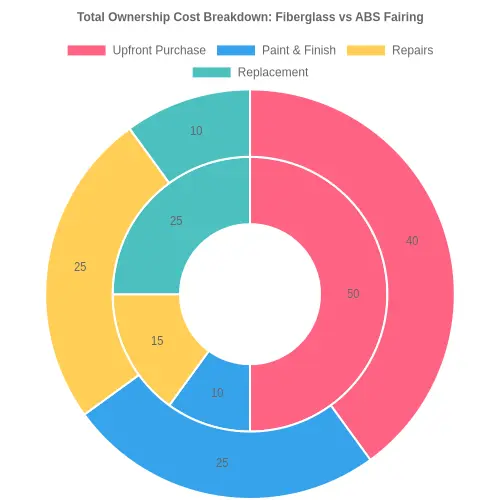
The chart above splits total ownership cost into four buckets. The inner ring is the fiberglass fairing; the outer ring is the ABS fairing. Watch how the weight shifts between them.
Reading the Rings
Fiberglass fairing (inner ring)
- Upfront Purchase – 40%
- Paint & Finish – 25%
- Repairs – 25%
- Replacement – 10%
ABS fairing (outer ring)
- Upfront Purchase – 50%
- Paint & Finish – 10%
- Repairs – 15%
- Replacement – 25%
What the Numbers Are Telling You
Fiberglass carries a bigger painting bill. Raw fiberglass arrives in a dull gelcoat, so a proper base coat, color match, and clear coat eat up a quarter of its total spend. ABS often ships pre-colored or in molded black, which is why paint and finish barely register at just 10%.
Repairs flip the script in fiberglass’s favor on paper; a skilled hand can lay new mat and resin over a crack. But good fiberglass work isn’t cheap, and the 25% share reflects the labor of getting a patched panel to look seamless again. ABS holds a lower repair share at 15% because small cracks can often be plastic-welded or simply snapped back into place.
The surprise is replacement. ABS panels are more likely to be swapped out over time, driving its replacement share to 25%, double fiberglass’s 10%. Whether that’s from impact damage, fading, or simply the availability of affordable aftermarket replacements, ABS riders end up replacing more often.
| Cost Category | Fiberglass Fairing | ABS Fairing |
|---|---|---|
| Upfront Purchase | 40% | 50% |
| Paint & Finish | 25% | 10% |
| Repairs | 25% | 15% |
| Replacement | 10% | 25% |
The Bottom Line
If you can stomach the finishing work, fiberglass spreads its cost more evenly and rewards you with fewer replacements. If you want to ride sooner and paint later, ABS front-loads the cost but keeps the maintenance simple. Neither is universally cheaper; it comes down to how hard you ride and how much you’re willing to wrench.
Repairability and Maintenance: Which Material Bounces Back?
When a fairing takes a hit, how easily you can bring it back to life matters as much as how it performs on the road. Both ABS and fiberglass can be saved after cracks and scuffs, but the methods and the learning curve are different.
DIY Repair: ABS
ABS is the friendlier material for hands-on owners. Most ABS fairing repair jobs start with plastic welding, where you melt a filler rod into the crack using a heat tool to fuse the plastic back together. For smaller scuffs, strong adhesives and a flexible filler smooth out the damage before sanding and painting. Because ABS is a thermoplastic, it tolerates repeated heating and reshaping, so a patient beginner can often achieve a clean result without special equipment.
DIY Repair: Fiberglass
Fiberglass repairs rely on resin patching. You grind back the damaged area, layer in new glass mat with resin, then cure, sand, and refinish the surface. This creates a strong, seamless bond, but it is messier and demands more skill. A rushed fairing repair can leave pinholes or an uneven surface that shows through paint, so fiberglass rewards riders who enjoy a methodical process. If you like building mechanical confidence step by step, resources on developing hands-on repair skills can help you approach these jobs with more assurance.
Routine Maintenance That Extends Fairing Life
- Wash fairings regularly and remove bug splatter and road grime before it etches the surface.
- Apply a UV-protective wax or sealant to fight sun fading and chalking.
- Tighten mounting bolts to spec and replace worn rubber grommets to prevent stress cracks.
- Inspect for hairline cracks early, since small fixes are far cheaper than replacements.
- Store the bike out of direct sun when possible to slow material fatigue.
Which Material Suits Which Rider?
If you are a tinkerer who likes quick, low-cost fixes, ABS is the practical choice, since plastic welding and adhesives keep you riding with minimal downtime. If you are a long-distance rider who values rigidity and prefers a durable, repairable structure even when repairs take more effort, fiberglass is the better long-term partner.
Weather, UV, and Temperature Resistance: ABS vs. Fiberglass Across a Riding Season
How the Elements Attack Fairing Materials
Weathering is not one force but a slow, combined assault. Sunlight fires UV photons that snap polymer chains through photodegradation. Rain and humidity seep into tiny surface cracks, expanding them as water freezes or heats. Meanwhile, constant temperature swings force materials to expand and contract until stress builds at seams, edges, and mounting points. How well a fairing endures comes down to what it is made of.
ABS Under the Sun
ABS is a thermoplastic of acrylonitrile, butadiene, and styrene. The butadiene phase is its weak link: UV exposure oxidizes it, triggering chalking, fading, and a brittle, chalky skin. Unless your ABS panels wear a UV-resistant coating, noticeable color loss can show up inside a single riding season. ABS also softens in real heat and grows brittle in the cold, so dramatic temperature swings are its worst enemy.
Fiberglass Under the Sun
Fiberglass combines glass fibers with a resin matrix. The glass fibers themselves shrug off UV, but the exposed resin can yellow and chalk over time. A quality gelcoat works like built-in armor, giving fiberglass a natural advantage as a UV resistant fairing. It also expands and contracts far less, so it holds its shape, fitment, and paint through scorching afternoons and chilly dawns alike.
The Verdict
For a genuinely weatherproof motorcycle fairing that resists fading, rain, humidity, and temperature swings, fiberglass takes the win, provided it is gelcoated and maintained. ABS stays lighter and cheaper, but it leans on protective coatings to survive more than a season or two in the sun.
Aesthetics and Customization: Which Fairing Takes a Better Finish?
When you’re chasing a custom motorcycle fairing that turns heads, looks matter as much as crash protection. So which material lets you build a finish you’re proud to show off?
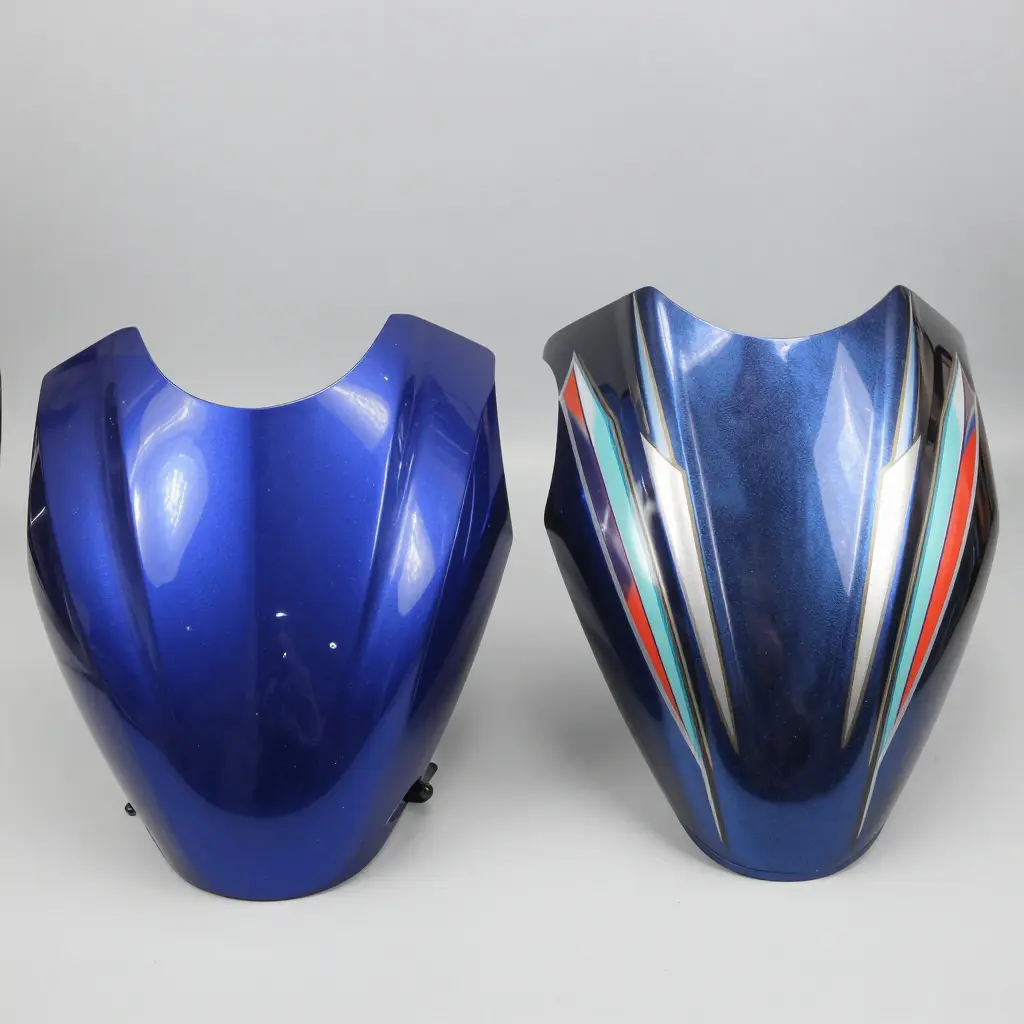
Fiberglass starts life as a raw, porous shell, which means it demands sanding, primer, and blocking before any color touches it. Put in that prep work, and it rewards you with a gelcoat-deep, seamless surface that swallows base coats, clear coats, and layered candy or metallic paint. A painted ABS fairing arrives molded and smooth, so it usually needs only a scuff and a flexible adhesion promoter before paint bites. Both accept paint well, but ABS insists on primers and paints engineered to flex with the plastic, otherwise the coating can spider-crack under engine vibration. Fiberglass tolerates standard automotive paint systems with fewer flex worries.
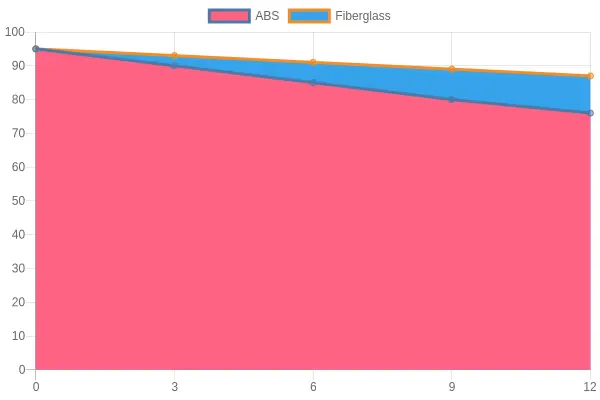
Gloss follows the same pattern. Gelcoat and automotive clear coat resist chalking better than unprotected ABS, which fades faster under the same UV exposure.
| Factor | ABS Plastic | Fiberglass |
|---|---|---|
| Surface prep needed | Minimal scuff and promoter | Heavy sanding and priming |
| Paint adhesion | Good with flex additives | Excellent with standard systems |
| Gloss retention (12 mo.) | Fades and chalks faster | Holds deep gloss longer |
| Decals and vinyl | Lays clean, watch for trapped air | Very smooth, easy application |
| Custom reshaping | Limited to mold shape | Fully cuttable and buildable |
Conclusion: For show-quality, seamless, deep-gloss builds and wild custom graphics, fiberglass is the clear winner. But if you want quick, weather-resistant looks with easy decal upgrades and lower cost, a painted ABS fairing is the practical everyday pick.
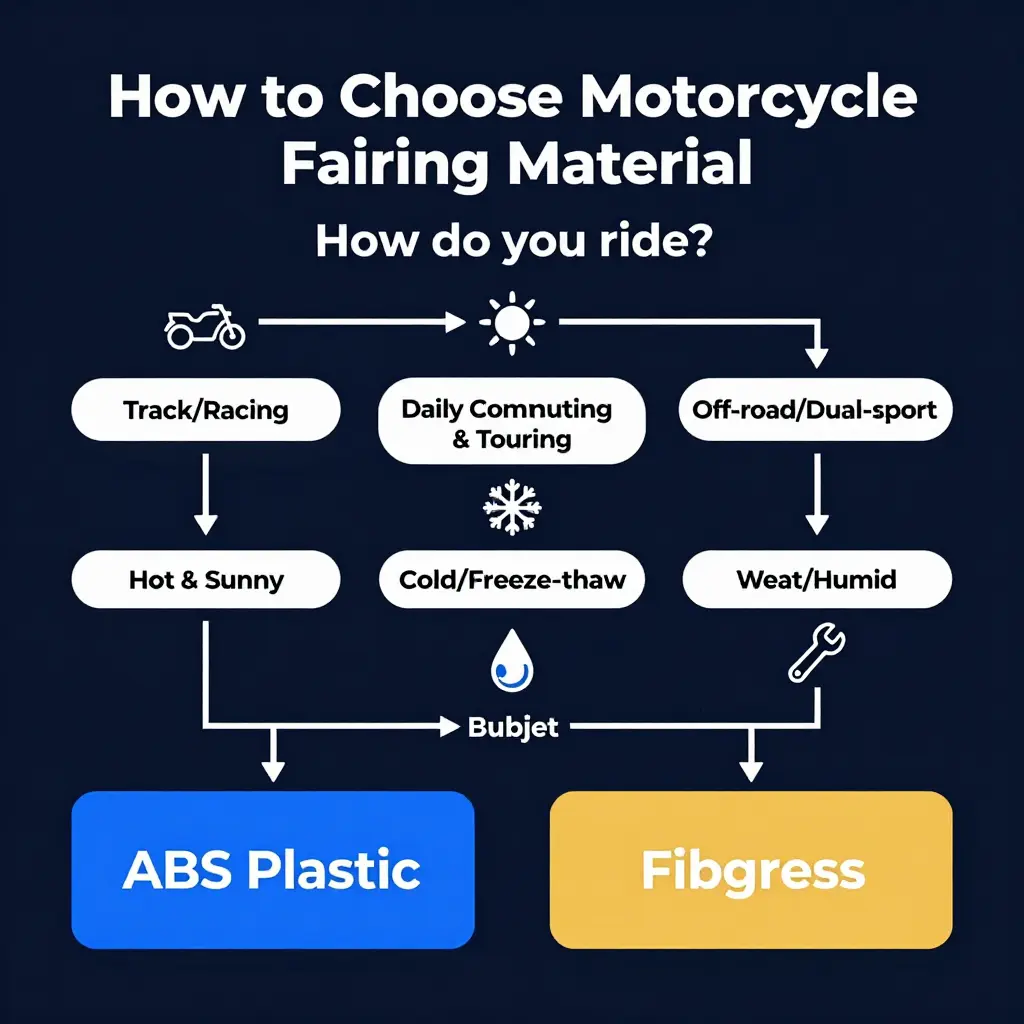
Buying Guide: How to Choose the Right Fairing Material
There is no single “best motorcycle fairing material” that wins for every rider. The winning pick is simply the one that matches how, where, and how hard you ride. Weigh what a panel must survive against what it will cost you over the years, not just on day one.
Step 1: Start With Your Riding Style
- Track days and aggressive canyon carving: You want stiffness and a smooth, paintable finish. Fiberglass shapes cool and repairs locally, but it cracks and can shatter on impact. ABS flexes and absorbs vibration, which suits tight, buzzy riding.
- Daily commuting and touring: Panel-to-panel durability and rattle-free fit win here. Molded ABS (often OEM) holds its shape over thousands of miles.
- Off-road and dual-sport: Crashes are part of the plan. A material that bends rather than shatters, or one you can patch trailside, saves your weekend.
Step 2: Let Your Climate Vote
Heat and UV fade and embrittle cheap fiberglass resin, and they chalk unprotected ABS as well. Wet, humid regions punish unsealed fiberglass and gelcoat, while freeze-thaw cycles crack brittle panels. If your season is short and brutal, choose the material with the least maintenance appetite.
Step 3: Budget Beyond the Sticker
This is where ABS vs fiberglass fairing debates get decided. ABS is usually cheaper upfront; fiberglass costs more to buy but can be repaired with resin and mat. Those numbers shift once you factor in repairs, paint, and replacement frequency. If you already track spend carefully in other parts of your life, borrow the same habit here and start evaluating total costs honestly before you commit.
Step 4: Match Your Repair Habits and Skills
If you enjoy wrenching and can lay fiberglass or sand a panel, a fiberglass fairing rewards you with repairable bodywork. If you would rather torque a bolt and go, ABS’s bolt-on, plug-and-play nature fits better. Building your maintenance confidence pays off across the whole bike; see how hands-on skills compound in this guide to mastering step-by-step repair know-how.
Step 5: Confirm OEM Fitment
Aftermarket fiberglass often needs trimming, drilling, and shimming; a quality ABS replacement typically mirrors OEM mounting points. Always confirm model year, sub-model, and mounting-hole locations before ordering.
Decision-Focused Checklist
| Your Priority | Lean ABS | Lean Fiberglass |
|---|---|---|
| Riding style | Commuting, touring, vibration-heavy | Track, custom builds, repair-friendly |
| Climate | UV-heavy, humid, wet | Mild, dry, low sun exposure |
| Upfront budget | Lower | Higher |
| Long-term cost | Often lower (durable) | Mixed (paint, resin, cracks) |
| Repair habits | Swap-and-go | DIY layup and patching |
| OEM fitment | Excellent, bolt-on | Often needs trimming |
The Verdict
For most everyday riders facing real weather and real miles, ABS is the safer, lower-hassle answer. Choose fiberglass when you love custom shaping, race weight, or repairing panels yourself. Buy for the season you actually ride, not the brochure.
Frequently Asked Questions About Motorcycle Fairing Material
Choosing between ABS and fiberglass often comes down to how and where you ride. Here are the questions riders ask most.
Which material is stronger in a crash: ABS or fiberglass?
It depends on the impact. ABS is more flexible and often survives low-speed tip-overs by bending rather than breaking. Fiberglass is stiffer and spreads load across a wider area, but it tends to crack locally instead of deforming. In a serious crash, fiberglass usually holds its shape better, while ABS can crumple and need full replacement. Riders who study crash test results know that how a material fails matters as much as how strong it is.
Can ABS fairings be repaired?
Yes, but repair is trickier than most people expect. Small cracks can be welded with a plastic welder or reinforced with ABS cement and mesh, and light scuffs sand out easily. However, large fractures and stress-cracked mounting tabs often can’t be restored to full strength, so replacing the panel is usually the safer call.
Does fiberglass cost more than ABS?
Fiberglass usually carries a higher upfront price because each set is hand-laid and needs more labor. OEM ABS fairings are mass-produced by injection molding, which keeps unit costs down. The gap narrows over time, since a fiberglass crack can be repaired with resin and mat while a badly cracked ABS panel is usually replaced.
Which material is better for a full riding season?
ABS is the better all-rounder for everyday riding across a full season. It flexes with vibration, shrugs off minor impacts, and won’t chip and expose raw laminate the way fiberglass can. Fiberglass is the pick for track riders and show bikes who want maximum rigidity and are willing to baby their panels.
Which gives a better paint finish?
Fiberglass takes paint beautifully and holds a deeper, smoother gloss because its surface can be sanded and gel-coated to a near-mirror finish. ABS can also look great when prepped properly, but it flexes under the paint, which can lead to hairline cracks over time.
Is ABS or fiberglass heavier?
For the same panel, ABS is typically lighter than a thick fiberglass layup, though the difference is often small. Fiberglass weight depends heavily on how many layers the builder uses, so a light race layup can undercut ABS, while a heavy street version will weigh noticeably more.
Quick Comparison
| Feature | ABS Plastic | Fiberglass |
|---|---|---|
| Typical cost (set) | $300 – $800 | $400 – $1,200 |
| Weight per panel | ~1.5 – 2.5 lb | ~2 – 4 lb |
| Impact behavior | Flexes, may crack | Cracks, spreads energy |
| Repairability | Limited (weld small cracks) | Good (resin and mat) |
| Paint finish | Good, needs flex additive | Excellent, deep gloss |
| Best for | Daily riders | Track and show bikes |
There is no single winner. Match the material to your riding style, your budget, and how much upkeep you’re willing to take on, and your fairings will serve you well all season long.