
Introduction
On a used off-road pickup, the frame and drivetrain tell you more about value than the odometer does. A low-mileage truck that spent ten winters in road salt is often worth less than a high-mileage one that was garaged and serviced. When you shop for the best used off road pickup, the dash tells you how far it went, not how hard it worked.
Two things expose that history better than any mileage figure: frame rust and transfer case wear. Rust eats the frame, the rails, cab mounts, and suspension hangers that carry the load and take the hits. Transfer case wear hides inside the drivetrain, where dirty fluid, a stretched chain, and worn bearings quietly take away the traction the owner paid for.
This guide covers how to inspect both yourself, what the warning signs actually look like, and how to weigh what you find against the mileage number.
A little knowledge of basic diesel mechanics makes those inspections more useful, and it can shift the negotiation your way.
Why Mileage Misleads Used Pickup Buyers
An odometer counts distance. It does not record where the truck was driven, what it hauled, or how often it was serviced. Two pickups can show the same reading with very different amounts of hidden damage.
A 90,000-mile truck that spent weekends on rocky trails, forded creeks, and towed a loaded trailer can be closer to failure than a 140,000-mile truck that mostly ran highway. None of that shows on the dash.
Off-road use is the clearest example. Rough ground flexes the frame and works the mounts, bushings, and control arms in ways highway miles do not. Those cycles add up even when total distance stays low, and the damage usually sits behind a clean exterior.
Some operating conditions wear parts faster than mileage suggests:
- Road salt: corrodes the frame and underbody, weakening structural steel long before the odometer looks alarming.
- Water crossings: push moisture into differentials, transfer cases, and wheel bearings, causing internal rust and breaking down lubricant.
- Mud and grit: grind against seals, U-joints, and suspension parts, wearing them faster than distance alone would.
- Heavy towing: adds heat and load to the transmission, transfer case, and cooling system, shortening drivetrain life regardless of miles.
So a used pickup inspection should weigh frame rust, transfer case condition, and service history alongside the odometer. Understanding how diesel drivetrain maintenance works helps you read those signals.
Mileage is one data point, not a verdict. Treat it as the first question, then let condition and records answer the rest.
Frame Rust vs. Transfer Case Wear: Inspection Priorities
Use this table before you make an offer. Scan the Primary Warning Sign column first to catch trouble fast, then match the finding against High-Risk Condition and Relative Repair Cost to decide how hard to bargain, or whether to walk.
| Inspection Area | Primary Warning Sign | High-Risk Condition | Relative Repair Cost |
|---|---|---|---|
| Frame surface rust | Light flaking on the frame rails | Rust is scaling or deeply pitted | Low ($) |
| Frame perforation | Screwdriver pokes clean through | Holes near suspension or body mounts | Very high ($$$$) |
| Seam and body-mount corrosion | Bubbling along weld seams | Separated seams and cracked mounts | High ($$$) |
| Transfer case fluid condition | Milky, black, or metallic fluid | Water intrusion or burnt-smelling fluid | Low to moderate ($$) |
| Transfer case chain and bearing wear | Whining or clunking under load | Stretched chain and noisy bearings | High ($$$) |
The pattern is consistent. A low-mileage truck with a rotting frame or a whining transfer case will cost you more than a higher-mileage rig that has been cared for, so let condition, not the odometer, drive the decision. If you want to sharpen the eye you use on every pre-purchase inspection, learning mastering diesel mechanics is a smart next step.
Reading Frame Rust Like a Surveyor
Frame rust decides the value of a used off road pickup more than anything else, because it attacks the structure that holds the truck together. A tired engine or a slipping clutch can be replaced; structural corrosion compromises safety and is rarely cheap to reverse. An engine can be rebuilt. A rotted frame needs a lift, a welder, and real money. That is why experienced buyers ignore the paint and kneel at the rear wheel first, checking frame rust before anything else.
Surface Rust vs. Structural Perforation
Surface rust is cosmetic: a brown film on solid steel. Structural perforation is something else. The metal has flaked away, leaving holes, soft spots, or layered scale you can push a screwdriver through. The question is not how it looks but whether the steel still carries load. Anyone who has priced what a proper mechanical repair actually involves learns quickly that welding a rotting rail seldom restores its original strength.
Where to look: behind the rear cab, where the bed meets the frame, above the spare tire, at the body mounts, and along the rocker line. These low, hidden areas trap moisture, mud, and road salt.
How to test: tap the rail with a hammer and listen for a dull thud instead of a crisp ring. Then run a magnet along it. Where the magnet refuses to stick, you are likely over body filler or deeply scaled metal.
Frame Rust Warning Signs
- Flaking, layered scale that crumbles in your fingers
- A dull thud rather than a metallic ring when tapped
- A magnet that slides instead of sticking
- Visible holes or daylight showing through a frame rail
- Bubbling or wavy metal around the body mounts
- Heavy corrosion above the spare tire and behind the rear cab
- Sagging or misaligned body lines along the rocker
- Fresh undercoating sprayed over rough, pitted steel
- Crunching or flexing sounds when the truck is jacked up
Any perforation is a negotiation point or a deal-breaker, never a minor detail, and never something a coat of paint will fix.
Diagnosing Transfer Case Wear Before It Becomes a Failure
The transfer case is the drivetrain part most sensitive to off-road abuse. Its wear pattern records a history that mileage hides. A truck with 120,000 highway miles can have a pristine case, while a 60,000-mile rig that spent its weekends in mud and rock can be quietly dying inside. A serious drivetrain inspection starts here for that reason.
Check the fluid first. Fresh fluid is translucent and amber or red. Dark, burnt-smelling fluid with a gritty feel points to heat and internal friction. When you drain it, run a magnet through the oil. Light fuzz is normal; visible metal flakes or chunks mean gears, bearings, or the chain are shedding material, which is advanced transfer case wear. Reading those clues takes practice, and sharpening it through mastering diesel mechanics step by step pays off every time you evaluate a used truck.
Then listen. Whining or grinding under load, especially in four-wheel drive, usually means a stretched chain slapping its housing or worn bearings. These noises rarely fix themselves and tend to get worse quickly.
Watch how the case shifts, too. Delayed, clunky, or harsh 4WD engagement points to a tired actuator, a worn shift fork, or a slipping clutch pack. If you have to fight the lever or wait for the front axle to grab, budget for repairs.
Finally, check the seals. Weeping or dripping fluid at the input and output shafts signals age, heat stress, and worn seals, and low fluid speeds up everything above.
A healthy transfer case with high miles is often a better buy than a low-mileage truck with a failing one. Diagnose it properly and your money goes to the right rig.
Reported Transfer Case Repairs by Mileage Band
| Mileage Band | Reported Transfer Case Repairs |
|---|---|
| 0-50k | 42 |
| 50k-100k | 88 |
| 100k-150k | 156 |
| 150k-200k | 239 |
| 200k-250k | 312 |
| 250k+ | 387 |
Caption: Reported transfer case repairs rise with mileage but never reach zero in the lowest bands, so mileage alone does not determine transfer case health.
Step-by-Step Used Pickup Inspection Checklist
Order matters here. The cheapest checks come first, so you can walk away early instead of sinking hours into a truck that fails the basics, especially when you’re still working toward mastering diesel mechanics.
- Begin by gathering and reviewing the complete service records, including oil changes, transmission service, and repair invoices, to confirm the pickup was maintained on schedule.
- Arrive early and cold-start the engine yourself, listening for knocking, rattling, or excessive smoke that could signal worn injectors or a tired turbo.
- Let the engine reach operating temperature while you inspect under the hood for coolant leaks, cracked hoses, and a clean, reddish transmission dipstick fluid.
- Crawl underneath and check the frame rails with a hammer and magnet, listening for dull thuds and watching for spots where the magnet refuses to stick, which reveal hidden rust or body filler.
- Inspect the transfer case fluid and seals for dark, burnt-smelling oil or fresh drips that point to internal wear or a leaking output shaft.
- Test-drive the truck and shift through every 4WD mode, from 4-High to 4-Low, on loose gravel to confirm the transfer case engages and disengages without grinding.
- Scan the OBD-II system for stored and pending fault codes, then clear them and re-scan after a short drive to see which ones return.
- Verify repair cost estimates for every issue you find by collecting parts and labor quotes before you negotiate, so you bargain from facts rather than feelings.
Run the whole checklist on a dry day. Standing water hides leaks, masks fluid drips, and obscures rust on the frame, so a dry inspection gives you the clearest view of the truck’s true condition.
Use this table during the inspection. Match the symptom you notice to its likely cause, then weigh severity and repair approach to decide whether the truck is worth the risk.
| Symptom | Likely Cause | Severity Level | Typical Repair Approach |
|---|---|---|---|
| Whining or humming that rises with speed | Worn bearings or a stretched chain | Moderate | Inspect bearings and chain; replace the chain kit or rebuild the unit |
| Grinding when shifting into 4WD | Worn engagement collar or damaged gears | High | Replace the shift fork, collar, or gear set |
| Delayed or no engagement | Failing actuator, vacuum leak, or worn clutch pack | Moderate to High | Diagnose the actuator or vacuum system; replace the clutch pack |
| Fluid discoloration or metal debris | Internal wear, overheated fluid, or failing gears | High | Flush and inspect; rebuild or replace the transfer case |
| External fluid leaks | Worn seals, gaskets, or a cracked housing | Low to Moderate | Replace seals and gaskets; reseal or swap the housing |
Fixing these symptoms early is almost always cheaper than waiting for the transfer case to fail, so treat every warning sign as leverage at the negotiating table. If you plan to do the repairs yourself, brushing up on diesel mechanics step by step helps you diagnose driveline wear with confidence.
Turning Inspection Findings Into a Better Deal
When you inspect a used off road pickup, every documented flaw becomes a talking point instead of a red flag. Frame rust and transfer case wear are negotiating levers, not automatic rejections. The trick is turning what you found into a number the seller can actually respect.
From findings to a price adjustment
Get repair estimates in writing before you make an offer. A shop quote for welding a rusted frame section, replacing transfer case seals, or rebuilding a worn chain gives you a defensible figure. Then subtract that amount from fair market value, not from the asking price. If the seller’s number is already below market, acknowledge it and negotiate on the difference. That keeps the conversation factual instead of emotional.
For deeper mechanical context on diagnosing drivetrain problems, the site’s step-by-step diesel mechanic guidance is a solid reference.
When repair estimates justify walking away
Not every finding is worth fixing. Walk away when:
- Frame rot has spread to structural mounts, shackle hangers, or the cab support area.
- The transfer case housing itself is cracked, not just leaking.
- Estimated repairs exceed roughly 30 to 40 percent of the vehicle’s value.
- The seller refuses an independent inspection.
Requesting independent verification
Do not rely on the seller’s records alone. Ask to have your own mechanic or a mobile inspector examine the truck, ideally on a lift. Put the request in writing and make your offer contingent on the results. A seller who hesitates is telling you something important. Treating that inspection like a maintenance log, the same habit fleet managers rely on, builds discipline into your buying process. See these fleet management insights for the mindset.
Set your threshold before you arrive
Decide your walk-away number and your must-fix list before you ever see the truck. A seller’s driveway is the worst place to make a big financial decision; a pre-set threshold keeps you objective when emotions run high.
Quick negotiation tactics
- Always get written repair estimates first.
- Negotiate from market value, not the asking price.
- Bundle several findings into one counteroffer.
- Make your offer contingent on an independent inspection.
- Be genuinely ready to walk; it is your strongest tool.
- Never let enthusiasm override your threshold.
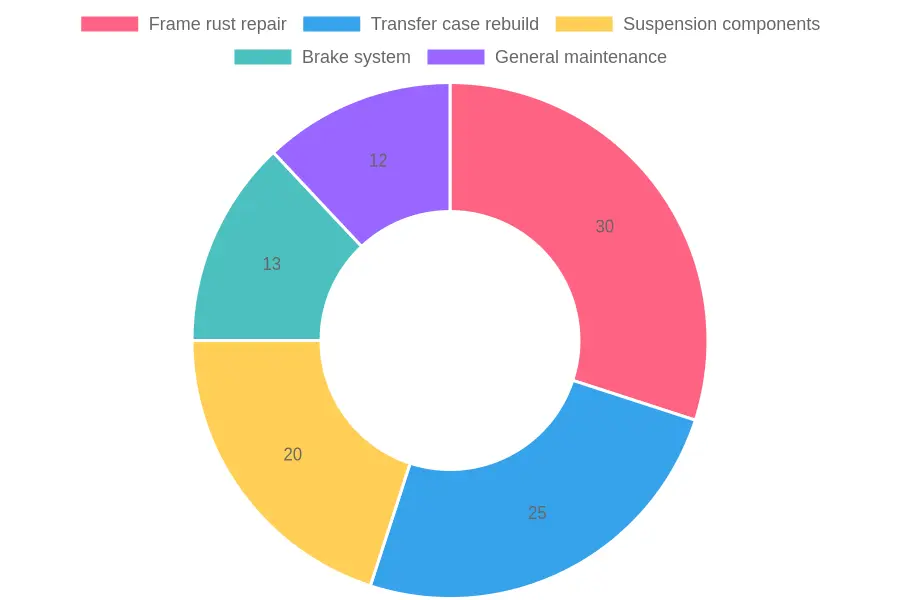
Typical Repair Cost Share for a Worn Used Off-Road Pickup
| Repair Category | Share of Total Repair Cost |
|---|---|
| Frame rust repair | 30% |
| Transfer case rebuild | 25% |
| Suspension components | 20% |
| Brake system | 13% |
| General maintenance | 12% |
Caption: Frame rust repair and transfer case rebuild take the largest share of the repair budget because both need extensive labor and specialized parts, and hidden structural damage costs far more to correct than the routine wear items behind the remaining slices.
Frequently Asked Questions About Used Off-Road Pickups
How much frame rust is too much on a used pickup?
Light, brown surface rust is common and usually manageable; structural deterioration is not. Frame rust is too much when you see flaking, scaling, holes, or layers separating from the metal. As a rule, if a screwdriver or awl pushes through the frame with hand pressure, walk away from the truck.
Can transfer case wear be repaired or must it be replaced?
It depends on the severity of the transfer case wear. Minor issues such as leaking seals, worn bearings, or a stretched chain can usually be rebuilt or repaired at a reasonable cost. More serious problems, including cracked housings, damaged gears, or broken shift forks, typically require full replacement. Always price both options before you commit to a truck.
Does low mileage guarantee a good used off-road pickup?
No. Low mileage says very little about frame rust or transfer case wear, because both follow from environment and use. A low-mileage vehicle that lived near the coast or on salted winter roads can rust faster than a high-mileage highway truck. To identify the best used off road pickup, inspect condition first and treat the odometer as a secondary clue.
How do I check a transfer case during a test drive?
Start on a smooth surface and shift through 2H, 4H, and 4L, listening for whining, grinding, or rattling. Feel for clunking or delayed engagement, then repeat on loose ground to confirm the system engages cleanly. Finally, park over cardboard to check for fluid leaks and inspect the case for fresh seepage. These hands-on habits are the same skills covered in this step-by-step diesel mechanics guide, and they apply directly to drivetrain inspection.
Is surface rust on a frame a dealbreaker?
Not by itself. Surface rust sits on the metal and can often be wire-brushed, treated, and coated to slow further corrosion. It becomes a dealbreaker when the rust is deep, flaking, or pitted enough to weaken the structure. If you are unsure, have a mechanic confirm metal thickness.
How do climate and road salt affect frame longevity?
Road salt dramatically accelerates corrosion, so frames in snowy, salted regions and coastal areas age far faster than those in dry climates. Humidity and beach sand add to the problem. Regular undercarriage washing and protective coatings help, but a salt-exposed frame still deserves the closest scrutiny before you buy.
Final Thoughts on Choosing the Best Used Off-Road Pickup
When you hunt for the best used off road pickup, the odometer is the first number most buyers check, and it is also the one most likely to mislead. After weighing every factor, frame rust and transfer case wear stand out as the most reliable value indicators on the used market. In most purchase decisions, they carry more weight than mileage alone.
The frame matters because it is the backbone of the truck. Rust eats the structure everything else bolts to, and once corrosion spreads through the rails, repairs get costly or outright impossible. A low-mileage truck with a rotting frame is a liability, not a bargain. The transfer case matters because it is the heart of true four-wheel-drive capability. Worn gears, fluid leaks, or sluggish engagement reveal abuse no clean dashboard can hide, and a rebuild is rarely cheap.
Inspecting both together is what protects you. A solid frame with a damaged transfer case points to hard off-road punishment, while a fresh transfer case on a rusted frame suggests cosmetic fixes over deeper neglect. Read side by side, the two signals give you an honest picture that mileage never provides on its own.
A simple order: check the frame first, test the transfer case second, review the service history third, and treat mileage as a supporting detail rather than the headline. Whether you are comparing trucks on a lot or weighing tips on evaluating pricing and features before you commit, a disciplined inspection sequence keeps your money safe. Buy the truck that passes the structural and mechanical tests, and let the numbers follow.