
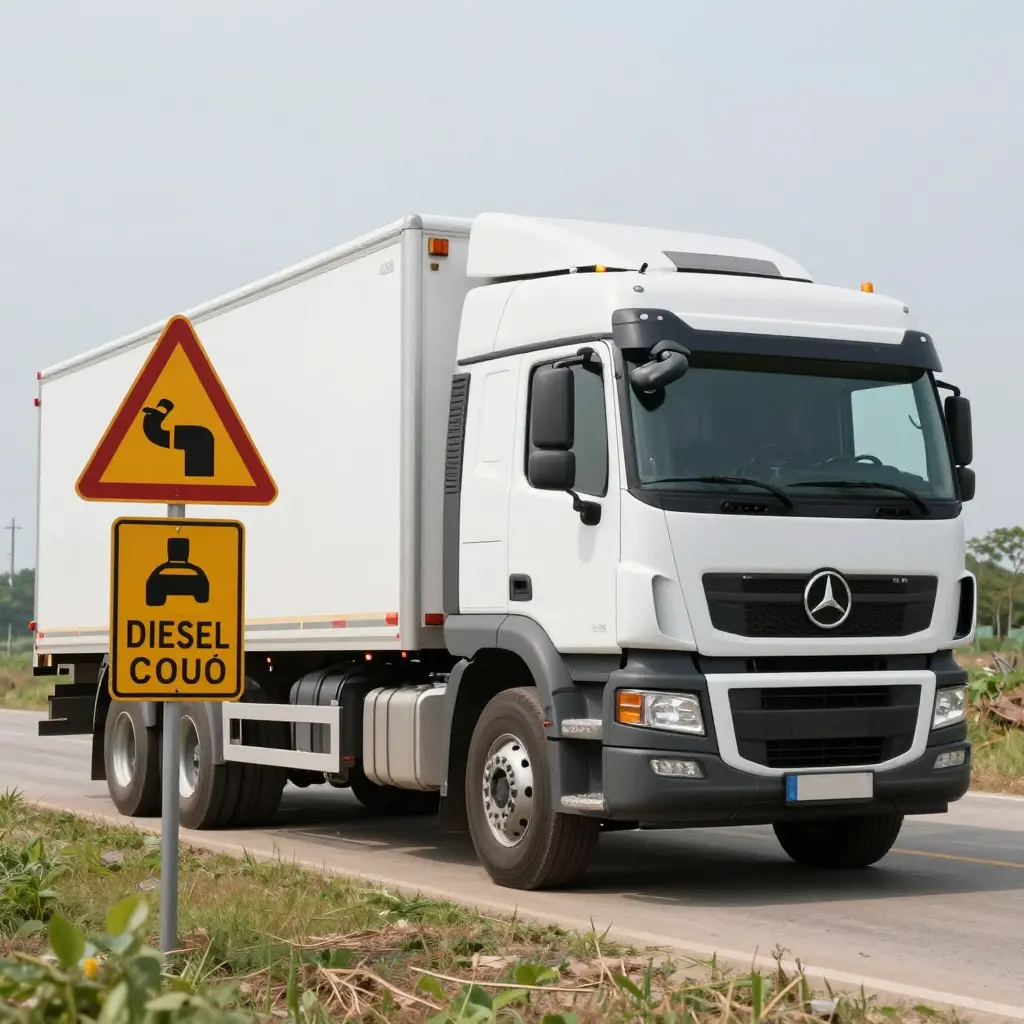
Off-road diesel — also called dyed diesel or red diesel — is fuel sold for non-highway use: farm equipment, construction machines, generators, and yard trucks. The red dye identifies it as untaxed, and that is all it tells you. Sulfur content is the property that decides whether a modern truck can burn the fuel, and it is not the same thing as the dye.
Trucks built to current emissions standards run on ultra-low-sulfur diesel (ULSD), capped at 15 parts per million of sulfur. High-sulfur diesel can carry 500 ppm or more. The aftertreatment systems on these trucks were never engineered to tolerate it.
Run high-sulfur fuel through that hardware and the damage compounds. Sulfur contaminates the emissions system with soot and sulfate. It shortens filter life through ash loading and plugging. And it can void the manufacturer’s warranty, leaving the owner with a repair bill that reaches into the thousands.
For owners, fleet managers, and the diesel mechanics who service these trucks, the useful habit is to know what is going into the tank before it gets there. Catching the wrong fuel early protects the equipment and the coverage.
What Off-Road Diesel Is and How It Differs Chemically
Off-road diesel is fuel sold for non-highway use: farm tractors, construction equipment, generators, and yard trucks. What separates it from on-road fuel is tax treatment, not chemistry. Road taxes are built into highway diesel, while off-road fuel is exempt, so the IRS requires untaxed diesel to be dyed with Solvent Red 164 so an inspector can tell at a glance which fuel was burned. Steep fines follow when dyed fuel shows up in a highway truck’s tank.
Sulfur is where the chemistry actually changes, and it is worth being precise about it, because “off-road” and “high sulfur” are not the same thing. Under EPA rules, nonroad, locomotive, and marine diesel moved first to a 500 ppm low-sulfur grade and then to ULSD between 2007 and 2014. Since 2014, nonroad fuel has had to meet the same 15 ppm limit as highway diesel. Most red-dyed diesel sold in the US today is therefore ULSD, and the dye tells you nothing about its sulfur level. The fuel that hurts a modern truck is the high-sulfur kind: legacy stock, marine or heating fuel, off-spec or contaminated deliveries, and fuel bought where ULSD is not enforced. Before the EPA began regulating diesel sulfur in 1993, fuel could run as high as 5,000 ppm.
“High sulfur” describes a family of compounds rather than one impurity. The sulfur sits inside hydrocarbon rings — thiophenes, benzothiophenes, and the heavier dibenzothiophenes — where refining has to work hard to pull it out.
Burn that fuel and the ring structures break down into sulfur oxides (SO2 and SO3). SO3 reacts with water vapor to form sulfuric acid, which attacks the exhaust aftertreatment. Sulfates also coat the catalyst and load the DPF with ash, cutting efficiency and setting up the repairs described below.
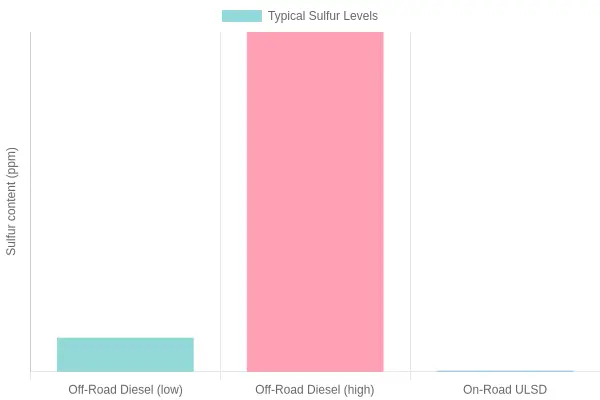
| Fuel Type | Typical Sulfur Content (ppm) |
|---|---|
| High-sulfur off-road diesel (legacy, pre-1993) | 5,000 |
| Low-sulfur off-road diesel (2007-2014 phase-in) | 500 |
| On-road and current off-road ULSD | 15 |
Shops that work on both older off-road equipment and current highway trucks learn to check the fuel before they trust it. The troubleshooting behind that habit is the same groundwork described in this guide to mastering diesel mechanics.
How the DPF and Aftertreatment System Work Together
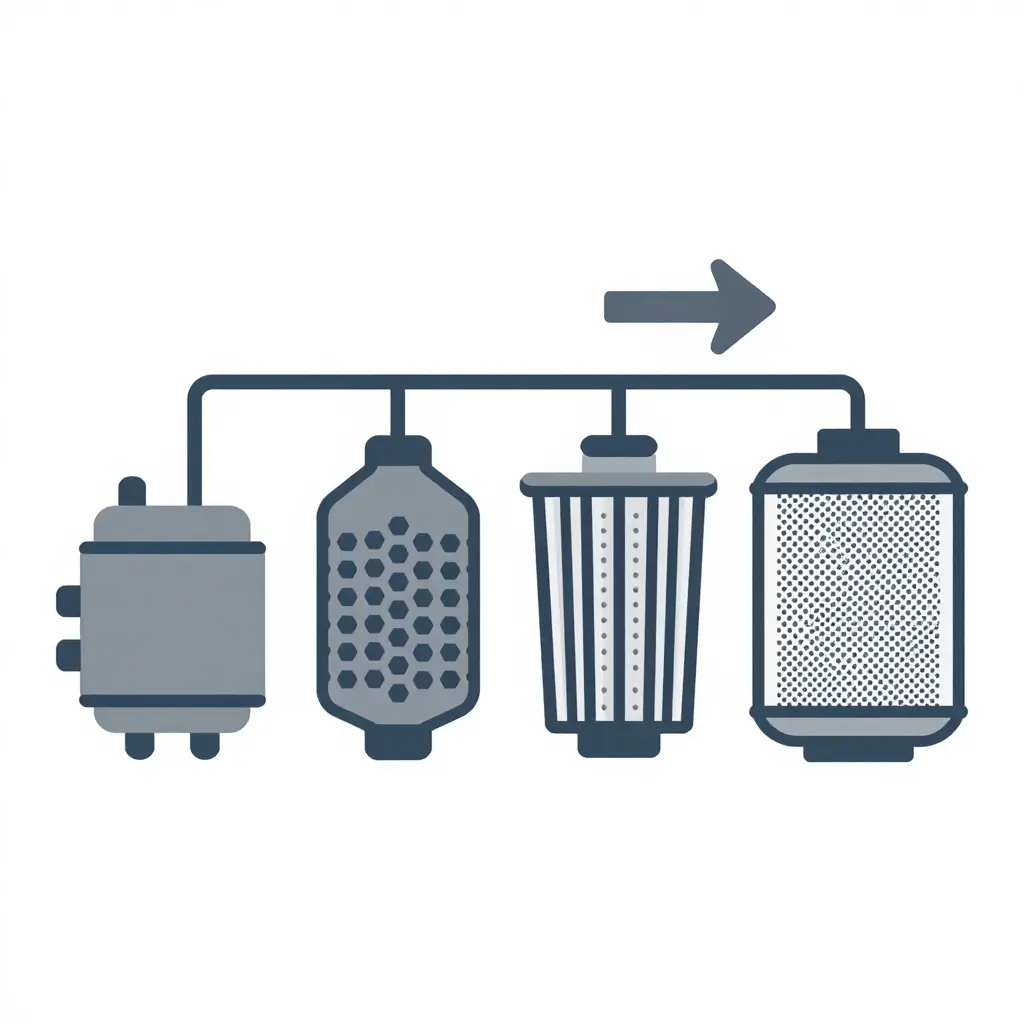
A modern truck’s exhaust aftertreatment is a chain of components that turns raw diesel exhaust into something far cleaner. At the center is the diesel particulate filter (DPF), a ceramic honeycomb that traps soot and ash before they leave the tailpipe. Without it, that soot goes straight into the air.
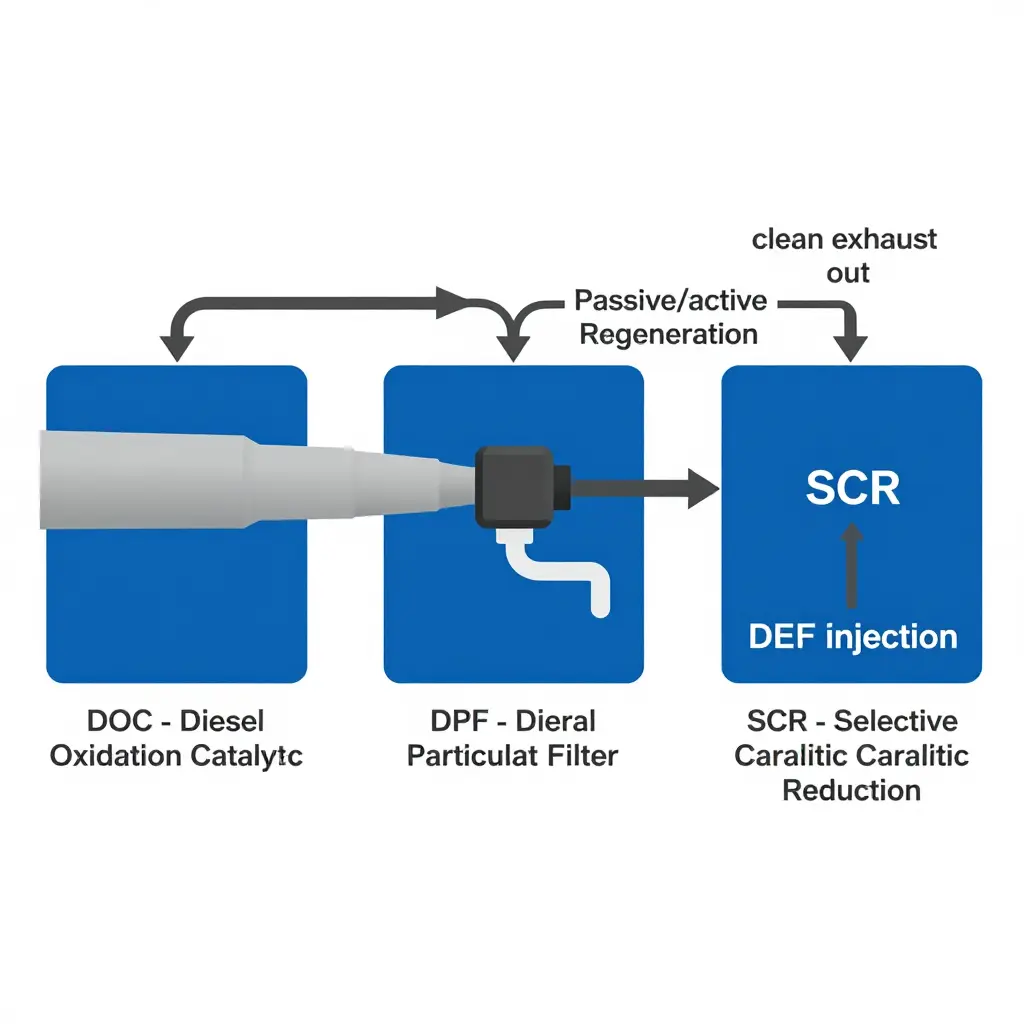
The DPF fills as you drive, so it has to regenerate. On a steady highway run, exhaust hot enough — roughly 600°F — burns off trapped soot on its own; that is passive regeneration. When exhaust temperatures stay low, the engine injects extra fuel to raise the heat and burn the filter clean. That is active regeneration.
Two components support the cycle. Upstream, the diesel oxidation catalyst (DOC) oxidizes carbon monoxide and unburned hydrocarbons and converts NO to NO2, which passive regeneration needs. Downstream, selective catalytic reduction (SCR) injects diesel exhaust fluid (DEF) to reduce nitrogen oxides into harmless nitrogen and water vapor.
The whole system is calibrated for ULSD. Sulfur poisons the catalysts and clogs the DPF, so high-sulfur fuel can light the dash, force one regeneration after another, and eventually destroy components that cost real money to replace. For anyone heading toward a career in diesel mechanics, that calibration is a core skill rather than a footnote.
How High Sulfur Diesel Damages the DPF
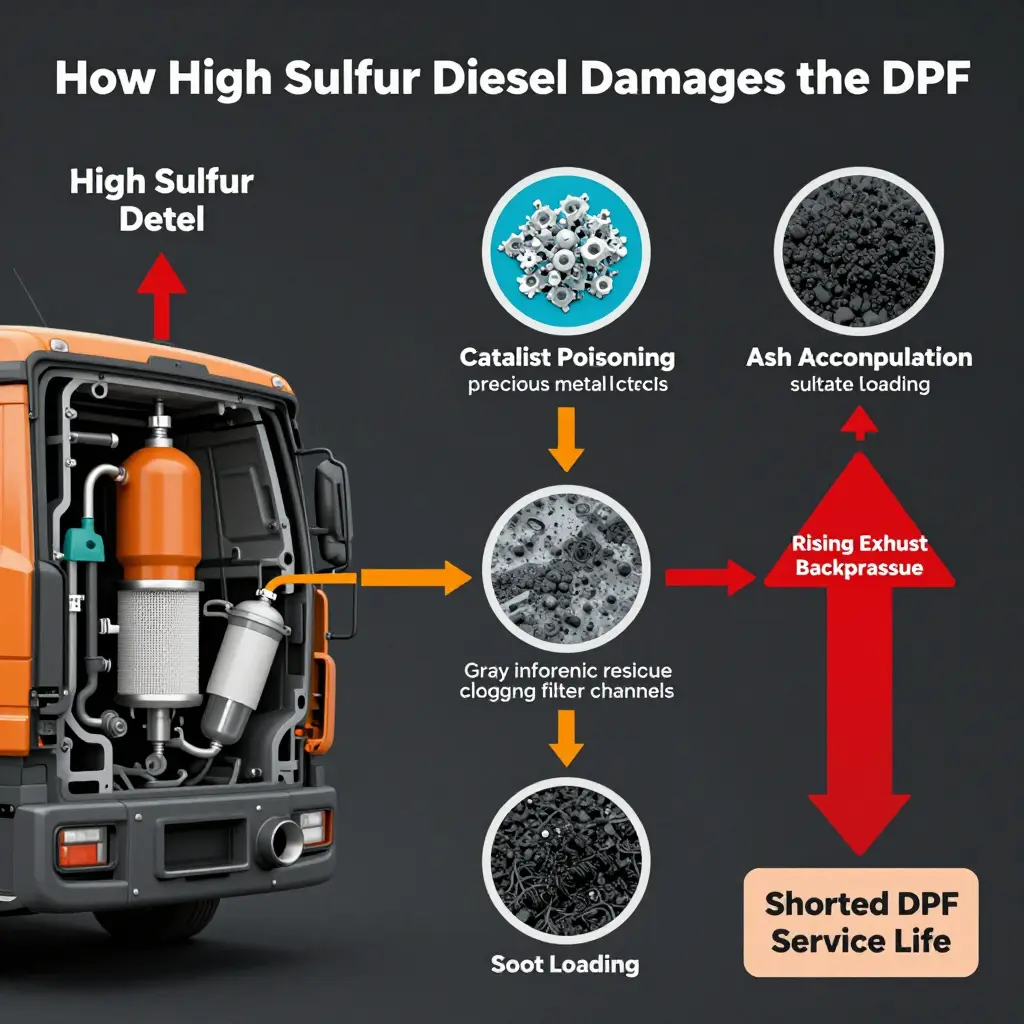
High-sulfur fuel damages aftertreatment quietly. By the time the dash lights up, sulfur has usually been at work for a while. In a truck built to current emissions standards, the damage moves through the DPF and everything downstream of it, and knowing the sequence helps you diagnose it fast and give the customer an honest number.
Sulfur Poisoning of the Catalyst
The washcoat in the DOC and catalyzed DPF uses platinum-group metals to burn off soot and generate the NO2 that passive regeneration depends on. Sulfur oxidizes into sulfur trioxide (SO3) and sulfate species that bond to those metal sites. A poisoned catalyst loses its NO2 supply, so its light-off temperature rises. Active regenerations then have to run hotter, longer, and more often, and each one stresses the substrate.
Ash Accumulation Inside the Filter
Sulfur also reacts with the additives in lube oil — zinc, calcium, and phosphorus — to form hard metal sulfates. That ash packs the filter channels and plugs the wall pores, and it does not leave. Every mile costs a little more usable filtration volume.
Ash vs. Soot: Why Regeneration Can’t Save You
Soot is carbon, the unburned fuel and oil residue that regeneration burns off at roughly 550-650 C. Ash is an inorganic, non-combustible leftover. No regeneration temperature removes it; it only comes out through professional filter cleaning or replacement.
The damage pathways compound:
- Sulfur-poisoned catalyst, lost NO2 production, more aggressive regens
- Metal-sulfate ash blocking channels, permanent flow restriction
- Elevated soot loading from degraded combustion, faster face-plugging
- Rising exhaust backpressure, higher EGTs, and torque derate
Backpressure and Shortened Service Life
As ash and soot stack up, exhaust backpressure climbs. The ECM answers with more frequent regenerations, burning extra fuel and dumping more heat into the aftertreatment. Backpressure triggers derate events, loads the turbo, and can crack the ceramic substrate. A 150,000-mile service interval can collapse to 50,000 miles or less — repeat comebacks, denied warranty claims, and unhappy fleets. A technician who can trace the problem back to the fuel turns that diagnosis into a service opportunity. That is the practical value of the step-by-step path to diesel mastery.
Why High Sulfur Fuel Punishes Your DPF
When high-sulfur fuel reaches a diesel particulate filter (DPF), the sulfur burns into sulfate ash — a fine, non-combustible residue that never fully regenerates out of the filter. As sulfate compounds build, they coat the catalyst washcoat and block the porous channels, so the filter traps less soot and burns off what it catches less cleanly.
Backpressure rises while DPF efficiency falls. Ordinary soot burns away on a normal regen cycle; ash and sulfur-derived deposits do not. They accumulate cycle after cycle until the filter chokes.
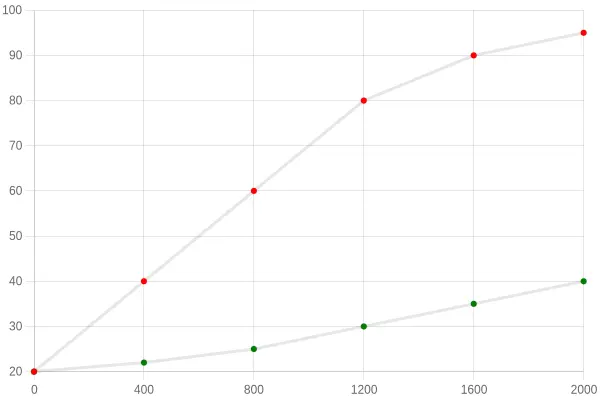
A truck running ultra-low sulfur diesel (ULSD) shows backpressure creeping up slowly and staying inside the range active regeneration can manage. A truck burning high-sulfur fuel shows backpressure rising steeply and filter loading climbing with it. That sets off more frequent, more aggressive regenerations, each running hotter and burning more fuel. Eventually regeneration can no longer keep pace, and the next step is a forced DPF cleaning or a full replacement.
What the Diverging Lines Really Tell You
- Steep red line = escalating backpressure. With high sulfur fuel, ash and sulfate loading accelerates, pushing the filter toward a clogged, derate-inducing state far sooner.
- Flat green line = predictable service life. ULSD keeps ash production low, so the DPF ages gradually and stays regenerable.
- The gap compounds. Every hour on high sulfur fuel widens the distance between the two scenarios, shortening DPF lifespan and increasing overall operating cost.
For shops and owner-operators, the chart is an easy way to show customers why the “cheap” fuel at the pump can be the most expensive decision they make. It also makes the case for learning modern emissions systems properly. If you or your techs want to go deeper, this step-by-step path to diesel mechanic success covers the diagnostic skills that keep these systems healthy.
Warranty Risk and Legal Liability
Running off-road diesel that does not meet the truck’s fuel spec is one of the fastest ways to create warranty risk. Almost every OEM emissions warranty booklet contains fuel-quality language. A clause typically reads: “Damage caused by misfueling, contaminated fuel, or use of fuel not meeting the specified cetane, sulfur, or lubricity standard is not covered.” The manufacturer promises to fix defects, not to pay for the consequences of the wrong fuel.
A denied claim and a full void are different things. A denied emissions warranty claim is narrow: the OEM refuses to pay for the specific failed component — usually the DPF, DOC, or SCR — because it blames the fuel. A complete warranty void is broader and rarer, and it normally requires repeated or documented misuse across multiple systems.
Evidence decides these disputes. Keep fuel receipts that show the sulfur rating and purchase date. After a failure, independent testing for sulfur content, water, and particulates can support your position or confirm the denial. Consumer protection principles generally require a manufacturer to show that the non-compliant fuel actually caused the failure before rejecting a claim, so the paper trail matters.
Treat fuel logs as compliance records, not paperwork. For a closer look at diesel diagnostics and repair workflows, see this step-by-step diesel mechanic guide. This is general information, not legal advice — consult a qualified professional about your situation.
Warning Signs of DPF and Aftertreatment Damage from High Sulfur Fuel
High-sulfur fuel poisons the catalyst and overloads the particulate filter, so spotting the early symptoms can save a truck owner thousands. Run through this list at every service visit, and compare each item against the last 30 days of driver reports.
- Frequent active regenerations: the truck performs a parked or moving regen almost every day, or soot mass climbs back above the trigger threshold within a single shift.
- Derate or limp mode: the ECM cuts torque or caps road speed, often with a “100% derate in X miles” countdown on the dash display.
- Rising backpressure codes: recurring P2452, P2002, P2453, or P2463 stored in the aftertreatment module, with exhaust pressure differential creeping upward over time.
- Black or white exhaust smoke: dark soot under load or white vapor at idle that never clears, both of which point to incomplete combustion or a cracked filter substrate.
- Sulfur or rotten-egg exhaust odor: a sharp, acrid smell at the tailpipe that lingers after shutdown tells you fuel is still contaminated.
- Reduced fuel economy: a steady 5 to 15 percent drop in miles per gallon that no tune, tire change, or route shift explains.
- Frequent DPF replacement: repeat filter swaps inside a few thousand miles, or a returned core that is unusually heavy and ash-loaded.
- Illuminated check-engine or emissions lights: a steady or flashing MIL, plus a DPF lamp or “exhaust filter full, see dealer” message.
- Exhaust gas temperature spikes: EGT sensors reading 1,200 degrees F or higher during normal cruise, a classic sign the filter is fighting to burn off sulfur ash.
- Excess ash in the oil analysis: elevated soot or sulfur readings on a lab report, which confirms the fuel source rather than a mechanical fault.
If two or more of these boxes are checked, pull an oil sample, verify the fuel’s sulfur content, and run a forced regeneration before you replace any parts. Documenting each symptom also strengthens any warranty claim tied to contaminated fuel, since dealers will ask for that evidence trail. Shops that want to make the call faster and cheaper get there by sharpening their diesel diagnostic skills; it pays off on every aftertreatment job.
How Authorities and Shops Detect Off-Road Diesel
Detecting illegal use of off-road fuel in an on-road truck relies on a few complementary tests, run by both government inspectors and repair shops.
The most common is the dye-marker test. The IRS requires untaxed diesel — dyed diesel — to contain Solvent Red 164 at federally mandated concentrations. An officer who draws a small sample and sees a reddish tint knows the fuel was not taxed for highway use. That field test supplies immediate probable-cause evidence, but it proves only the tax status, not the sulfur level.
Roadside fuel sampling goes further. Inspectors collect fuel into sealed containers and record the truck’s identity, location, and time, creating a documented chain of custody. Samples may also be screened on site with portable analyzers before laboratory confirmation.
Laboratory sulfur analysis provides the most definitive proof. Technicians measure sulfur content using standardized methods such as ASTM D4294 or D2622. Highway diesel must meet the 15 ppm ULSD limit, and nonroad diesel has had to meet it since 2014; the older nonroad low-sulfur grade was capped at 500 ppm.
Fuel testing results, combined with dye detection, generate the documentation used in fines and enforcement actions. Because contaminated fuel can void coverage, many shops and diesel mechanics now run comparable checks before approving warranty claims.
The Real Cost of High Sulfur Fuel: Repair and Aftertreatment Consequences
When high sulfur fuel reaches a modern emissions-equipped engine, the damage rarely stops at one component. Sulfur poisons the catalyst and overloads the diesel particulate filter, so the first signs are frequent regeneration cycles, derate warnings, and climbing soot loads. Left alone, this escalates into serious DPF damage that cleaning often cannot reverse.
Typical repair actions include:
- Repeated or forced DPF cleaning
- Filter replacement, sometimes more than once
- Diesel oxidation or SCR catalyst replacement
- Injector service, EGR cooler cleaning, and related work
The bill is high because the aftertreatment system is built as one tightly integrated unit with precious-metal catalysts and sensitive sensors. Contamination usually forces replacement rather than repair, and labor hours climb fast on emissions-equipped engines. Total repair cost varies widely by truck model and shop labor rates, so treat any single figure as a rough estimate rather than a guaranteed number.
For shops and fleets, disciplined asset management limits the fallout. Good fleet maintenance and dispatch tools help log service history and flag problem trucks before small faults snowball into major bills.
Typical Aftertreatment Repair Cost Breakdown Caused by High Sulfur Fuel
High-sulfur fuel rarely damages just one part. Sulfur-laden exhaust loads the diesel particulate filter (DPF), poisons the diesel oxidation catalyst (DOC), and can compromise the selective catalytic reduction (SCR) unit over time. The doughnut chart below breaks a typical repair bill down across the major component categories, using representative values to show the pattern most shops see.
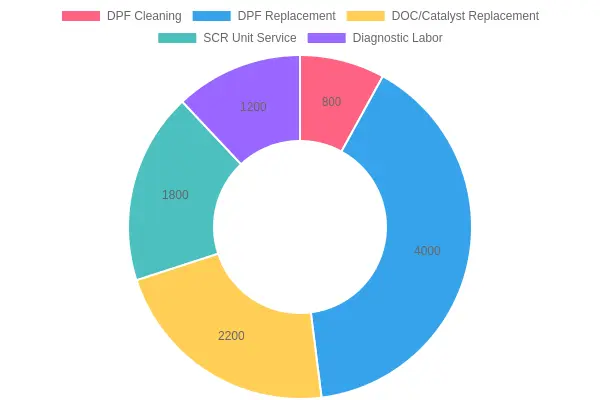
Two categories dominate: DPF replacement and DOC/catalyst replacement together account for roughly two-thirds of the total cost. A single tank of the wrong fuel can push a truck owner toward a four-figure-plus repair before any diagnostic labor is added to the invoice. For mechanics who want to handle these jobs across the full aftertreatment system, it helps to understand the step-by-step path to diesel mechanic mastery before the fault lands in the bay.
| Component Category | Illustrative Cost (USD) | Share of Total |
|---|---|---|
| DPF Cleaning | $800 | 8% |
| DPF Replacement | $4,000 | 40% |
| DOC/Catalyst Replacement | $2,200 | 22% |
| SCR Unit Service | $1,800 | 18% |
| Diagnostic Labor | $1,200 | 12% |
How to Read This Chart
- DPF Replacement (40%) dominates because sulfur ash and soot cannot be burned off during normal regeneration. Once the filter is permanently clogged or cracked from thermal stress, cleaning is no longer an option and a full replacement is required.
- DOC/Catalyst Replacement (22%) ranks second because sulfur poisoning deactivates the precious-metal coating that converts hydrocarbons and carbon monoxide. The catalyst does not recover on its own.
- SCR Unit Service (18%) reflects the downstream damage that accumulates when the SCR system compensates for poor upstream performance, often requiring injector or catalyst service.
- Diagnostic Labor (12%) covers the scan-tool time, sensor checks, and back-pressure testing needed to confirm that fuel quality, not a simple sensor, caused the fault.
- DPF Cleaning (8%) is the smallest slice, and only applies when damage is caught early enough that the filter can still be salvaged.
Why This Matters for Your Wallet
These figures are illustrative, but the ranking holds up across real-world repair scenarios: prevention costs far less than replacement. Running on-road ULSD, filtering fuel before it reaches the tank, and watching backpressure trends keep you out of the two most expensive slices of this chart.
Because high sulfur contamination is often treated as owner misuse, warranty coverage may be denied, leaving the full bill on the operator. That is why recognizing the early warning signs — frequent regeneration cycles, derate events, rising soot-load readings — matters to anyone working on modern diesel equipment.
Off-Road Diesel FAQ: Answers for Modern Truck Owners
Truck owners and diesel mechanics keep asking the same questions about off-road diesel. Here are direct answers on sulfur content, DPF damage, and warranty risk.
Is Off-Road Diesel Still High Sulfur?
Not usually. In the US, the red dye marks untaxed fuel, and since 2014 nonroad diesel has had to meet the same 15 ppm ULSD limit as highway diesel. High-sulfur diesel still exists in legacy stock, marine and heating fuel, off-spec or contaminated deliveries, and fuel from places that do not enforce ULSD — and that is the fuel that damages modern emissions systems.
Can I Run Off-Road Diesel in an Emergency?
Dyed ULSD will not by itself hurt the aftertreatment, but running untaxed fuel on the highway is tax evasion and can bring steep fines. The real danger is high-sulfur or contaminated fuel: a single tank can get you home, but it will load the emissions hardware, so refill with known ULSD as soon as possible and have the system checked if the dash complains.
Does Off-Road Diesel Always Void My Warranty?
No, not automatically, and the dye alone proves nothing. Warranty coverage can be denied when the manufacturer shows the wrong fuel caused the failure. If a lab confirms high sulfur or contamination, the OEM has its evidence, so expect pushback on any emissions-related claim.
What Happens to the DPF Immediately?
The diesel particulate filter begins clogging faster, since high sulfur diesel produces extra soot and ash. You may notice frequent regeneration cycles, rising exhaust temperatures, and a check-engine light within the first few hundred miles.
How Long Before Damage Appears?
DPF damage isn’t always instant. Mild symptoms can surface within a few thousand miles, while severe clogging, injector issues, or sensor failure may take 10,000 to 30,000 miles of continued use.
How Do I Verify What Fuel Was Used?
A red-dye test tells you whether the fuel was taxed for highway use; it does not measure sulfur. Send a sample to a lab to confirm sulfur levels, and document the result, because that evidence matters in warranty disputes. Mechanics with solid grounding in mastering diesel mechanics catch these issues early.