
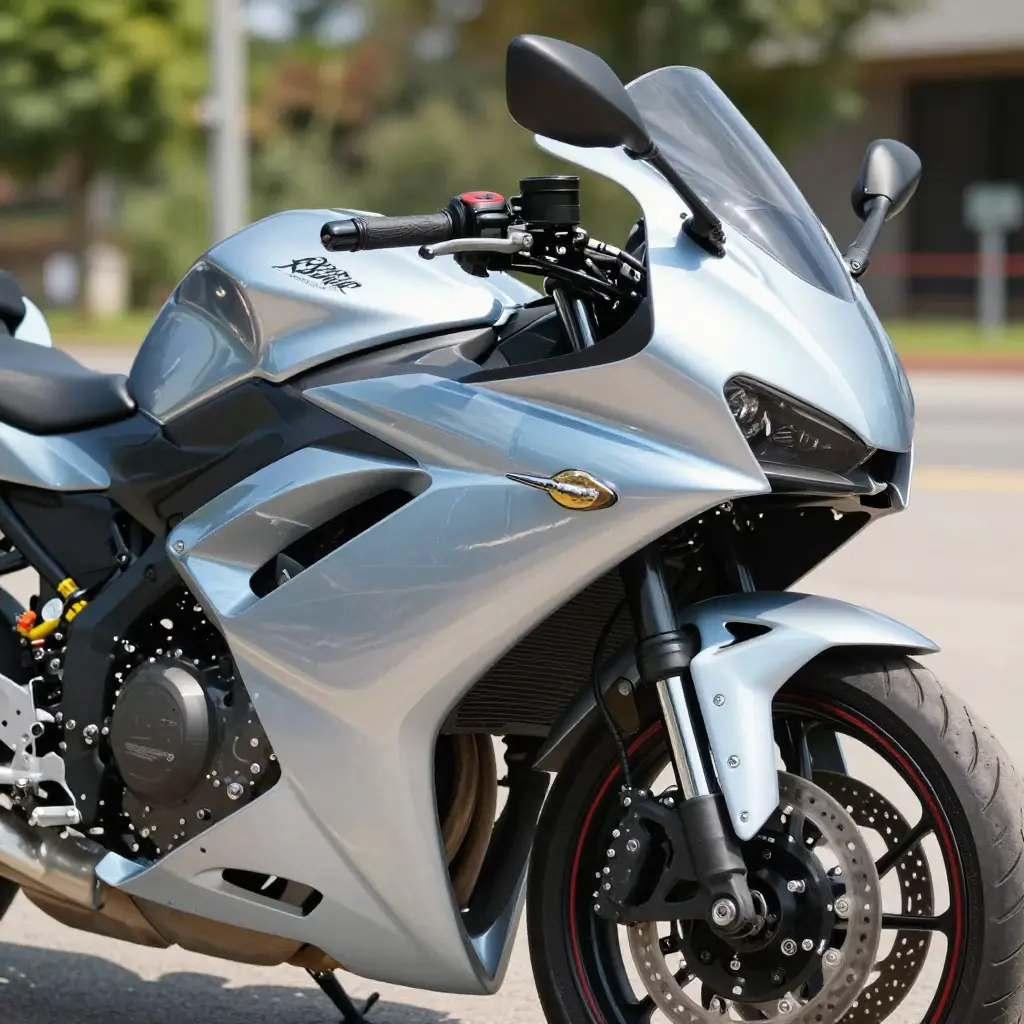
A custom fairing paint match can look flawless under garage fluorescents or the spotlights of a showroom and still reveal an obvious color mismatch the instant the bike rolls into direct sunlight. That is not a rare defect or a careless mixing error; it follows from how light sources, pigments, and coated surfaces behave when the lighting environment changes.
The Problem: A “Matched” Fairing That Turns Off-Tone Outdoors
Most color approvals happen indoors, and shop lighting is narrow-band and incomplete. Fluorescent tubes and LED panels spike at certain wavelengths while under-representing others, so two panels with genuinely different pigment chemistry can reflect almost identical light and pass visual inspection. Direct sunlight is the opposite: a broad, full-spectrum source that floods the surface with the exact wavelengths indoor lighting suppressed. A panel that matched the tank in the bay can split into a distinct tone on the pavement – warmer, cooler, darker, or flatter than the tank beside it.
Four variables determine whether that hidden mismatch ever becomes visible:
- Light source – the spectrum and intensity of the light hitting the panels, and whether it is narrow-band shop lighting or full-spectrum daylight.
- Pigment chemistry – the specific tints, metallics, pearls, and binders used in each mix, which reflect invisible wavelength bands differently.
- Viewing angle – how the fairing and the adjacent bodywork are positioned relative to the sun and the observer’s eye.
- Surface finish – clear coat thickness, gloss level, and texture, all of which alter how light scatters off the coating.
What This Article Covers
The sections below take each variable in turn: why manufacturer color codes and OEM formulas drift over time, how metallic and pearl finishes behave differently from solid colors, and which practical steps – test panels, controlled sun checks, accurate formula documentation – keep a custom fairing paint match honest once the bike leaves the shade.
The Science of Sunlight and Color Rendering
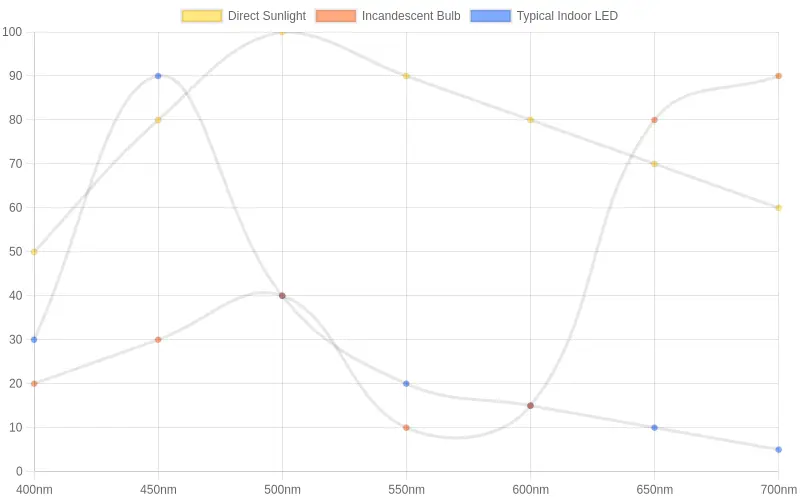
Direct sunlight is the original full-spectrum light source. It carries energy across the entire visible range – roughly 400 to 700 nanometers – with no major gaps. That smooth coverage is its spectral power distribution: the amount of energy a source emits at each individual wavelength. Daylight spreads that energy broadly and fairly evenly, which is why it flatters so many colors at once.
Why Indoor Bulbs Fall Short
Most artificial bulbs only cover part of that range.
- Incandescent lamps pour energy into reds and oranges and starve the blues.
- Typical LEDs spike hard in the blue, then dip, leaving gaps across greens and deep reds.
- Fluorescents fill some gaps but leave spiky, uneven coverage.
When the light itself skips a wavelength, your eye never gets that information back.
Pigments Only React to the Light They Receive
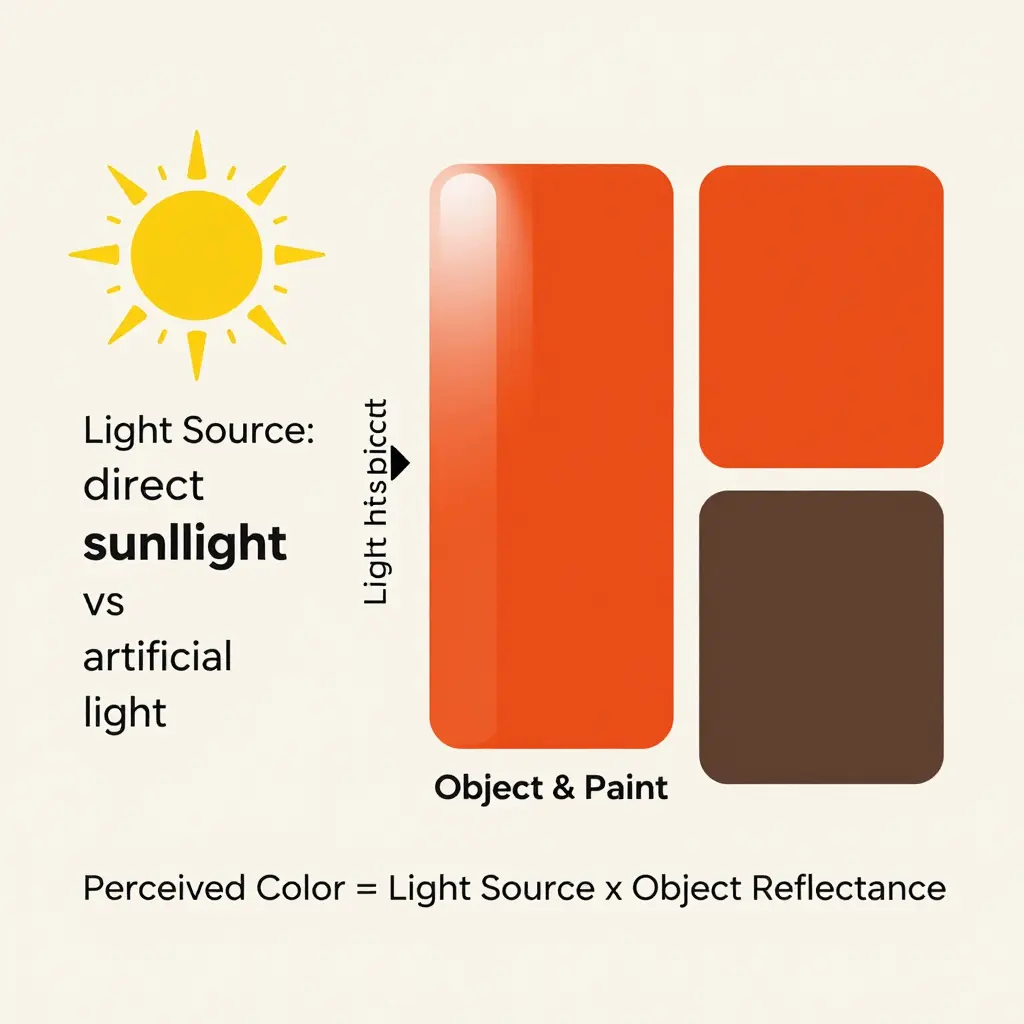
A pigment can only work with the wavelengths it receives. It absorbs some and reflects the rest, and that reflected light is the color you see. So a pigment that needs deep red energy to look rich will look flat under a source that barely emits deep red – even though nothing about the paint changed.
That is why the same fairing reads as two colors under two lights: you see the light source multiplied by the object’s reflectance, not the object alone.
Why Sunlight Exposes Subtle Tones
Because direct sunlight delivers the full spectrum, it excites pigments that indoor bulbs barely reach. Those extra wavelengths reveal subtle tone differences – a slightly warm red versus a slightly cool one – that a narrow-spectrum bulb washes out completely. Two panels that look identical indoors can split apart the moment full-spectrum light hits them.
So judge color under the widest spectrum you can find.
How Custom Fairing Paint Is Built
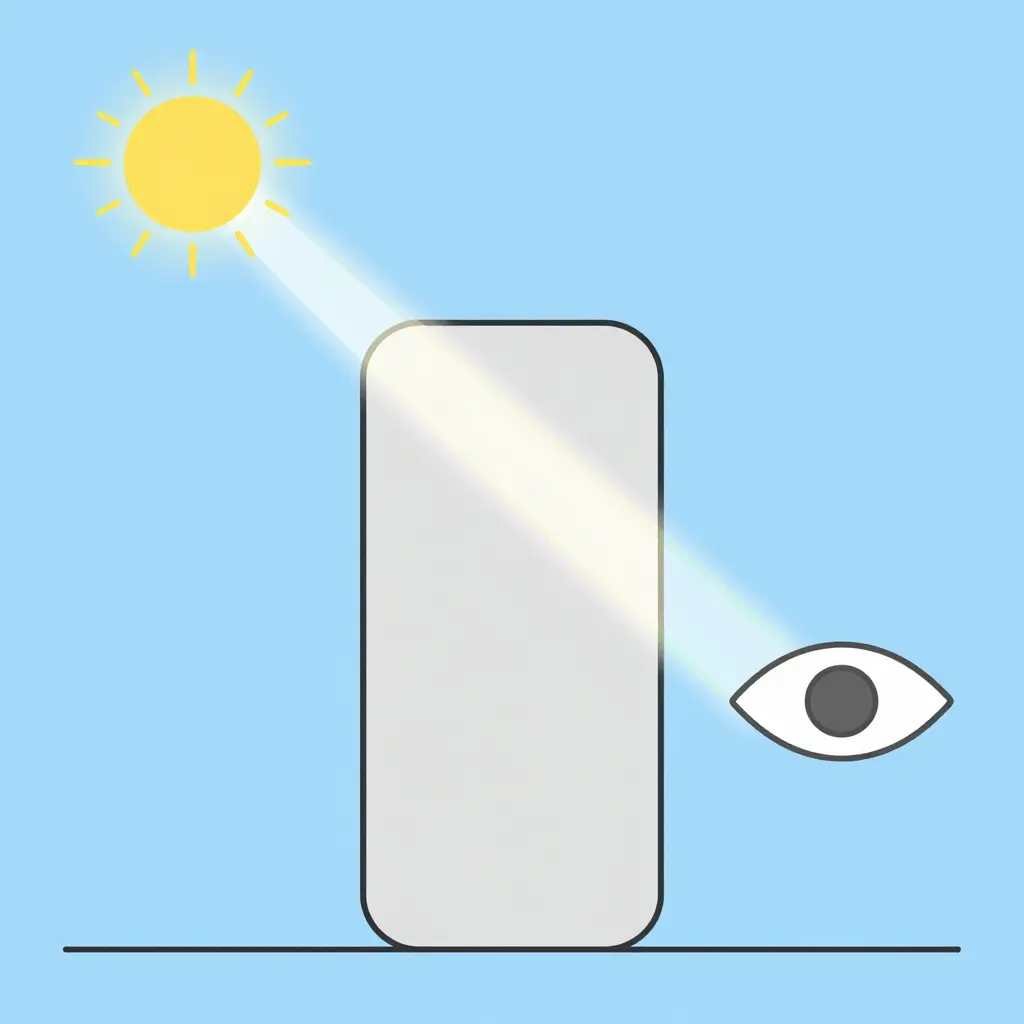
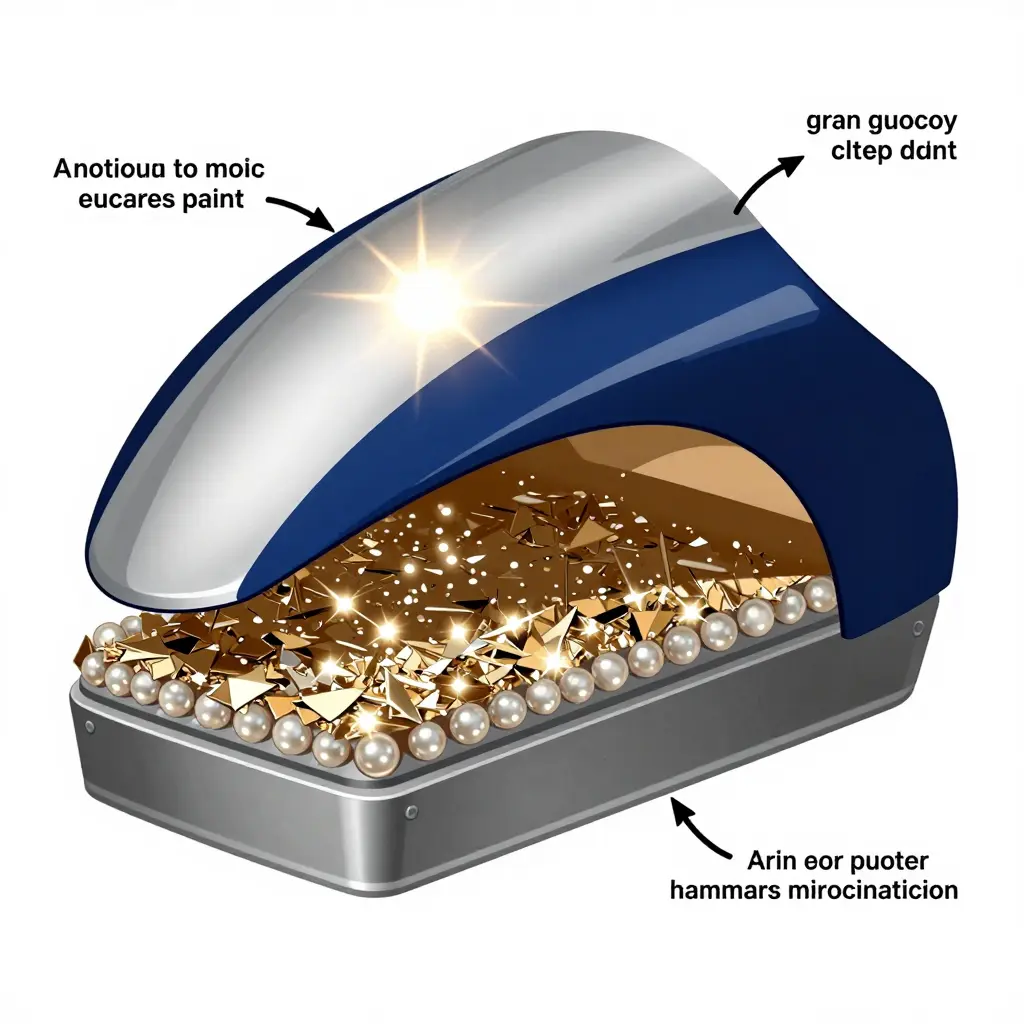
Custom fairing paint is a layered system rather than one coat of color: the prepared surface at the bottom, then a primer, then a basecoat that carries the color, and finally a clearcoat that seals and protects it. The pigment is the ingredient that actually provides color; everything else exists to hold it, orient it, and shield it.
The binder is the resin that surrounds the pigment and locks it in place. How the binder cures, and how thick the final film ends up, decides whether flat flakes lie down evenly or tilt at random. In custom fairing paint, that orientation directly controls how the finish behaves under strong light.
The Four Pigment Families
Solid, metallic, pearl, and tri-coat finishes each build color in a different way.
- Solid pigments are fine, flat particles spread evenly through the binder, so you see much the same color from any angle.
- Metallic paint carries small metal flakes, each one a tiny mirror bouncing light back at the viewer.
- A pearl finish uses translucent mica plates that bend and refract light rather than simply bouncing it. Where metallic is a mirror, pearl is closer to a prism.
- A tri-coat stacks a translucent tinted layer over a reflective base and under the clearcoat. Candy tones are the classic example, where the colored layer and the bright base combine into one final shade.
Why Angle and Intensity Shift the Tone
Because metal flakes and mica plates sit at many different angles across a panel, they scatter reflected light in many directions. Tilt the surface toward strong sun and one cluster of flakes lights up while another goes dark. That is why metallic paint and a pearl finish appear to change tone as the viewing angle changes – brighter and more brilliant from one spot, deeper and duller from another. A tri-coat magnifies the effect because light now travels through the tinted layer twice, once on the way in and once on the way out.
Why Solid Colors Match More Reliably
Solid colors have no flakes to reorient, so there is nothing to shift. A solid swatch looks essentially the same from every angle, which is why solid colors tend to match across panels more reliably.
| Pigment family | How it makes color | Tone shift with angle | Match reliability |
|---|---|---|---|
| Solid | Evenly spread opaque particles | Minimal | High |
| Metallic | Reflective metal flakes | Moderate | Lower |
| Pearl / mica | Refracting translucent plates | Strong | Low |
| Tri-coat | Tinted layer over reflective base | Strongest | Lowest |
Metallic, pearl, and tri-coat systems depend on precise flake angle, layer thickness, and particle spread. Tiny differences between two batches – a slightly different spray pressure, temperature, or film build – tilt the flakes differently. That gap stays invisible in dim indoor light but becomes obvious in bright outdoor sunlight, where every reflective particle is working at full strength.
The way a fairing’s paint reads depends heavily on the light hitting it, so the table below contrasts common shop and outdoor lighting conditions with how reliably each one exposes a genuine color mismatch.
| Lighting Condition | Spectral Character | Likely Effect on Perceived Color Match | Risk of Hiding a Mismatch |
|---|---|---|---|
| Incandescent bulb | Warm, continuous spectrum rich in red and yellow (approx. 2700-3000K) | Warms and blends hues together; exaggerates yellow and red tones | High |
| Fluorescent tube | Spiky line spectrum with a strong green bias | Adds a green cast; distorts blues and reds so panels appear closer than they are | High |
| LED shop light (cool 5000K+) | Strong blue peak with an uneven, gappy spectrum | Flattens tonal variation and shifts cool tones, masking subtle hue drifts | High |
| Overcast daylight | Diffuse, near full-spectrum but low-contrast and blue-shifted | Even, shadowless illumination blurs the boundary between matched and unmatched panels | High |
| Direct sunlight (midday, high angle) | Full-spectrum, high-intensity, direct illumination | Reveals metallic flake orientation, pearl shift, and true hue on both panels | Low |
A higher risk rating means that lighting condition is more likely to conceal a mismatch, which is why a custom fairing should only be signed off under true direct sunlight, where those hidden differences finally surface.
Metamerism: Why a Color Mismatch Only Shows Up in Direct Sunlight
Metamerism is the reason two paints can look like a perfect match in the shop and then drift apart the moment the bike rolls into daylight: two color samples look identical under one light source yet visibly different under another. Our eyes only judge the total light reaching them, but the pigments underneath reflect a unique spectrum. Two different pigment recipes can therefore produce the same perceived color while reflecting light in completely different ways.
That conditionality is the risk inside any custom fairing paint match: the match is real, but it holds only under the light where the color was blended and approved.
How Metameric Pairs Behave
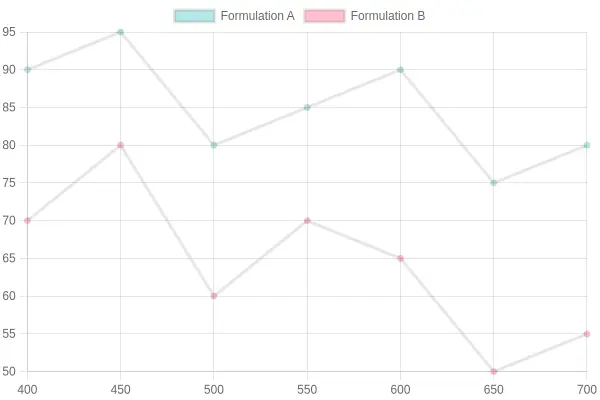
A metameric pair is two color samples that match under one illuminant and diverge under another. Under a soft, balanced, broad-spectrum light, their spectra average out to the same color and the difference stays invisible. Under a narrow, intense, or unusual light source, the underlying spectrum takes over and the pair splits apart.
Where a Color Mismatch Comes From
A metameric color mismatch rarely comes from one obvious error. It comes from small differences stacked together:
- Tinting: Each tint added during mixing shifts the reflectance curve, pulling the formula away from the original pigment spectrum.
- Batch variation: Pigments vary slightly between production runs, so the “same” color code can hide a different spectrum.
- Aftermarket fairing paint choices: Different suppliers and chemistries rarely share the exact pigment makeup of factory paint, so an aftermarket match is often metameric by default.
When these stack up, a color can pass inspection indoors and fail outdoors.
Why Direct Sunlight Exposes the Difference
Direct sunlight is the light source most likely to separate two metameric colors because it is intense and covers the full visible spectrum, pushing a wide band of wavelengths into the pigment all at once. Two formulations with different reflectance curves absorb and bounce that energy differently, so their imbalance becomes visible. Shade, garage fluorescents, and overcast light simply do not deliver the same spread of energy, which is why a mismatch can stay hidden until the bike sits in the sun.
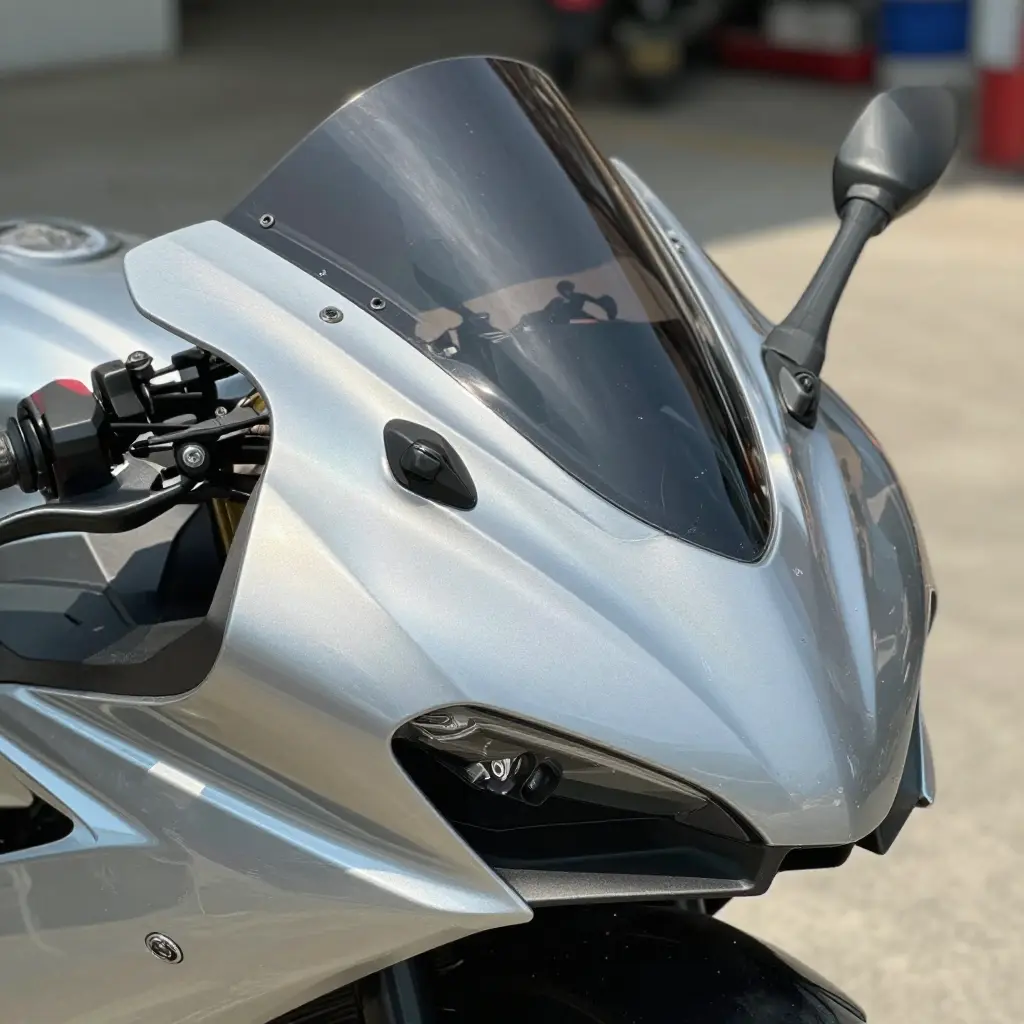
Example: Two gray paints are mixed to match and both look identical under garage lighting. Rolled into direct sunlight, one reads slightly warmer and the other slightly cooler, even though neither formula changed.
For a color that will live outdoors, judge it outdoors, in the light it will actually face.
Color Match Accuracy by Lighting Condition
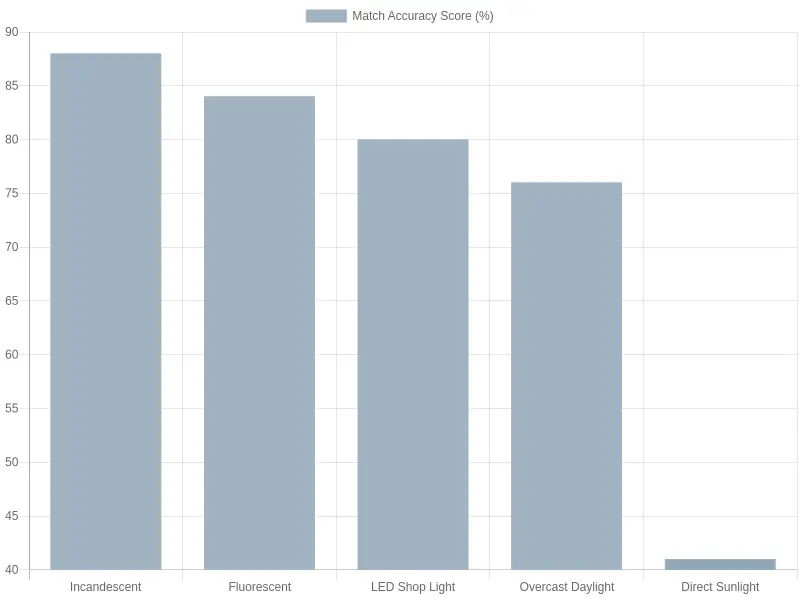
The bars above compare how convincingly a custom fairing paint job reads as a “match” under five different light sources, using a 0-100 accuracy score where higher numbers mean the human eye struggles to spot any difference. The typical garage setting is forgiving: incandescent bulbs score highest at 88, followed by fluorescent at 84 and an LED shop light at 80, while overcast daylight still manages a respectable 76. Those four environments all hide minor pigment and metallic flake discrepancies because their color temperature and intensity are relatively flat, so a paint blend that is slightly off still looks seamless. Direct sunlight collapses to just 41, less than half the score of the best indoor condition. Full-spectrum sunlight throws far more intense, unfiltered brightness across the surface and exaggerates the subtle shifts in hue, flake orientation, and undertone that every other light source smooths over. A mismatch that looks invisible on your bench can become obvious the moment the bike rolls outside, so a match you validated indoors should always be re-checked in real sun before you call the job finished.
Steps to Get a Reliable Custom Fairing Paint Match
A dependable custom fairing paint match is less about luck and more about process. Work through these steps in order, and you will catch most color mismatch problems before the fairing ever leaves the booth.
-
Confirm the Original Paint Code – Start with the factory or builder code printed on the bike, tag, or build sheet. A code narrows the search, but treat it as a starting point rather than a guarantee, since age and sun exposure shift the original tone over time.
-
Take Color Readings Under Multiple Light Sources – Use a spectrophotometer or colorimeter to read the panel under daylight, shop lighting, and incandescent light. Multiple readings show how the pigment behaves across conditions and expose any hidden color mismatch early.
-
Test a Spray-Out Panel – Mix your candidate formula and shoot it onto a spare panel, not the fairing itself. Let it cure fully, because many tints continue to shift as solvents flash off.
-
Check for Metamerism – Compare the spray-out against the original under several light angles. Metamerism occurs when two colors match under one source but diverge under another, and it is one of the most common traps in custom fairing paint match work.
-
Evaluate the Finish in Direct Sunlight – Take both panels outside and view them in direct sunlight, the harshest and most revealing test. This is where a subtle color mismatch and any flake-orientation problems become obvious.
-
Plan the Final Blend – If the tone is close but not exact, blend across adjacent panels so the eye cannot find a hard edge. A gradual transition hides minor variance far better than a single perfect-looking coat.
-
Lock In Clear-Coat and Finish Variables – Confirm the same clear coat, film build, and finish (gloss or matte) on every panel. Differences in clear coat alone can reintroduce a visible mismatch under direct sunlight.
Why Indoor Lighting Commonly Masks a Color Mismatch
A fairing that looks flawless under workshop lights can look obviously wrong the moment it rolls into direct sunlight. That gap is about how artificial light interacts with pigments, intensity, and color temperature, and it explains why so many paint jobs are approved indoors and then rejected outside.
Limited-spectrum light under-excites certain pigments
Most workshop lighting – fluorescent tubes, LEDs, and even older halogens – emits a narrow band of wavelengths rather than the full, continuous spectrum of the sun. Metallic and pearlescent pigments, along with many reds, oranges, and deep blues, work by absorbing specific wavelengths and reflecting the rest. When the light source never supplies those wavelengths in the first place, the pigment has nothing to reflect. Because the missing wavelengths never reach the panel, a mismatched part cannot reveal its difference.
Lower intensity flattens perceived differences
Indoor light is typically far dimmer than daylight. Human vision adapts to low light by leaning on cells that detect brightness rather than fine color variation. In that state, subtle hue and tone gaps between two panels get compressed, so a slightly off panel reads as a near match. Direct sunlight pours far greater intensity onto the surface, sharpening those same differences until they become obvious.
Color temperature illusions
Every light source has a color temperature, measured in Kelvin. Warm fixtures around 2700-3000K push everything toward yellow and orange, while cool fixtures at 5000K and above bias toward blue. If a paint formula is slightly warm or cool relative to the original, a light source with a matching bias visually cancels that error out. A warm lamp can make a too-warm panel look neutral, just as a cool lamp can flatter a too-cool one.
Why fairings pass indoors and fail outside
The three effects compound. Narrow-spectrum light hides pigment differences, low intensity compresses what remains, and color temperature cancels the rest. Back in the shop, the panel and the original look identical to the eye. Under full-spectrum direct sunlight, all three safety nets vanish at once, and the color mismatch that was present all along finally becomes impossible to ignore.
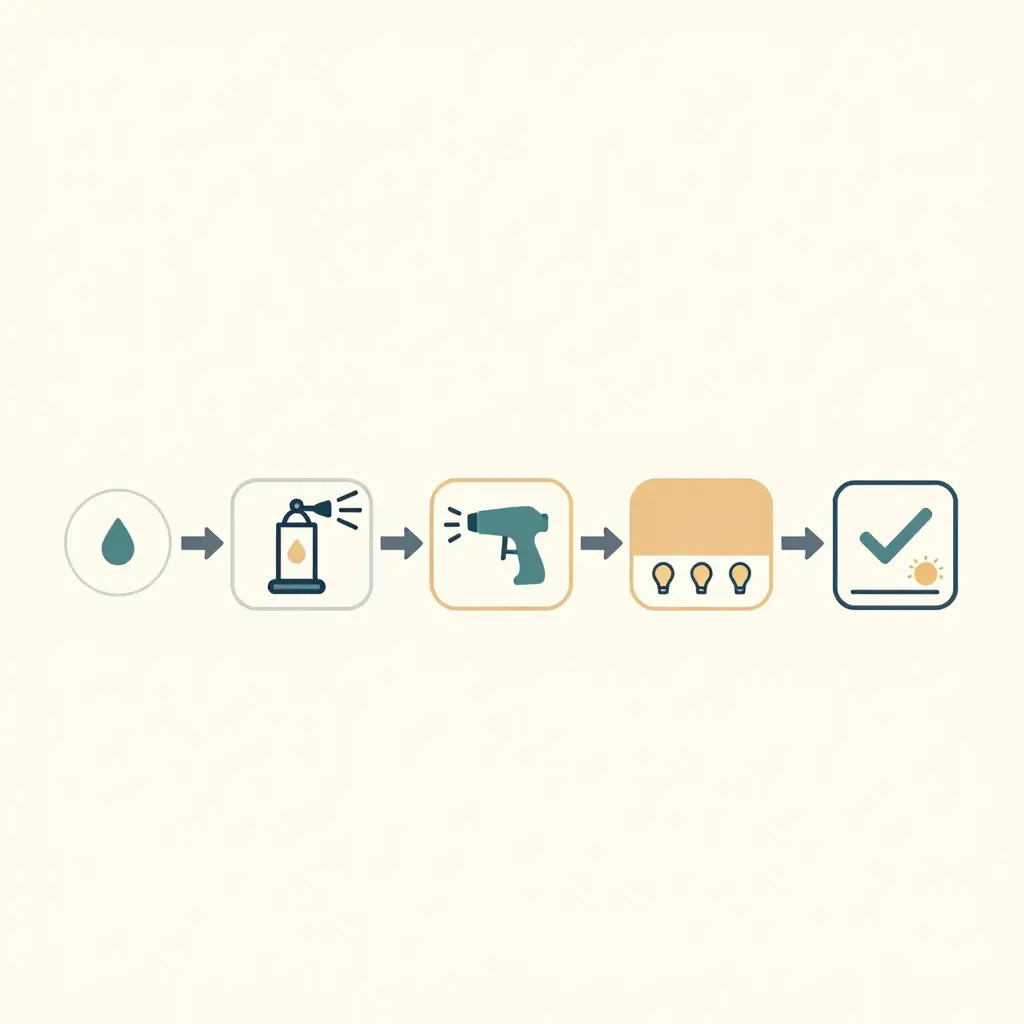
The Fairing Color Match Flow, At a Glance
Blending a custom fairing with the rest of the bike takes five checkpoints, repeated in order. Skipping one is how a mismatch slips through until the sun exposes it. The diagram maps the sequence from start to finish.
Reading the Flow
- Paint sample – The starting reference. A known panel or mixed batch that represents the target color before any tinting begins.
- Color measurement – The sample is read with a spectrophotometer or colorimeter to capture its true spectral fingerprint, not just what the eye reports.
- Spray-out test – A test card is sprayed with the candidate mix so the real finish, with its metallic flakes and clear coat, can be judged as it will actually look.
- Multi-light inspection – The spray-out is viewed under several light sources, because a color can pass under shop fluorescents and still fall apart in real daylight.
- Final verification – The matched panel is confirmed against the original, with a direct-sunlight check built in – the small sun icon on this step signals the one light source that catches what every other light hides.
This final step matters most for metallic and pearlescent finishes. Under diffuse indoor light the fine flakes scatter evenly and everything looks close, but direct sunlight drives those flakes into sharp specular highlights that throw color flop and side-tone shifts into view. A match only passes when it survives that scrutiny.
Practical Challenges of Matching Paint on Custom and Aftermarket Fairings
Getting a clean custom fairing paint match is rarely as simple as ordering a can of factory color and spraying away. When you are working with an aftermarket fairing, the surface you start with behaves differently from the original bodywork, and that difference shows up in the final tone.
Surface Preparation Sets the Stage
Aftermarket panels often arrive with a different substrate, molding texture, or sanding finish than factory plastics. Any variation in how the panel is sanded, cleaned, and prepped changes how the paint lays down. Uneven preparation can leave the finish looking blotchy or slightly off once it cures.
Primer and Sealer Shift the Tone
The color of the primer and sealer matters more than most people expect. A gray primer under a bright hue reads differently than a white or black base, subtly shifting the finished shade. Even a perfectly matched topcoat can look wrong if the layer beneath it changes.
Clear-Coat Thickness and Perceived Color
Clear coat is not purely protective. Extra coats add depth that darkens and richens a color, while a thin clear coat can leave it looking flat. Because a color mismatch often only becomes obvious in direct sunlight, many builders do not notice the drift until the bike is out in the open.
Batch-to-Batch Pigment Variation
Paint pigments vary from one production batch to the next. Two cans labeled with the same code can still render slightly different tones. When part of a bike wears factory paint and another part wears fresh aftermarket paint, those tiny differences stack up.
Matching a Factory Color on Replacement Panels
Replicating a factory color on a repainted or replacement fairing is one of the hardest tasks in the booth. Age, fading, and previous repairs on the original panels mean the factory code is only a starting point, not a guarantee.
Sourcing panels from a supplier that keeps consistent stock can take some of the guesswork out of the process, since uniform pieces are easier to work with from the start. It won’t eliminate the laws of paint chemistry, but it removes one variable. When everything else is dialed in, even a stubborn color mismatch becomes far easier to chase down.
What Actually Drives a Fairing Color Mismatch in the Sun
When a resprayed fairing looks like a twin under garage lights but turns a slightly different shade the moment it rolls into direct sunlight, the blame rarely falls on a single factor. The doughnut chart below breaks down the typical causes behind that tell-tale color shift, with metameric pigment differences (35%) and batch variation (25%) dominating the picture.
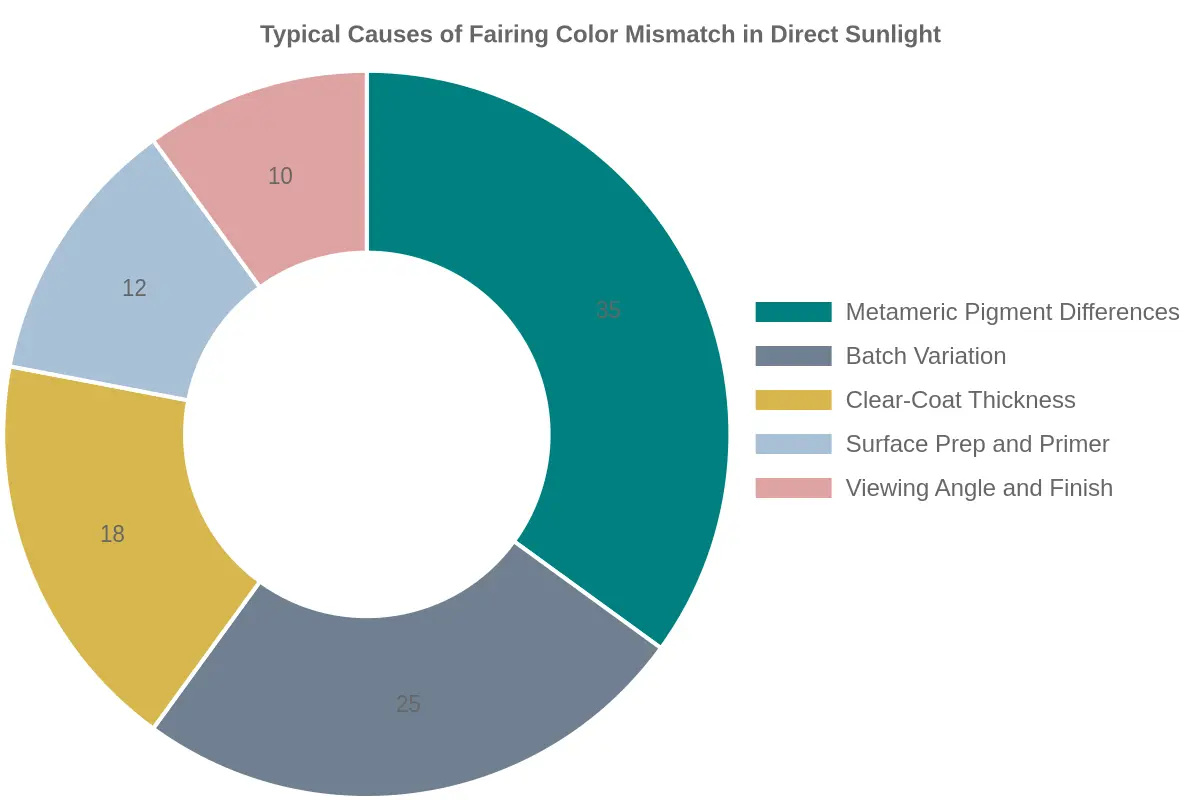
Chart title: Typical Causes of Fairing Color Mismatch in Direct Sunlight
Reading the Chart
The largest slice belongs to metameric pigment differences. Metamerism is the phenomenon where two paints match under one light source but diverge under another. Shop lights skew toward warmer, narrower wavelengths, while sunlight floods the surface with the full spectrum. Pigments that appeared identical under a bulb can reflect subtly different wavelengths in daylight, exposing a mismatch that was technically always there. Batch variation takes the second-largest share, because even within the same paint code, tinting machines and pigment lots drift from one production batch to the next, so a factory fairing and a later touch-up panel are never truly guaranteed to be identical.
Together, these two causes account for roughly six out of every ten mismatches. They dominate because both are baked in at the formulation stage – they cannot be polished, sanded, or buffed out after the fact. Clear-coat thickness (18%) ranks third: a heavier or lighter clear layer changes how light refracts and can shift perceived depth and hue, especially on metallic and pearl finishes. Surface prep and primer (12%) follows, since an inconsistent base coat or primer tint bleeds through and alters the final tone. Finally, viewing angle and finish (10%) rounds out the list – the flake orientation and gloss level of a panel change how sunlight hits it, so two adjacent fairings can read differently simply because of how they are angled toward the sun.
Most sunlight-only mismatches trace back to pigment chemistry and batch drift, not to the painter’s technique. Choosing a single paint batch for the whole job and verifying color under true daylight – not shop lights – eliminates the bulk of the problem before a single panel is sprayed.
Frequently Asked Questions About Custom Fairing Paint Match
Getting a custom fairing paint match dialed in can feel like chasing a shadow, especially when a panel looks perfect at the bench but off on the road. These common questions cover the factors that trip up even experienced builders and painters.
Why does a custom fairing paint match only look right in direct sunlight?
Modern finishes rely on metallic flakes, pearlescent pigments, and layered tints that reflect light differently depending on the angle and intensity of the source. Under diffuse indoor light, those pigments scatter softly and a color mismatch stays hidden. Direct sunlight is intense and directional, so it exposes subtle differences in hue, flake orientation, and tint that weaker lighting cannot reveal.
Can LED shop lights hide a color mismatch?
Yes. Many LED shop lights emit a narrow, high-color-temperature spectrum that flattens out the metallic and pearl effects in paint. That even, bluish wash can make two noticeably different panels read as identical. Always confirm your work under more than one light source before calling a job finished.
How do I check for metamerism on a painted fairing?
Metamerism is when two colors match under one light but diverge under another, and it is the number one reason a color mismatch seems to “appear” outdoors. Test by viewing the panels under daylight, incandescent, and shop lighting in sequence, and rotate them to check angle-dependent shifts. If the panels separate under any of those conditions, you have a metameric mismatch worth correcting.
Can a mismatched fairing be corrected without a full repaint?
Often, yes. If the discrepancy is limited to one panel or a blend zone, a skilled painter can tint and blend that area to bring it in line with the rest of the bike. A full respray is usually only necessary when the base color itself is wrong or the mismatch spans multiple panels.
How do aftermarket fairings affect color matching?
Aftermarket fairings frequently arrive with a generic factory color that does not precisely match the OEM finish, and their plastic substrate can behave differently under the same paint. That combination makes an exact custom fairing paint match harder to achieve straight out of the box. Many builders strip and repaint aftermarket panels rather than trusting the pre-applied color.
How does paint code accuracy reduce the risk of a color mismatch?
An accurate paint code gives your supplier the exact pigment recipe, tint ratios, and variant information the manufacturer used originally. Starting from the correct code removes most guesswork before a single drop is mixed. Verifying the code against your bike’s year, model, and even production batch is one of the simplest ways to avoid a color mismatch down the road.
Does clear coat affect how a custom fairing paint match looks in direct sunlight?
Absolutely. The clear coat controls gloss and how light refracts off the flake layer, so a different clear product or film thickness can shift the final appearance. Using the same clear coat and application method across all panels keeps the finish consistent when the bike rolls into direct sunlight.
Conclusion: Proof Happens in the Sun, Not the Shop
A custom fairing paint match is never really finished when the last clear coat cures. It is finished the moment you roll the bike outside and let unfiltered daylight judge the work. Indoor lighting, whether fluorescent tubes or LED bays, flattens and filters the full spectrum that pigments actually reflect. That filtering hides the very differences that make a color mismatch obvious the instant direct sunlight hits the panel. The shop confirms coverage; the sun confirms the match.
Key Takeaways
- Light source decides the result. Tunable shop lighting narrows the spectrum, so panels that look identical under a lamp can diverge sharply once real daylight excites every pigment in the mix.
- Pigment chemistry differs even within one color code. Different tinters, batch codes, and metallic flakes reflect wavelengths at different strengths, and those small spectral gaps are exactly what a mismatch exposes.
- Metamerism does the damage. Two colors can match under one light and clash under another; only a daylight check, ideally near noon on a clear day, reveals the true relationship between panels.
- Verification follows a repeatable sequence. Spray a test card, compare it against the existing finish, then view both side by side in direct sun before committing to the full fairing.
- Document the recipe. Record the base, reducer, and flake ratios so any future touch-up can reproduce the same match under the same light.
Best Practices to Lock In the Match
Treat the sun as the final inspector. Always cure a sample, walk it to the edge of the garage, and rotate it through direct light before you commit a fairing to the gun. Compare at multiple angles, since flakes shift tone as the viewing angle changes, and never sign off on a custom fairing paint match under the same lamp that sprayed it. Bring the customer or the owner outside for the approval, because their eyes will judge the bike in daylight long after your booth lights are off. When the sample and the panel agree in full sun, you have a match that survives every lighting condition the road can throw at it.
Related Reading
For readers who want to extend the same discipline into the wider world of vehicle service and logistics, these technical resources pair well with this guide: mastering diesel mechanics through a structured, step-by-step path, exploring dispatch software for fleet management, and reviewing the advantages of fleet dispatching software to see how verification and record-keeping scale from a single bike to an entire operation.